


Due to the persistently high prices of graphics cards, there has long been a group of people in China who are eager to “snag a bargain” on the secondhand marketplace “Xianyu” by purchasing low-priced, high-end graphics cards at prices below market value. Some of these cards are sold as upgrades, but many more are sold as “brick” units—defective cards being sold to extract their remaining value. Recently, “Brother Zhang,” a well-known repair expert on China’s Bilibili (who also has a YouTube channel), released a video exposing an NVIDIA GeForce RTX 4080 listed on Xianyu for just 1,000 RMB (approximately 4,400 New Taiwan Dollars), was actually “e-waste”—a cobbled-together unit made from scrapped parts and a previous-generation mid-range chip—and urged viewers not to be tempted by such bargain prices.
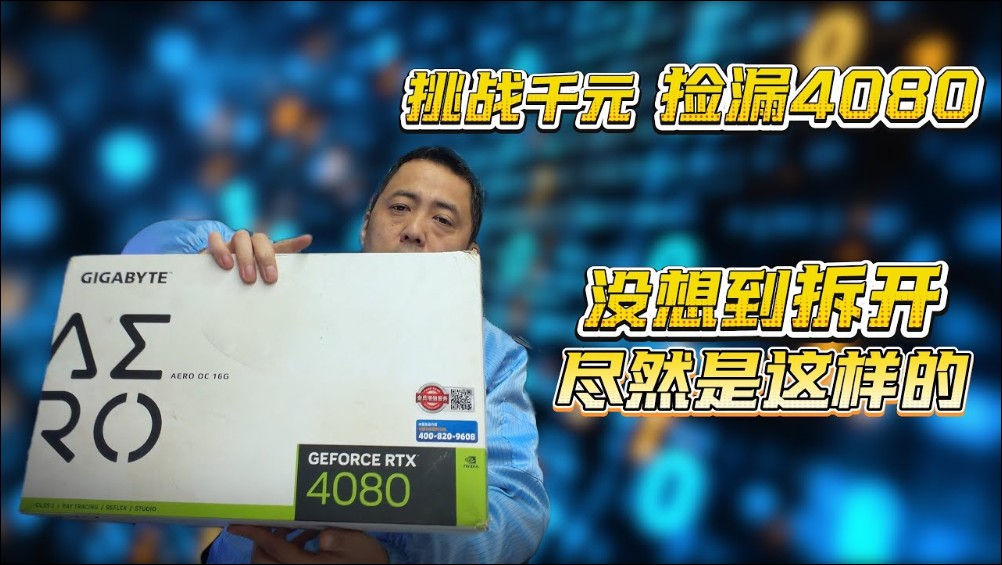
Repair Expert “Brother Zhang” Exposes Fake RTX-4080 Custom-Built Graphics Cards on the Xianyu Platform
Recently, “Brother Zhang” shared a repair case on his channel: a buyer on the Xianyu platform was drawn to a GeForce RTX 4080 graphics card priced at just 1,000 RMB. Although this price was less than one-tenth of the model’s normal market price (the RTX 4080’s launch price was over $1,000), driven by a gambler’s mentality and the seller’s persuasive tactics, the buyer ultimately went through with the transaction.
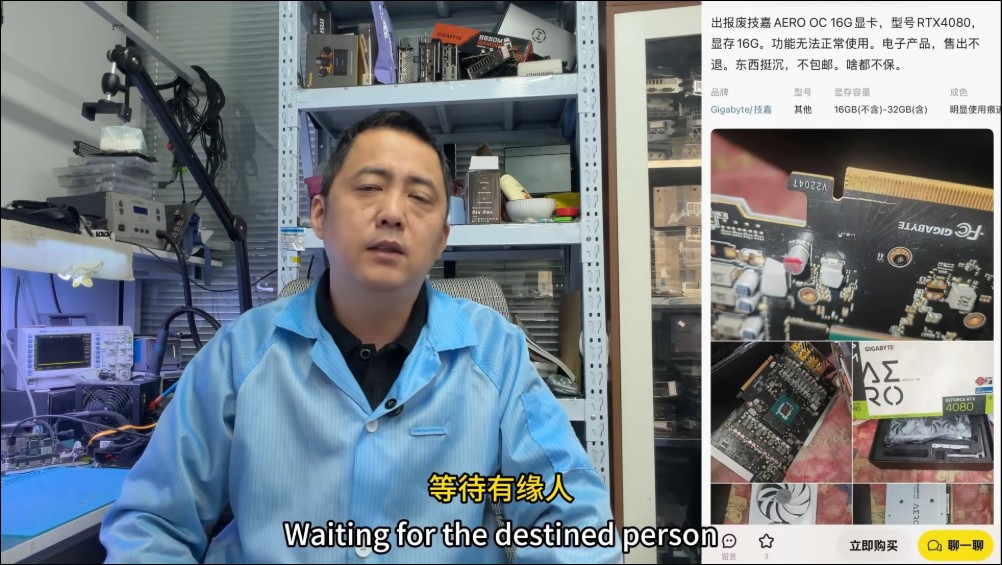
Physical Damage and Scrap Substrates
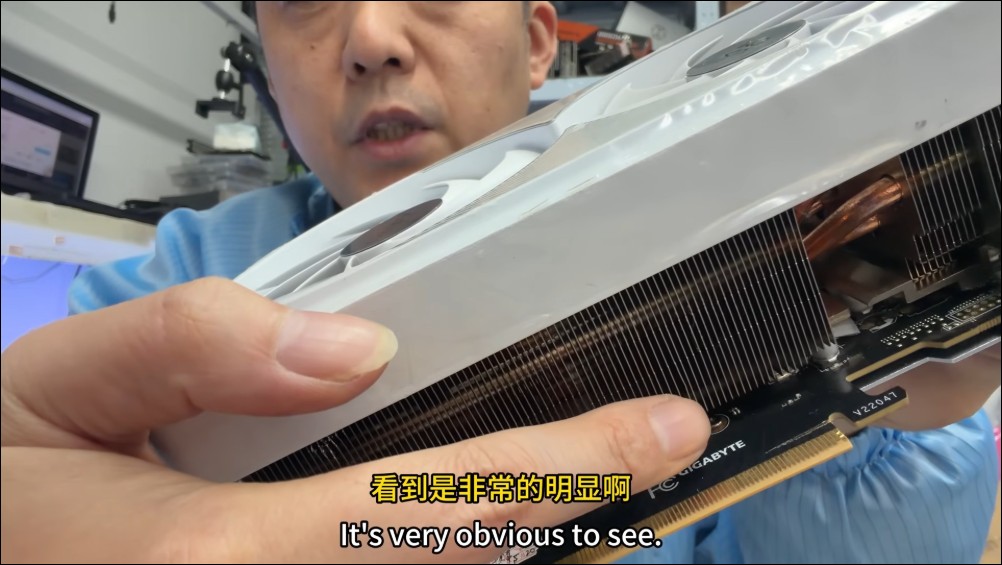
According to a preliminary visual inspection by repair expert Brother Zhang, this graphics card already showed obvious, fatal damage before it was disassembled: the PCB had long since fractured. For high-end graphics cards with a multilayer PCB design, a fractured PCB means the internal circuitry is completely destroyed—which is essentially a death sentence.
The Core Falls Victim to a “Swap of the Heir” Scheme
The real highlight comes after removing the heatsink. When the technician removed the heatsink assembly and wiped away the thermal paste, the size of the GPU die that came into view showed a visible difference from the standard RTX 4080 specifications.
-
Label Fraud: The laser marking on the surface of the chip clearly reads “AD103“, which is the codename for the core used in the RTX 4080 based on NVIDIA’s Ada Lovelace architecture.
-
True Identity: However, after professional analysis and testing, the true identity of this chip turned out to be GA106。
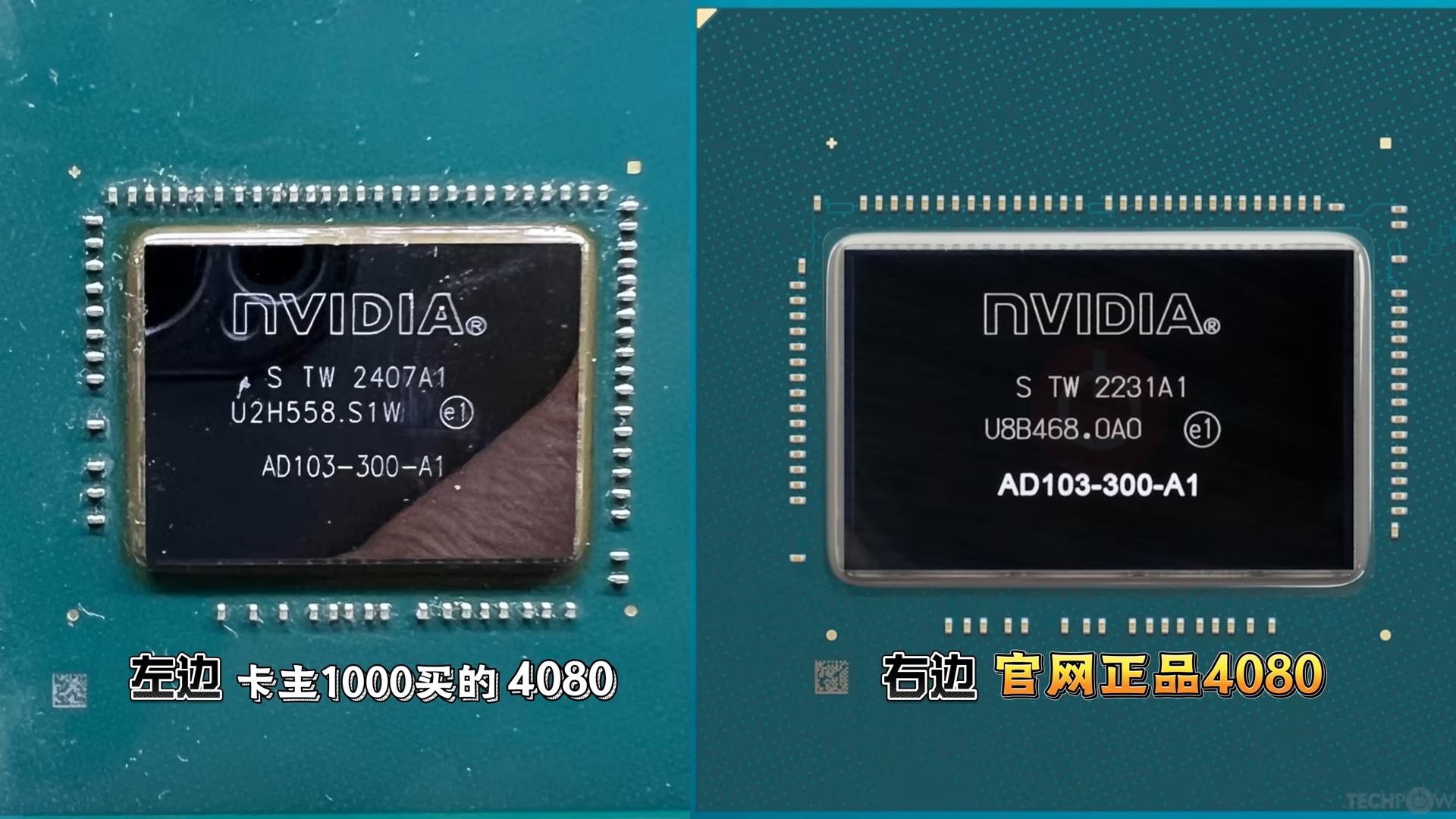
Brother Zhang pointed out that the original markings on the chip’s surface had been carefully polished away, and the scammers then used a laser engraver to re-engrave the letters “AD103.” This technique is sufficient to deceive the vast majority of ordinary consumers who lack professional authentication skills; even some experienced enthusiasts would find it difficult to detect immediately without disassembling the heat sink.
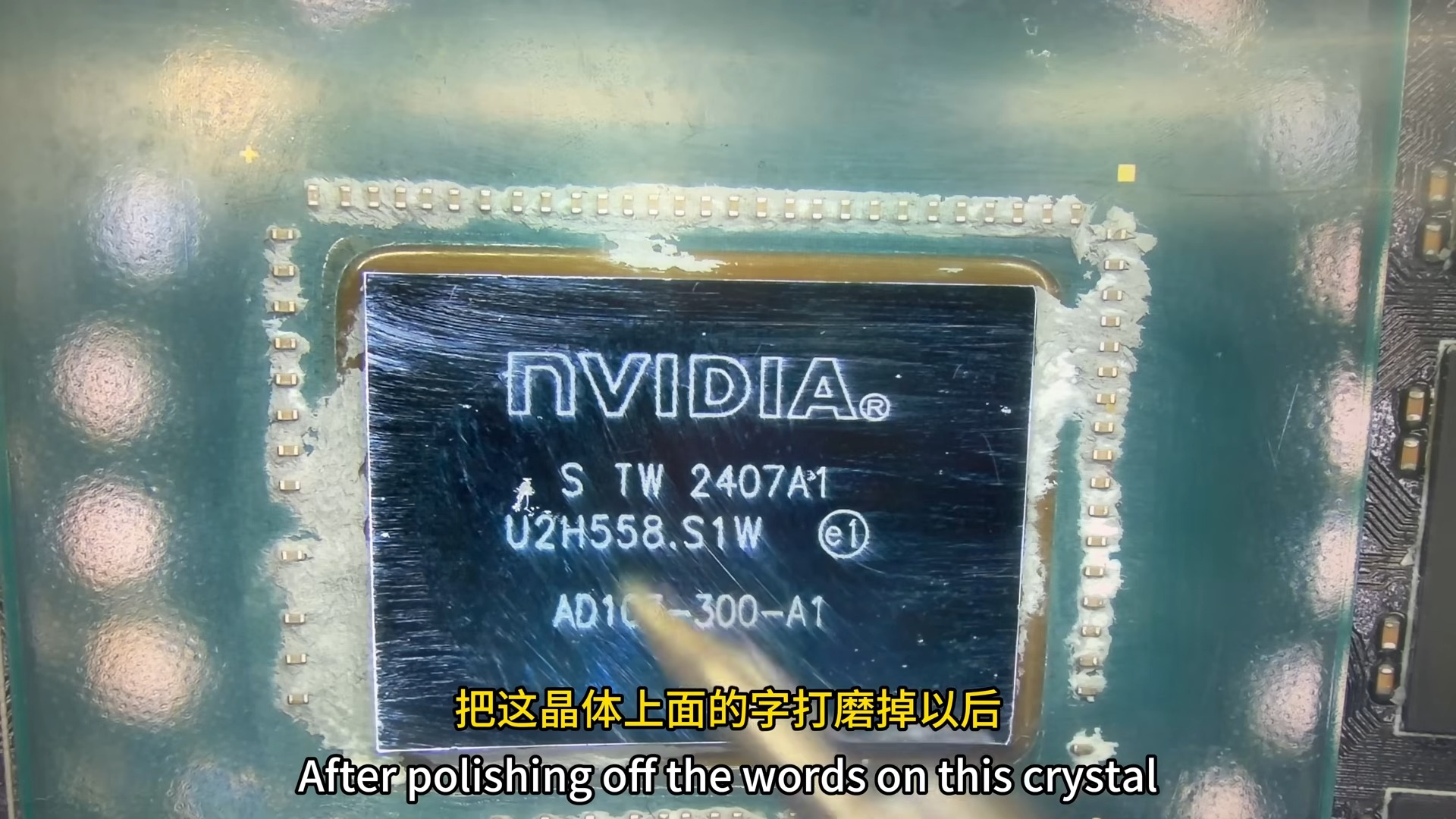
The PCB for this graphics card originally came from a genuine scrapped card. However, its original high-value components—the genuine AD103 GPU core and expensive GDDR6X memory chips (the graphics memory is also counterfeit)—had long since been dismantled and removed. These high-value original parts were most likely resold to the repair market to fix other faulty RTX 4080 graphics cards or used in the production of higher-end refurbished cards.
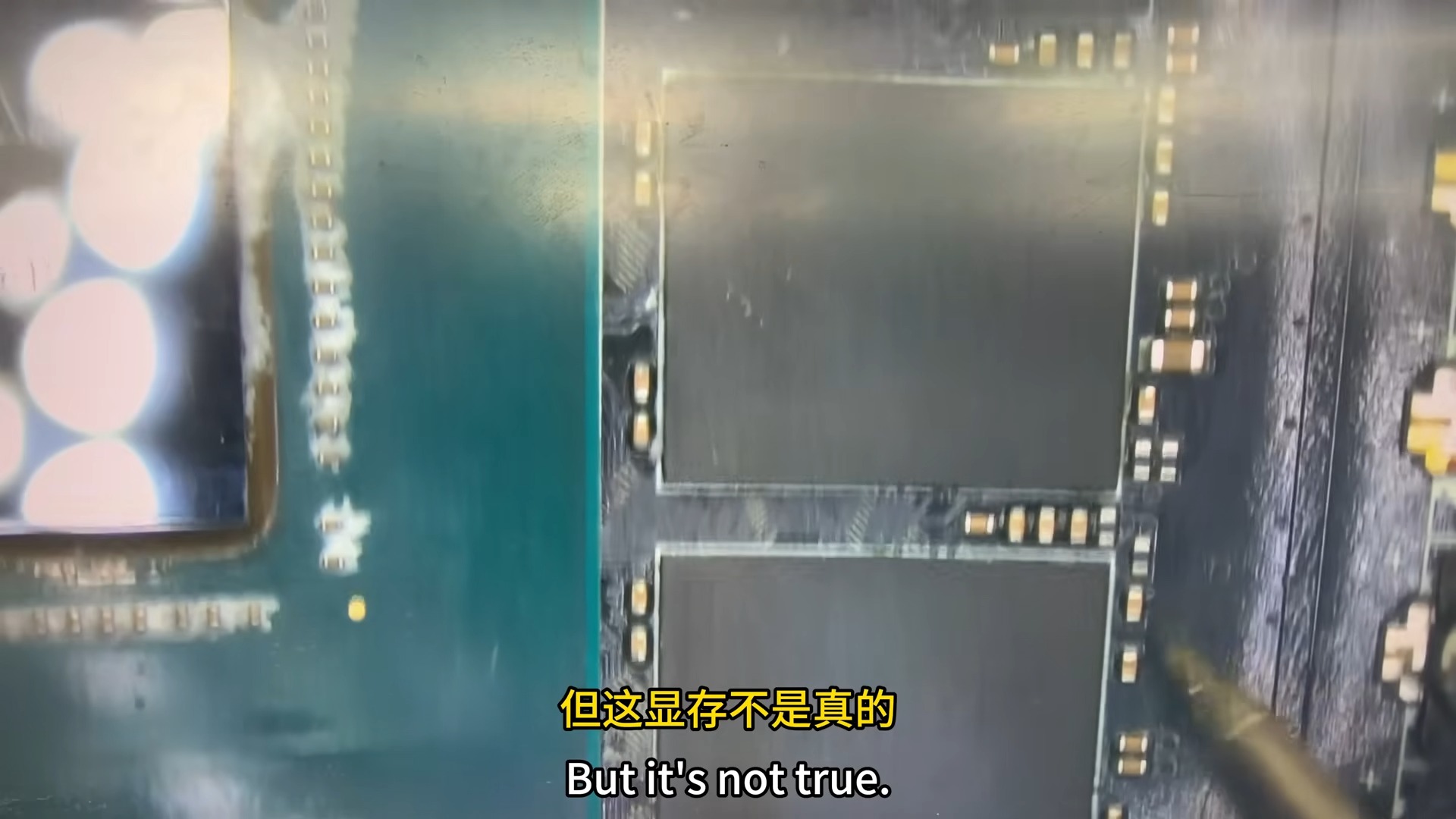
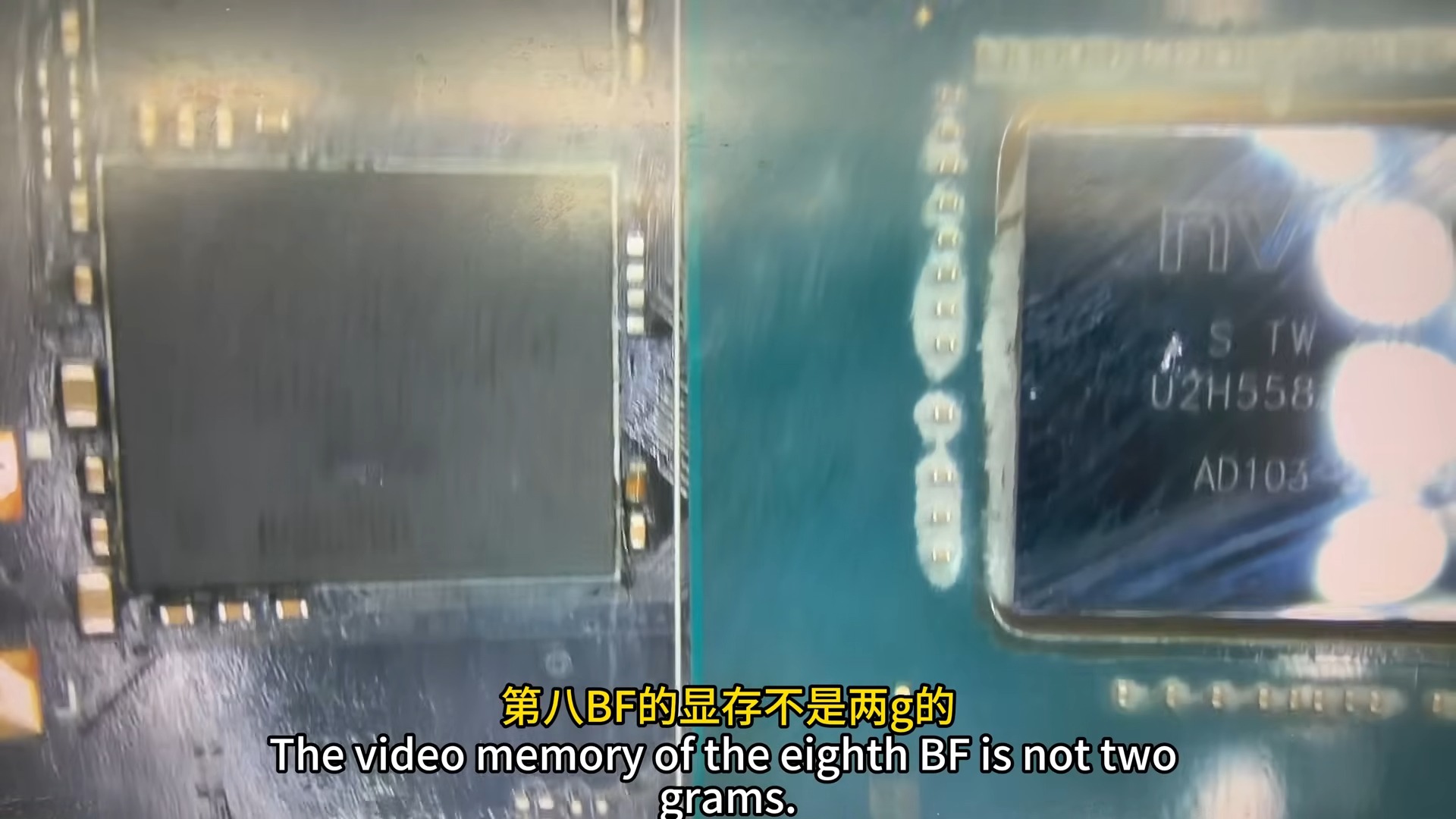
This type of scam, known as “FrankenGPU” (a Frankenstein-like assembly of graphics cards), is nothing new in China’s secondhand market, but its technical methods and targets are undergoing a dangerous evolution. As early as the early 2010s, with the rise of the cryptocurrency mining boom, a large number of overworked “mining cards” flooded the market. At that time, scams primarily involved selling mining cards with rewritten BIOSes disguised as regular gaming cards. However, as technology has advanced, fraudsters’ methods have evolved from “software disguise” to “hardware reengineering.”
Xianyu Platform Liability
The platform where this incident occurred, “Xianyu,” is China’s largest secondhand marketplace and has long been criticized for its lax regulation. Although the platform has a reporting mechanism in place, it appears to be falling short in the face of the endless stream of hardware scams. The reason people continue to fall for these scams is largely due to consumers’ gambler’s mentality—their desire to “snag a bargain” (though, to be fair, Brother Zhang has actually repaired quite a few of these cards). In an era of sky-high graphics card prices, prices 50% or even 80% below market value often cause buyers to lose their rational judgment. One Chinese netizen shared an experience noting that some sellers on Xianyu even fabricate detailed “stories”—such as “studio closing down and clearing inventory” or “a gift from my boyfriend that I don’t like”—to justify unreasonably low prices.
In response to the increasingly rampant scams involving used graphics cards, here are a few tips that apply not only to the Chinese market but also to buyers of used hardware in Taiwan and around the world:
-
Price is a key indicator: Never trust prices that are absurdly low. When a graphics card is priced far below market value (for example, an RTX 4080 selling for only 1,000 RMB), it’s 100% a scam. (It’s not going to fall into your lap.)
-
Check Seller’s Credit Rating: Carefully review the seller’s past transaction ratings, registration date, and whether they have undergone real-name verification. Accounts specifically used for fraud are typically registered very recently or list a large number of similar items.
-
Do Not Conduct Transactions Outside the Platform: Many scammers will ask buyers to conduct transactions privately via messaging apps, citing reasons such as “saving on transaction fees” or “easier communication.” Once the transaction is conducted outside the platform’s oversight, buyers lose all financial protection and have no recourse for compensation.
-
Requires testing on actual hardware: When purchasing high-end hardware, you should ask the seller to provide photos and videos of the device’s appearance, as well as real-time stress test videos (such as 3DMark or FurMark), and request a screenshot of the detailed GPU-Z specifications. to verify that the core code, manufacturing process, and BIOS version match the official specifications (although the seller could still swap out the parts after taking the photos, you should at least save this as evidence in case you need to file a complaint or claim compensation later).
Ultimately, I still recommend not buying this type of graphics card online (not even new ones)—you should at least be able to test it in person. If it were really that easy to fix, wouldn’t it make more sense for him to send it to Brother Zhang to get it repaired before reselling it? For more details, check out the video below.
Source: KOCPC Chinese