


On June 1, 2026, NVIDIA Founder and CEO Jensen Huang took the GTC Taipei stage at the Taipei Music Center, opening his nearly 2-hour-20-minute keynote with “It’s so good to be home.” This COMPUTEX 2026 preview covered the complete AI roadmap from data centers to personal computers, from digital agents to autonomous vehicles. Here are all the key highlights from the speech.
We also provided bilingual translation throughout the entire talk, and added timestamps at all the key points. Feel free to bookmark this and watch at your own pace. Click on any section title below to jump directly to that part.
Taiwan: The Core of NVIDIA’s Ecosystem
Jensen Huang opened by focusing on Taiwan, praising it for having “the world’s most abundant supply chain ecosystem.” He cited data showing that Taiwan’s GDP is expected to grow nearly 10% this year, while NVIDIA’s business cooperation with Taiwan is also growing at a rapid pace in tandem.
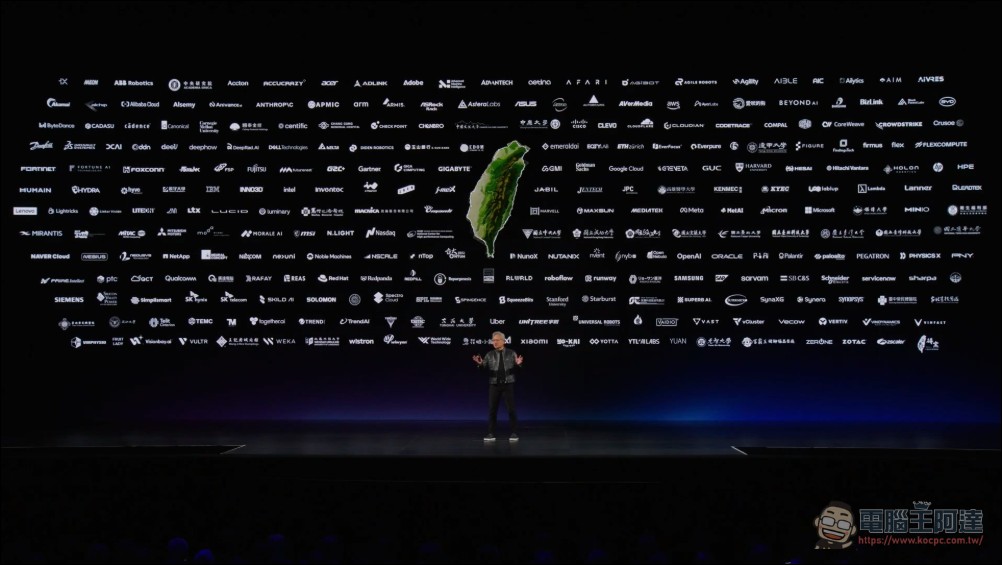
Jensen Huang specifically emphasized that NVIDIA’s ecosystem encompasses not just software developers, but extends all the way to the upstream supply chain—and that supply chain starts right here in Taiwan. From chip manufacturing to system assembly, Taiwan’s 150 supply chain partners, millions of square feet of factory space, and hundreds of facilities collectively support Vera Rubin’s complete production process from wafer to rack.
Agentic AI has already landed
Jensen Huang recalled that two years ago at the same event, he spoke about “the next wave of AI being Agentic AI.” Now he declares: “Agentic AI has arrived, useful AI has arrived.” Using software development as an example, he points out that the world’s 30 to 40 million software engineers represent approximately $3 trillion (approximately NT$97.5 trillion) in annual salary output, and with AI augmentation, these salaries are generating nearly $9 trillion (approximately NT$292.5 trillion) in productivity.
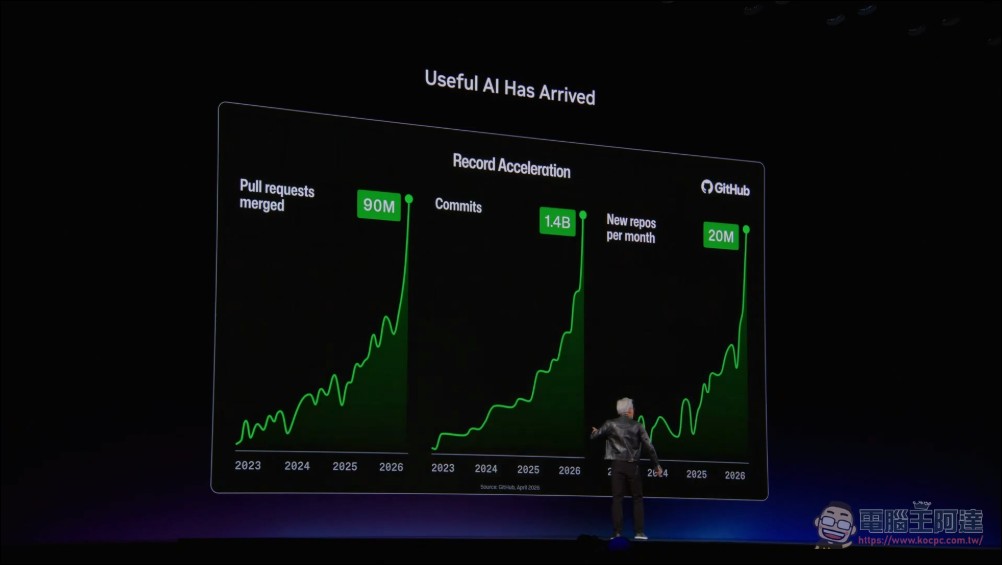
He cited GitHub commit data as evidence: there were 300 million commits globally in 2023, growing to 400 million in 2024, reaching 500 million in 2025, and in the first few months of 2026 it was “almost triple.” Jensen Huang directly stated: “People say AI will reduce jobs, that’s complete nonsense.” The number of software engineers is increasing, not decreasing.
Vera Rubin: NVIDIA’s Most Ambitious Project Ever
The core of the entire keynote was the full unveiling of the next-generation GPU platform Vera Rubin. Jensen Huang called it “the most ambitious undertaking in NVIDIA’s history,” mobilizing all 40,000 engineers across the company. On the hardware side, the Vera Rubin system packs 6 trillion transistors and over 18,000 components onto a single substrate, composed of 7 new chips formed through hundreds of manufacturing steps. The system architecture includes the Vera Rubin GPU, Vera CPU, NVLink 72 switch, ConnectX-9 SuperNIC, and BlueField-4 DPU.
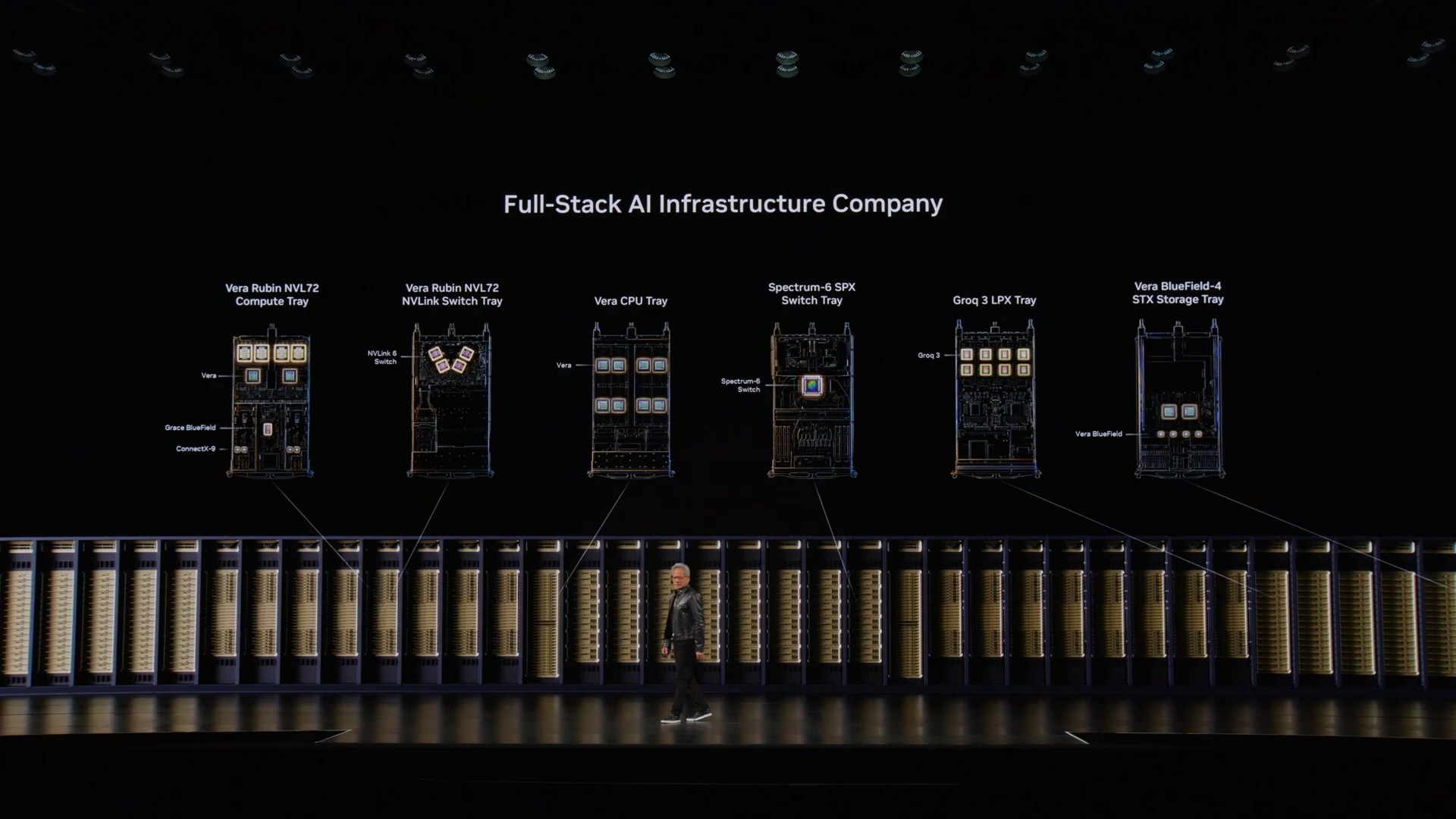
Jensen Huang announced: “Vera Rubin is now in full production.” He noted that Vera Rubin’s supply chain is twice the size of Grace Blackwell’s, and Microsoft, Dell, and CoreWeave have all deployed Vera Rubin NVL72 engineering racks.
Vera Rubin NVL72 is positioned not just for AI inference or training—Jensen Huang specifically emphasized it as “a multi-rack pod-scale supercomputer purpose-built for the Agentic era.” Within each Vera Rubin rack, two Vera CPUs handle orchestration of the entire agentic loop’s thinking, reasoning, and planning processes.
Vera CPU: A processor built for the agent era
Jensen Huang spent considerable time introducing Vera CPU, NVIDIA’s self-developed Arm architecture processor designed specifically for AI agent workloads. He pointed out that Agentic AI has transformed the CPU’s role—it’s no longer just a general-purpose computing component, but rather an “orchestrator” in agent systems.
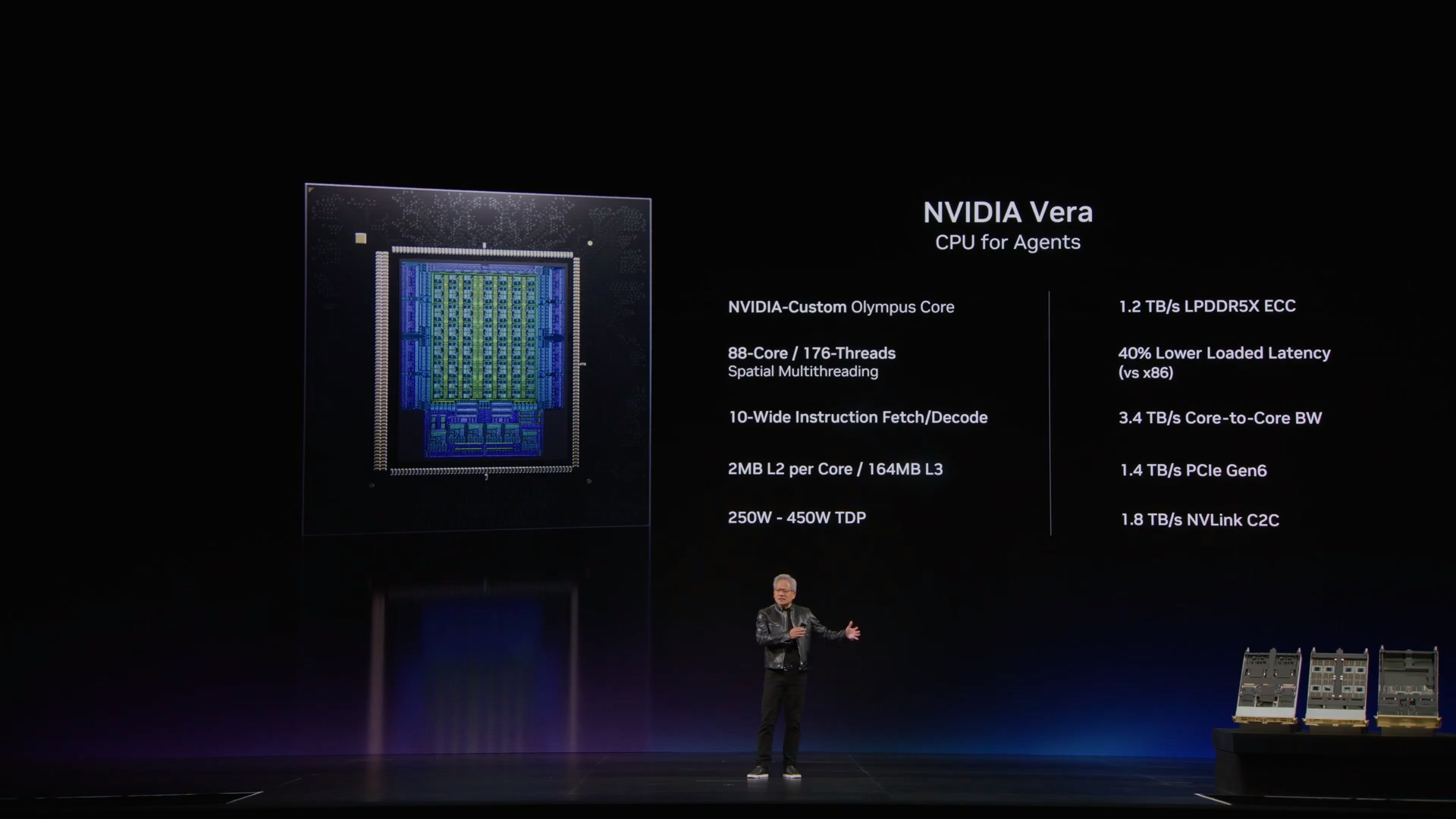
Key specifications of Vera CPU include: the first CPU to use LPDDR5X memory while being able to correct multiple errors, scalable to multi-socket architecture via NVLink chip-to-chip, and delivering 1.8x the performance of x86 CPUs in agent sandbox workloads. Jensen Huang demonstrated Vera CPU performing real-time stream processing for the New York Stock Exchange, emphasizing that due to its bandwidth advantage, it achieves 6x the performance of traditional architectures.
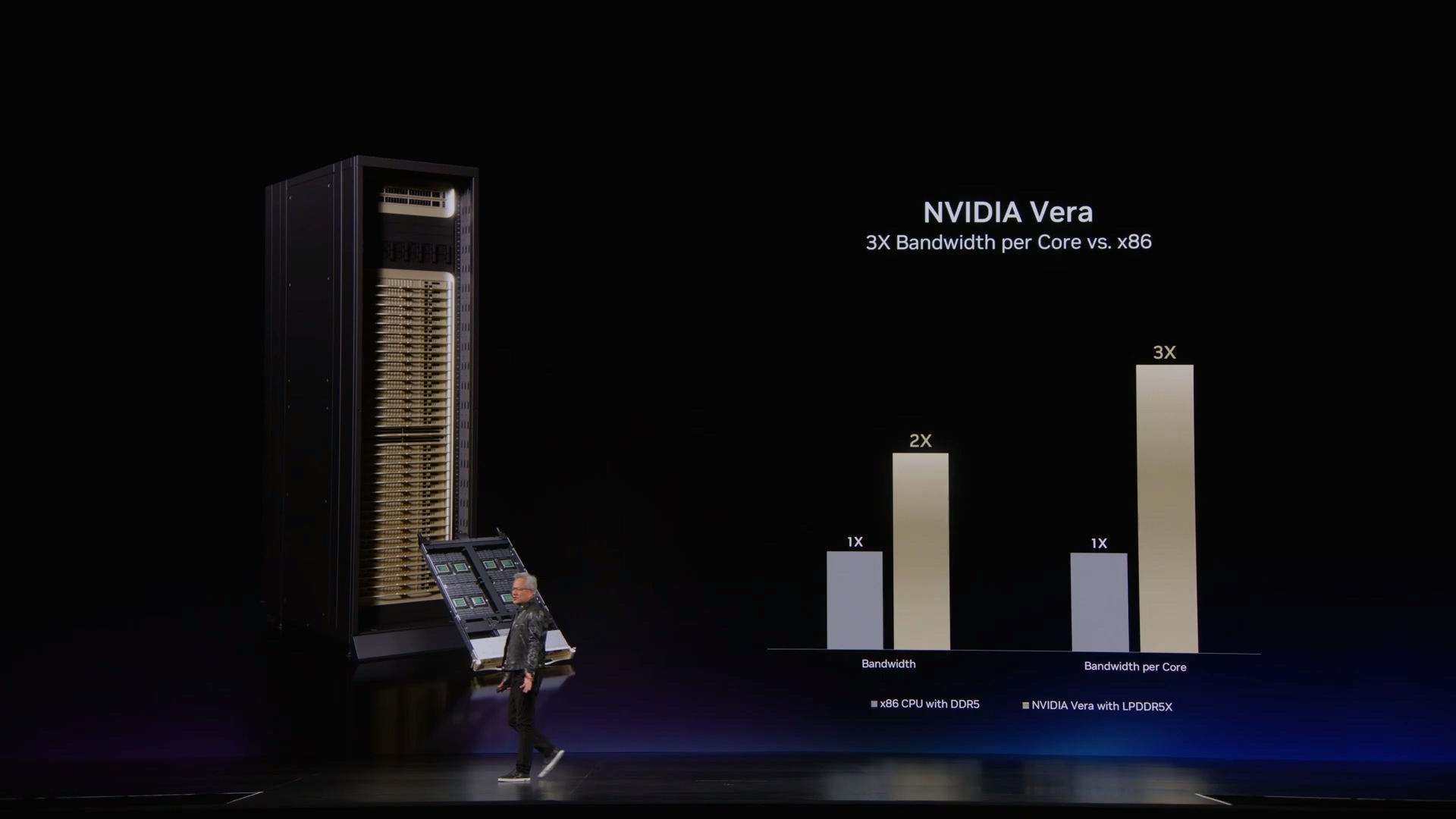
Additionally, the Vera BlueField-4 STX system handles AI memory and storage acceleration, paired with Spectrum-X Ethernet photonics to form a complete data center infrastructure stack. Jensen Huang concluded: “Vera will become the world’s most optimized proxy CPU.”
GROK LPX: A New Choice for Low-Latency Inference
Besides operating the Vera Rubin NVL72 at maximum throughput, NVIDIA has also launched the GROK LPX (LPU-30) system, targeting ultra-low latency inference scenarios. This system is manufactured on production lines at Foxconn and Quanta, equipped with 256 GROK LPUs distributed across 16 trays.
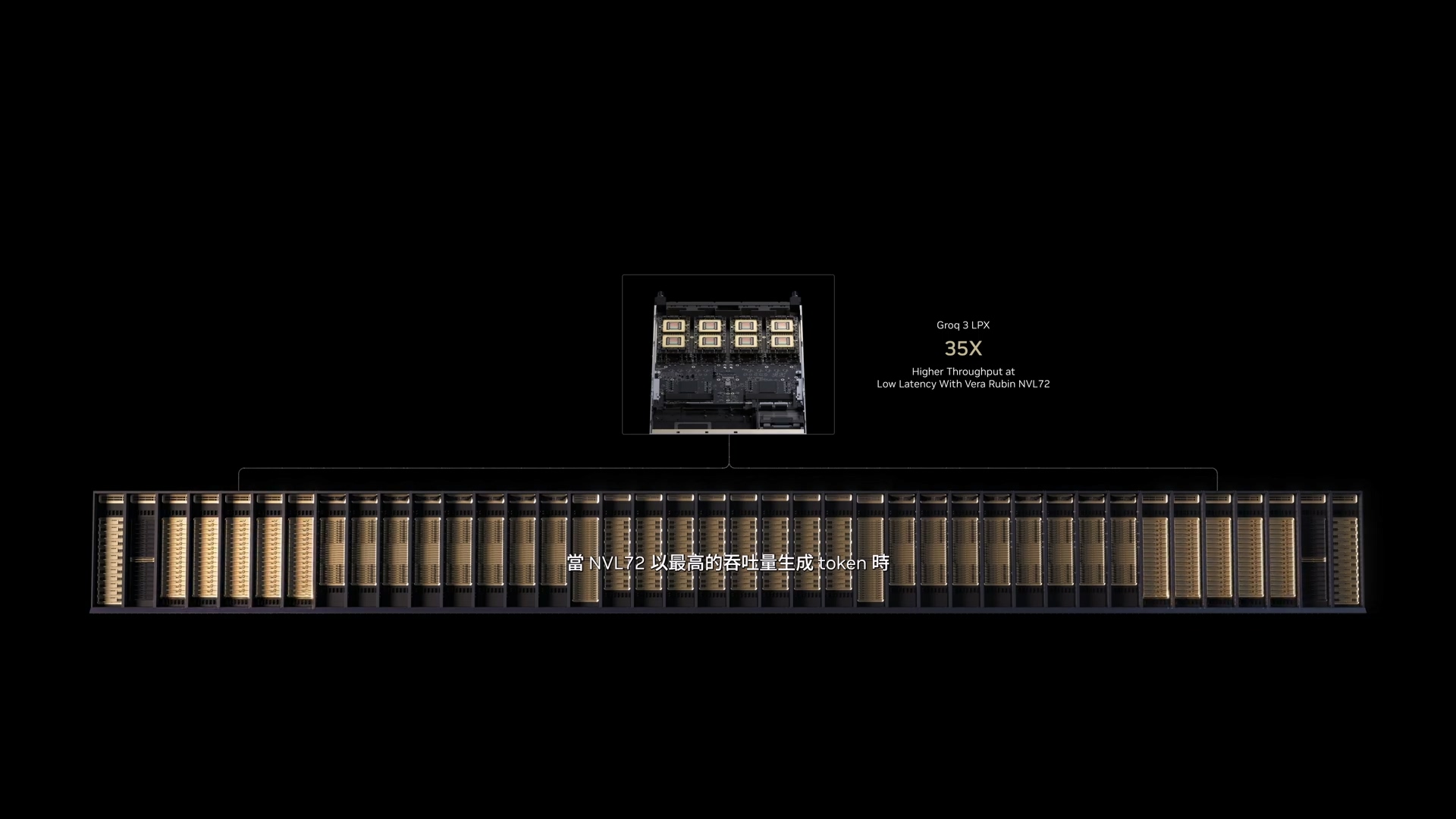
Jensen Huang explained the division of labor between the two: NVL72 handles token generation for “maximum throughput,” while Grok LPX focuses on token generation for “minimum latency.” They complement each other, enabling AI factories to meet both batch processing and real-time response demands simultaneously.
Nemotron 3 Ultra and Open Model Strategy
NVIDIA continues to bet on the open model approach. Jensen Huang announced the official launch of Nemotron 3 Ultra, which is 5 times faster than the previous generation, and previewed that Nemotron 4 is already in development. He emphasized that Nemotron was trained on the world’s largest suite of long-context reasoning models, making it the “world’s best open model system strategy.”
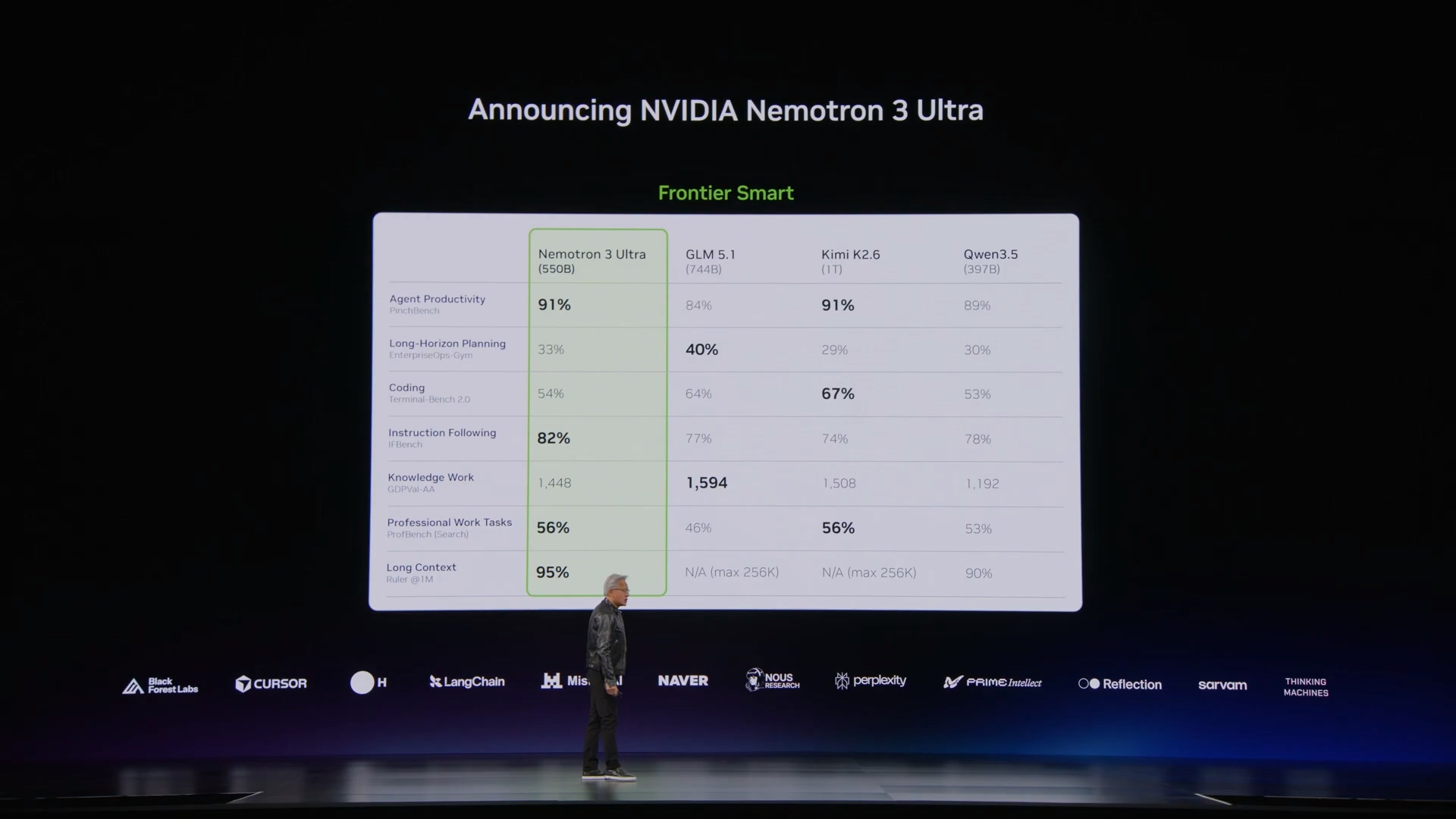
This aligns with NVIDIA’s consistent open strategy: open models, open data, and even open training methods, allowing enterprises to fine-tune them and transform them into proprietary models. Jensen Huang also mentioned that NVIDIA OpenShell is open-source, and partners like Cadence are building specialized applications such as chip verification based on Nemotron.
RTX Spark33 years of PC experience condensed into one chip
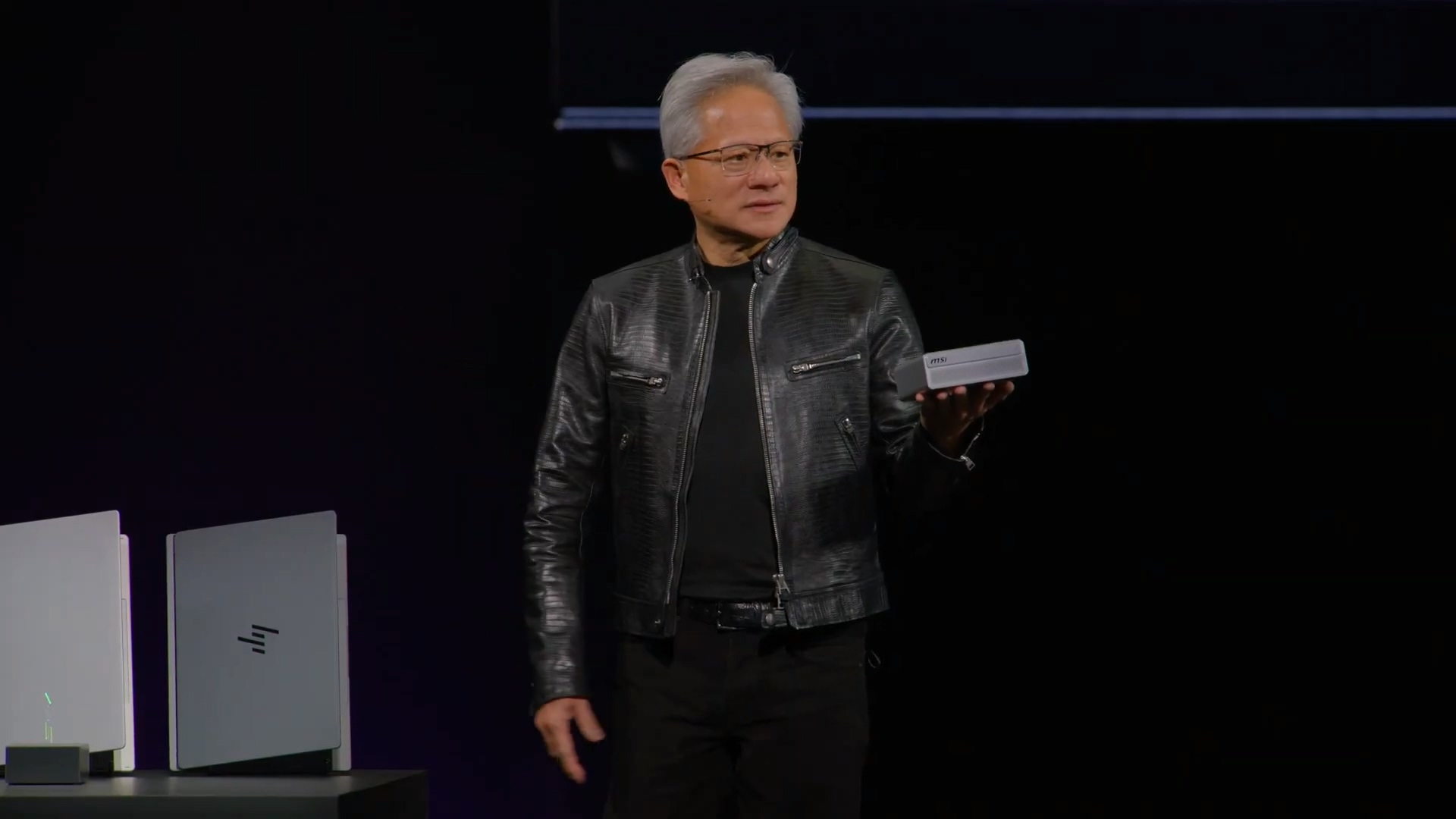
In the second half of his keynote, Jensen Huang unveiled RTX Spark, a laptop platform powered by Blackwell architecture RTX GPUs. He said: “RTX Spark is the reinvention of the laptop.”
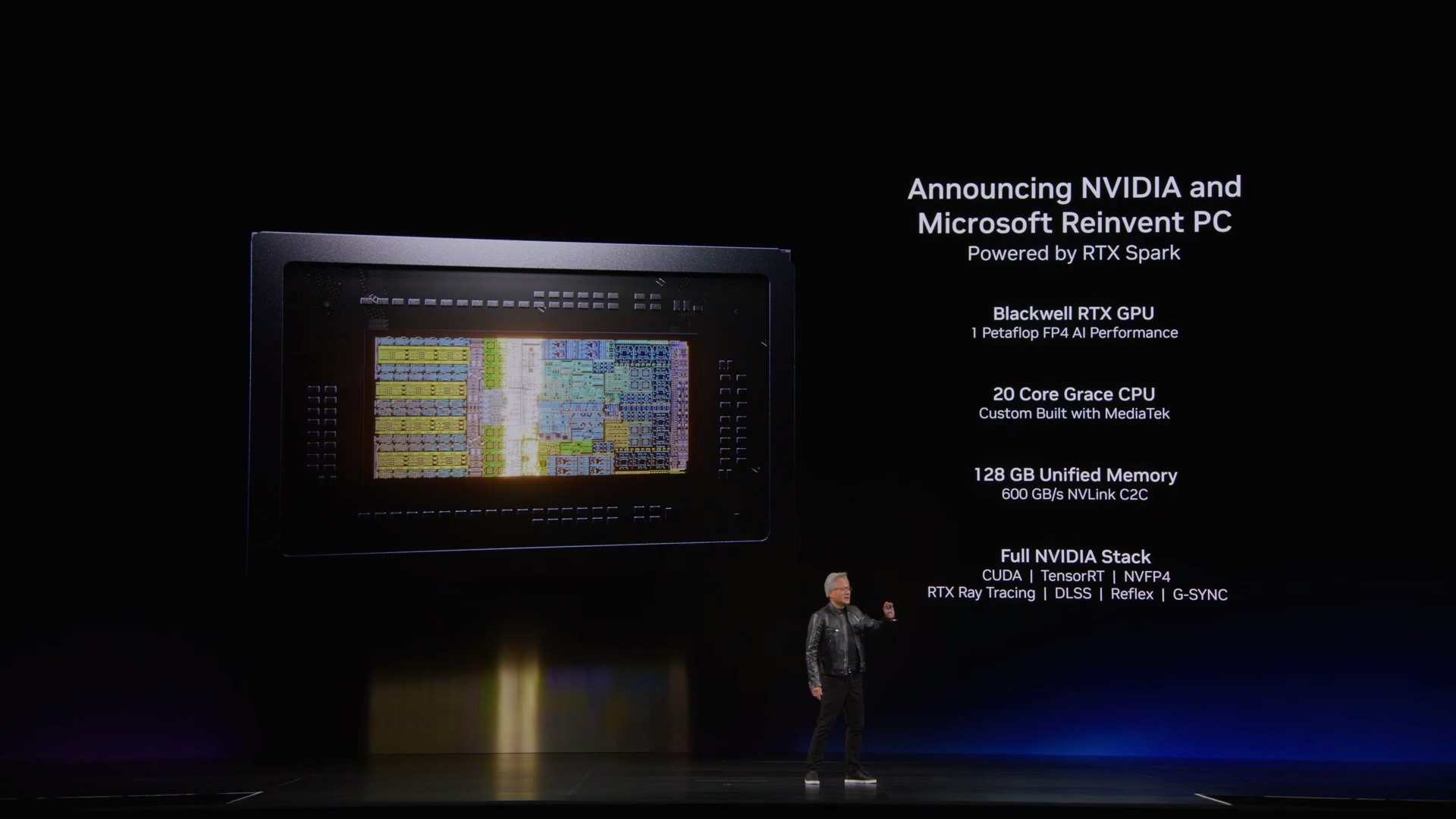
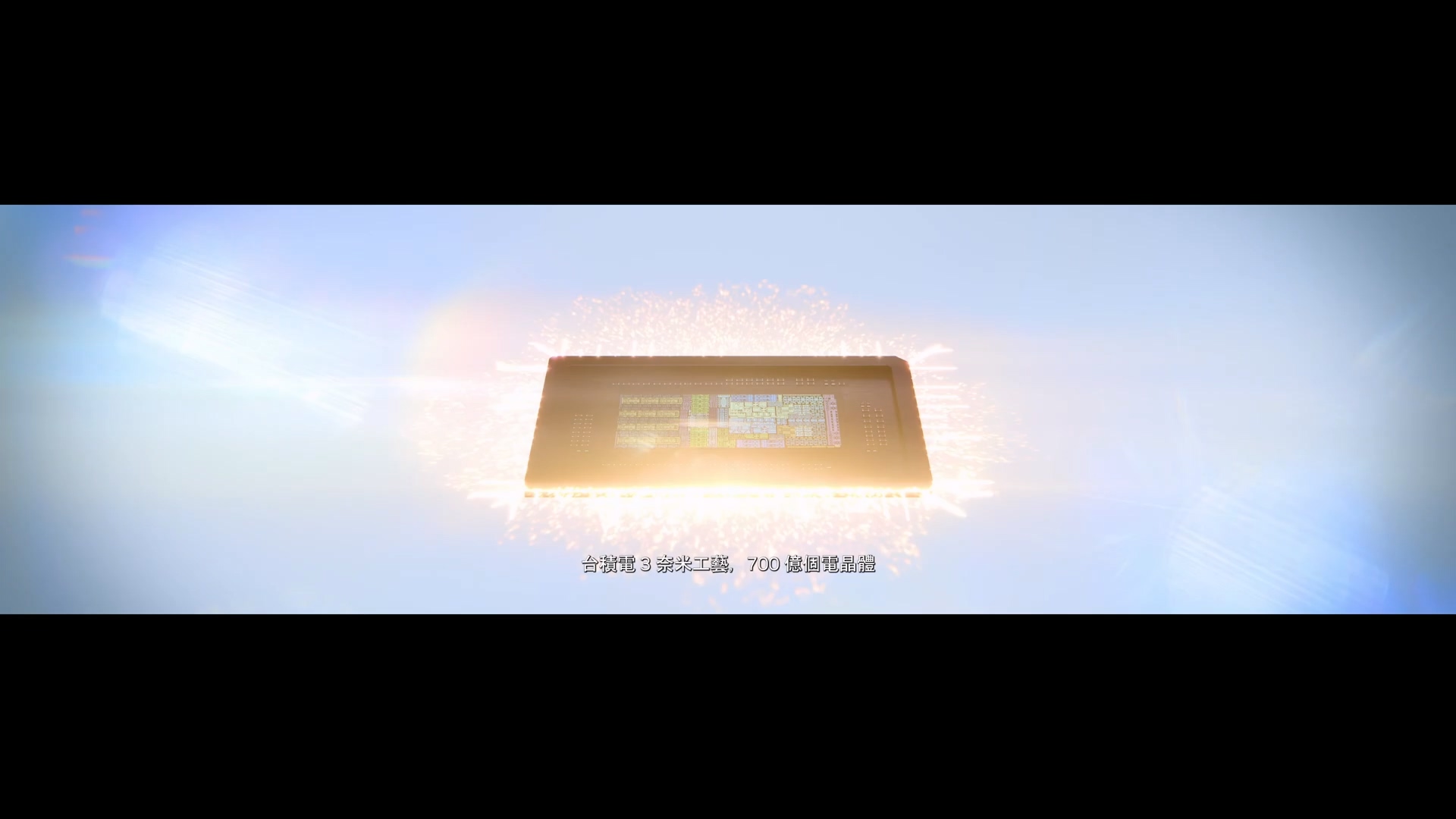
On the specs side, the RTX Spark features 6,144 CUDA cores, 1 petaflop of AI computing performance, and 128GB of unified memory. It’s built on TSMC’s 3nm process with 70 billion transistors. Jensen Huang specifically mentioned that this is the result of close collaboration with Microsoft, as both companies worked together to build a “Windows platform designed for agents.”
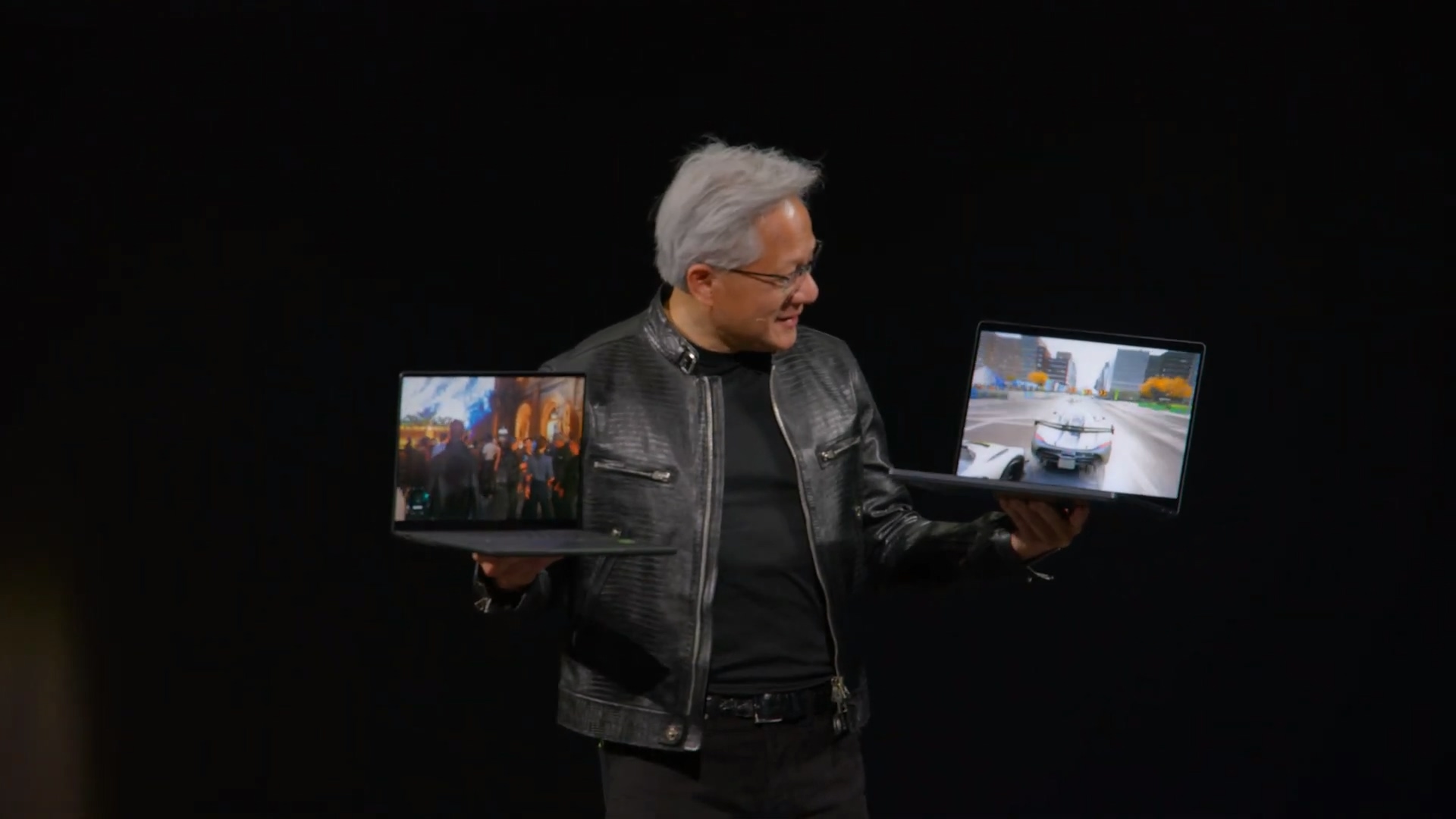
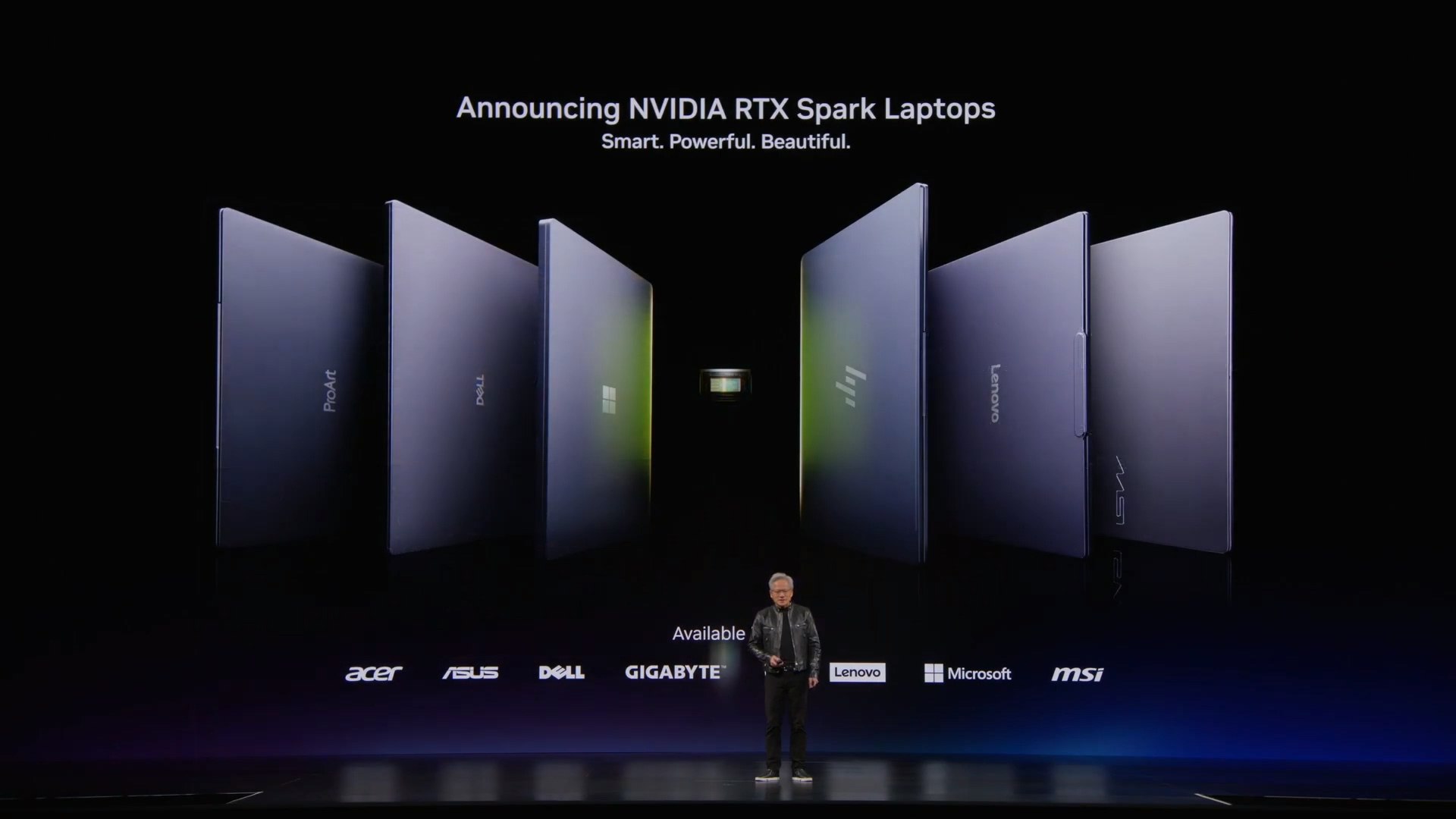
Several OEM partners showcased RTX Spark laptops and mini PCs on-site, with Jensen Huang emphasizing: “40 years later, Microsoft and NVIDIA will reinvent the PC.” The RTX Spark can locally run models like Nemotron 3 Ultra, allowing users to execute AI agent tasks directly on their laptops.
Cosmos 3The Frontline of Physical AI
Jensen Huang announced the official launch of Cosmos 3, calling it “the frontier of physical AI.” Cosmos 3 has four key capabilities: acting as a Vision Language Model (VLM) to observe the physical world, acting as a world model to generate physically accurate synthetic videos, acting as a simulator to close the policy training loop, and serving as the foundation for NVIDIA Omnidreams to predict the future frame by frame.
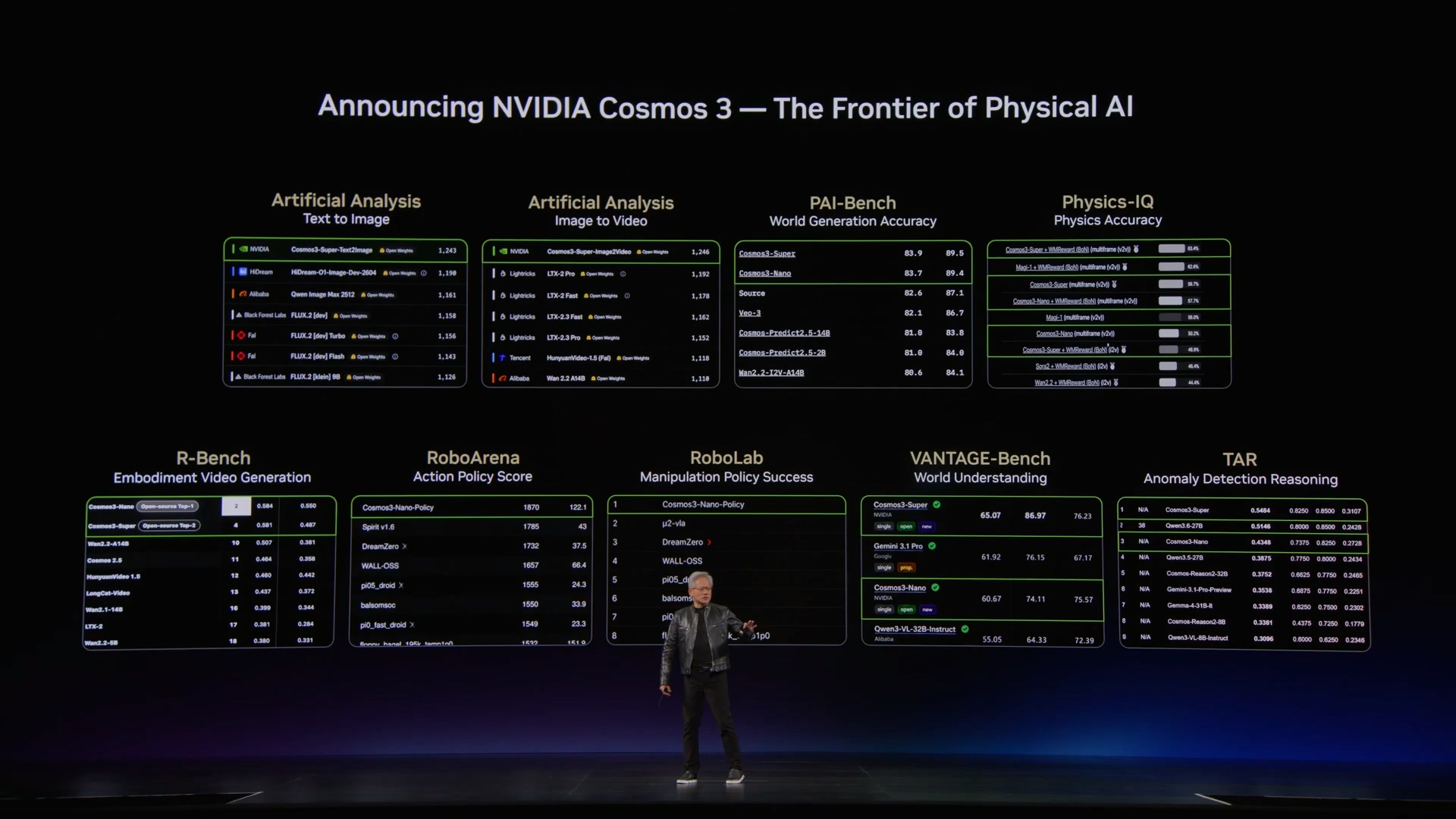
Jensen Huang pointed out that the most difficult problem with Physical AI is data—robots have a perceptual perspective different from humans, so training data must be generated from the robot’s viewpoint. Cosmos 3 was created specifically to solve this problem, and like Nemotron, it adopts an open strategy, allowing developers to fine-tune it themselves and transform it into proprietary models.
Alpamaio 2World’s first reasoning autonomous vehicle
In the autonomous vehicle space, NVIDIA has released Alpamaio 2, an open autonomous driving model. Jensen Huang called it “the world’s first reasoning autonomous vehicle.” Paired with the NVIDIA Hyperion platform and Halo operating system, Alpamaio 2 has secured adoption commitments from approximately 80% of global automotive brands.
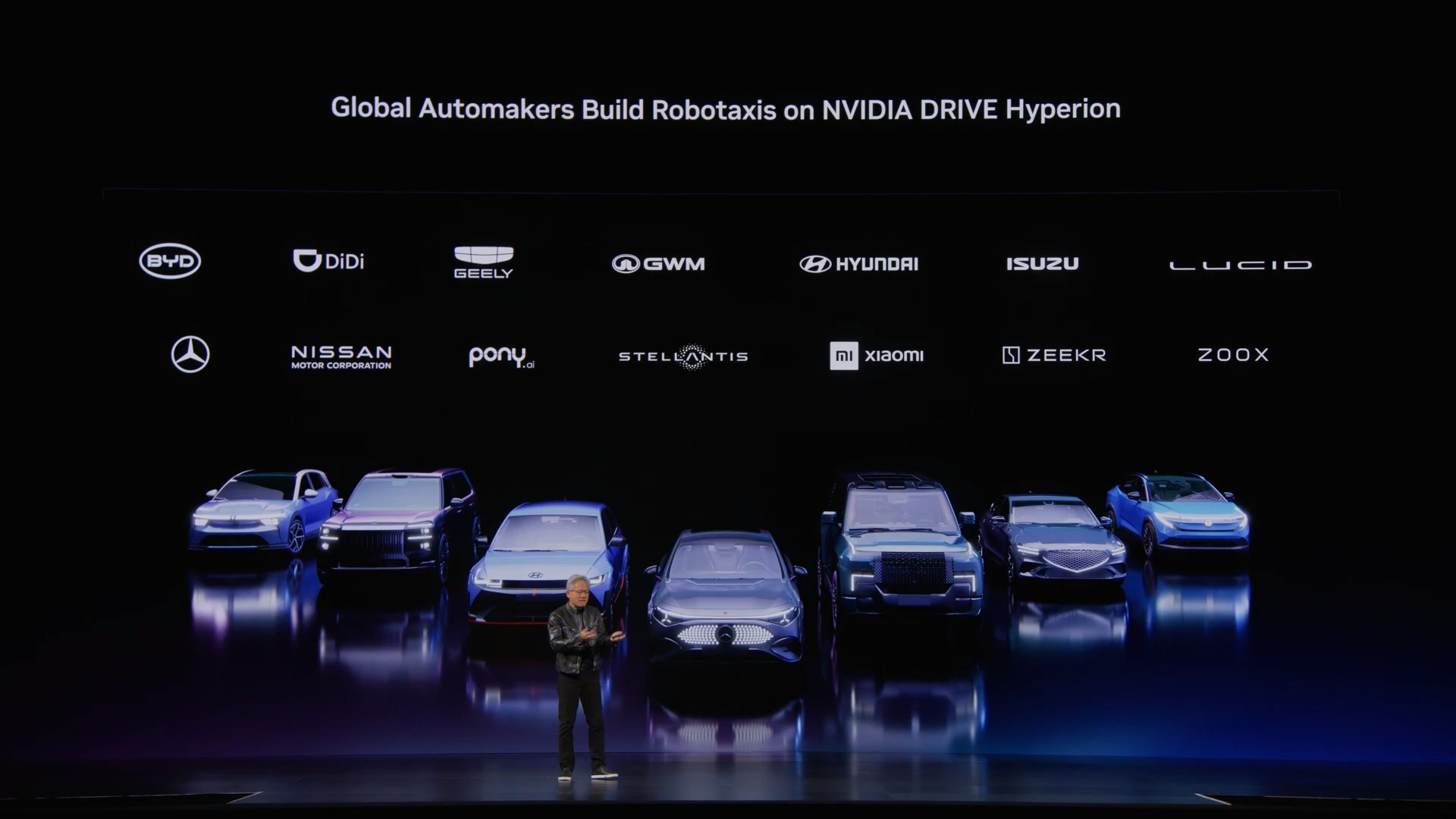
Jensen Huang compares autonomous vehicles to “physical AI agent robots,” emphasizing that their technology stack is essentially the same as cloud-based agent systems, with both requiring perception, reasoning, and planning capabilities.
Conclusion: From Token Factory to the Physical World
In his closing remarks, Jensen Huang said, “Our view of personal computers is likely to change.” He thanked Taiwan’s ecosystem partners and previewed “more to come next year.” The speech concluded with an Nvidia-themed video, with lyrics singing “This is how intelligence is made, a new kind of factory” — the core metaphor of the entire presentation.
From the mass production of Vera Rubin to the RTX Spark PC revolution, from Cosmos 3’s physical AI to Alpamaio 2’s reasoning-based autonomous vehicles, what Jensen Huang presented at GTC Taipei was a complete AI infrastructure blueprint. Taiwan is not just the starting point of the supply chain, but also a key node for AI factories going global.
Source: KOCPC Chinese