


If you’ve heard the term “Openclaw” in China’s tech circles recently, it probably isn’t referring to the dish on your dinner table, but rather to the wildly popular AI assistant “OpenClaw.” This AI tool, which originally circulated among tech enthusiasts, has recently sparked a wave of offline installation fever across China that has taken on the scale of a nationwide movement. What makes this craze unique is that it hasn’t remained confined to online discussions but has spread into the real world: free in-home installations, in-person meetups, and even the emergence of dedicated “installation” services. Does this mean that AI agents like this are gradually evolving from toys for engineers into tools accessible to the general public? And what noteworthy social signals and potential risks lie behind this craze?
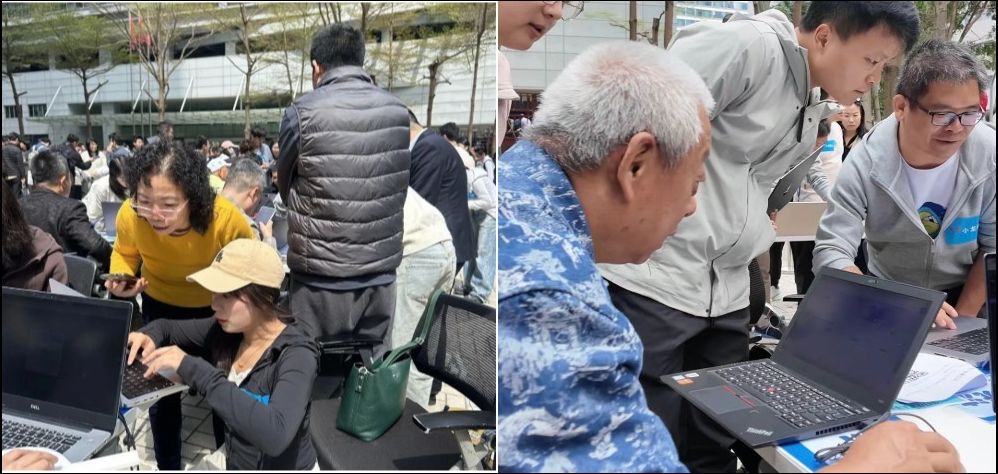
From an Engineer’s Toy to a National Craze: OpenClaw Is Taking China by Storm—Even Senior Citizens Are Using It
“A Memorable Moment in On-the-Ground Promotion in the Era of Large-Scale AI”: According to an official post by Tencent on X, a free in-home OpenClaw installation service provided by Tencent Cloud technical engineers took place in Shenzhen on March 6, 2026, attracting a significant number of participants. The on-site setup event attracted many seniors over the age of 60, ranging from retired aviation engineers to librarians, all eager to embrace OpenClaw.
The charm of #OpenClaw! 🌟
Tencent’s public setup service event drew in 60+ year-olds incredible enthusiasm! From retired aviation technical engineer to librarian, they’re looking forward to embrace AI agents. Stay curious, stay digital! pic.twitter.com/ln3Us6kmrI
— Tencent AI (@TencentAI_News) March 6, 2026
At the same time, according to a post by another X user, @nbblock, a netizen described “footage of an OpenClaw installation in Shenzhen captured by a friend” and characterized the scene as “an iconic moment of on-the-ground promotion in the era of large-scale AI”; The post has accumulated over 1.63 million views, hundreds of shares, and more than 2,000 likes.
朋友在深圳拍到的线下Openclaw装机画面😂
大型AI时代“地推”名场面。
这需求也太高了吧😂😂😂 pic.twitter.com/1QHEftRrJL
— CJ_Blockchain, CFA (@nbblock) March 6, 2026
Free Installation Isn’t Charity: Major Companies Are Competing for Market Entry
So, what’s the real motive behind this seemingly “generous” free in-home installation service? The answer is actually quite simple: given the “involution” prevalent across all industries in China, nearly every AI company is vying to capture the massive traffic and demand generated by OpenClaw. The goal of these seemingly free setup, installation, and onboarding efforts isn’t to promote OpenClaw, but rather to secure a foothold in the AI agent market among the “general public.” By first capturing a larger base of general users, these companies increase their chances of capitalizing on future API token revenue opportunities and securing a larger share of the cloud services market.
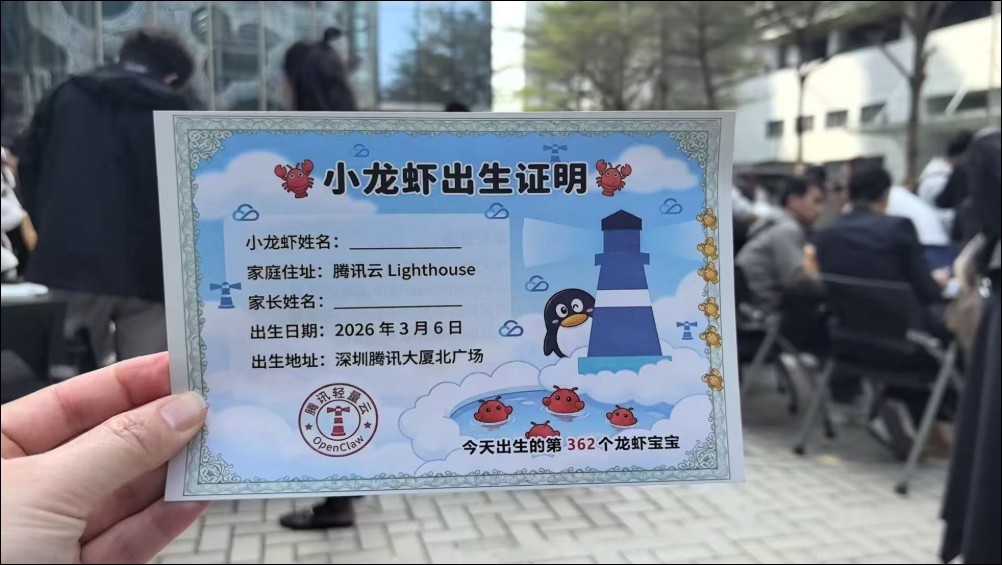
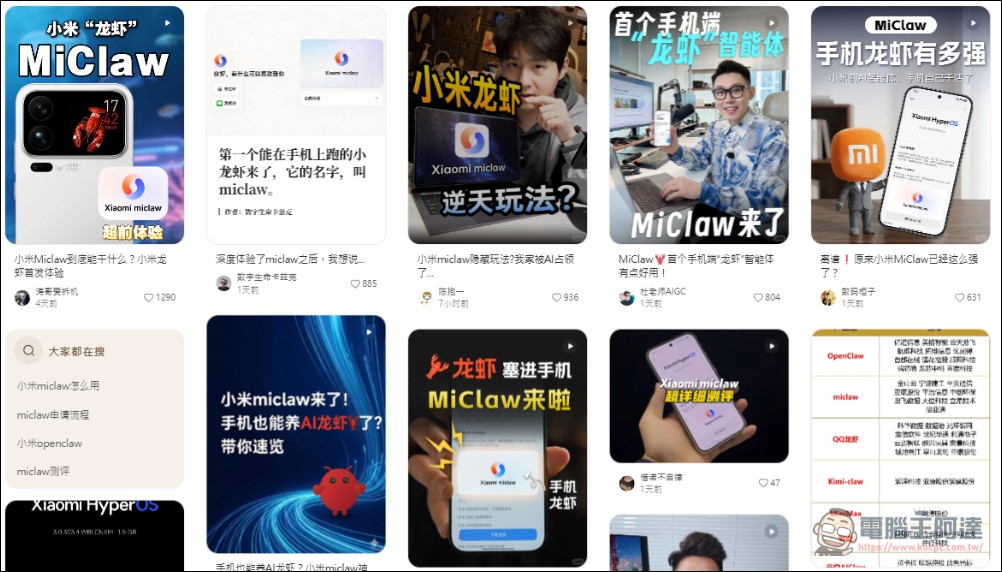
This actually closely resembles the subsidy wars of China’s early internet era: first, attract users with free or low-cost strategies to build usage habits, and then recoup commercial value through value-added services, API usage, cloud resources, or integrated services. For large cloud service providers, promoting the installation of OpenClaw, is essentially a skirmish for user acquisition and ecosystem dominance—Tencent, as a major player, has simply fired the first shot. Even smartphone manufacturers like Xiaomi have already rushed to launch the MiClaw service on their devices, and it’s likely that other major players will follow suit.
China’s startup scene is also celebrating OpenClaw
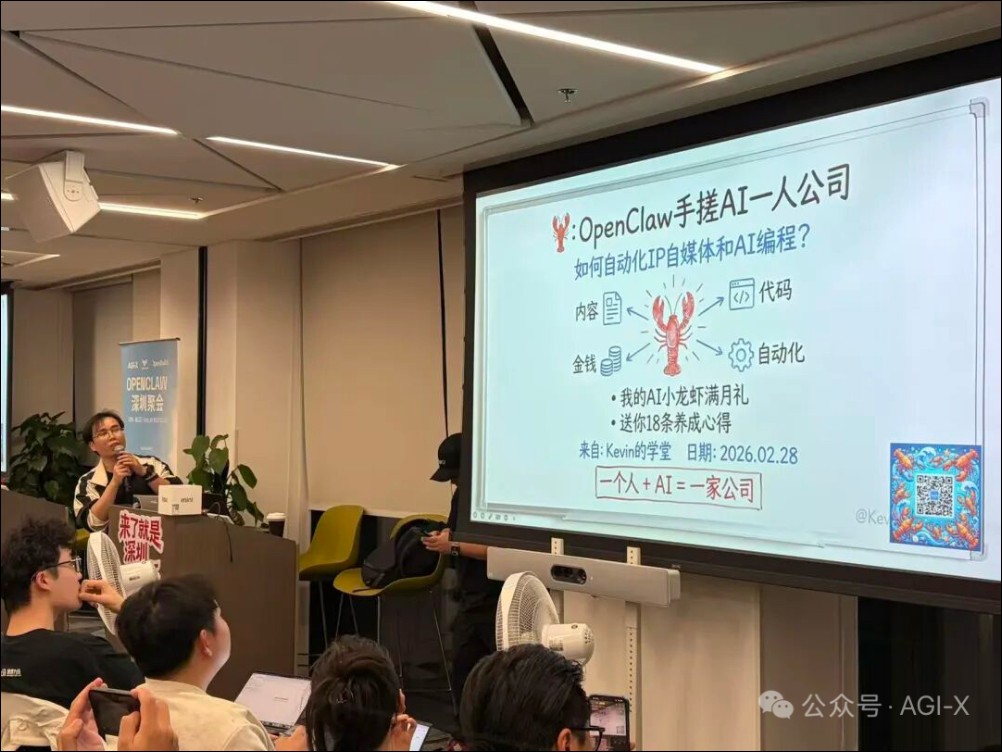
In addition to Tencent’s official events, according to ChinaLeifeng.comReports indicate that a thousand-person OpenClaw gathering was also held in Shenzhen, sparking an unprecedented surge in participation. This reflects the five major potential trends in future AI hardware that have emerged since the launch of OpenClaw, including lower barriers to entry, multi-device integration, on-premises deployment, natural interaction, and a shift toward the system’s lower layers. While these remain analytical perspectives rather than established facts, they clearly point to a direction: AI tools are shifting from the cloud to on-premises and from professional use to everyday life.
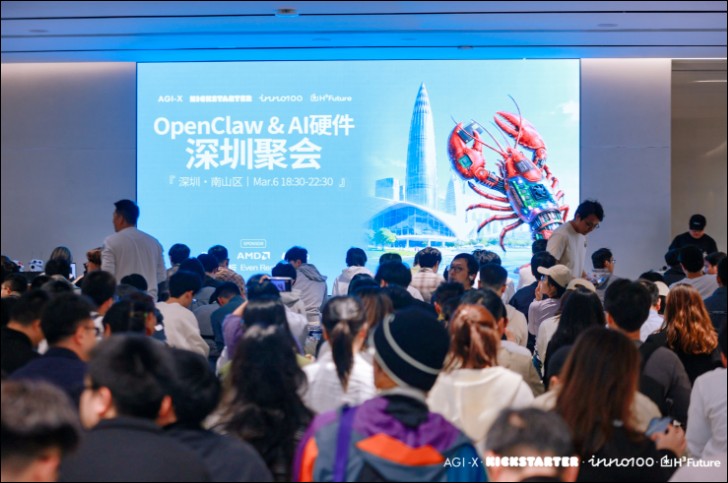
This also sends an important signal: applications like AI Agent are expanding beyond the young tech community and beginning to reach groups that were previously considered distant from new technologies. Users include not only developers, but also indie hackers, entrepreneurs, retirees, and students. Even more interestingly, some users have already begun using OpenClaw to optimize their workflows, and the Chinese community is even rife with fantasies about how OpenClaw can be used to set up a “one-person company” or “one-person business” to make money.
The Price of the Craze: Costs, Fees, and Data Risks
However, no trend is all good. First, there’s the issue of hidden costs. Some users have reported that after installing OpenClaw on Tencent Cloud, they experienced small, frequent charges without any prior notification (since OpenClaw tokens are consumed at an astonishing rate, the costs could be quite substantial without a Coding Plan). Using AI agents like this is never a “free lunch”; it involves API calls, token consumption, cloud resources, and potential opportunities for automatic renewal. Second, there are privacy and data security concerns. When using OpenClaw, it gains significant system privileges on the user’s computer—it can read files, process messages, and participate in workflows—which means that convenience and risk go hand in hand.
有网友称,腾讯云安装OpenClaw被反薅羊毛……
上午安装完,腾讯云无任何提示情况下,一直快速高频的进行小额扣费,目前扣了200多。
这个大概是因为装的时候顺道安装了腾讯云的一堆产品用来创收啊? pic.twitter.com/pWiujAgMC5
— 李志 | Rational Investing (@LZRationalnvest) March 6, 2026
Next, let’s consider the reality of the barriers to entry. Although “free on-site installation” significantly lowers the barrier to entry, the real challenge is often not the installation itself, but how to use the system afterward: how to set tasks, how to interpret model results, how to troubleshoot failures, and how to set cost thresholds. For users with absolutely no technical background, simply getting the software installed doesn’t mean they’ll actually be able to use it effectively.
Finally, there’s the issue of managing expectations. When social media is flooded with claims that “AI will change everything,” ordinary users are easily swept up in the hype. However, at this stage, OpenClaw is still best suited for structured, highly repetitive tasks; when it comes to creative judgment, complex decision-making, and contextual understanding, it remains a long way from being a truly “all-purpose assistant.” Overhyping it often only leads to disappointment later on.
Summary
From the “Openclaw Gathering” in Shenzhen to the installation services, setup videos, stories of seniors using the technology, and cost controversies that have emerged on social media, this wave of OpenClaw enthusiasm actually offers a very clear perspective: AI agents are moving beyond the insular culture of engineers and gradually entering broader, more everyday, and more complex real-world scenarios.
Will OpenClaw eventually evolve from an “engineer’s toy” into a “tool for everyone”? The key likely lies not only in the technology itself, but also in whether the entire ecosystem can effectively address the most practical issues: education, cost, safety, and user expectations. This “Openclaw Party” in Shenzhen may have looked like a lively event, but it was more like a starting point: AI Agents are moving from concept to the masses.
Source: KOCPC Chinese