


While Openclaw are in season (OpenClaw) As it swept across the globe,XiaomiThe Group also announced its latest strategy in the field of AI agents. Lei Jun, founder and chairman of Xiaomi Group, announced at a media briefing following the Spring New Product Launch Event on March 19, 2026, that Xiaomi will launch a desktop version of the “Openclaw” AI agent and simultaneously officially unveil the mobile version of “Openclaw” Xiaomi. miclaw A closed beta test officially began in early March. This system-level AI agent, based on Xiaomi’s in-house MiMo large language model, is viewed by the industry as a sign that Xiaomi is officially entering the AI agent market.
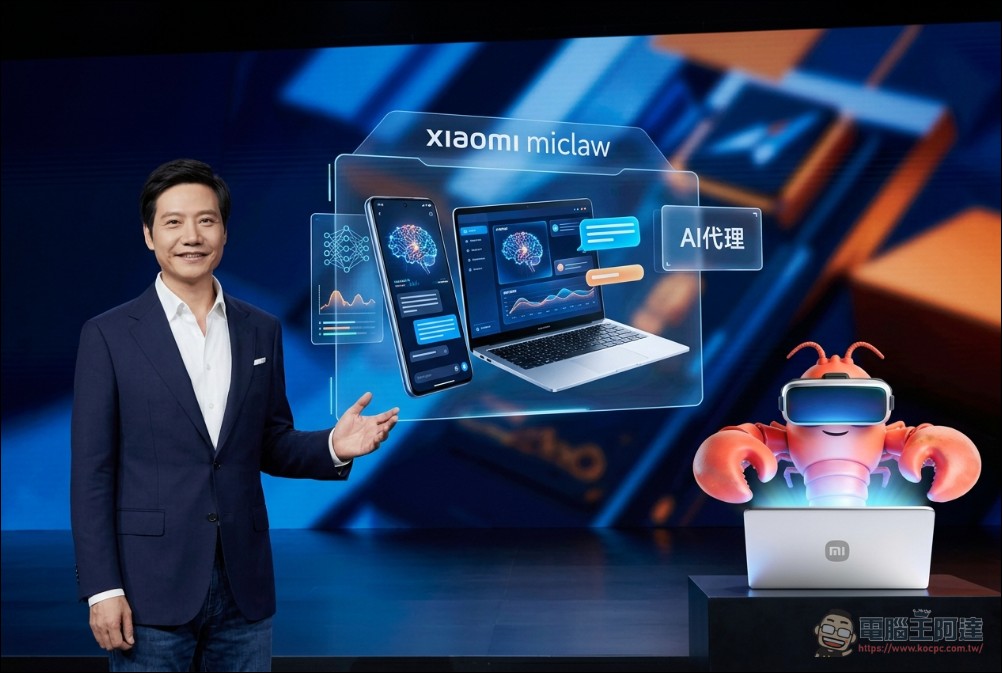
Xiaomi’s “Openclaw” Officially Launches: Xiaomi miclaw AI Agent Begins Closed Beta Testing; Plans for Desktop Version Revealed
The biggest difference between Xiaomi miclaw and traditional voice assistants is that it can directly access the phone’s underlying functions as a “system app,” rather than being limited to operating commands at the app level. miclaw employs an “inference-execution” loop architecture, enabling it to autonomously break down complex commands and complete tasks step by step. The system features a three-tier intelligent memory management system, allowing it to remember the user’s initial goal and continue progressing even when processing complex operations involving more than 20 consecutive steps.
In terms of functionality, miclaw supports over 50 system capabilities, including core operations such as reading and writing messages, creating calendar events, searching for content, launching apps, and setting up scheduled tasks. In the past, users had to perform these actions manually one by one; now, users simply need to issue natural language commands, and the AI agent can automatically complete a series of complex cross-app workflows.
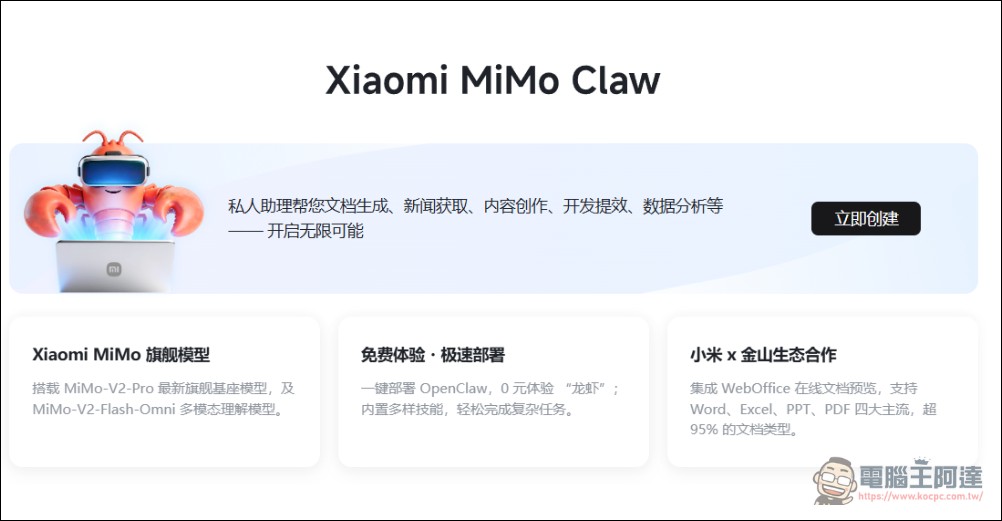
miclaw officially launched its closed beta on March 6. Initially, participation is limited to five models from the Xiaomi 17 series—including the Xiaomi 17, 17 Pro, 17 Pro Max, 17 Ultra, and 17 Ultra Leica Edition—and applications are accepted on an invitation-only basis. At the same time,Xiaomi MiMo Claw Web VersionThe official Xiaomi MiMo Studio website is now live, offering interested users an early look. It currently supports control of all home appliances in the Xiaomi ecosystem.
Four Levels of Capability: From the System’s Foundations to Self-Evolution
miclaw’s technical architecture can be divided into four major capability layers from the bottom up: system infrastructure, personal context, ecosystem connectivity, and self-evolution. The first layer, “system infrastructure,” enables the AI to directly control the phone’s core functions, which is the key factor that sets miclaw apart from typical voice assistants.
The second layer, “Personal Context,” is responsible for building a personalized model for the user. It includes a three-tier memory management mechanism that enables the AI to understand the user’s habits, preferences, and schedule, thereby providing assistance that is better tailored to the user’s individual needs.
The third layer, “Eco-Connectivity,” integrates Xiaomi’s complete IoT ecosystem. miclaw can read and control Mi Home smart devices, transforming the smartphone into the central hub of the entire smart home. It is worth noting that miclaw supports the Model Context Protocol (MCP) and an open SDK, allowing third-party apps to proactively declare their capabilities to the AI. This means the system was designed from the outset as an expandable, open architecture rather than a closed ecosystem.
The top-level “self-evolution” is at the core of miclaw’s long-term strategy: by continuously accumulating usage data and fine-tuning models, the AI agent’s performance becomes increasingly accurate over time.

Security Design: On-Premises First, Cloud Second
As a system-level tool capable of directly manipulating a smartphone’s underlying functions, security is naturally a major focus of public attention. miclaw features a comprehensive design for privacy and security: access to highly sensitive data requires explicit user authorization, while high-risk operations are subject to a 60-second confirmation countdown, allowing users to cancel any unintended actions within that timeframe. Chat history is primarily stored on the local device; the cloud is used solely to process current task commands, and the company explicitly pledges not to use this data for model training. Additionally, the system currently does not integrate payment tools to prevent the AI agent from executing financial transactions without authorization.
Lei Jun Sets the Tone: Just a Small Step; 200 Billion in Investment Over Five Years
At the media briefing on March 19, Lei Jun provided a clear yet understated framework for miclaw’s strategic positioning. He described it as merely a “small step” in Xiaomi’s exploration of agent technology. A report by Sina Finance on the same day noted that, in an interview during the launch event, Lei Jun stated that Xiaomi would soon begin developing a desktop version of “Openclaw,” with the goal of enabling users to remotely wake up their laptops and handle work tasks anytime, anywhere.
Lei Jun stated that the company will invest 200 billion yuan over the next five years to continue driving innovation in AI-related technologies. This massive investment plan far exceeds the scope of a single product like Miclaw, indicating that Xiaomi has positioned AI agents as one of the company’s core strategic directions, rather than a mere market test.
Industry Watch: Xiaomi Joins the AI Agent Race
The unveiling of miclaw has sparked heated discussion in the tech industry. Most media outlets have described the product as “OpenClaw-like,” highlighting the similarities between miclaw’s positioning as a system-level AI agent and OpenClaw, which has recently garnered significant attention in the market. However, Xiaomi emphasizes that its core architecture is built on the in-house developed MiMo large language model and is deeply integrated with Xiaomi’s existing hardware and IoT ecosystem—a key factor that sets Xiaomi apart from its competitors.
Unlike other platform-based AI assistants, which are primarily cloud-based, Xiaomi has chosen to integrate AI at the mobile operating system level, granting the AI agent direct access to control the hardware. This approach aligns more closely with the concept of a “digital twin”: users authorize the AI to perform tedious phone operations on their behalf, rather than simply providing information or responses. When integrated with Mi Home IoT devices, the AI agent on the smartphone serves as the control hub for the entire smart home ecosystem.
Future Developments: Progress on the Desktop Version and Market Strategy
Looking ahead, miclaw’s development roadmap can be examined from several angles. First is the gradual expansion of the mobile version; Lei Jun has already stated that the current closed beta is just the beginning, and as the system matures, support is expected to extend to lower-end models. Second is the specific timeline for the desktop version. Currently, Xiaomi has only stated that it “will be available soon” and has not yet announced a precise schedule. However, given the planned feature of remotely waking up laptops, deep integration with the Windows system will undoubtedly be required.
Another key development is the deeper integration of the IoT ecosystem. Miclaw currently supports Mi Home smart devices, and if it can be further integrated with Xiaomi’s broader range of hardware products—from smart wristbands to smart home sensors—in the future, it will create a comprehensive user experience centered around an AI agent.
Finally, there is the specific allocation of the 200 billion RMB investment. Observers expect that these substantial resources will be prioritized for model training, computing infrastructure, and talent recruitment. Lei Jun’s cautious remarks following the miclaw announcement also suggest that a truly mature AI agent experience will require time to refine and cannot be achieved overnight.
Source: KOCPC Chinese