


When Apple and Google used the Gemini model in Siri, it should have been a moment worth celebrating. However, the details of the cooperation between the two giants on the Gemini-enhanced version of Siri unexpectedly became a Rashomon. This AI alliance between the world’s most popular smartphone brand and the world’s largest search engine leader has been controversial since its announcement. Both parties gave completely different and vague answers to the most critical question: “Where will user data be sent?” This not only tests the public relations wisdom of the two companies, but also directly challenges the bottom line of trust in privacy protection for billions of iPhone users around the world.
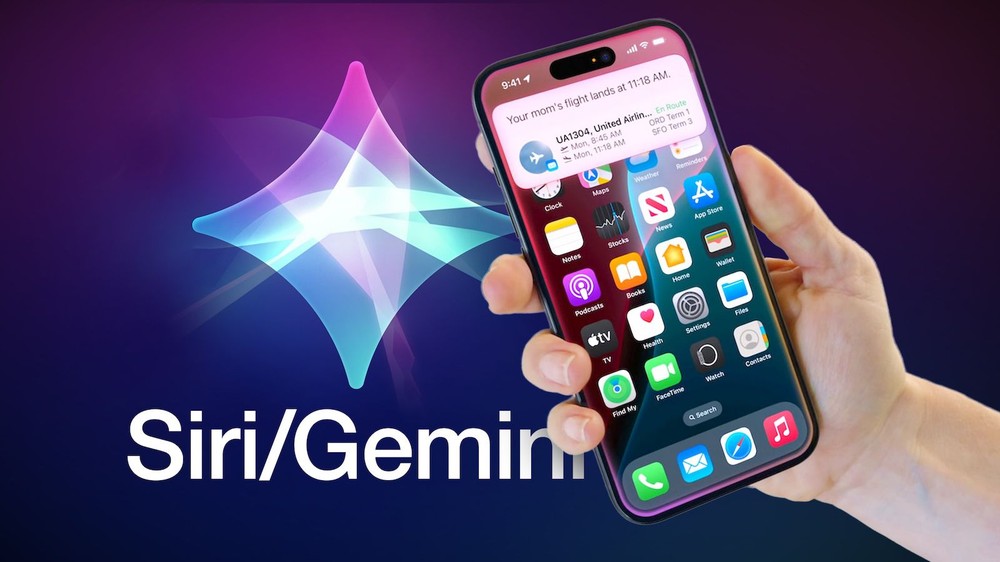
Google Gemini and Apple Siri cooperation confirmed doubts
Back in mid-January 2026, Apple officially confirmed that it would use Google’s Gemini technology to drive some of the AI functions of the new version of Siri. This announcement immediately triggered widespread discussion in the technology industry. After all, this is a rare cooperation between two companies that have long been in competition in many fields. However, along with this announcement comes a more core and sensitive issue: where will the user’s voice commands, personal information, and conversation content be sent for processing?
For years, Apple has been known for its “privacy first” brand image. In the smartphone market, Apple is the only brand that can stand in sharp contrast to Google in terms of user privacy protection. Google’s core business model essentially relies on the collection and monetization of user data, which makes Apple users highly wary of any cooperation that may involve sending data to Google servers. Apple’s initial official statement attempted to allay these concerns, stating that “after careful evaluation, we have determined that Google’s technology provides the strongest foundation for Apple Foundation Models, and we are excited about the innovative experiences it will unlock for users.” However, this statement said nothing about the most critical issue of data flow.
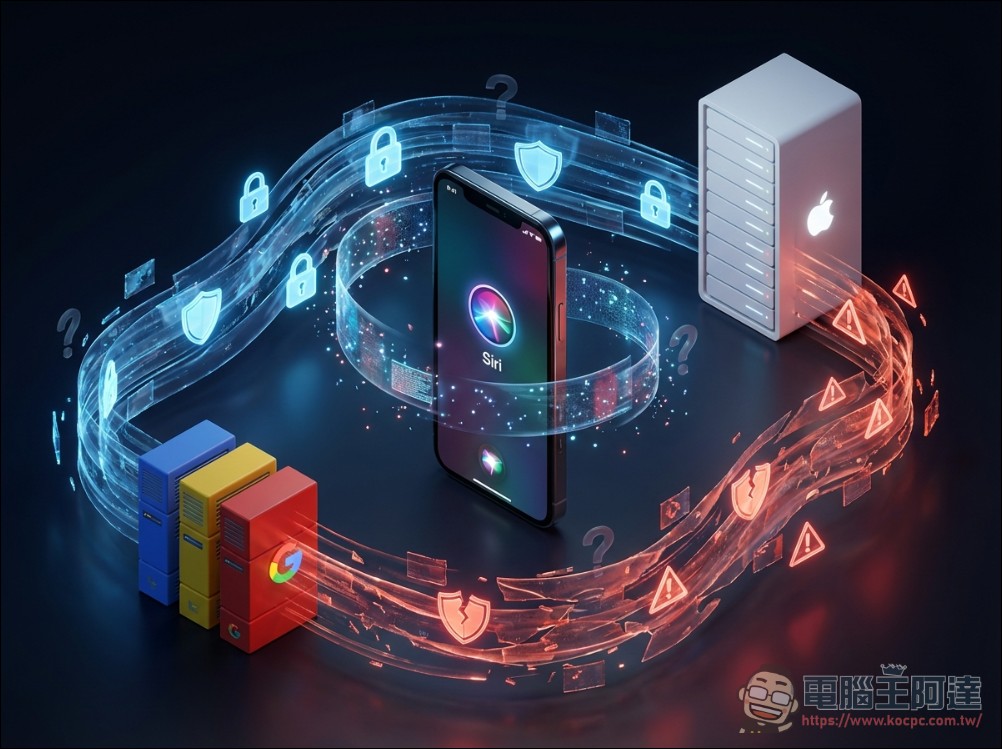
Private Cloud Compute: Apple’s privacy moat
To understand the heart of this controversy, we need to understand the significant infrastructure Apple has built in recent years for AI processing in the cloud. Private Cloud Compute (PCC) is Apple’s cloud infrastructure designed to handle AI tasks that exceed device computing capabilities. The core design concept of this system is that even if the data must leave the user’s iPhone or Mac, it must at least remain on Apple’s own servers and not be sent to any third-party platform. Apple officially positions PCC as the “industry-leading privacy standard” and emphasizes that when user data needs to be uploaded to the cloud for inference, PCC can ensure that this data will not be misused or accessed without authorization.
According to Apple’s official statement, both the existing Apple Intelligence function and the upcoming Siri update should in principle run in one of two environments: the local processor on the user device, or Apple’s own PCC cloud architecture. This design allows Apple to deliver powerful AI capabilities while maintaining its ongoing commitment to privacy. However, when Gemini was introduced to the AI landscape, cracks began to appear in this seemingly perfect privacy equation.

Bloomberg blasts: Google server suspicions
Just a few days after Apple announced its cooperation with Google, the authoritative technology media Bloomberg published an in-depth investigative report, revealing the possible other side of this cooperation. According to an exclusive report by Bloomberg, Apple and Google are actively discussing a highly controversial plan: to host the core chatbot functions of the new version of Siri directly on Google servers equipped with powerful TPU (Tensor Processing Unit). This means that the user’s Siri voice commands and conversation content may be sent to servers located in Google data centers for processing, rather than the PCC environment that Apple has always emphasized.
Bloomberg’s report also pointed out that this “dual-track” deployment strategy may be carried out in stages. Recent Siri updates may still run on Apple’s own PCC environment, but more ambitious AI feature upgrades may be moved to Google’s cloud infrastructure at a later stage. This statement adds more uncertainty to the entire cooperation project, and also makes users unable to get a clear answer to the question “Who will see my Siri conversations?”
Tim Cook’s vague statement
During Apple’s 2025 fourth-quarter earnings call, CEO Tim Cook gave an intriguing response to analysts’ pointed questions about this collaboration. When analyst Ben Reitzes asked Apple why it chose to cooperate with Google and whether there were opportunities to “share revenue,” Cook said: “We are basically certain that Google’s AI technology will provide the strongest foundation for Apple Foundation Models. We believe that through this cooperation, we can unlock many experiences and innovate in key ways. We will continue to run on the device and run in Private Cloud Compute while maintaining industry-leading privacy standards. As for the details of the cooperation with Google, we will not disclose it to the public.”
On the surface, this statement reaffirms Apple’s commitment to privacy protection, but upon closer inspection, it will be found that Cook’s statement of “continuing to run on the device and PCC” seems to refer to other Apple Intelligence functions, rather than the part directly related to Gemini cooperation. This deliberately vague statement has made speculation about the actual running location of Gemini version of Siri even more heated.
Additional notes from Sundar Pichai
During Alphabet’s (Google parent company) earnings call that same quarter, Chief Executive Sundar Pichai’s prepared remarks added a new layer to the mystery. Pichai said: “We are working with Apple as their preferred cloud provider and developing the next generation of Apple Foundation Models based on Gemini technology.” [1] Moments later, Chief Commercial Officer Philipp Schindler made an almost identical statement. These two statements from Google executives clearly position Google as Apple’s “preferred cloud provider.” This forms a subtle but obvious contrast with the “autonomous and controllable” image that Apple has always emphasized.
Piecing these pieces together, a possible truth gradually emerges: Tim Cook’s statement of “running on the device and PCC” may only apply to the upcoming Siri feature update, not the upcoming “next generation Apple Foundation Models.” The real Gemini version of Siri—the AI chatbot that can conduct complex conversations, process long texts, and understand deep semantics—is likely to run on Google’s TPU servers, but the two parties are still negotiating when and how to announce this arrangement.
In this information tug-of-war, Bloomberg’s Mark Gurman, an authoritative reporter who has long tracked Apple’s dynamics, continues to play the role of breaking the casserole and asking the truth. Shortly after the earnings meeting, Gurman posted on his personal
The difference may be Apple is considering Siri and Apple Intelligence 2 different things. Apple servers for non-Siri features + Google servers for new Siri features. The last thing Apple wants is to hurt its privacy stance, which is its only (albeit irrelevant) differentiator. https://t.co/V7pj2KWbR2
— Mark Gurman (@markgurman) February 4, 2026
Gurman’s report further reveals a key possibility: Apple may be playing a subtle PR game by treating “new Siri” and “Apple Intelligence” as two independent systems running on different infrastructure. In other words, the core functions of Apple Intelligence – those AI capabilities that are deeply integrated with iOS, can understand the content of the user’s screen, and provide personalized recommendations – may indeed continue to run on the device and PCC, as Cook said. However, Siri, a chatbot like ChatGPT that specializes in complex conversations, may be outsourced to Google Cloud. This “eat two things with one fish” strategy not only allows Apple to maintain its brand image as a privacy top student, but also brings the industry’s top conversational AI capabilities to users in the shortest possible time.
The core contradiction of the privacy controversy
The essence of this storm is actually a concrete manifestation of a deep-seated contradiction. When Apple users choose to buy an iPhone, they pay not only the hardware cost of a smartphone, but also a set of privacy promises that “my data belongs only to me.” However, when the AI era arrives, when the tasks that mobile phones need to handle become more and more complex, and when device-side chips alone can no longer meet users’ expectations for a “real smart assistant,” this promise begins to face the test of reality.
Google Gemini is recognized as one of the most powerful AI models currently available on the market, and this is an undeniable fact. If Apple chooses to develop its own conversational AI that can compete with Gemini, it will not only need to invest huge R&D resources, but it will also take several years to catch up with Google’s accumulation in this field. Cooperating with Google is undoubtedly a shortcut for iPhone users to experience top AI capabilities as soon as possible. However, the price of this shortcut is that user data may have to leave Apple’s control circle and enter Google’s cloud ecosystem.
It’s a big brand image gamble for Apple. Over the years, Apple’s marketing strategy has relied heavily on the differentiated selling point of “privacy protection.” From the classic advertising line “What happens on your iPhone stays on your iPhone” to the annual “Privacy Report”, Apple has successfully established the image of “the most privacy-focused technology company” in the minds of consumers. Now, that image may be facing its toughest challenge yet.
The mystery yet to be revealed
So far, neither Apple nor Google have been willing to make a clear official statement on where the Gemini version of Siri will actually run. There may be multiple considerations behind this deliberately vague attitude. First, the two sides may still be negotiating the final details of the collaboration, including how data will be transferred, how it will be stored, and who will have access to it. Secondly, the technical architecture involved in this cooperation may be more complex than outsiders imagine, and cannot be summarized by a simple “where it runs.” Third, any early exposure before an official announcement is likely to trigger a backlash from user privacy advocates.
However, paper cannot cover the fire after all. As fall approaches, Apple will have to detail the full scope of this collaboration to users around the world at some point. By then, no matter what the answer is, it will have a profound impact on the privacy standards of the smartphone industry, user trust, and the business model of AI services. In this era where AI capabilities determine product competitiveness, how Apple strikes a balance between “giving users the best AI experience” and “protecting user privacy” will be a key decision that determines the fate of this technology giant in the next decade.
Source: KOCPC Chinese