


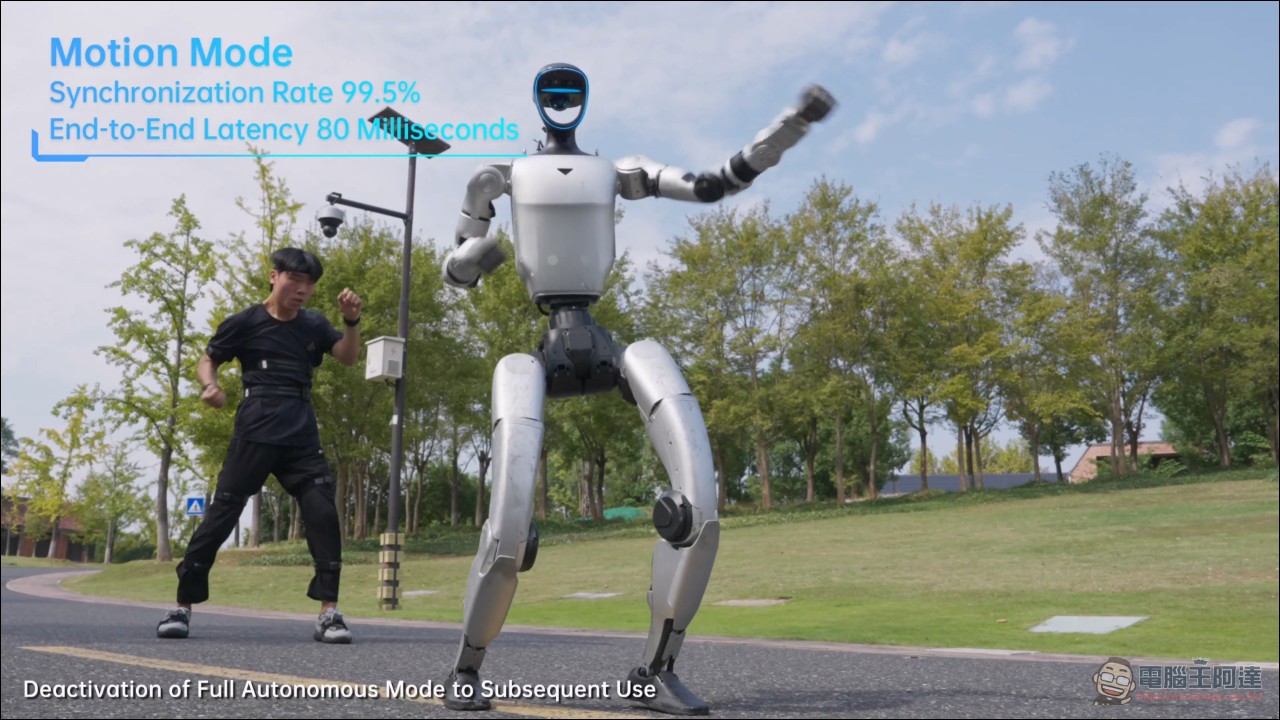
The plot in the movie “Real Steel,” where robots imitate human movements to box, may soon become reality. China’s Unitree Technology (Unitree) recently released an official video unveiling its third-generation full-body teleoperation system. Embodied Avatar V3.0 GuardianThe official materials tout two figures:Highest synchronization rate 99.8%、Minimum end-to-end latency of 80 milliseconds.Humanoid robots can fully replicate human movements in real time with extremely low latency.
How does the official do it?
What the operator is wearing isStrap with sensorStrapped to the arms, legs, and torso, plus a pair of haptic gloves to reproduce finger movements. The system maps the person’s movements onto the robot in real time; the demo uses Unitree’s own G1. In addition to fully autonomous mode, this real-time full-body teleoperation is another route officially promoted by the company, targeting complex remote operations and data collection. The movements the robot performs in the video include boxing, running, and stunts, and even subtle finger movements are replicated.
The numbers need to be broken down and looked at separately.
Unitree officially also providedTwo operating modes, the specifications are separate:
Standard Modewith a latency of about 100 milliseconds and a motion synchronization rate of 99.8%;Dynamic ModeLowering the latency to 80 milliseconds drops the sync rate to 99.5%. The documentation’s “maximum sync rate 99.8%” and “minimum latency 80 milliseconds” refer to these two modes respectively.Respective best values, they will not occur at the same time. To get 80 milliseconds, you have to accept 99.5% synchronization; to get 99.8% synchronization, you have to accept 100 milliseconds. In addition, UnitreeThe method used to calculate these figures has not been disclosed.。
More than just a remote control
Unitree positions this system asData collection pipeline, not just a remote-control tool. This is technically significant. Humanoid robot control policies require demonstration data that matches the target robot’s physical structure. With video-based imitation learning, researchers must remap human movements onto robots with different proportions, joints, and actuator limits; simulated environments also diverge from reality in contact, friction, and object behavior.
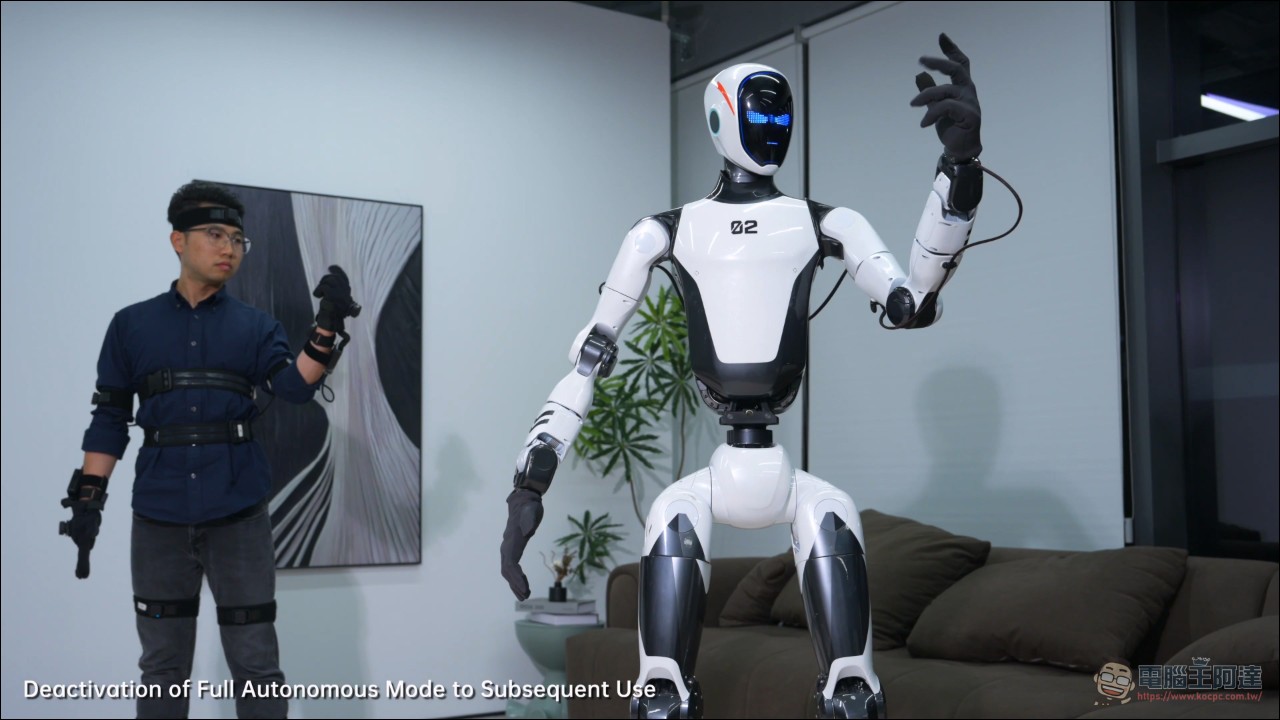
Teleoperation, by contrast, can directly record commands and sensor observations on the physical robot. As long as the logging system synchronously saves joint states, actions, camera images, force readings, and task outcomes, each operator work session becomes a training trajectory that conforms to G1’s actual constraints.
The officially listed application scenarios include: expert demonstrations, recovery data from failure states, remote inspection or hazardous tasks, performance comparison against autonomous policies, and variability for expanding datasets.
The robotics company Unitree has released a video about their full-body teleoperation platform. A more primitive version of what was shown in movies like Surrogates or Real Steel. The robot will either move like the human operator in real time or learn to copy the movements.
byu/MilesLongthe3rd inDamnthatsinteresting
Can it be used now?
What is currently visible isOfficial showcase videoIt was not a product launch. Unitree did not announce a release date, price, licensing terms, or hardware requirements. Developers who want to evaluate this system can currently only infer from the video and official specifications, and will need to wait for Unitree to provide testing methods and integration details.
Source: KOCPC Chinese