


News about Intel’s next-generation desktop processors has really been coming in wave after wave lately. Not long ago, the model names and core configurations of the Core Ultra 4000 series leaked, and this time even the clock speeds and L3 cache capacities have been exposed as well. The most closely watched is undoubtedly the flagship Core Ultra 9 4970K BFC, which has 28 cores, a maximum of 5.5GHz, and L3 cache increased directly to 144MB. Judging from these specs, Intel is clearly aiming to go head-to-head with AMD’s X3D processors in gaming performance with this generation.
There are only two or three months left until the expected launch, so anyone planning to upgrade their computer early next year may want to wait and see what good stuff Intel can deliver this time.

Specifications for seven Intel Core Ultra 4000 series processors have leaked! The flagship Ultra 9 4970K BFC has 28 cores, 5.5GHz, and up to 144MB of L3 cache.
Intel’s next-generation desktop processors, Nova Lake-S, are expected to adopt the “Core Ultra 4000 Series” naming, and this leak comes from foreign media. VideoCardzThey obtained C1 stepping validation sample data, listing a total of 7 first-wave processors, including 3 Ultra 9, 2 Ultra 7, and 2 Ultra 5 models, with core counts from 22 to 28 cores, a maximum clock speed of 5.5GHz, L3 cache up to 144MB, and the entire series supports DDR5-8000 memory.
However, it is worth noting that the document also states that Intel may adjust clock speeds and performance before shipping. That said, validation samples are usually already very close to the final retail version, so if this information is accurate, the official launch specifications should not differ much.
The specifications of the 7 processors leaked this time are as follows:
| Model | Core count (P+E+LPE) | L3 cache | P-Core Base / Max Clock | E-Core maximum clock speed | Base power consumption |
|---|---|---|---|---|---|
| Core Ultra 9 4970K BFC | 28(8+16+4) | 144MB | 3.3/5.5GHz | 4.6GHz | 125W |
| Core Ultra 9 4950K | 28(8+16+4) | 36MB | 3.4/5.4GHz | 4.6GHz | 125W |
| Core Ultra 9 4900 BFC | 22(6+12+4) | 120MB | 2.0/5.3GHz | 4.3GHz | 65W |
| Core Ultra 7 4870K BFC | 24(8+12+4) | 144MB | 3.2/5.2GHz | 4.4GHz | 125W |
| Core Ultra 7 4850K | 24(8+12+4) | 36MB | 3.5/5.2GHz | 4.4GHz | 125W |
| Core Ultra 5 4650K | 22(6+12+4) | 30MB | 3.6/5.1GHz | 4.3GHz | 125W |
| Core Ultra 5 4650KF | 22(6+12+4) | 30MB | 3.6/5.1GHz | 4.3GHz | 125W |
A while ago LC Tech Leaks These 7 models had already leaked on X, but at the time only the core configurations were available, without clock speeds or cache capacities; this time the missing parts have been filled in.
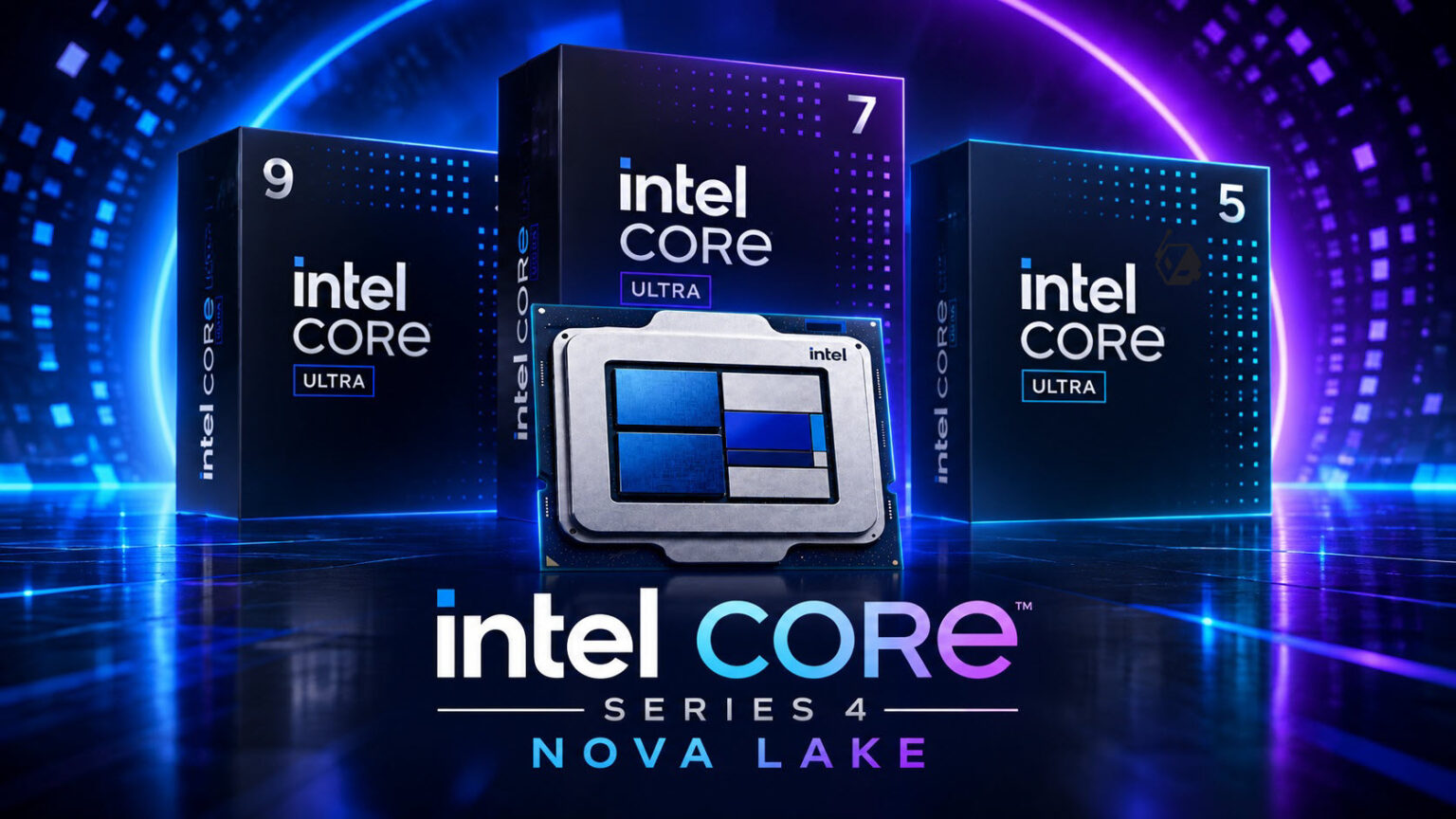
Image source: Wccftech
First, let’s look at the flagship Core Ultra 9 4970K BFC processor. It has 8 P-Cores, 16 E-Cores, plus 4 low-power LPE-Cores, for a total of 28 cores. The P-Core base clock is 3.3GHz with a maximum of 5.5GHz, the E-Core maximum is 4.6GHz, and the base power is 125W. The biggest highlight is, of course, the 144MB L3 cache.
Meanwhile, the Core Ultra 9 4950K, also with 28 cores and 125W, has only 36MB of L3 cache—a 4x difference—and the clock speed differs by only 0.1GHz. In other words, the main difference between the BFC version and the standard version is cache capacity.
However, Intel has not yet confirmed what BFC actually stands for. Foreign media generally believe BFC is used to denote the large-cache version, and HotHardware even jokingly guessed that it is short for Big F-ing Cache.

Image source: Wccftech
The benefits of a large cache for gaming performance probably don’t need to be repeated here. AMD’s Ryzen 7 9800X3D relies on 3D V-Cache to push L3 to 96MB and has consistently beaten Intel in gaming performance. This time, the 4970K BFC’s 144MB is already more than the 9800X3D’s, but whether it can actually translate into game frame rates still requires real-world testing to know.
The other models also have noteworthy aspects. The Core Ultra 7 4870K BFC has only 8P+12E+4LPE for a total of 24 cores, but its L3 cache is still 144MB, the same as the flagship; forum users also noticed that this matches the data leaked by Jaykihn in August.
The Core Ultra 9 4900 BFC, meanwhile, is the only 65W model among the seven, with 6P+12E+4LPE for a total of 22 cores, 120MB L3 cache, a P-Core base clock of only 2.0GHz and a max clock of 5.3GHz. Its model name also lacks a K, so it does not support overclocking.
As for the Core Ultra 5 4650K and 4650KF, their specs are exactly the same: both have 22 cores, 30MB L3 cache, and a maximum clock speed of 5.1GHz. The only difference is that the 4650KF lacks integrated graphics. Compared with the current Core Ultra 5 245K, which has only 14 cores (6P+8E), this generation’s entry-level K series has 8 more cores.
However, it’s worth noting that the clock speeds of the next-generation Intel Core Ultra 4000 series won’t necessarily be higher than current ones. For example, the current Core Ultra 9 285K has a maximum clock speed of 5.7GHz, while this flagship is only 5.5GHz. Also, a few weeks ago, a leak indicated that Nova Lake-S will limit its maximum core clock to 5.1GHz when temperatures exceed 90°C.
These 7 processors are all expected to support DDR5-8000, up to 256GB of memory, and provide 24 CPU PCIe lanes.
In terms of other specifications, the built-in NPU compute power may be 77 TOPS, the integrated GPU clock speed ranges from 2.9 to 3.1 GHz depending on the model, and video decoding also supports VVC, DNx, XAVC, JPEG-XS, as well as the AV1 High and Professional profiles.
As for the launch timing, Intel CEO Lip-Bu Tan previously mentioned at an earnings call that Nova Lake is Intel’s first consumer product using the 18A-P process, and said more information would be shared at CES in January. It is currently rumored that Intel plans to hold a launch event in late February 2027 in Berlin, Germany, while motherboard manufacturers may showcase compatible motherboards as early as CES 2027 in January.
Source: KOCPC Chinese