


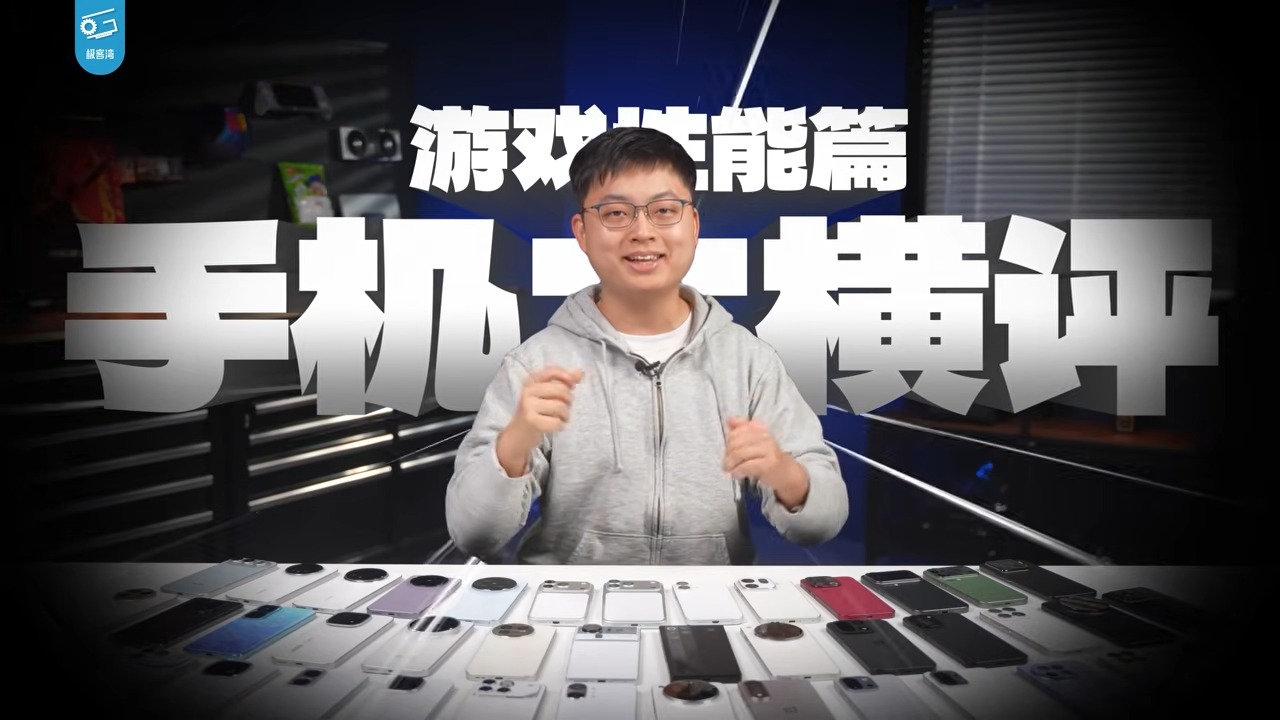
Technology review channel Geekerwan recently released its annual mobile game performance review. The host Yunfei conducted a comprehensive game test on current mainstream flagship mobile phones using 44 self-purchased retail machines with no ads. This is the first chapter of the channel’s fourth annual review project (Game/Battery/Image/Fluency). The content covers multiple dimensions such as game frame rate, power consumption, touch delay and audio delay. It also directly names and exposes the “cheating” behavior of media machines from various manufacturers, triggering widespread discussion.
Media machine cheating mechanism: Specially selected chips + special adjustment strategies have become the norm in the industry
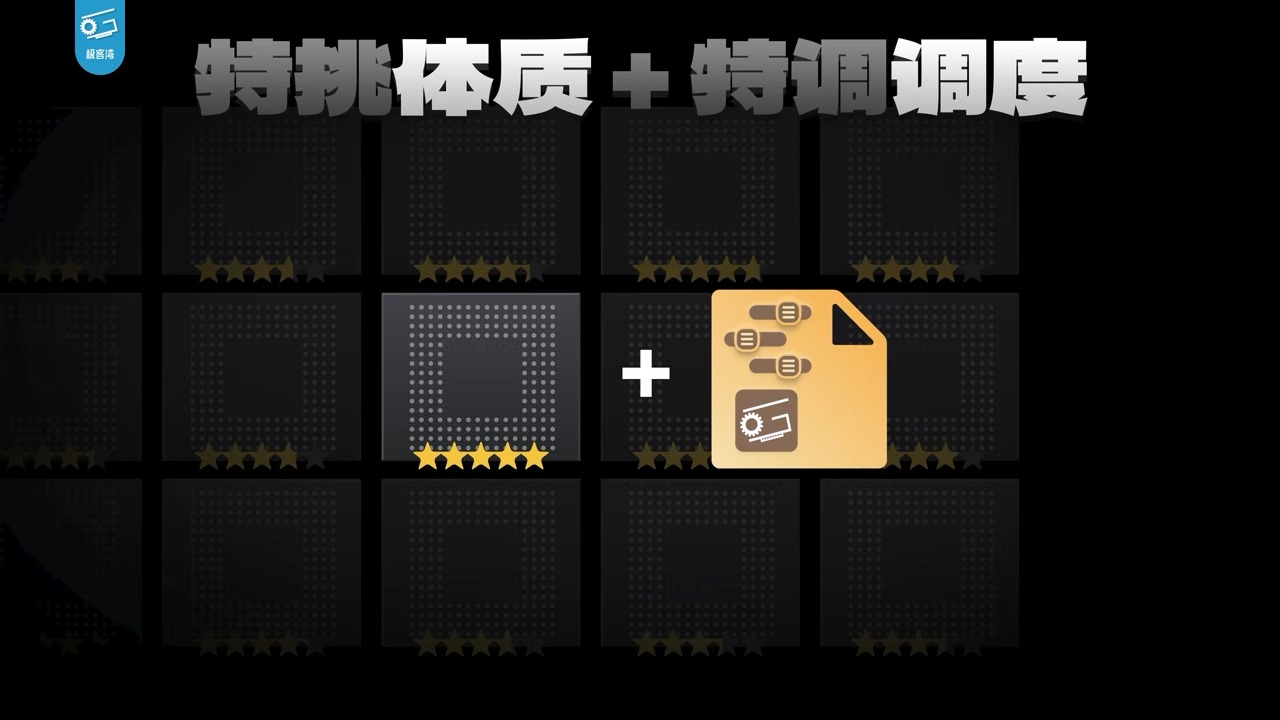
At the beginning of the video, Yunfei clearly explains the scale and principles of this Hengping review: 44 retail machines were all purchased at their own expense, excluding all manufacturer sponsorships and advertising cooperation. He deeply analyzed the cheating mechanism of media machines commonly used by Android manufacturers: the so-called “special selection+special blend”, that is, manufacturers select chips with better quality from the production line, and then push exclusive scheduling strategies to the media machines sent for testing.
Especially in the context of the “toothpaste-squeezing” generation of Snapdragon 8 Elite 5 (8E5) and Dimensity 9500, it is almost impossible for retail machines to open up a significant gap with the previous generation without cheating. Different from previous years, he announced that this year he would no longer use the anonymous “Model A/Model B” designations, but directly name the specific manufacturer and model.
The differences between each manufacturer’s media machine vs. retail machine are named one by one.
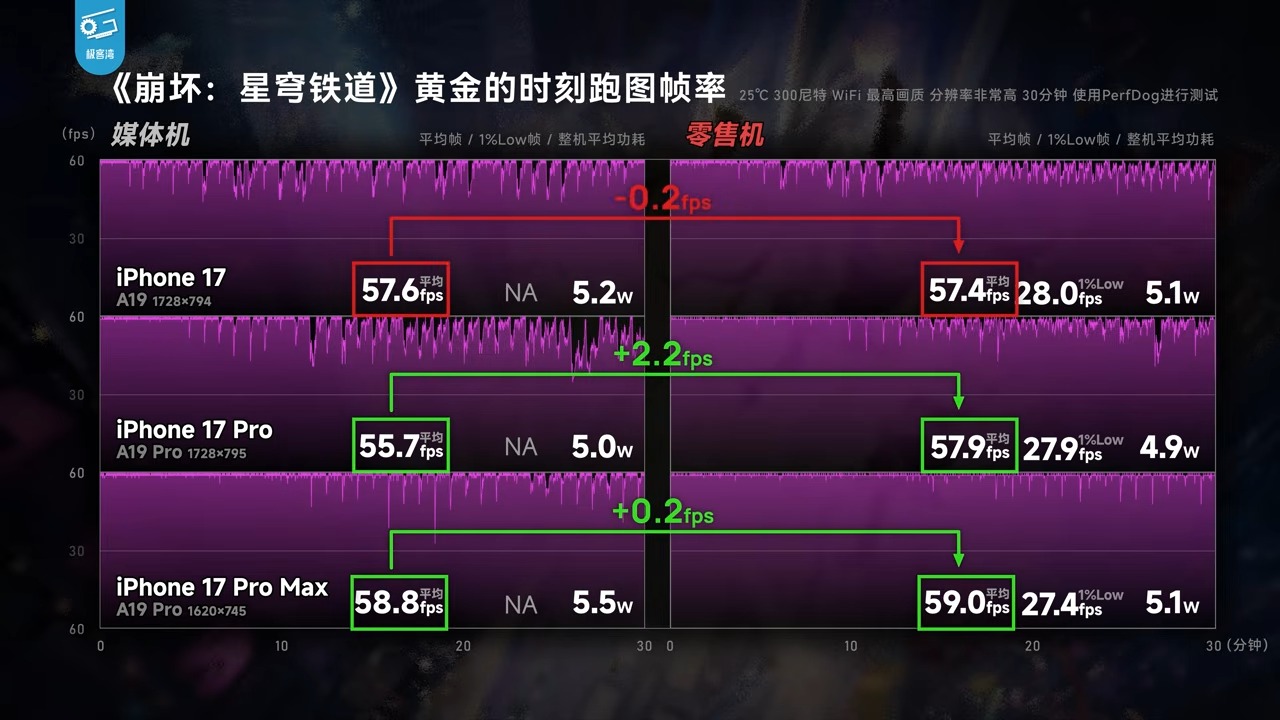
Apple (the only manufacturer without special adjustments):Apple is one of the very few manufacturers that has not made special adjustments to media machines. The continuous optimization of iOS 26.x has even made retail machines perform better than or equal to media machines, which is a clear trend in the industry.
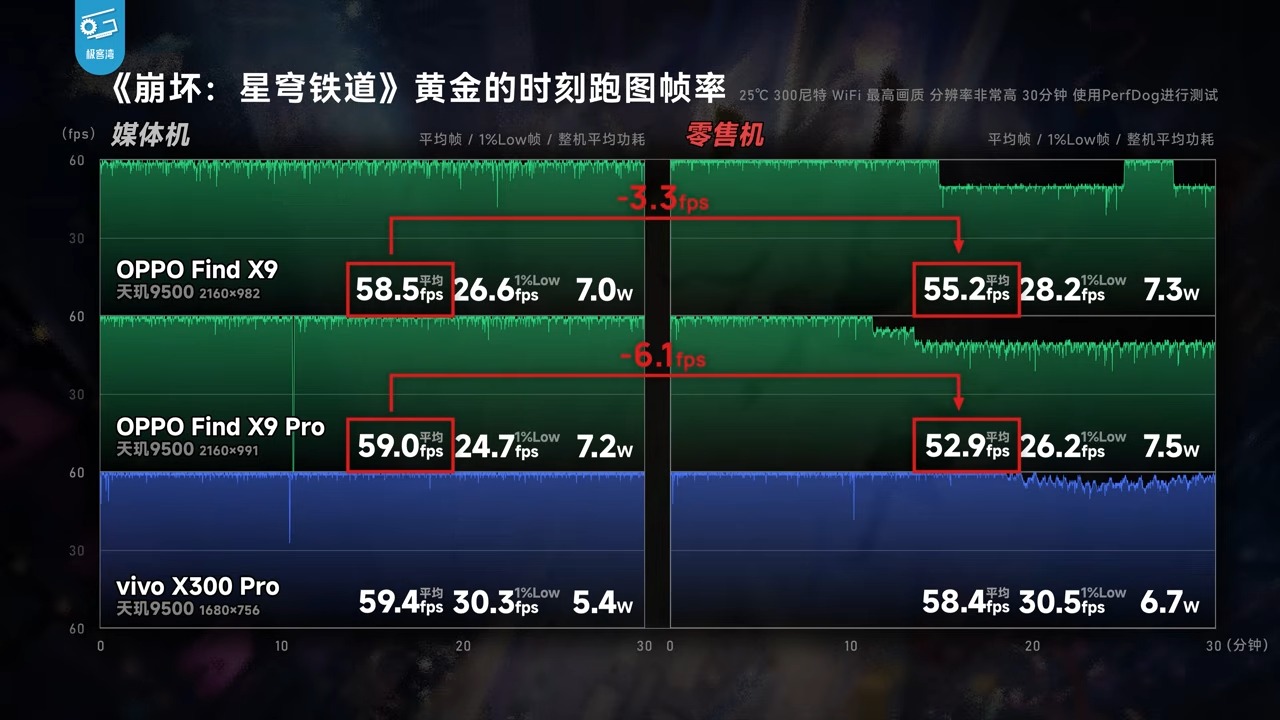
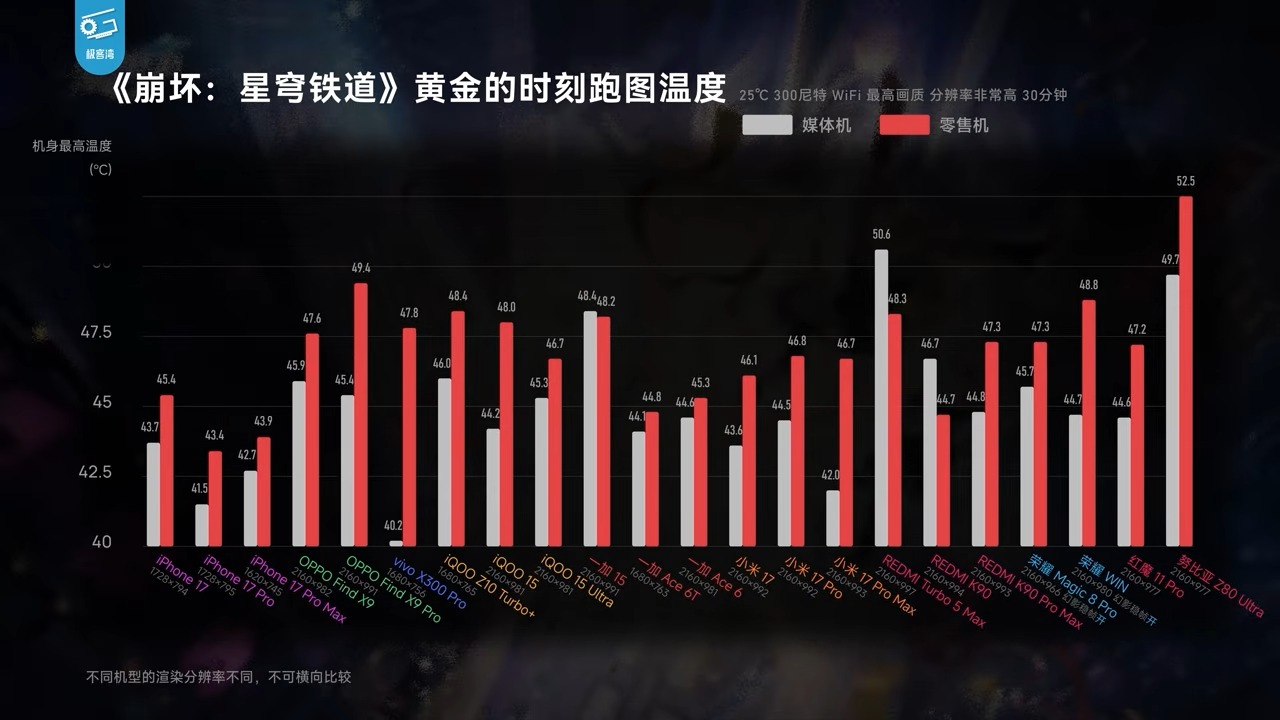
OPPO Find X9/vivo:The media machine of OPPO Find X9 can reach full frames in the Collapsed Star Dome Railway, but the retail machine has a gap of 3 to 6 fps; the vivo series has no difference in performance but the power consumption increases by 1.3W.
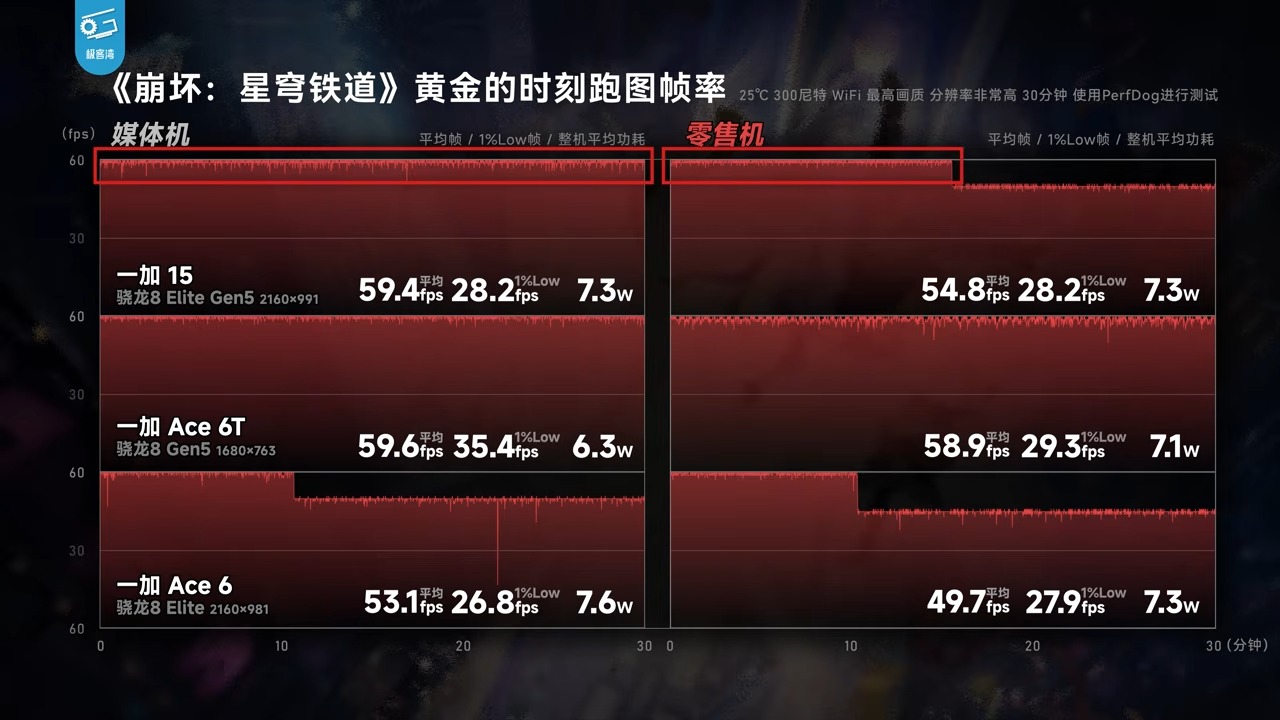
one plus(OnePlus): The OnePlus 15 media machine can maintain full frame for 30 minutes, but the retail machine can only last for 15 minutes, which cuts the time in half. Ace6 and Ace6T also have special behavior.
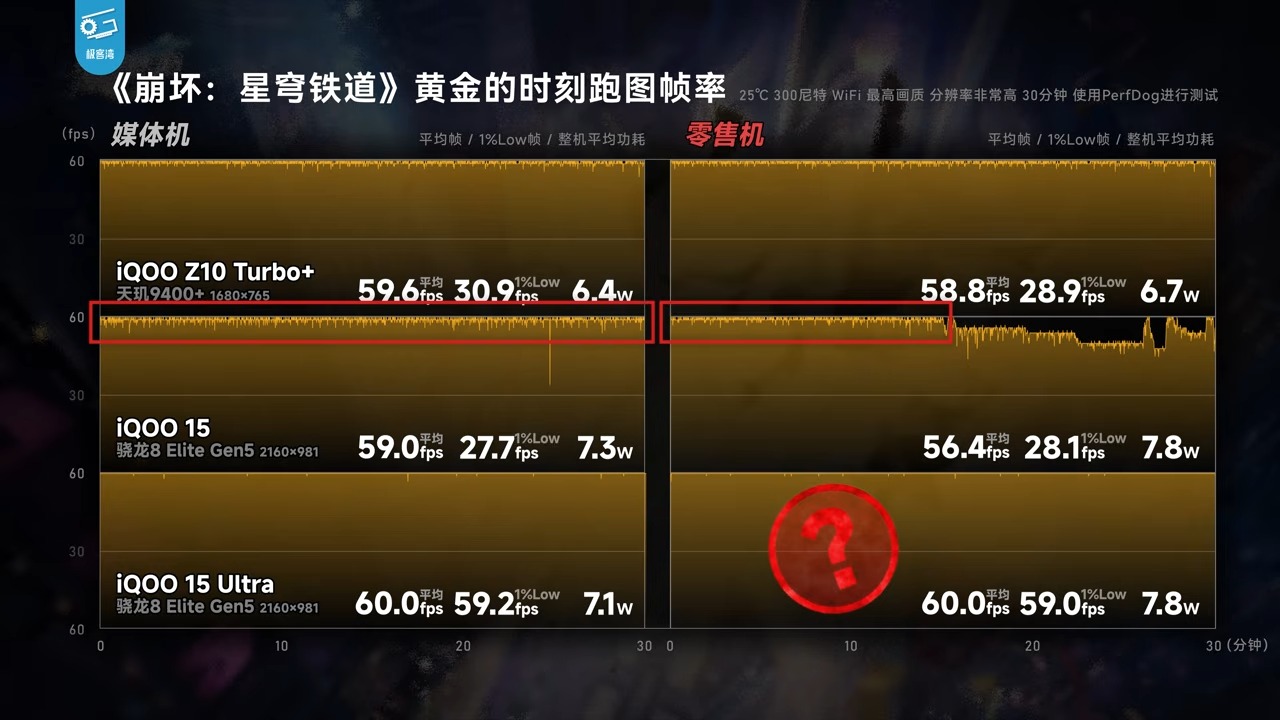
iQOO 15:The full frame only lasts for about 15 minutes before starting to reduce the frequency, and the power consumption is much higher than the media machine data.
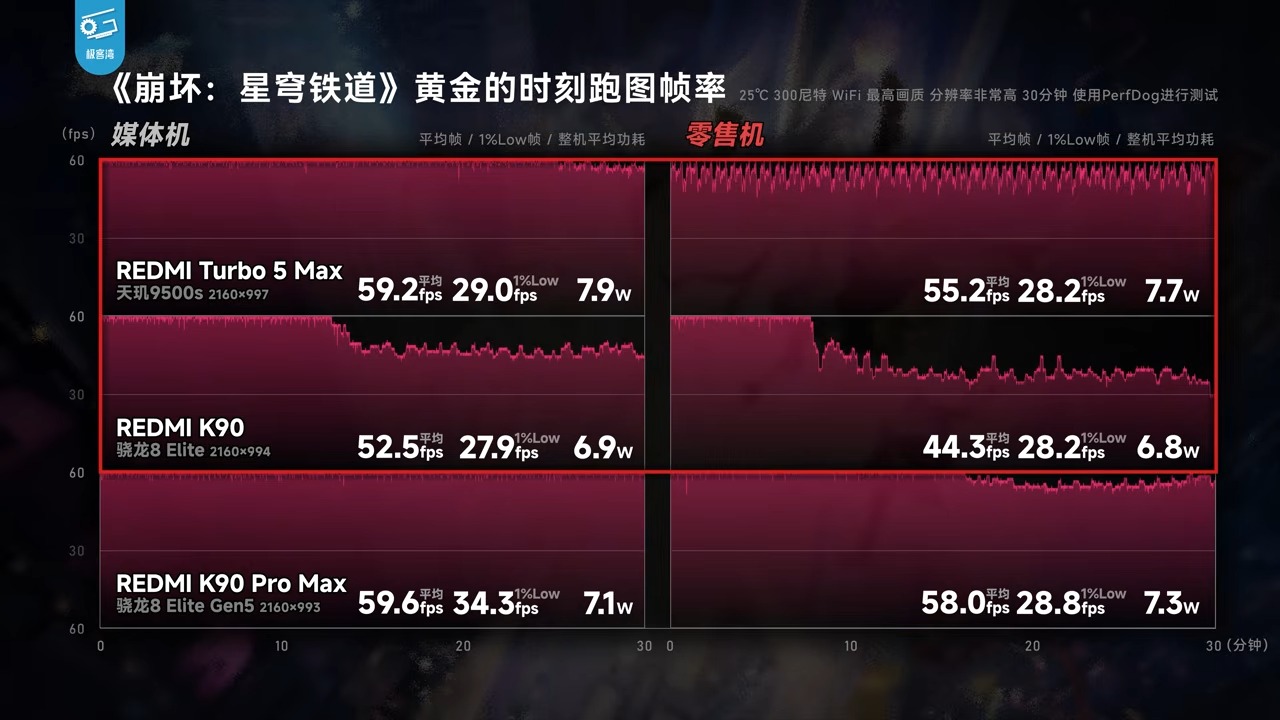
Xiaomi/Redmi:(Xiaomi 17 was found to be forced to turn on VRS (Variable Rate Shading), sacrificing image quality in exchange for book performance figures; the special adjustment range of Redmi K90 and Turbo 5 Max was called “very cruel”, and the gap immediately became apparent after turning off VRS.
glory:The power consumption of the Magic 8 Pro retail machine is 1W higher than that of the media machine; the Honor WIN is even more exaggerated, with power consumption skyrocketing from 1.7W to more than 8W, and the phantom frame stabilization function automatically exits at the end of the test.
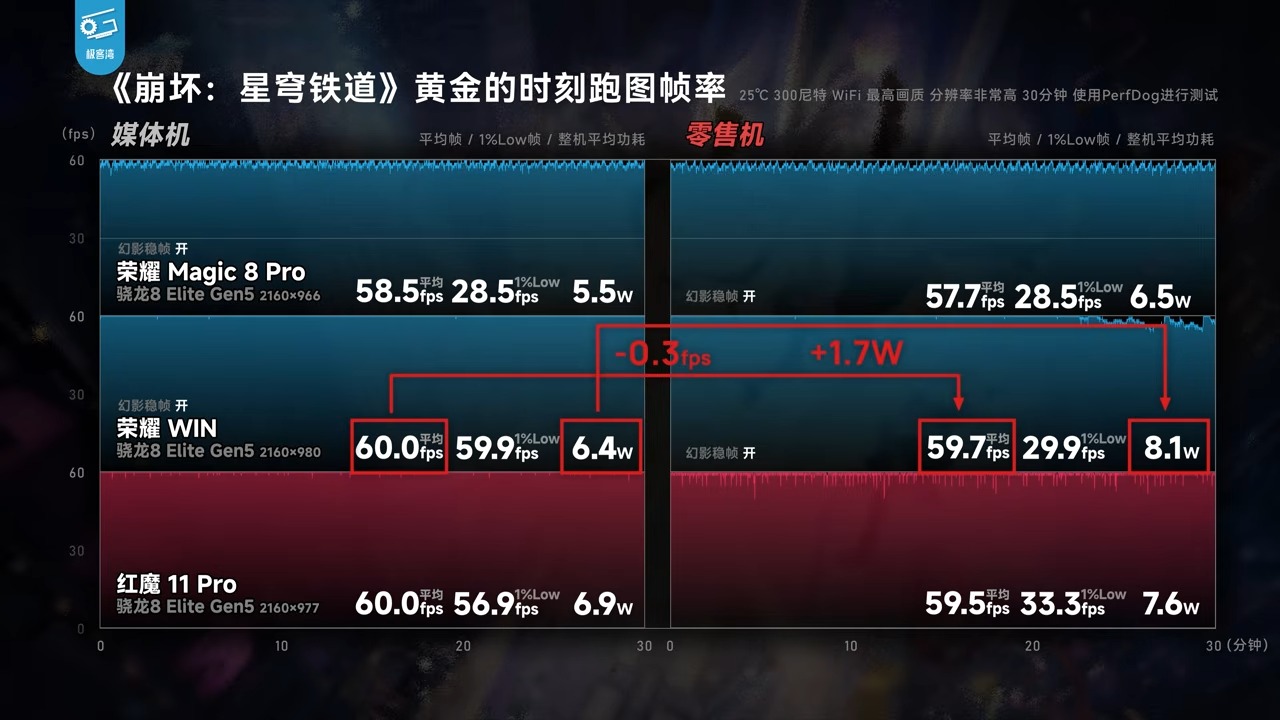
Nubia/Red Devils:Although the frame rate data is similar to that of the media machine, the power consumption and body temperature are very different.
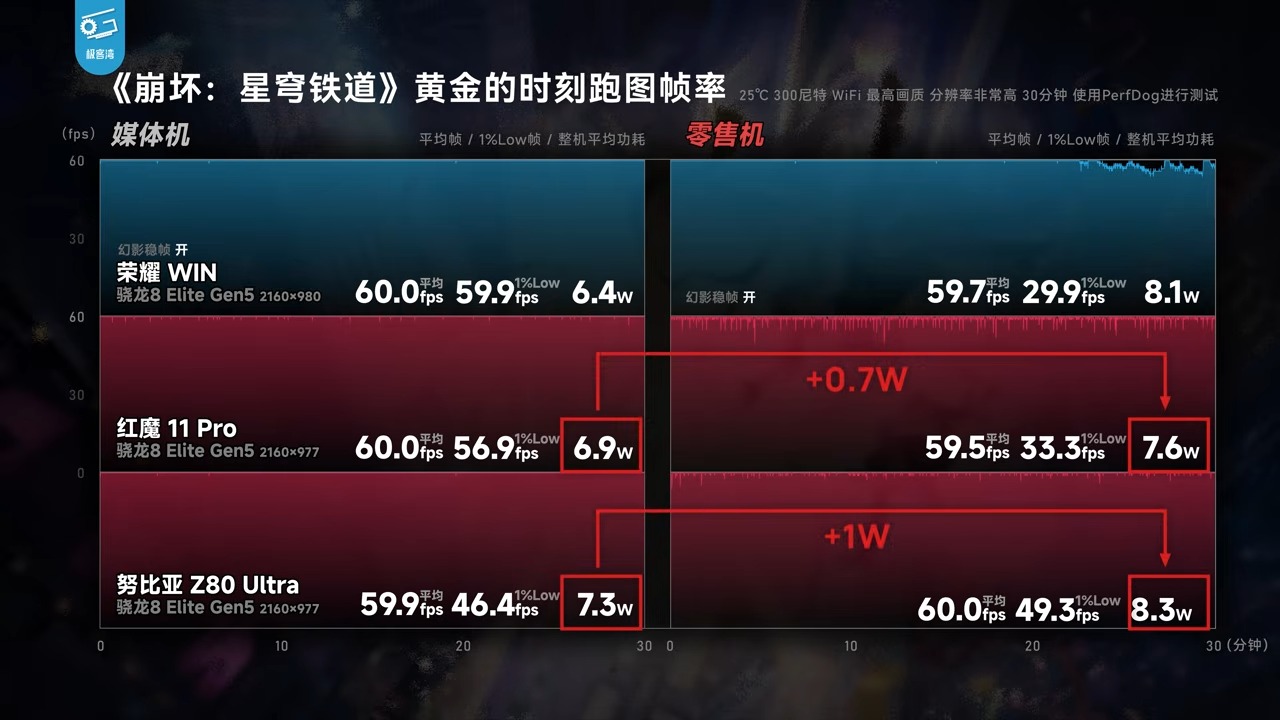
Yunfei further analyzed the “snowball effect” of cheating: when manufacturer A starts making special adjustments, manufacturer B is forced to follow suit in order not to fall behind in the comparison. Then manufacturer C intensifies its efforts, forming a vicious arms race, and the degree of cheating will only become more and more exaggerated.
Arknights: Terminus Testing
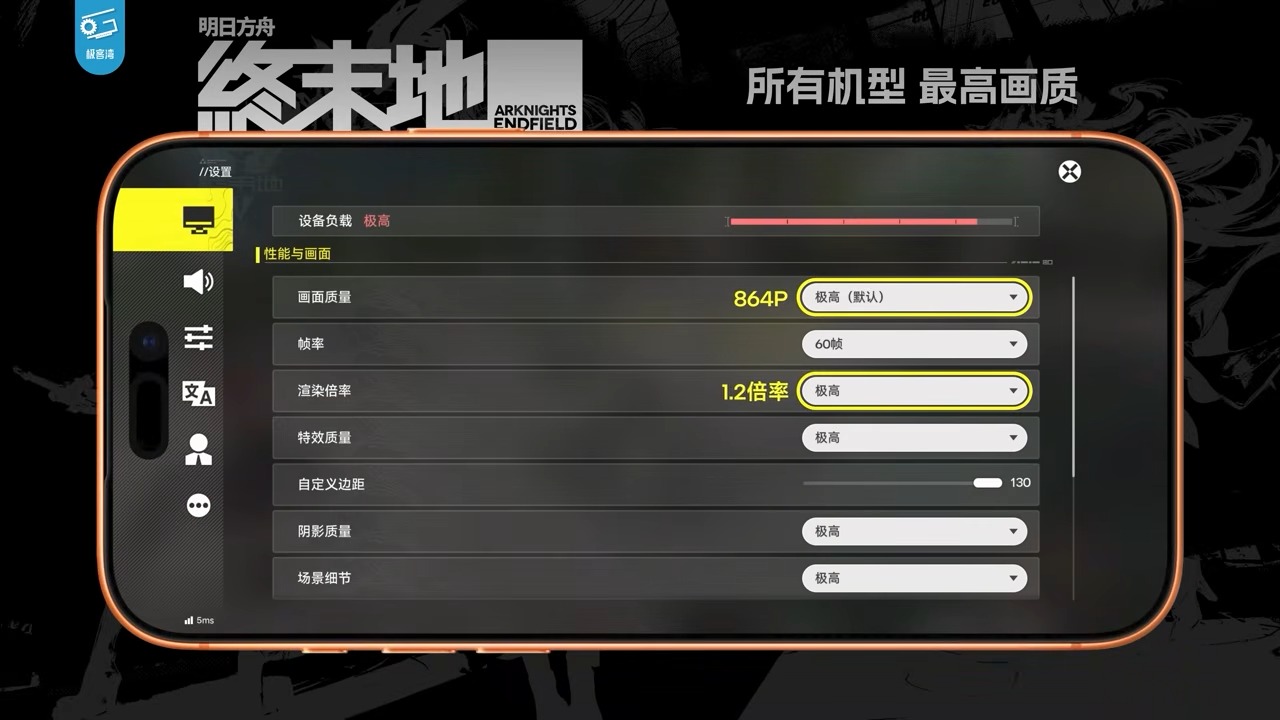
The first game test is “Arknights: The End”, which uses extremely high default settings and 1036P resolution to run the scene on the Wuling City Cableway scene. Since the game has not yet entered the whitelist of most manufacturers, it can better reflect the real scheduling capabilities.
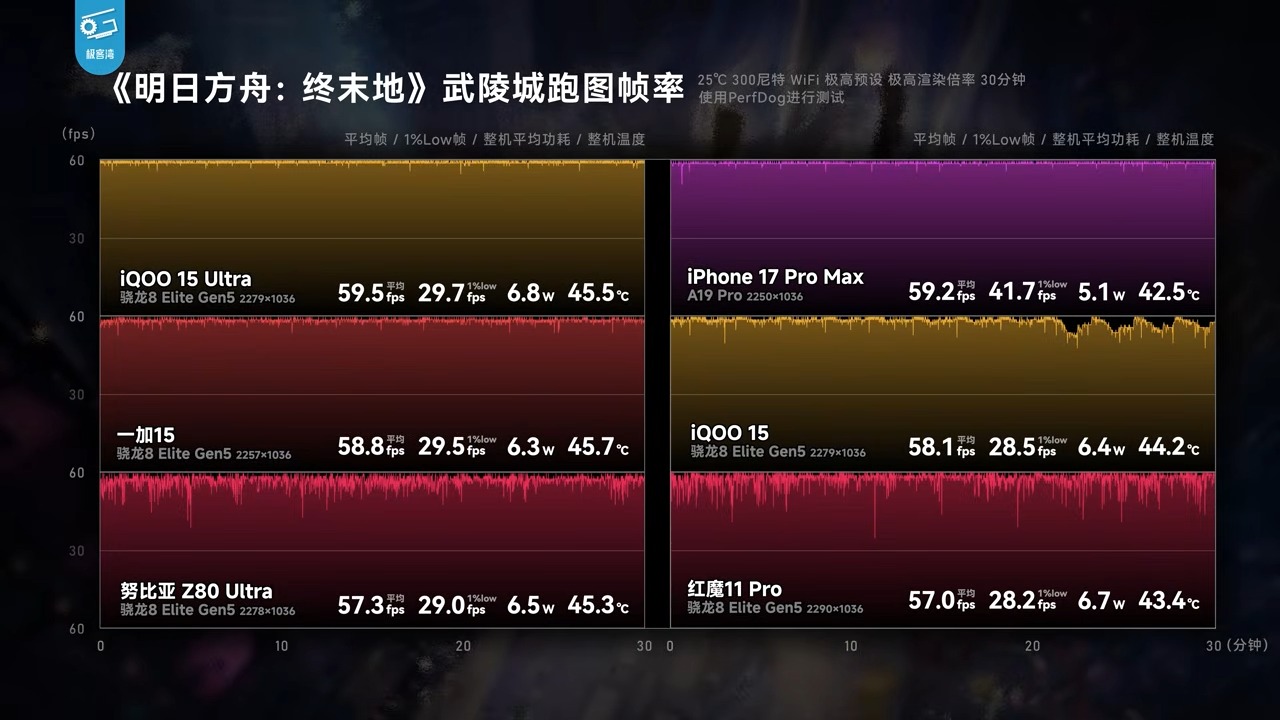
iPhone 17 seriesThe performance is outstanding: iPhone 17 Pro Max reaches full frame and consumes only 5.1W, which is much lower than the Android camp; iPhone 17 Pro consumes as low as 4.9W but adopts a conservative frequency reduction strategy; the standard version of iPhone 17 is stable at 56fps.
Android 8E5 Best Performer: iQOO 15 is at the forefront with 58fps/6.4W, and iQOO 15 Ultra reaches full frame; OnePlus 15 is about 58fps; Red Magic and Nubia are about 57fps; Honor series is in the 56–57fps range.
Surprises for the 8E model: The performance of Honor GT Pro and WIN RT (equipped with 8E chips) is not inferior to that of 8E5 models, which once again confirms the fact that 8E5 squeezes out toothpaste. The gap between the two generations of chips is extremely small.
Tide test
The second test is version 3.1 of “Singing Tide”. The scene is riding a motorcycle on the Lahailo Ring Road. The resolution on the Android side is 864P and the iOS side is 718P.
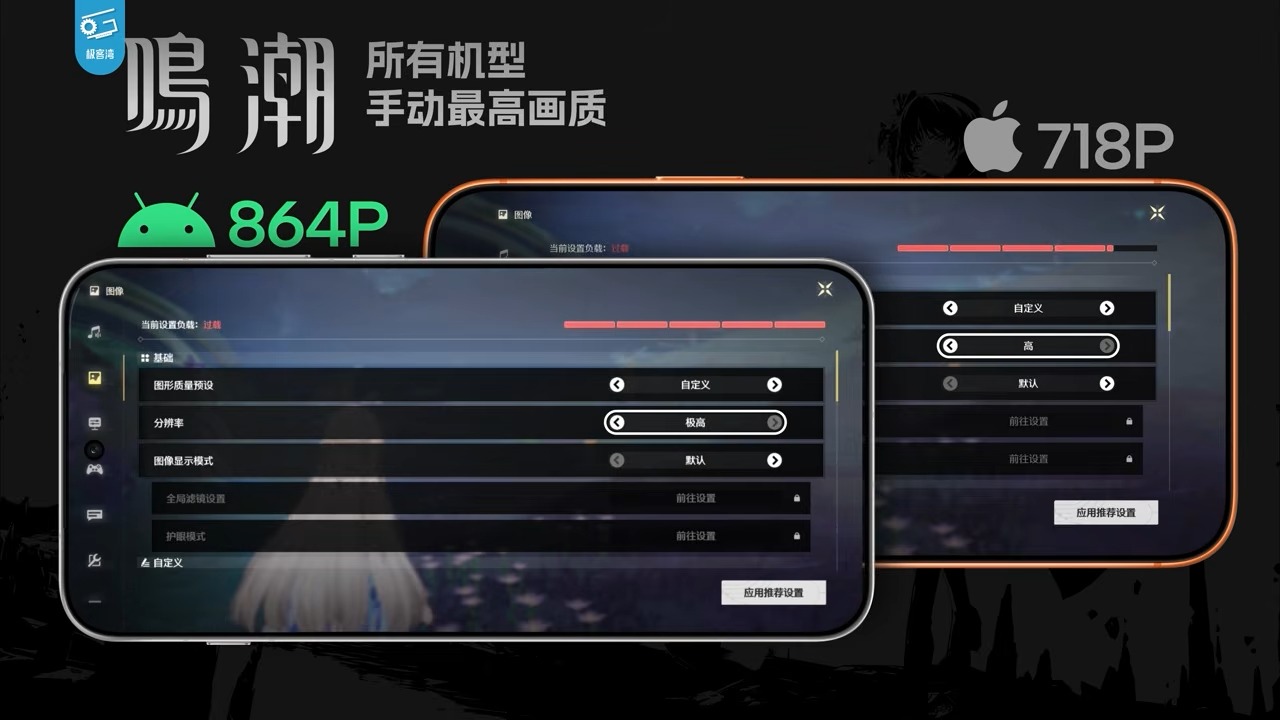
iPhone: The 17 Pro Max ran 57.2fps/6.2W (718P), which is a rare 6W power consumption performance; the 17 Pro and the standard iPhone 17 are about 50fps.
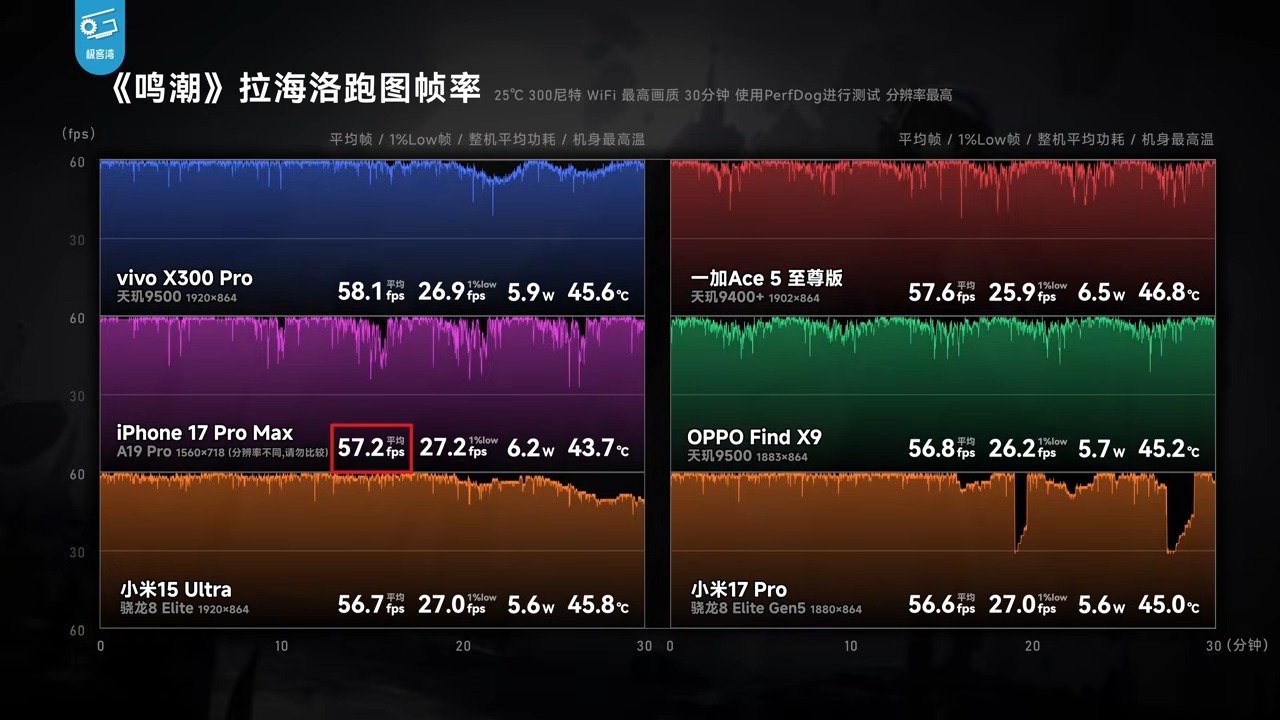
Android Best: Nubia and Red Devils won the championship with full frame 60fps/5.6W; Honor WIN and Magic 8 Pro also achieved full frame; iQOO 15 approached full frame and had extremely low power consumption.
poor performer: OnePlus 15 was locked to 45fps after 18 minutes; Redmi K90 was even more outrageous, locked to 30fps in just 7 minutes, with violent jumps of 30/60 frames; Xiaomi 17 series also experienced frame drops due to frequency reduction.
8Gen5 and XRING chip: 8Gen5 is still usable with a score of 58fps and above, but the Xiaomi XRING chip is less than 50fps, and its performance is disappointing.
Collapse Dome Railway Test
The third and most important test: “Collapsed Star Dome Railway” covers the three major aspects of the 5G network “devil test” of 981P high load, 763P and 30°C environment.
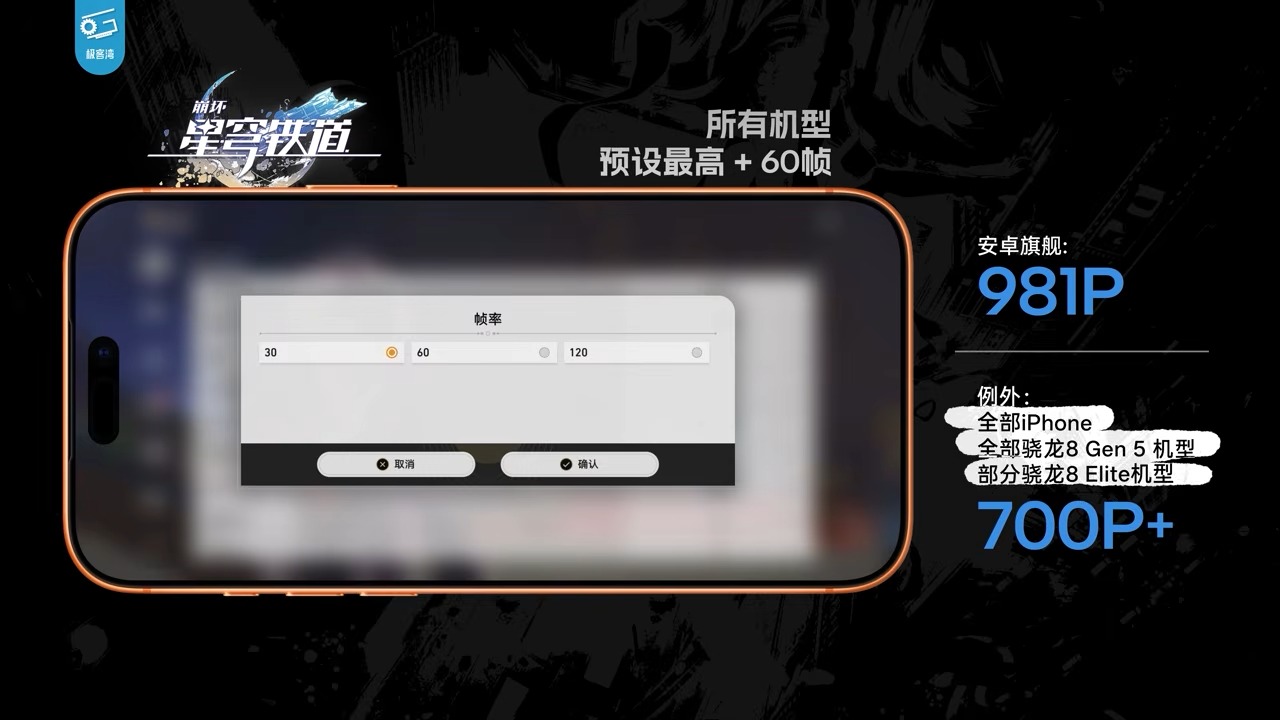
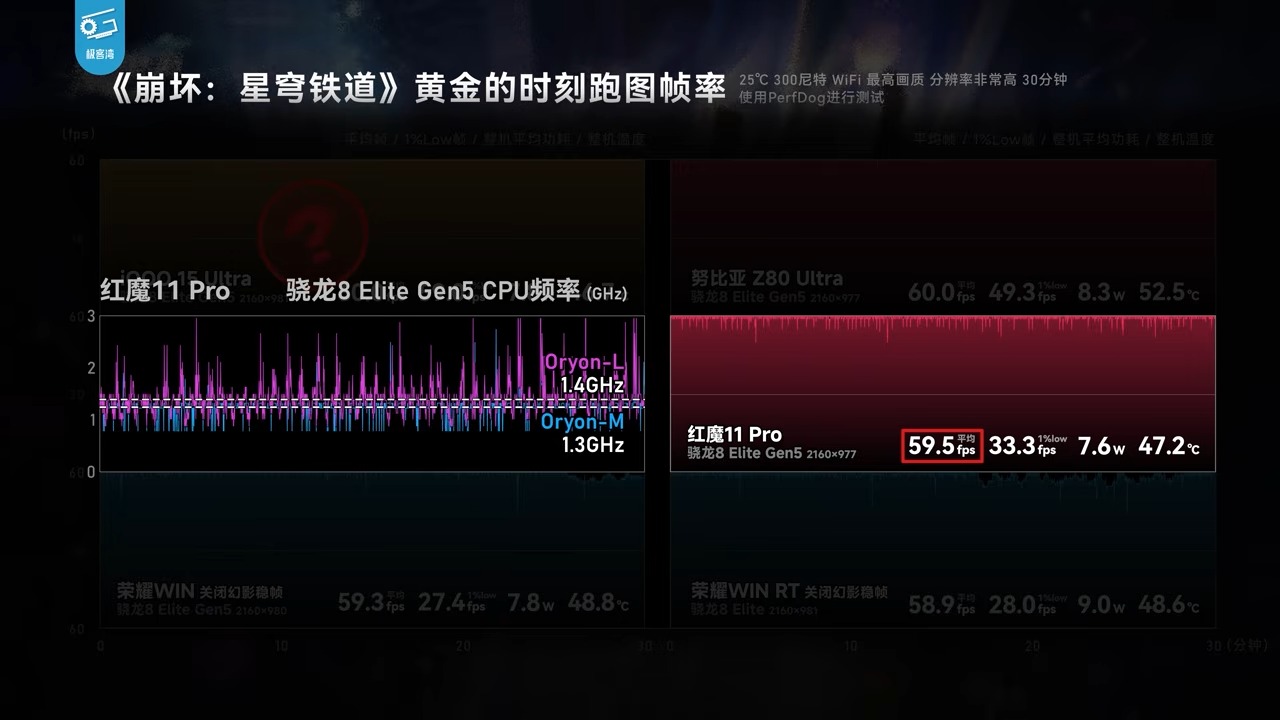
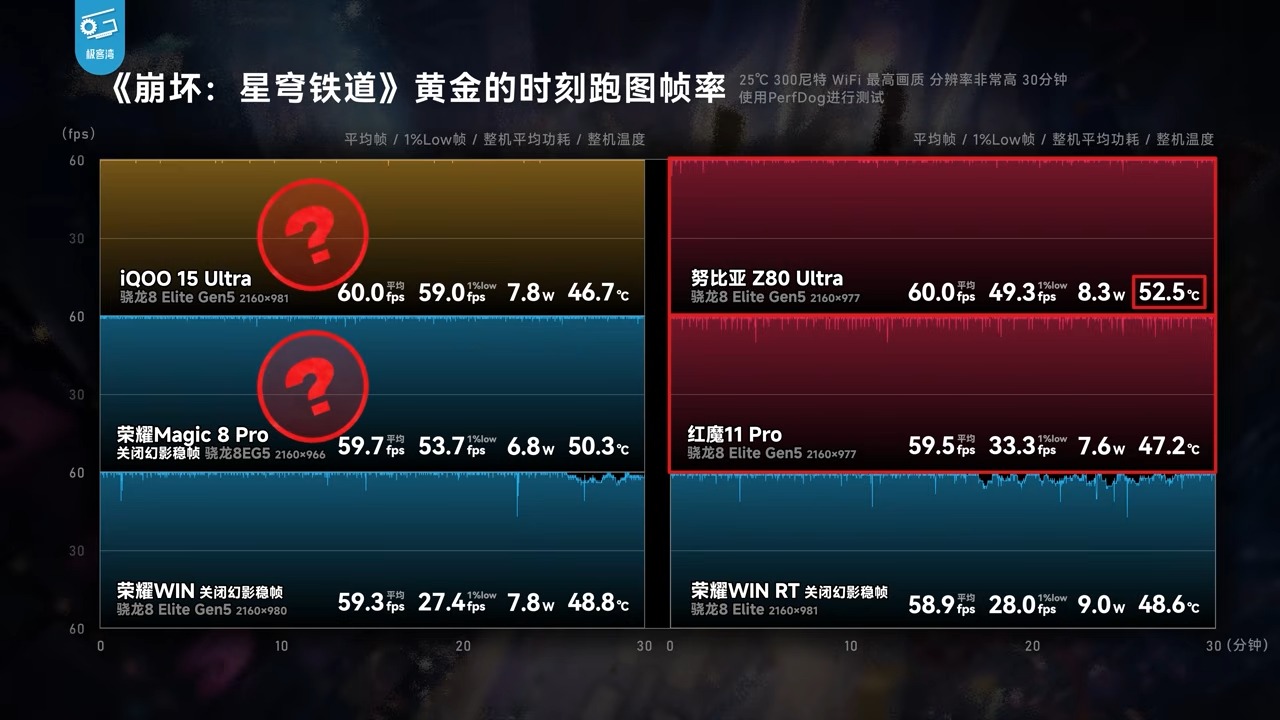
981P high load (Red Magic and Honor WIN): The Red Magic 11 Pro has almost full frame, with a power consumption of 7.6W, and the CPU frequency is accurately controlled at 1.4GHz; Honor WIN follows closely with 59.3fps/7.8W, and the first 25 minutes are almost full frame. However, the Red Magic 11 Pro has a serious touch-disconnect bug: the touch controls on the left and right sides of the screen fail, which is suspected to be related to the Synaptics touch solution.
Phantom frame stabilization analysis: Honor’s phantom frame stabilization function uses a triple buffering mechanism, which can effectively eliminate minor stuttering, but at the cost of an additional 0–2 frames of input delay, which makes it feel “meaty” in the hand. What’s more noteworthy is that there is a bug in Magic 8 Pro. Even if phantom frame stabilization is turned off, triple buffering is not really turned off.
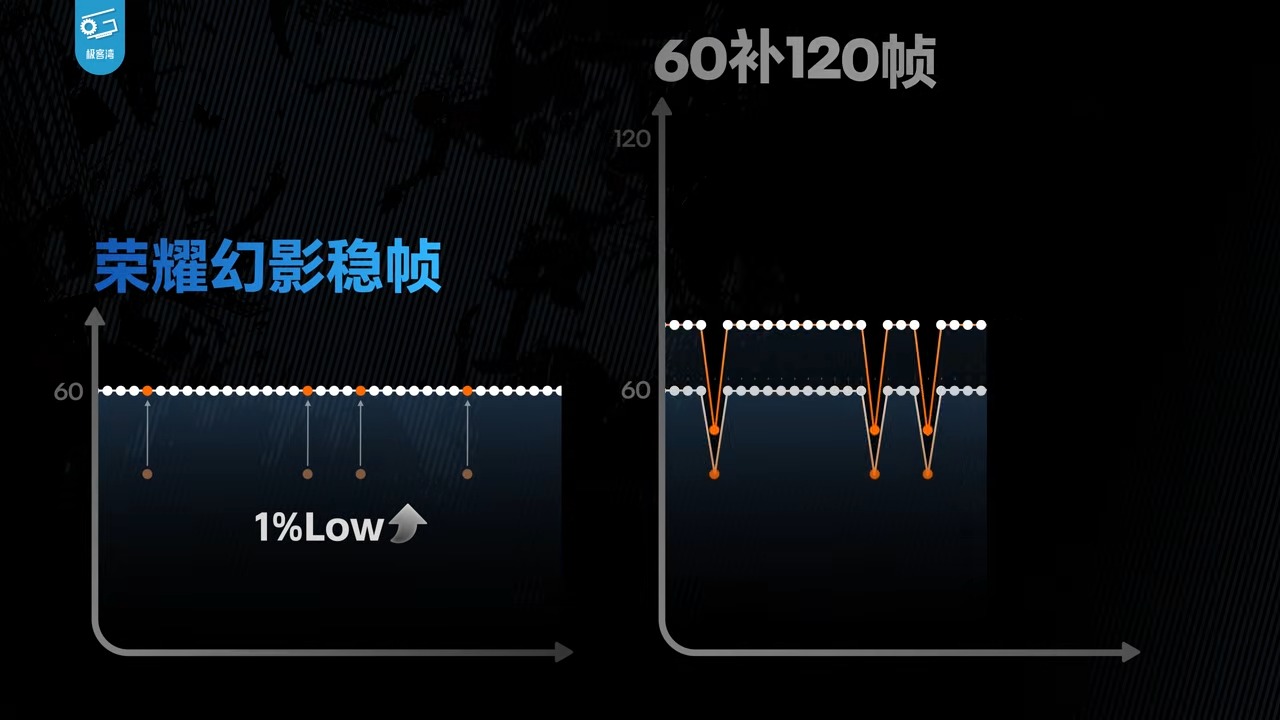
iQOO 15 Ultra VSync : iQOO 15 Ultra has impressive book data, with 1% Low reaching 59fps, which is almost perfect. However, actual analysis found that its synthesizer and game frame rate have a VSync disconnect problem, and the frame time drifts. The 59fps on the book does not equal a real smooth experience.
981P other models: The Nubia Z80 Ultra has a power consumption of up to 8–9W and a temperature of over 50°C. It is nicknamed the “acquaintance mode” (roasting people); the K90 Pro Max is the best performer in the Xiaomi series, but the K90 standard version is once again at the bottom.
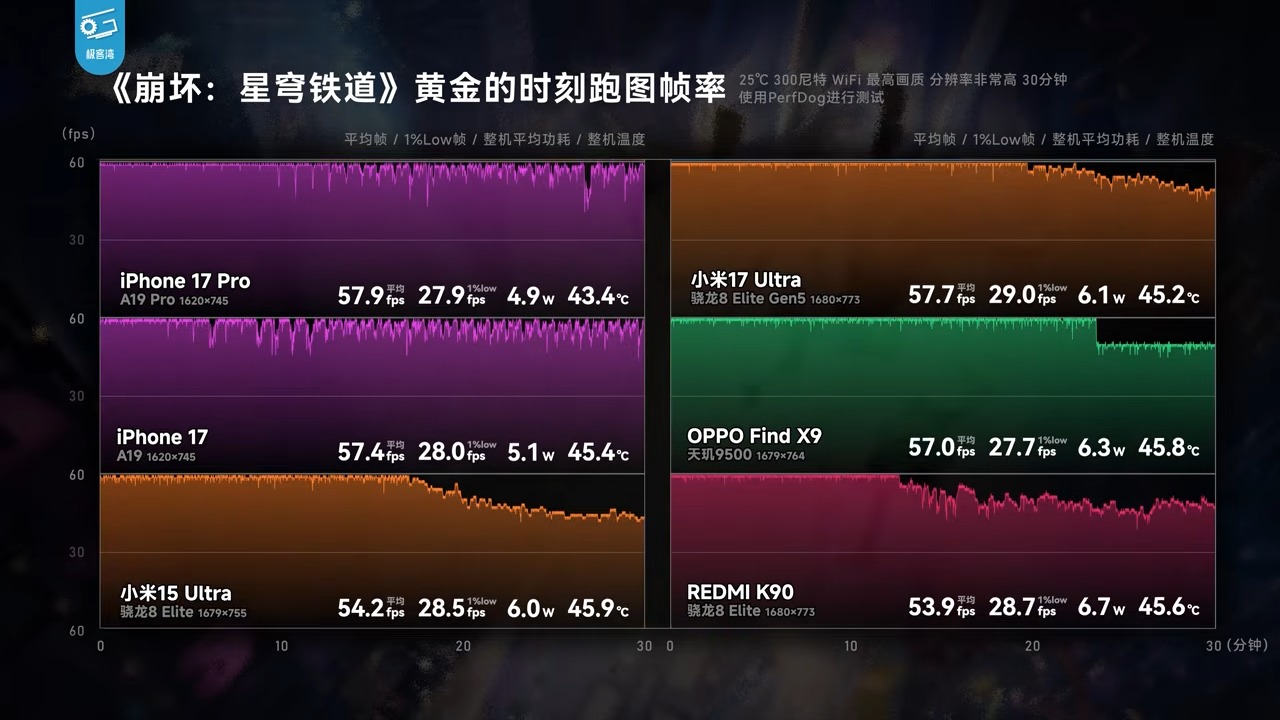
763P test: After lowering the resolution, the iPhone 17 Pro Max continued to dominate with full frame plus power consumption of just over 5W, and the K90 was once again named for poor performance.
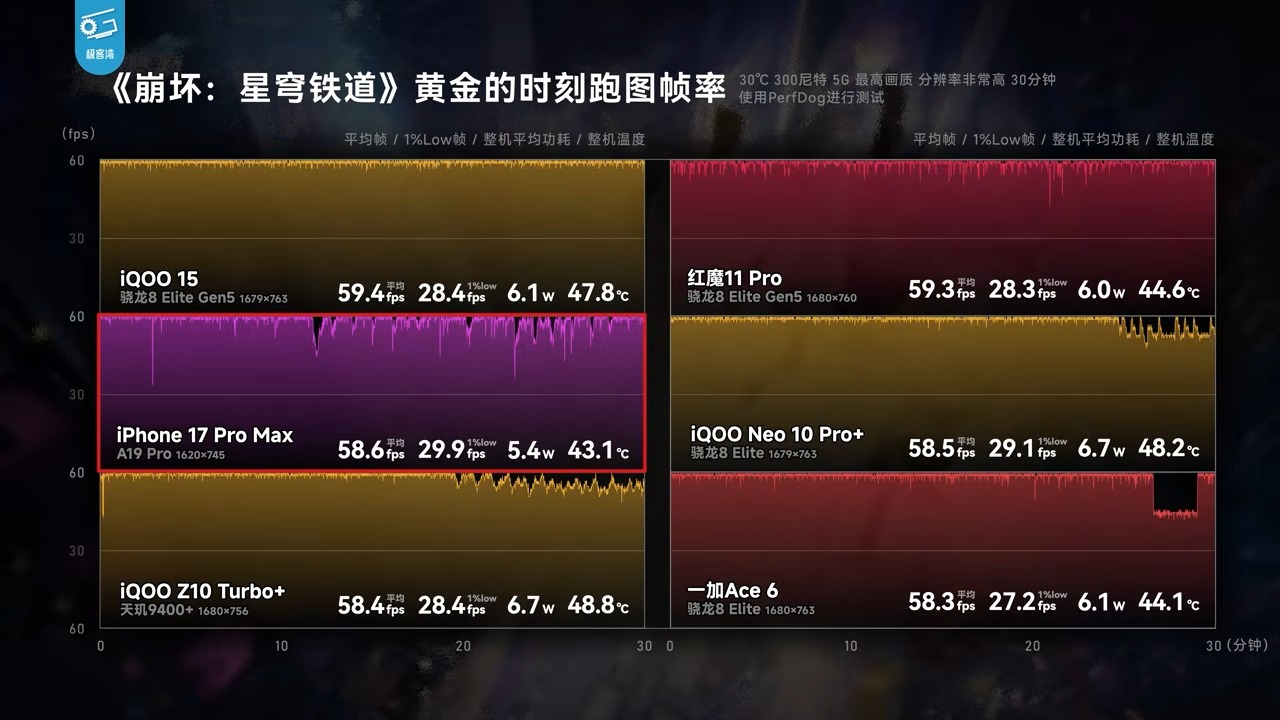
30°C 5G devil test: Geek Bay built its own 5G core network for testing for the first time. Under the harsh conditions of high temperature and 5G network, models that performed well include iPhone 17 Pro Max, OnePlus 15, all iQOO series, Honor, Red Magic and K90 Pro Max, etc.; while iPhone 17 Pro, all Xiaomi 17 series, 15S Pro, 15 Ultra and GT8 Pro experienced obvious frame drops. Another noteworthy finding is that the additional power consumption brought by 5G networks is almost negligible compared to WiFi.
Honor of Kings energy efficiency test
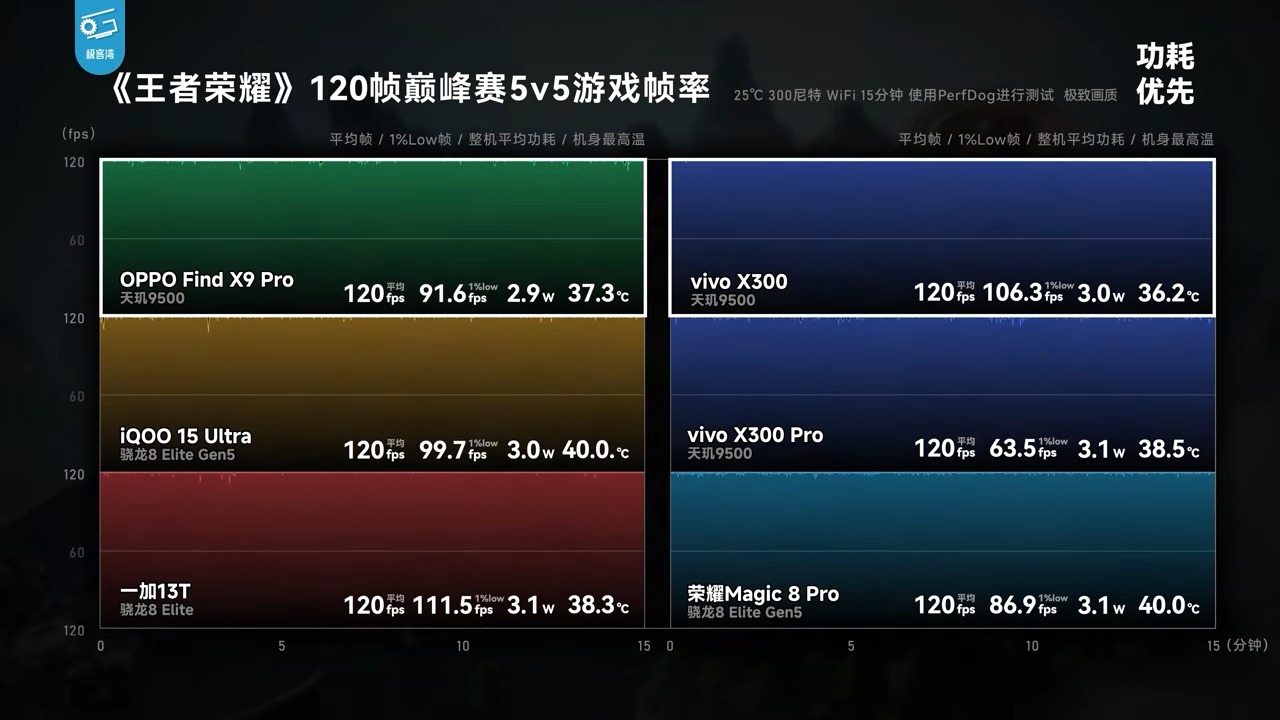
In the energy efficiency test of lightweight games such as “Honor of Kings”, OPPO Find X9 and realme X300 equipped with Dimensity 9500 won the championship with an ultra-low power consumption of about 3W; Dimensity 9400 also performed well. However, 8E5 has almost zero improvement in low-frequency energy efficiency compared to 8E, which once again confirms the judgment of squeezing toothpaste.
Touch Latency Test: Peace Elite and Blank App
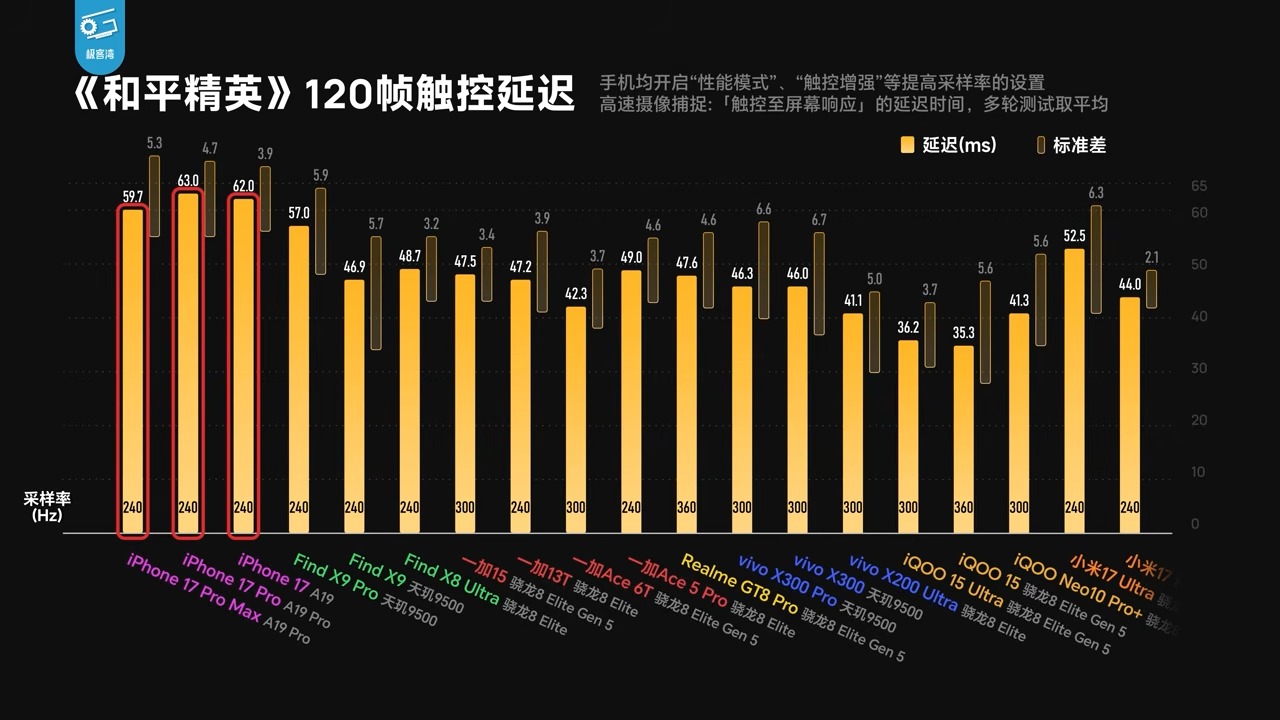
Peace Elite touch delay: Honor WIN is tied for the best with a 480Hz touch sampling rate of about 35ms, and iQOO 15 is also about 35ms; most Android flagships fall in the 40–50ms range; the entire iPhone 17 series unexpectedly ranks at the bottom with about 60ms.
Blank App touch delay: When the test scene was switched to a non-whitelisted blank App, the results were dramatically reversed: the iPhone’s latency dropped by 20ms and jumped to the forefront, with a standard deviation of only about 2. Xiaomi phones are also affected by battery settings, further increasing latency.
Yunfei also provided an in-depth analysis of the triple buffering mechanism of iOS: Apple’s Metal API uses triple buffering by default, which will increase the control delay in the game, but it can ensure the absolute stability of the frame rhythm. This reflects Apple’s design philosophy of “prioritizing stability over low latency.”
The detailed review content recommends that you watch the video, the content is quite exciting:
Summary and purchasing suggestions
This review revealed a disturbing reality in the Android mobile phone industry: when all manufacturers are tampering with media machines, the evaluation data seen by consumers is seriously out of touch with the actual purchase experience. The “toothpaste squeeze” between 8E5 and Dimensity 9500 makes the motivation for cheating even worse: the chip itself cannot bridge the gap, so manufacturers have no choice but to make a fuss about software scheduling.
Based on the multi-dimensional evaluation of four game tests, touch delay and audio delay, Yunfei’s final purchase recommendation is:iPhone 17 Pro Max It is the gaming phone with the strongest overall performance, and its energy efficiency ratio is far ahead;iQOO 15(Non-Ultra) In the Android camp, it has both cost-effectiveness and practical performance;Honor WIN Touch control and frame rate performance are excellent. Users with limited budgets can consider the 8E chip model, because the gap between 8E and 8E5 is very small. After reading this, have you decided which new phone to buy after receiving the red envelopes in the New Year?
Source: KOCPC Chinese