


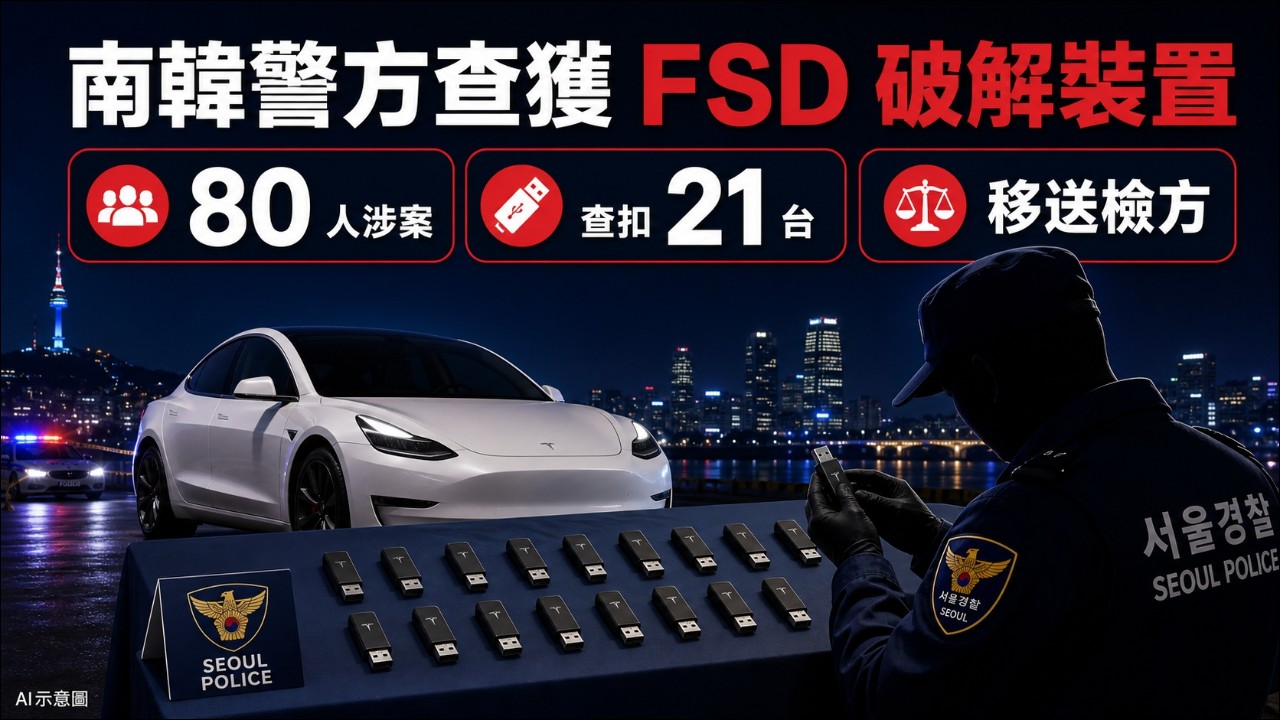
South Korea’s Seoul Metropolitan Police Agency Traffic Crime Investigation Team recently announced a case involving Tesla FSD that it labeled a “crime” case (Editor’s note: I think calling it a crime is a bit over the top), with 80 people involved. Those involved connected unauthorized external devices to their own Teslas and forcibly enabled the Full Self-Driving (FSD) feature, which has not yet been fully rolled out in South Korea. Police seized 21 bypass devices on the spot and referred the 80 people involved to prosecutors under the Automobile Management Act. According to Korean media reports, these bypass devices sell for about 30,000 won on the market, equivalent to about NT$720.
Most Teslas in Korea can’t use FSD anyway.
This is the core of the entire case. In South Korea, FSD is available only for U.S.-made Model S, Model X, and Cybertruck. The reason is written into the law: under the Korea-U.S. Free Trade Agreement (FTA), U.S.-made vehicles are exempt from Korean automobile safety standard certification; China-made Model 3 and Model Y have not passed this certification, so the FSD feature is locked at the factory, and even if the owner has purchased FSD, it currently cannot be used in South Korea (simply put, only Tesla vehicles produced in the U.S. can use FSD).
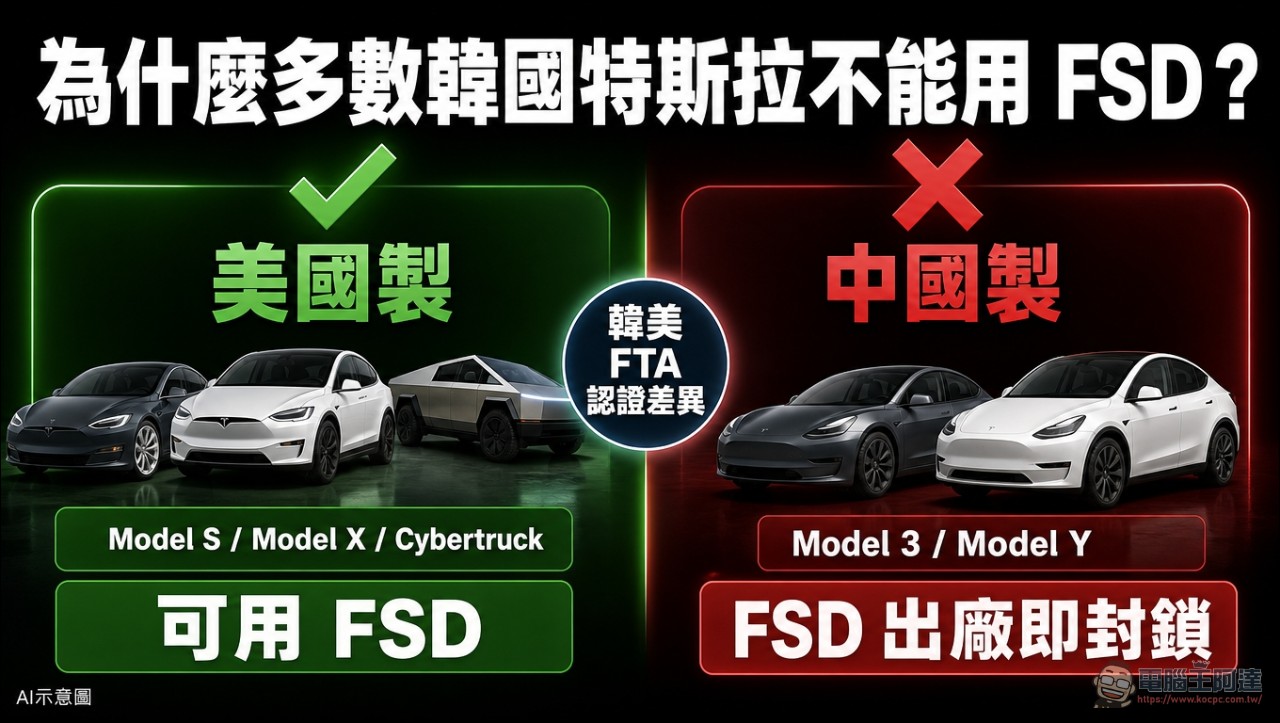
Model 3 and Model Y are the mainstays on Korean roads. According to statistics from market research firm Carisyou Data Lab, as of August, of the 229,311 Teslas on Korean roads, only 47,458 (20.7%) were legally allowed to use FSD. Earlier official figures were even more striking: in May, data released by National Assembly member Park Young-gap showed that of 180,684 registered vehicles, only 4,292 (2.4%) were eligible, consisting of 2,708 Model X, 1,193 Model S, and 391 Cybertruck. Tesla Korea itself reported to the Ministry of Land, Infrastructure and Transport at the end of September that 185,491 of 238,968 vehicles (77.6%) were unable to use it.
From buying devices to building your own
First, it must be made clear to all readers that these “suspects” (car owners) who used the hack to unlock it had already purchased the extremely expensive FSD; they just couldn’t activate the feature due to issues related to the country of manufacture. This hack does not “create something out of nothing”—if you haven’t bought FSD, the hack won’t work either.
In a statement on October 27, police described two methods of circumvention. Suspect A bought an FSD activation device from Europe and connected it to his own Tesla for use. Suspect B, an IT industry worker, obtained relevant information from the developer code-sharing platform GitHub and built an activation device himself. The device itself is not complicated. These modules are USB-shaped hardware that plug directly into a Tesla’s CAN bus, bypassing the manufacturer’s regional software locks and geofencing. These devices sell for about EUR 500 in Europe, far higher than the Chinese version; the price difference reflects the gap in FSD approval progress across regions.
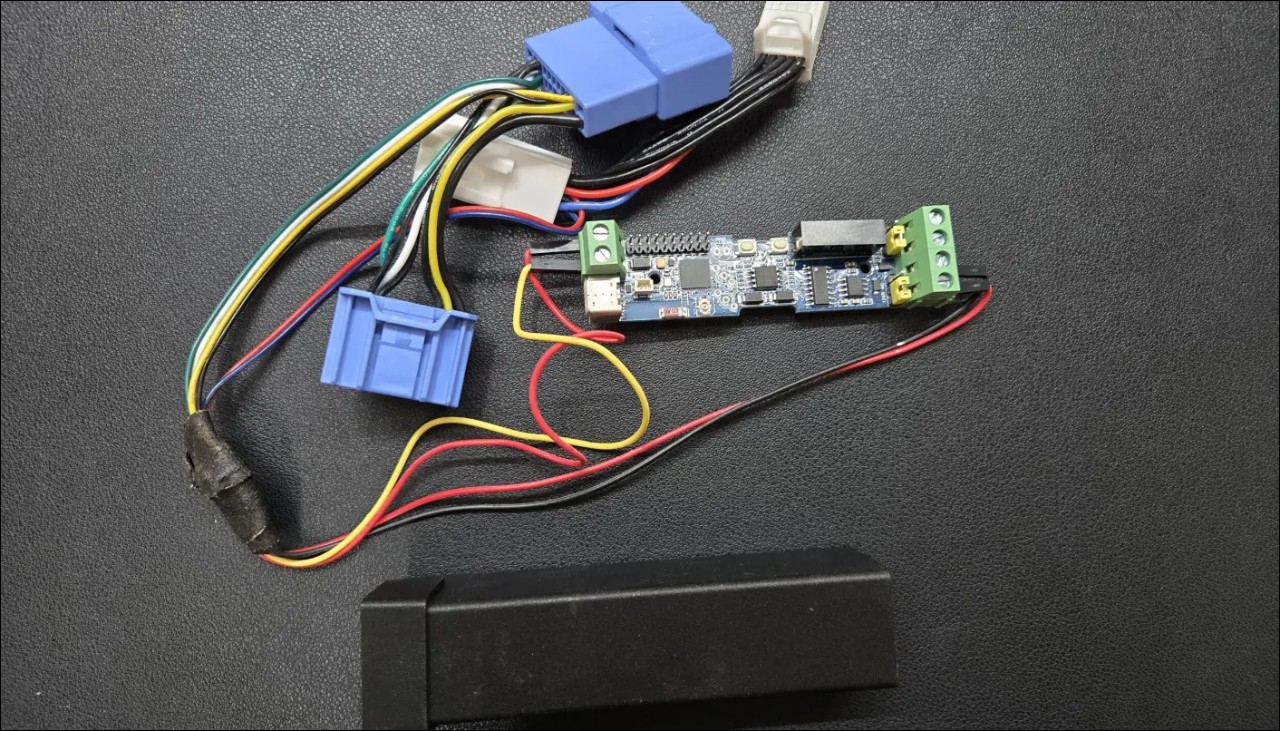
The way the suspects exchanged information is more noteworthy than the devices themselves. Police found that what these people discussed in online communities included not only “how to enable FSD” but also “how to keep the car from leaving an activation record” (because activating it privately would void the warranty and forfeit eligibility to use FSD in the future). On this basis, police concluded that they were collectively sharing and disseminating such information, and then reviewed relevant posts and chat records to clarify the offenses. The Korean media report also mentioned that some China-made devices cost as little as $20.
Security risks are the reason the police took action.
Police officers told 《Korea JoongAng Daily》 stated, “It has been confirmed that safety risks exist, including that FSD may fail to correctly recognize driving conditions or operate in a manner contrary to the driver’s intentions.”
Where does the risk come from? The police are direct: these devices “have not gone through the manufacturer’s official software update and certification process.” Without official updates, the vehicle’s software status cannot be confirmed; without a certification process, there is no safety inspection gatekeeping. The police also sought technical consultation through institutions such as the Korea Traffic Safety Authority. Korean media quoted police as saying that this type of unauthorized FSD activation has not yet caused any traffic accidents. What has occurred so far is a legal issue, not a casualty issue.
Even Tesla doing it themselves didn’t stop it.
Actually, this whole thing didn’t only happen in Korea. The earliest cases were in China, where some owners had already started using related hacks in April. Tesla began remotely detecting these devices back then and directly stripped FSD permissions. After the vehicle was remotely woken and detected an unauthorized CAN bus device, it turned FSD off entirely and reverted to basic Autopilot; affected owners in China received in-car notifications and were permanently banned from using FSD, even those who had already paid for it.
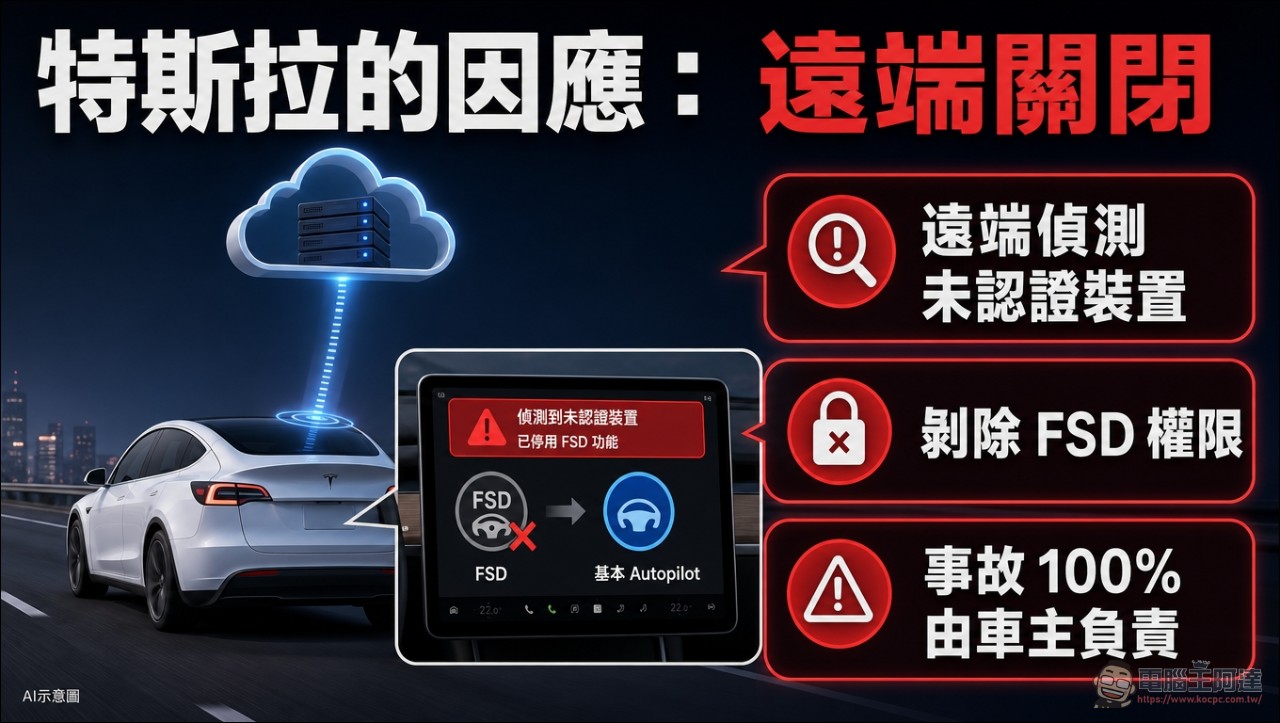
Tesla also mass-emailed affected owners warning that any accident occurring while using an uncertified device is “100% the owner’s responsibility,” and reserved the right to “deny warranty claims regardless of whether the device actually caused damage.” Tesla characterized such devices as a “cybersecurity threat,” arguing that they could create vulnerabilities that attackers could exploit.
But the block did not take effect. In April, after discovering signs of unauthorized activation, South Korea’s Ministry of Land, Infrastructure and Transport asked police to investigate; police said the ministry had received a cybersecurity threat report from Tesla Korea on March 31 about a software vulnerability. The cracking attempts never stopped; they merely continued with different people and different methods. This referral to prosecutors came on the fifth day after Tesla Korea formally applied to the Ministry of Land, Infrastructure and Transport for approval of FSD (Supervised). The timing coincidence is worth noting: on one side, car owners were obtaining the feature through workarounds; on the other, Tesla was formally going through the review process to apply for the same thing.
Law and Cost
Under the Korean Automobile Management Act, unauthorized modification, installation, addition, or deletion of software that may affect the safe operation of a vehicle is prohibited and is punishable by up to 2 years in prison or a fine of up to 20 million Korean won, approximately USD 15,000.
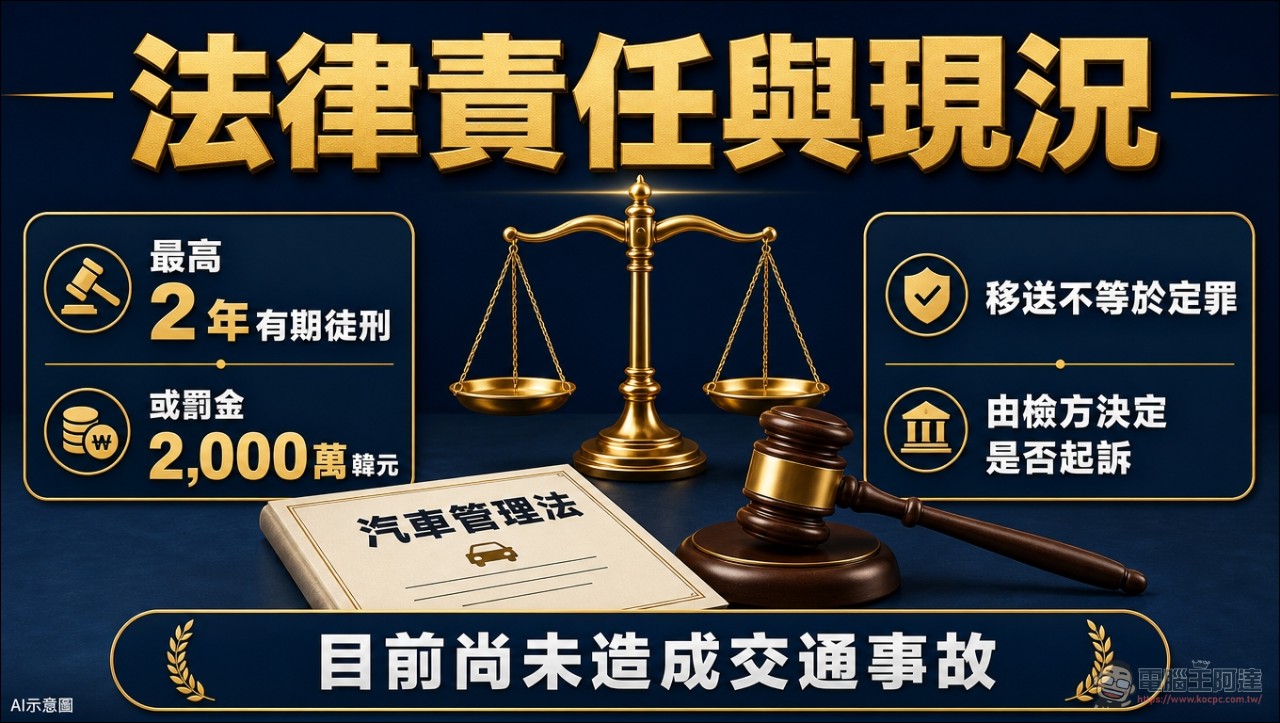
Police stressed that in each case it is the prosecutors who decide whether to bring charges, and that referral does not equal conviction. Police officials told the JoongAng Ilbo: “We are working closely with relevant agencies, including seeking expert opinions from the Ministry of Land, Infrastructure and Transport and the Korea Transportation Safety Authority on technical issues such as changes to the FSD feature structure. We will continue to actively investigate illegal acts that threaten road safety.”
A police official also said: “Arbitrarily modifying vehicle software is an illegal act that could threaten road safety. We plan to work with relevant agencies such as the Ministry of Land, Infrastructure, Transport and Tourism to continue monitoring.”
The true meaning of this matter
The number 80 isn’t large, and 21 devices isn’t many either. But this is the first time police have handled this kind of FSD jailbreak hardware on a large scale, and such hardware has been widely sold in China, Europe, and South Korea over the past year. Most South Korean Tesla owners legally cannot use FSD, and official applications are still queued. The alternative while waiting is a USB device that bypasses the software lock, priced low enough that even anonymous community exchanges considered it worth promoting. A suspect with an IT background even went straight to GitHub to find information and build one himself, and also publicly shared “how to leave no records” along the way.
The fact that this method works shows that Tesla’s software locks cannot stop determined people at the hardware level. All Tesla can do is remotely detect it and then revoke access, but that still cannot prevent the next attempt. Both sides are serious, but their efforts are headed in opposite directions: one side is patching the entry point, while the other is pushing for legal channels. As for the Taiwan region, some people have also used similar devices to crack FSD and filmed and shared videos. My personal advice is that everyone should still wait for review by the relevant government agencies (even though that is indefinitely delayed), because that is better than having FSD functionality revoked and getting into legal disputes. I hope legislators and the relevant agencies act faster.
Source:Korea JoongAng Ilbo
Source: KOCPC Chinese