


Well-known technology YouTuber Alex Ziskind recently published a video titled “NVIDIA didn’t want me to do this”, showing how he organized eight NVIDIA DGX Spark-level personal AI computers (four DGX Spark, two Dell GB10, one MSI EDGEXPERT, and one ASUS ASCENT GX10) into a super cluster with 1TB of unified memory. This initiative breaks through the limitation of NVIDIA’s official documentation that only supports up to 2 clusters, and opens up new ideas for individual users to run ultra-large-scale language models.
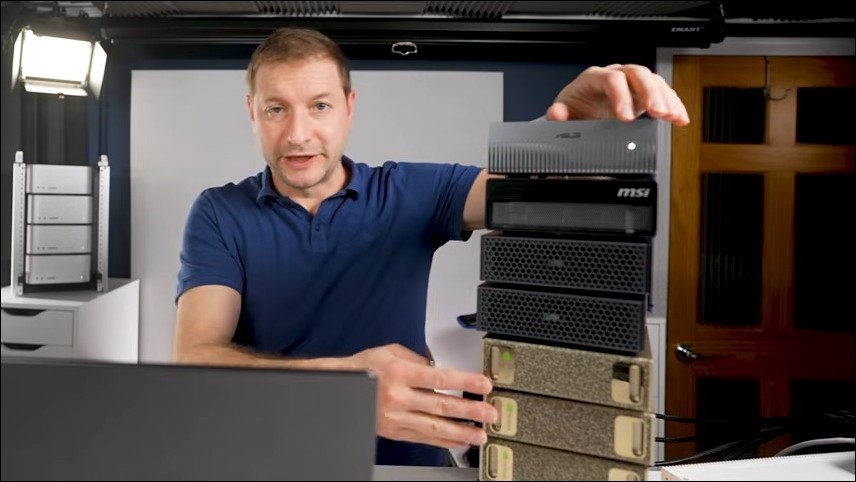
NVIDIA might not be happy? Foreign YouTuber uses 8 DGX Sparks to build a 1TB VRAM super cluster
In-depth analysis of DGX Spark hardware specifications
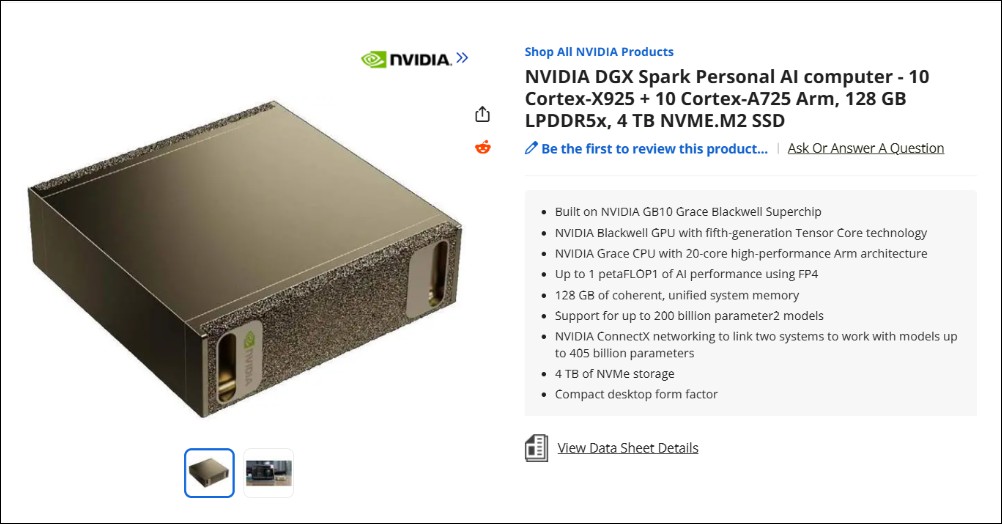
per unit NVIDIA DGX Spark Equipped with the following top-level specifications (other consoles basically have the same specifications, just made by different manufacturers):
- processor: 10-core Cortex-X925 + 10-core Cortex-A725 Arm architecture
- memory: 128GB LPDDR5x (can be used for training and inference of large language models)
- store:4TB NVMe M.2 SSD
- web interface: NVIDIA Connect-7 (single purchase price is about $1,000-1,500)
- Heat dissipation: Centralized thermal exhaust design (described by the author as “super hot”)
Cluster advantages
When multiple DGX Sparks form a cluster through high-speed interconnection, it can achieve:
| Cluster size | total memory | Applicable scenarios |
|---|---|---|
| Standalone | 128GB | Small and medium-sized LLM inference |
| Dual-machine cluster | 256GB | Extra large models such as Qwen 235B |
| Four-machine cluster | 512GB | Multi-model parallelism and large-scale training tasks |
| Eight-machine cluster | 1TB | Extreme scale AI research |
Technical details of cluster establishment
Alex usesMesh NetworkTopology, all nodes can communicate with each other:
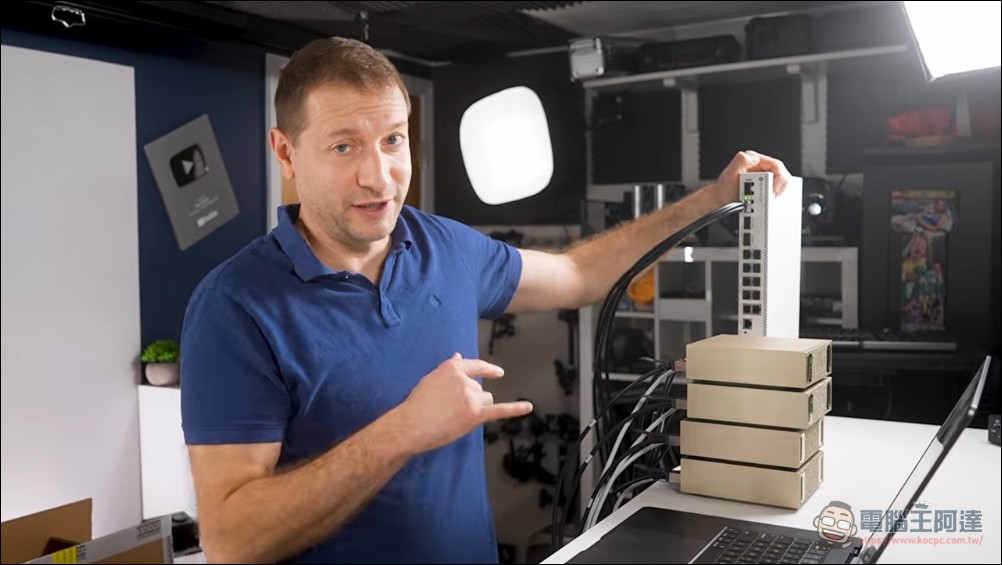
Key configuration steps:
- SSH passwordless authentication: Establish SSH trust relationship between each node
- Network speed test:use
ethtoolVerify link speed - RDMA configuration: Enable direct memory access for tensor parallelism
Analysis of Tensor Parallel Principle
It is explained in detail in the videoTensor ParallelismDifferences from traditional clusters:
| Connection method | Extended features | Performance |
|---|---|---|
| Traditional Ethernet | The more machines there are, the slower they are | Serious network bottleneck |
| RDMA high-speed interconnect | The more machines, the faster | Linear scaling performance |
Technical principle:
- RDMA (Remote Direct Memory Access) allows direct access to remote memory without CPU intervention
- Connect-7 interface provides ultra-high bandwidth and low latency
- Tensor parallelism distributes model weights to multiple GPUs for collaborative computing
Trampled on the pitfalls: the painful lesson of buying the wrong cable
Alex confesses in the video that he made an expensive mistake: “I bought a whole bunch of cables a few months ago… and I happened to buy the wrong model.”
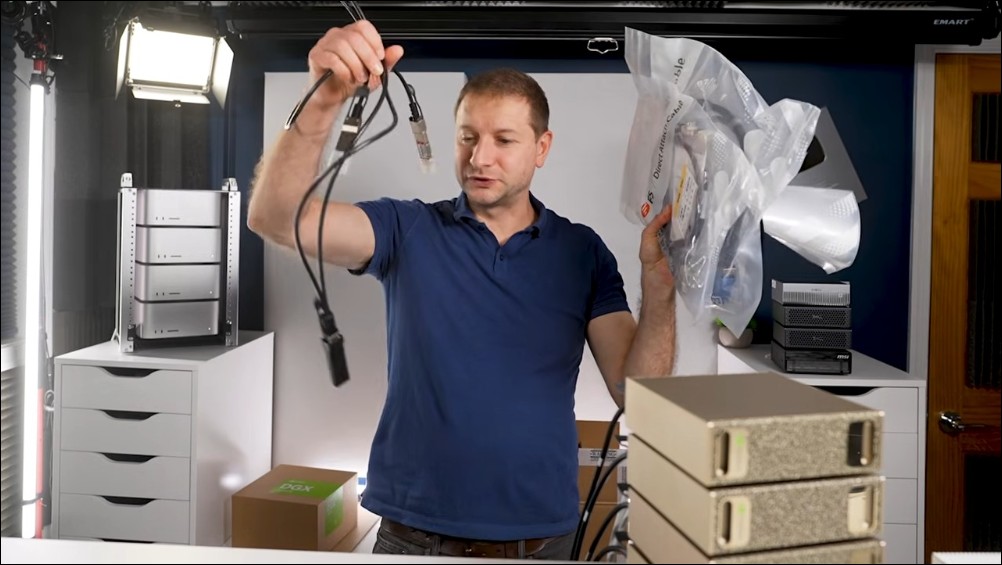
Source of the problem:
| Cable type | speed | density | result |
|---|---|---|---|
| QSFP28 | 100Gbps | standard | ❌ Speed limit 50Gbps |
| QSFP56 | 200Gbps | standard | ✅ Correct specifications |
| QSFP-DD | 400Gbps | double density | ✅ Best choice |
cost: Was only able to run at half speed for months until replacing the correct QSFP56 cable fixed the problem.
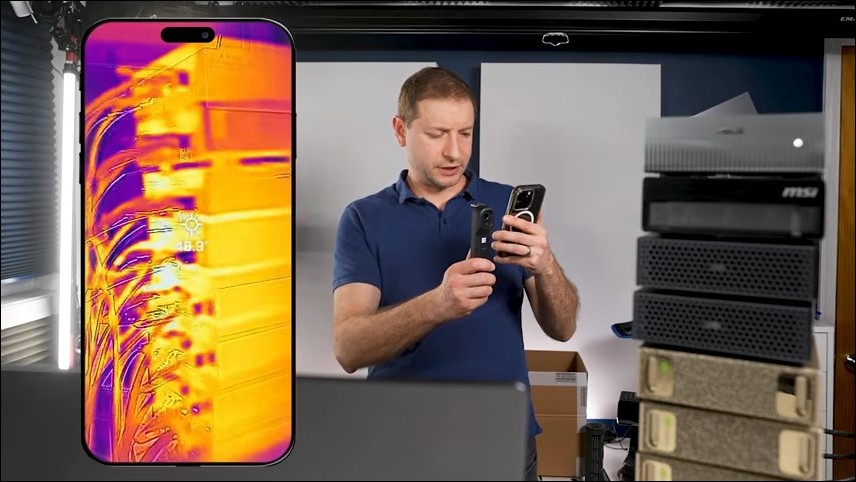
The back-blown heat dissipation design of DGX Spark also brings unexpected troubles:
- Exhaust direction: Concentrated hot air blowing in one direction
- Scope of influence: Thermal airflow is enough to interfere with camera operation
- Noise performance: The fan is quiet but the wind pressure is extremely strong
cost analysis
According to the video description and link, cost estimates for a complete four-machine cluster:
| project | unit price | quantity | Subtotal |
|---|---|---|---|
| DGX Spark | ~$4,000 | 4 | ~$16,000 |
| MikroTik 400G Switch | $1,300 | 1 | $1,300 |
| QSFP56 breakout cable | ~$200 | 4 | ~$800 |
| Connect-7 interface card | ~$1,250 | 4 | ~$5,000 |
| total | ~$23,100 |
If expanded to an eight-machine cluster, the total investment may exceed $40,000 USD (approximately NT$1.3 million). It sounds astonishingly expensive, but compared with traditional enterprise-level solutions, it is actually very cost-effective:
- NVIDIA DGX A100: Stand-alone 8×A100 GPU, priced at about $200,000 (approximately more than NT$6 million)
- DGX H100: Single machine 8×H100 GPU, priced at about $300,000+ (maybe more than NT$10 million)
Alex’s solution achieves a similar memory capacity at about 1/10 the cost. Although the computing power is compromised, it is sufficient for LLM inference and lightweight training.
Practical application scenarios
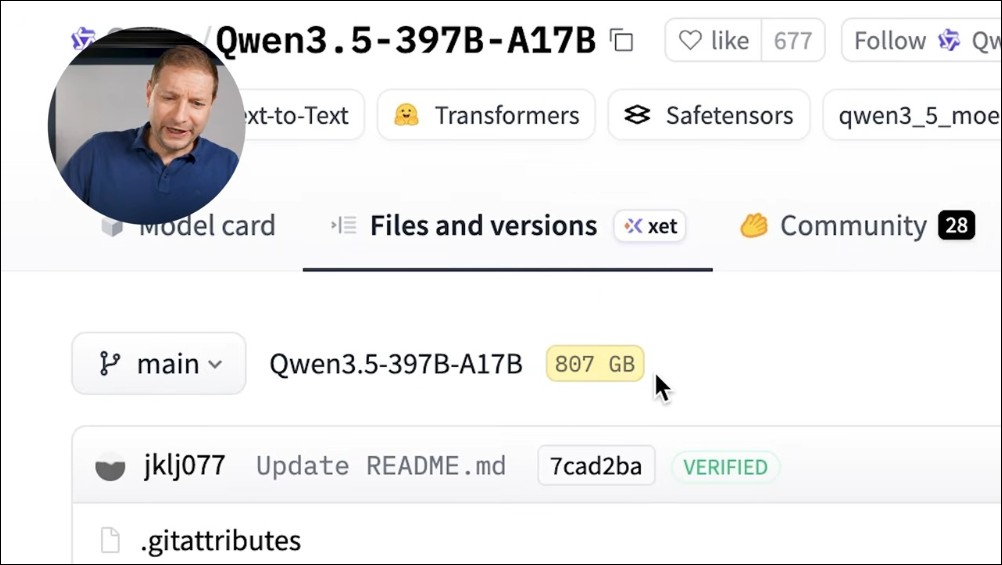
Based on the memory requirement estimation, he finally tested the newly launched Chinese open source large models such as Qwen 3.5 and KIMI K2.5. Although the articulation speed is not very fast, it is a breakthrough to be able to run such a full-size, non-quantified large model at home:
| Model | Parameter quantity | FP16 memory requirements | Required cluster size |
|---|---|---|---|
| Llama 3 | 70B | ~140GB | 2 DGX Spark |
| Qwen 2.5 | 72B | ~144GB | 2 DGX Spark |
| Grok-1 | 314B | ~628GB | 6-8 DGX Spark |
| Customized oversized model | 500B+ | ~1TB+ | 8 DGX Spark |
Performance advantage
Through RDMA and tensor parallelism, clusters can achieve:
- Linear expansion: Adding nodes will not slow down the speed
- low latency inference: Suitable for instant conversation applications
- batch training:Supports fine-tuning technologies such as LoRA
Friends who are interested can check out this video, which is really Hardcore:
Conclusion
Alex Ziskind’s experiments demonstrate the possibility of building enterprise-grade AI infrastructure using consumer-grade hardware. This “DIY supercomputer” model has multiple implications:
First, it breaks the myth that large language model training and inference must rely on cloud services or expensive enterprise equipment. Through clever cluster design, individual researchers and small teams can run models with hundreds of billions of parameters. Secondly, this project highlights the importance of community-driven innovation. NVIDIA’s official documents only cover dual-machine clusters. It is the exploration and sharing of community members that allow more people to break through this limitation. This spirit of open collaboration is the core driving force for technological progress.
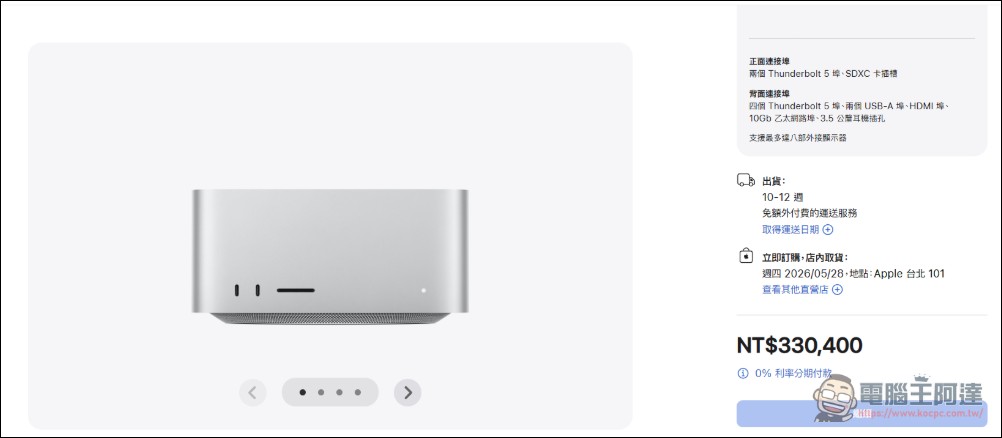
However, the high cost of entry remains a major barrier. Even the most streamlined four-machine cluster requires an investment of more than $20,000, which is still an astronomical amount for most individual users. As technology matures and economies of scale occur, we look forward to seeing more cost-effective solutions in the future (of course your pockets must be deep enough). Apple’s M3 Ultra 512GB also has 1TB of memory if you buy two EXOs. Does it seem to be more cost-effective? I have also seen the plan of four stations on the other side, and you may want to try it yourself.
Source: KOCPC Chinese