


Recently, before the model had even produced results, someone signed a check for more than $100 billion up front—how is that supposed to be accounted for? Meta CEO Mark Zuckerberg and Alexandr Wang (Wang Tao), head of Meta Superintelligence Labs (MSL), were interviewed on the Cheeky Pint podcast hosted by Stripe co-founder John Collison, laying bare the behind-the-scenes secrets of this hundred-billion-dollar bet. This episode was timed to Meta’s latest flagship model Muse Wonder It went live at the time of the announcement. The two drink beer on camera, discussing the journey from Llama 4’s failure to the making of MSL in far greater depth than the official press release.
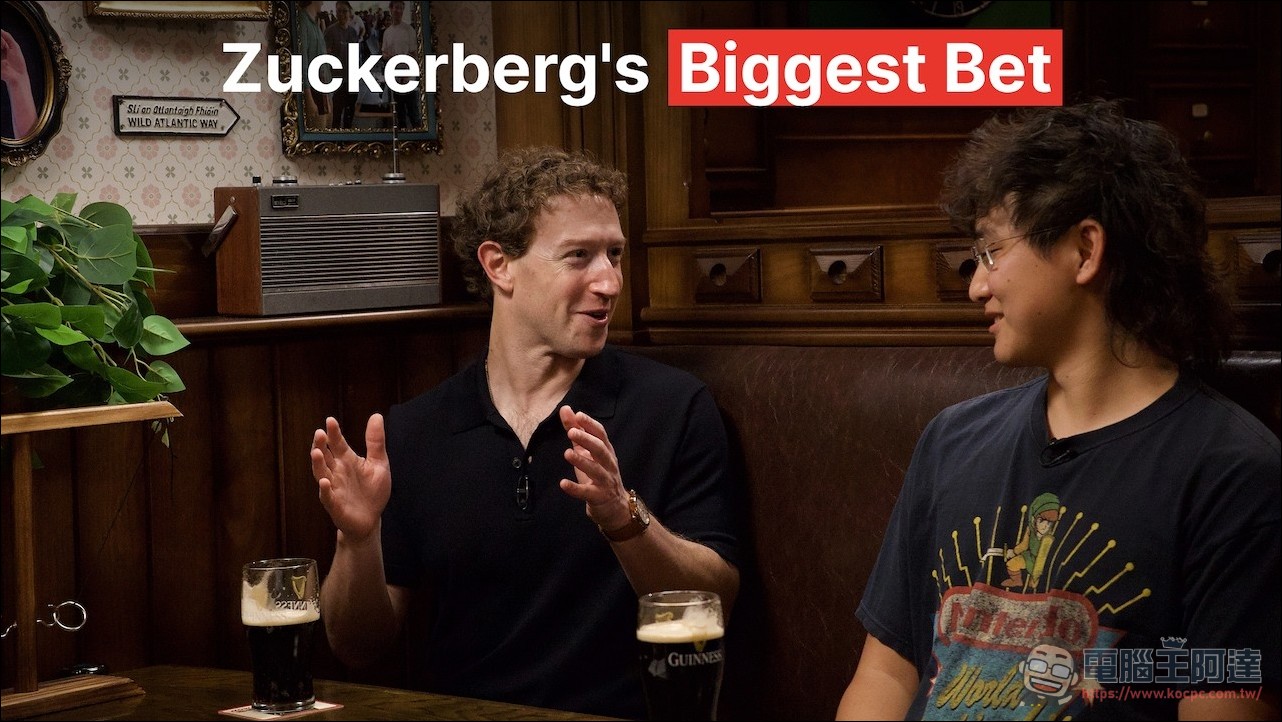
The model hasn’t been seen yet, but the check has already been written.
The episode opens with its most dramatic moment, with Zuckerberg recalling a decision from late last year: “We were pretty excited about the progress, but we hadn’t seen the model yet. We were about to write this check for roughly $100 billion, $200 billion. I turned to Alex and asked: Are you sure this is going to work?”
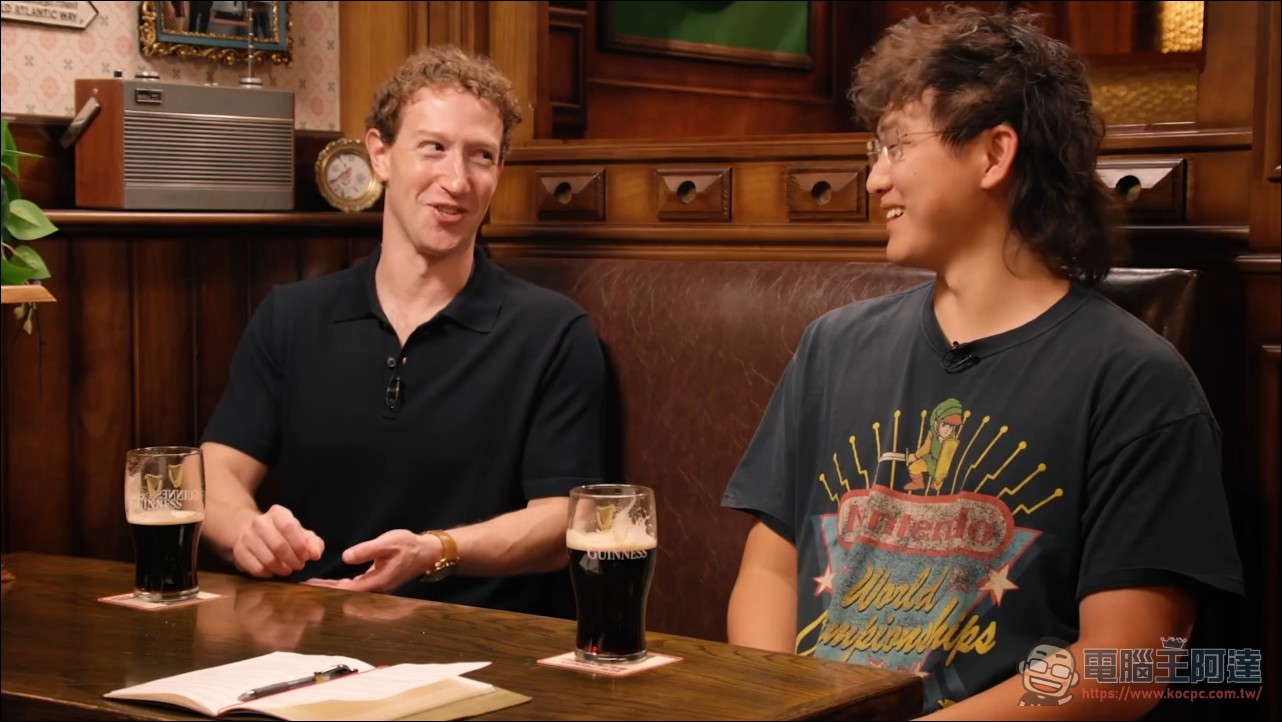
The Tea-Buying Butler and the MMA Coach
Recently, Meta Muse It’s a huge hit in the U.S. and is seen as Meta’s most successful recent AI product, with Zuckerberg and Wang themselves heavy users. When asked about his favorite Muse use case, Wang said his Muse is named Oiler and specializes in scouring remote tea farms in Japan and Taiwan for obscure tea leaves, buying a batch every week and having it shipped back. Zuckerberg’s answer was even wilder: he installed cameras in his gym and has Muse serve as a coach during the 60-second breaks between MMA rounds, giving specific advice on things like weight distribution and hip position: “You didn’t get the underhook here—you’re going to get swept.”
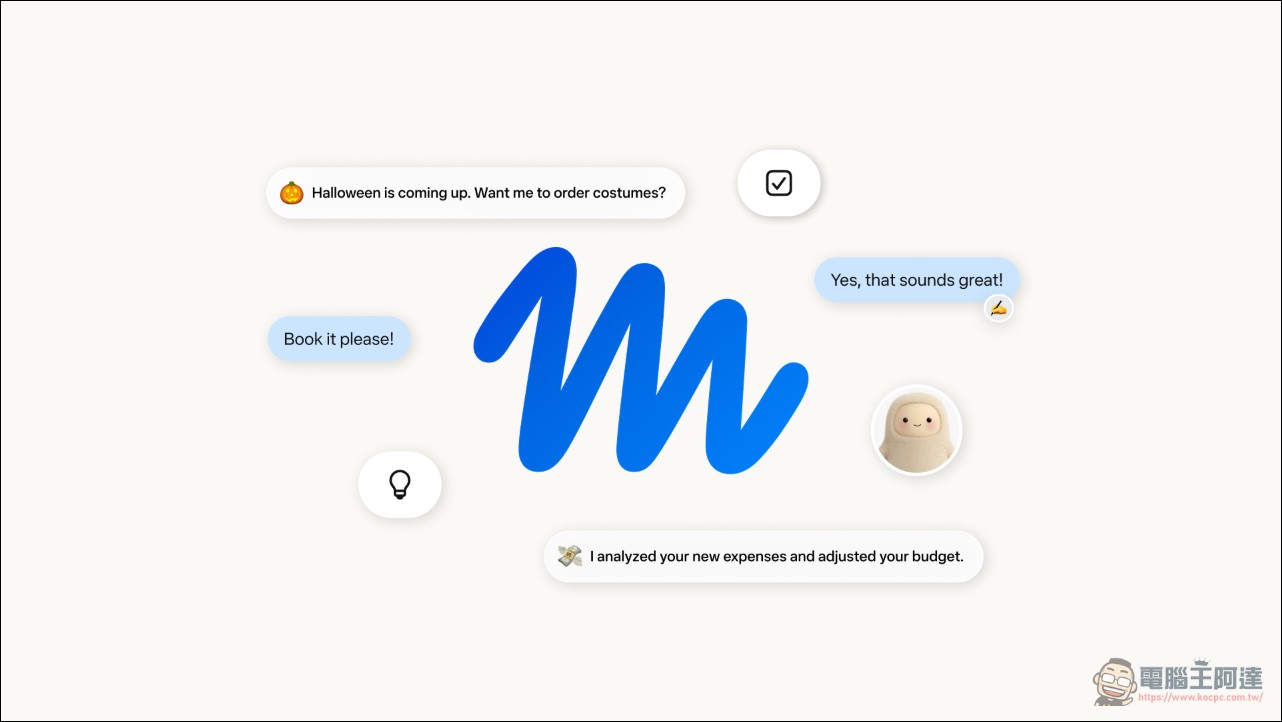
Technically, Muse extracts frames for analysis on its own; no one taught it to cut frames. Zuckerberg also kept pushing it: “You take 30 seconds to reply to me, and I only have 60 seconds to rest. Hurry up and optimize yourself.” He treats this as a test of the model’s coding ability. Inside the agent, it is writing an entire image-processing pipeline. “In the future, everyone will be writing lots of code; they just won’t know they’re writing code.”
One buys tea, the other throws punches—both squeeze multimodal understanding, real-time reasoning, and code generation into everyday scenarios. Zuckerberg lists his MMA coach as a formal product evaluation item, echoing the claim that “the model is the product.”
The model is the product.
“Products are getting thinner, and models are increasingly like the product itself.” There’s an internal saying at MSL: “The model itself is the product.” He used Muse as an example: for this agent, the hardest product work isn’t the interface but the design of the data privacy and security model. What can be connected and how data is handled are the key to whether users buy in. When model capabilities directly determine the ceiling of the experience, the focus of product design shifts from the interface to model behavior itself.
Muse Wonder Launches: Active Memory and Active Focus
Wang positions Muse Wonder as the strongest model for personal and professional agent tasks, with official benchmarks showing industry-leading performance on these tasks and improved coding ability as well.
The two signature abilities are:
- Active Memory: The model itself knows which information should be kept and which should be compressed, preserving context across days or even months. Wang bluntly says that agents on the market “get a bunch of memory bugs after prolonged use,” so they redesigned the memory mechanism across both the model and the system.
- Active FocusThe longer, vaguer, and more frustrating the task, the more the model must be able to endure and finish it—corresponding to users’ biggest complaint after they continually raise task complexity.
The rollout strategy is dual-track: Muse Spark remains free, while Wonder is costly to serve and initially goes behind a paid subscription, accessible to developers via API, OpenRouter, or Muse Code; the higher-tier Wonder Full requires a Muse Code subscription, with a tested plan costing about US$50 per month (about NT$1,625). Zuckerberg’s ultimate goal is to fit Wonder-level capabilities back into Spark’s size, “then it can serve hundreds of millions of people around the world,” making memory and persistence native capabilities of the model, addressing agent users’ most common complaint. The emergence of a paywall means Muse is starting to support itself.
How Frontier Models Are Forged: Pretraining Eats Glass, RL Does the Fine Carving
John Collison asked the two of them to break down the training process. The pretraining stage involves swallowing massive amounts of multimodal data—text, images, video, audio—plus proprietary corpora; Wang specifically noted that if you want the model to be good at professional questions in law, tax, and finance, you have to deliberately add corresponding domain corpora. Zuckerberg quoted researcher Rune’s tweet to describe this work: “The pretraining team is a group of people chewing glass and staring into the abyss.” Wonder bets an extremely high proportion of its compute on pretraining, and a single misstep is extremely costly.
Post-training starts with supervised fine-tuning, followed by reinforcement learning (RL). Wang described RL as having a philosophy opposite to pretraining: it requires small, refined data and environment design. The greatest danger is that RL’s optimization pressure pushes the model off course, leading it to learn misaligned shortcuts in environments where the only way to pass is to cheat, so environments must be chosen carefully.
As for evaluations, neither of them pulled any punches about public benchmarks. Wang said: “If you dig into the supply chain, you’ll find that many public benchmarks are just tools some PhD student threw together while doing their PhD. Focusing all your attention on benchmark scores is equivalent to outsourcing your entire company’s product thinking to whichever PhD student happened to create a viral test.” MSL therefore shifted its focus to in-house evaluations, and even quantified a “big model smell” metric in its research report, using the performance gap between in-distribution and out-of-distribution results to judge whether a model has a “big model feel”—the exact opposite of blindly score-chasing benchmaxing.
Next, turning to the hundred-billion-dollar-scale “big gamble” on AI, the specific scale of the bet is as follows: the Prometheus cluster in Ohio is expanding to over 1GW, while the Hyperion cluster in Louisiana is targeting 5GW. Zuckerberg specifically clarified that these two projects predate the founding of MSL and were finalized between 2023 and 2024.
How does the math work out? Zuckerberg laid it all out at once: “Running a 1GW cluster for a year is on the order of $15 billion” (about NT$487.5 billion), and including upfront construction capital expenditure, “roughly $50 to $60 billion” (about NT$1.63 trillion to NT$1.95 trillion). And that’s just one cluster, one training stage; the research cost for small-scale experiments is about the same amount again.
The most stressful moment was at the senior-level meeting in Hawaii late last year. Wang recalls CFO Susan Li pulling him aside several times: “I want to remind you, if this model can’t be built, it will be very, very bad financially. I need to make sure you remember: this model must succeed and must be good enough. If it succeeds, everything is fine; if it doesn’t, it will be really, really bad.”
Zuckerberg’s confidence comes from Power Law thinking, and Wang says few people have internalized the power law as deeply as he has. Zuckerberg’s calculation is: “If AI succeeds as a whole, there will be plenty of people out there eager to get their hands on our compute, and we can charge rent above cost. The only way this investment fails is if AI as a whole fails.” Even in the worst-case scenario, “our core business only needs to grow a few percentage points thanks to these models to sustain our R&D spending.”
The logic of downside protection is the fuse in this gamble: compute is a general-purpose asset, and if the model loses, the compute is still there. On top of that, GPUs can remain in service even after being fully depreciated, and Zuckerberg even believes an H100 is worth more now than it was last year.
MSL from Zero to One: Four Decisions After Llama 4
MSL was born out of a public setback. Zuckerberg said Llama 4 was released on April 4, 2025, and around April 20 he began calling people to solicit opinions. “I was in a meeting when I suddenly got a WhatsApp message asking if I had time to talk.” That was the starting point of Wang reaching out. He admitted he was “very dissatisfied” with Llama 4’s trajectory, and the ultimate solution was to reorganize the entire team.
John Collison laid out four unusual decisions in this restructuring:
- Publicly admit that the direction is wrong., if it needs a reboot, reboot it.
- Pay astronomical prices for talent., poaching Wang and a group of top researchers en masse
- Betting on people who have never trained a flagship model.Wang has worked at an AI company, but has never done this specific thing.
- Clear the calendar for two months.Zuckerberg “almost cleared one to two months of his schedule, doing only one thing every day: meeting with researchers.”
The restructuring adopted a full reboot approach, and the deal gives Meta a 49% stake in Scale AI. The founder-CEO cleared his calendar for two months to personally conduct interviews, a level of mobilization rarely seen at large companies. The four decisions point to the same judgment: the organization itself is the bottleneck, and changing people and mindsets is faster than changing strategy. (Editor’s note: But going All in on someone as wild as Alexandr Wang was a bit surprising to everyone.)
Exceptional Performance from a Place of Insecurity
Wang described them as a group of “insecure overachievers”: “When I ask everyone where they’ll be in three months, the answer is always that things are terrible and we’re doomed.” He would record these predictions and, when the model was released three months later, play them back for everyone to reconcile. It didn’t work. “They’re just as self-critical as ever,” optimistic about MSL as a whole and never satisfied with their own projects. Using pessimistic predictions as a reality check to manage R&D pace is more pragmatic than optimistic pep talks: uncertainty can’t be eliminated, but complacency can be minimized.
So flat that there are no non-technical managers.
Wang has 200 direct reports. Zuckerberg says the key is that “there are no non-technical managers here.” Wang explains the design philosophy is anti-bureaucratic: all new researchers report directly to him, and cutting out the middle layer prevents people from losing touch with the front line: “Once researchers move from technical details into management, they lose touch with technical reality at an unimaginable speed. This field changes so fast, and that is very dangerous.” His conclusion: “Stay technically hands-on, use agents yourself, and write code yourself.”
Conclusion
Listening for 134 minutes, this interview redefines the AI race as a dual war of capital and organization: hard-mode entrepreneurship where you write the check first and see results later, compute allocation without spreading peanut butter, and flat organizations with no non-technical managers—each one runs counter to conventional best practices. At the end of the show, the two offer this summary: “Stay on the front lines and stay hands-on with the technology,” wrapping up by drinking Guinness beer that Zuckerberg carried back from Dublin. While everyone is still comparing whose model is smarter, front-line players have already moved the battlefield to the level of compute and organizational form. A hundred-billion-dollar check does not guarantee success; it only guarantees that the entry ticket keeps getting more expensive.
Due to space constraints, I can’t include the full content, so I’ll just summarize the points I personally found important. Friends who are interested can listen to this interview in full; it has CC subtitles:
Source: KOCPC Chinese