


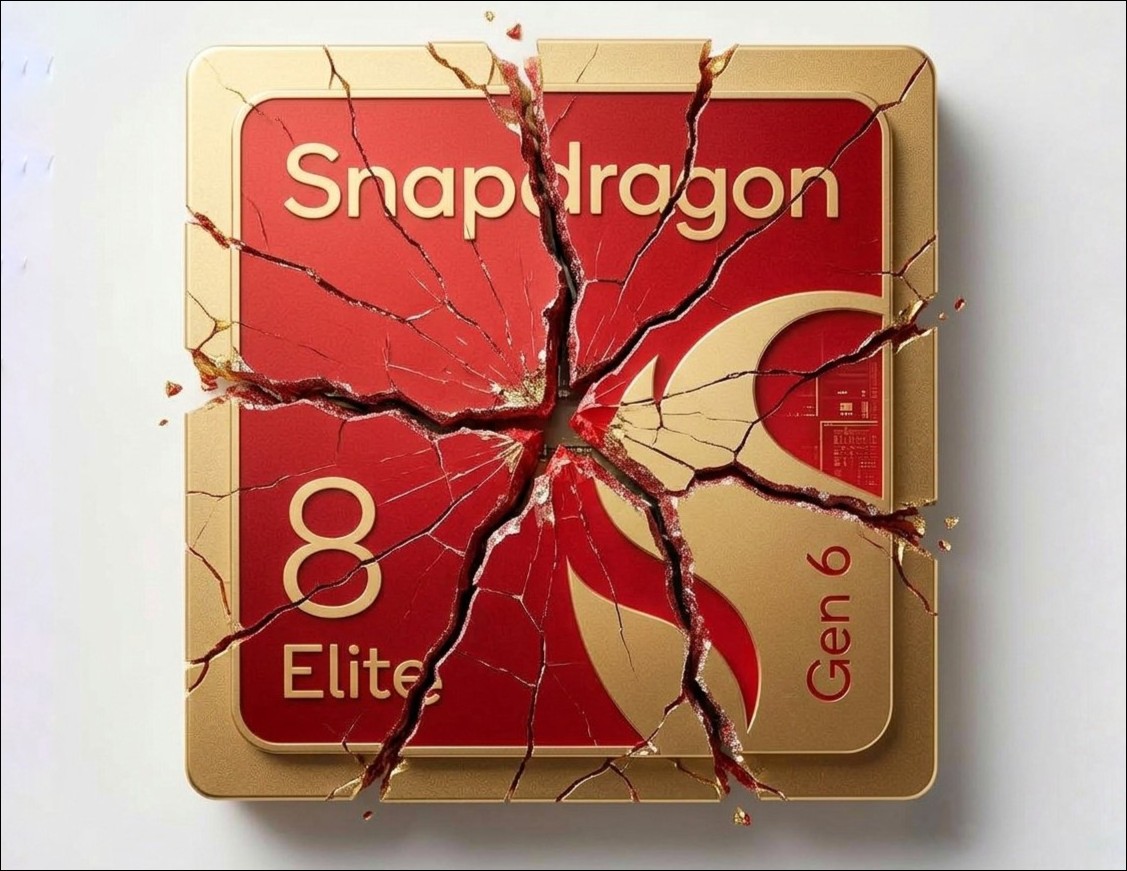
Starting in September, almost every brand rolls out its annual new phones around this time, but whether these flagship phones use Qualcomm, MediaTek, or Apple chips, they almost all have one thing in common: they are all built using TSMC’s 2nm process. But recently, reports have begun circulating in China that this year’s devices equipped with the Qualcomm Snapdragon 8 Elite Gen 6 series are all reportedly experiencing crashes, black screens, and random reboots, with the issues being more pronounced under high load, especially on the Honor Magic 9 Pro Max, Xiaomi 18 Pro series, and iQOO 16;Some reportsIt even suspects that TSMC’s latest 2nm process is flawed and claims that the iPhone 18 Pro series has a similar issue, while only MediaTek Dimensity 9600 Pro models remain unaffected.

Fact check 1: The iPhone 18 Pro restart is real; the culprit is software.
The only part of these rumors that is actually true is on Apple’s side: a few days after the iPhone 18 Pro went on sale on September 18, “panic-full” logs began appearing on Korea’s Asamo, Reddit, and forums in various places: the device freezes and then automatically shuts down and restarts. One Reddit user had it restart more than three times within 24 hours of buying it, and in a Macworld-tracked thread with 24 replies, 22 people said they had encountered the same or a similar issue. A Korean YouTuber also reproduced it in testing.
iPhone 18 Pro randomly stops responding to touch 😭 pic.twitter.com/xr76g6OyHc
— Noah Cat (@Cartidise) September 20, 2026
However, the cause of this issue may be an iOS 27 driver problem with the new Face ID sensor on the iPhone 18 Pro: this generation moved the infrared camera under the display and separated it from the dot projector. When Face ID authentication within an app fails and you tap “Retry,” the driver’s failure return path triggers a kernel-level panic, which is why the phone hard-restarts. Apple publicly acknowledged on September 24 that it was a software issue and that no hardware replacement was required. iOS 27.0.1 was pushed out by the end of September to fix it, while also fixing two issues: unresponsive touch and color spots in photos. In other words, this was a software-driver compatibility oversight, unrelated to what process the chip uses.
Verification 2: There are quite a few cases, but it cannot be confirmed that 8EE6 “failed.”
The situation on the Android side is completely different. At the end of September, Qualcomm unveiled two 2nm flagships at once at Snapdragon Summit 2026: the Snapdragon 8 Elite Gen 6 (SM8950) and the 8 Elite Extreme Gen 6 (SM8975, or 8EE6 for short), both built on TSMC’s N2P process. Nearly all of this wave of new 2nm flagship phones use these two Qualcomm processors: the iQOO 16 was announced at the end of September, the Honor Magic 9 Pro Max and Xiaomi 18 Pro series are new phones that only went on sale in the past two weeks, and the Motorola Signature 27 is still further down the line. Not long after shipments began, many users in China were reporting various reboot issues online.

Recently, there has indeed been talk in Chinese tech circles that the “8EE6 has flopped,” mostly screenshots and secondhand accounts claiming it easily crashes, black-screens, and randomly reboots under heavy load. However, in publicly available real-world gaming and benchmark tests so far, no large-scale crashes have been recorded.

The issue is that this wave of problems hasn’t been large enough to be exaggerated; most are scattered reports across brands. The brands involved also haven’t issued official statements or repair/recall notices (I did see a Xiaomi notice saying that if this happens, it will simply replace the device), and there are no incident statistics either. Only claims from Chinese local self-media that “quite a few users have reported it” keep being forwarded. Meanwhile, earlier engineering sample tests showed that 8EE6 has a restrained power-efficiency curve and gaming performance that is even a pleasant surprise. 8EE6 flagship phones only just launched in the past two weeks, and long-term usage reports for the first batch haven’t accumulated enough; it’s too early for either side to say definitively whether it has failed.
Fact-check 3: No evidence found for TSMC 2nm defect claims
The “TSMC 2nm process defects” currently rumored online in China has so far no evidence, and in all currently public information, TSMC’s 2nm progress is generally positive on all fronts: yield has climbed into a stable range of 60% to 70% or above, clearly better than Samsung at the same node, and monthly capacity is planned to expand from 90,000 wafers by the end of 2026 to 110,000 wafers by mid-2027. Another piece of news often mixed in is that Qualcomm is considering moving some standard-version chips to Samsung’s 2nm.Dual foundry rumorsThat is a supply-chain issue involving tight capacity and price negotiations, which is completely different from “a defective manufacturing process”—they are two distinct allegations. Moreover, the Dimensity 9600 Pro, which also uses TSMC’s 2nm process, was already announced on September 15 and made its debut with the vivo X500 series. If the process itself really had defects, there is no reason it would only affect Qualcomm and Apple chips. Of course, Dimensity 9600 Pro devices have only just launched and their user base is not yet large, so saying “there are no reported problems” is not convincing for now either, but calling it “a defective manufacturing process” is likewise unsupported by evidence.
Conclusion
After verifying the various recent rumors, the only confirmed one is that the iPhone 18 Pro really did have a crash-and-restart issue, but it was brought to an end by the iOS 27.0.1 firmware update; claims such as the 8EE6 failing and 2nm defects are currently limited to isolated incidents in China, and the 2nm new phones from both camps have only just started shipping, so consumers really don’t need to worry too much (if you do run into a problem, the manufacturer will handle it). If you’re thinking of getting an 8 Elite Gen 6 phone and are really worried, you can also wait until the first wave of retail units has been on the market for a while and see whether there are any reports of issues before deciding. If 8EE6 really has a hardware-level defect, consumer reactions to retail units in the coming weeks will definitely not stay hidden, and if there really is a problem, the blame could also be on Qualcomm’s side (after all, MediaTek and Apple are fine), so there should be no need to worry about TSMC’s process and technology.
Source: KOCPC Chinese