


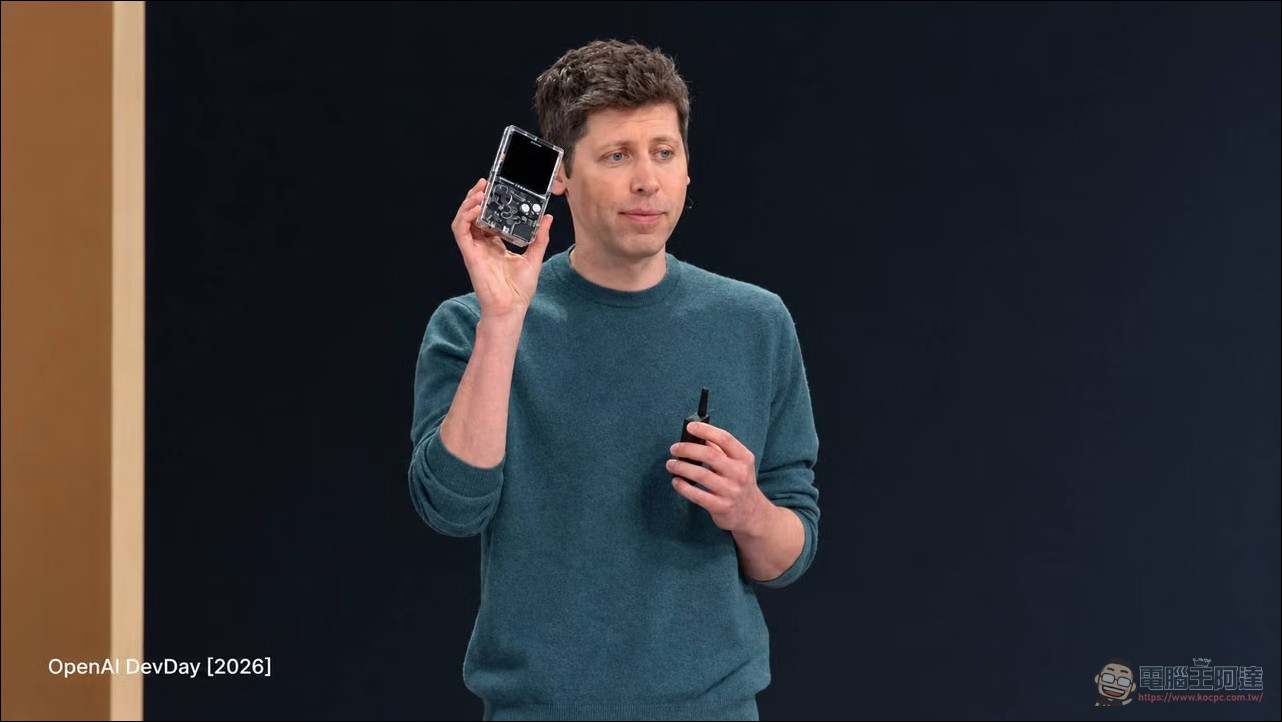
During an Easter egg segment at the OpenAI DevDay 2026 keynote a few days ago, Sam Altman held up a working transparent-shell handheld console and announced that OpenAI was teaming up with retro handheld brand ModRetro. The collaboration had not been leaked in advance, and all roughly 2,500 attendees each received a limited-edition “ModRetro Chromatic: DevDay Edition,” complete with a blank cartridge and activation code, so they could start making their own games as soon as they left the venue.
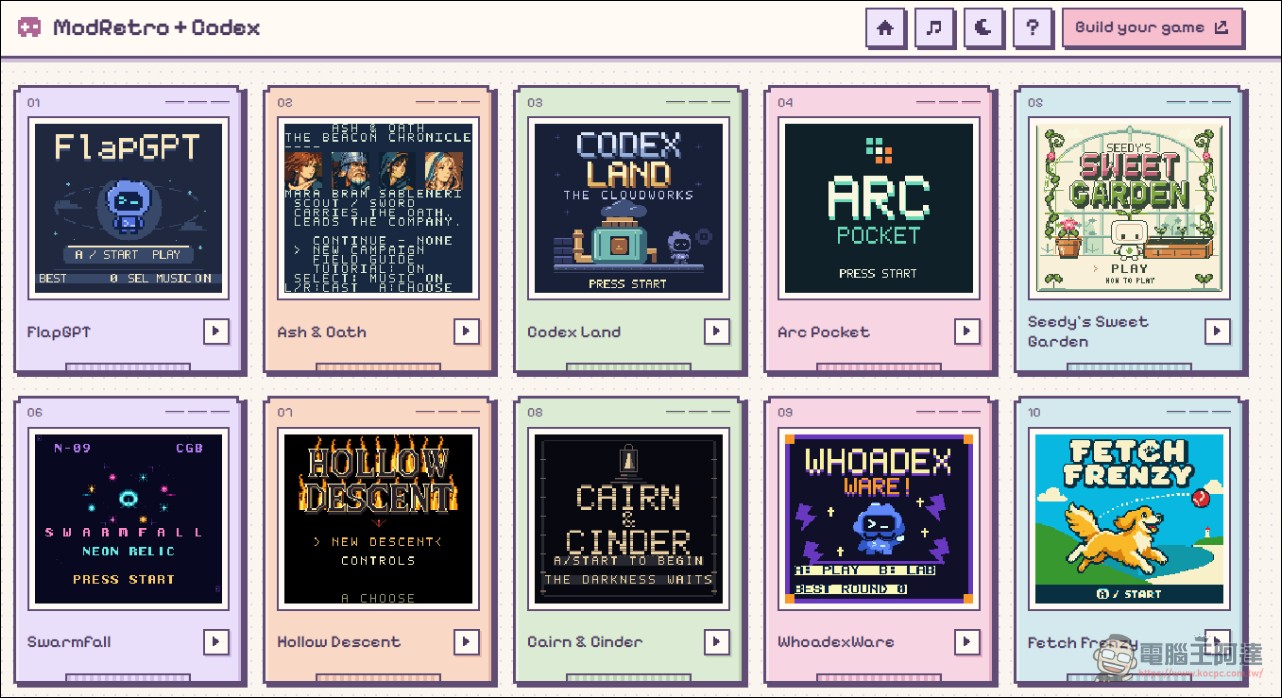
13 GBC games made with Codex, playable directly in your browser
The first step of the collaboration is to deliver games first: OpenAI’s developer site has launched 13 Game Boy Color games written with Codex. Leading the lineup is FlapGPT, a tribute to Flappy Bird set in San Francisco; Pizza Dash is a side-scrolling game where you play a pizza delivery driver riding a motorcycle and dodging roadblocks; Seedy’s Sweet Garden takes a casual puzzle approach, with you tending a small garden. The rest also include Ash & Oath, Codex Land, Arc Pocket, Swarmfall, Hollow Descent, Cairn & Cinder, WhoadexWare, Fetch Frenzy, Cloudfall, Ember Escape, and others, spanning action, adventure, and puzzle genres.
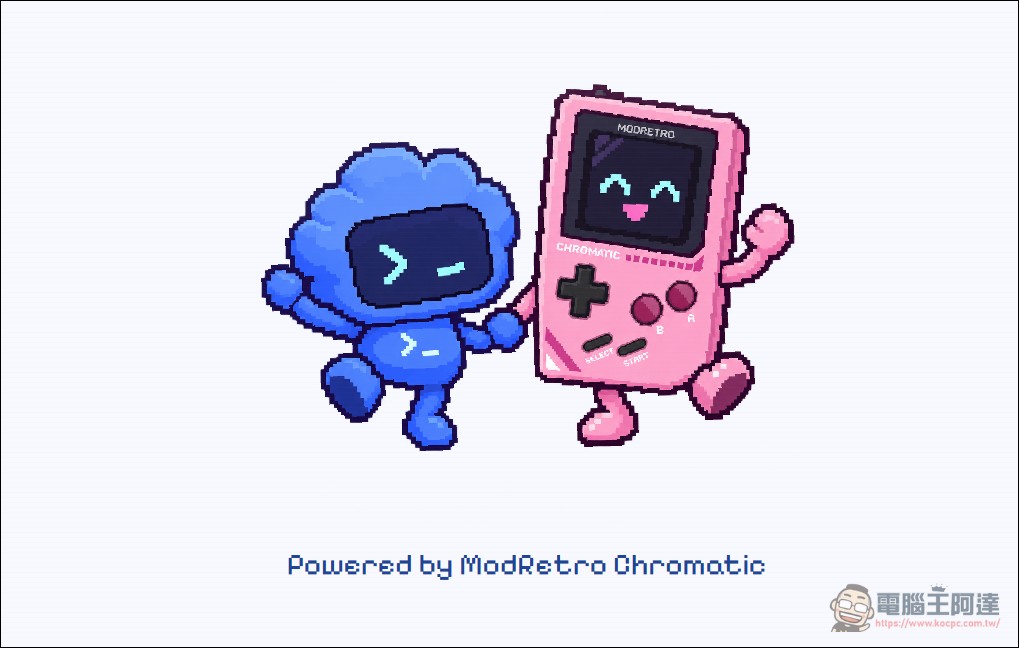
These games can be played right in a browser, and you can also download the ROM files to load onto compatible Game Boy hardware or emulators. The official page even has its own Easter egg: it opens with an animation of a Codex pet dancing hand-in-hand with a pink Chromatic, and you have to press any key to get to the game menu. The official statements from both sides are simple: the collaboration pairs ModRetro’s handheld hardware with OpenAI’s coding agent Codex, and there is just one theme: game development.
Codex Game Studio: Describe it in one sentence, and the game is up and running.
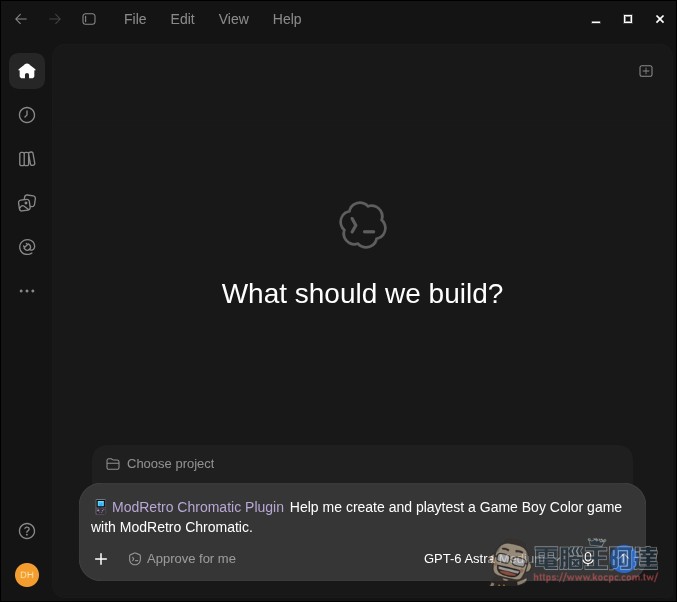
What excited the on-site engineers was “Codex Game Studio.” It is an official plug-in for the Codex desktop version, and its actual name is ModRetro Chromatic Plugin. Once installed, you describe the game you want to make in natural language; Codex generates code, immediately runs and tests it in a built-in emulator, and can also compile it into ROM files compatible with Game Boy and Game Boy Color. Officially, Game Studio is positioned as a development environment that automatically generates 2D and 3D games from text descriptions, and Chromatic is one of its branches.
Whomever thought of the Modretro deserves a raise. Incredibly cool.
The console comes with a blank cartridge and you will literally build the game with Codex and load it onto the device.
— am.will (@LLMJunky) September 29, 2026
The official quick-start guide even has examples ready. Open a new conversation, press “@” to call up the plugin, and describe the game; it will automatically create a GB Studio project. For example, say, “Make me an exploration game where a little gardener collects three seeds, plants them, and unlocks a door,” and the finished product appears. If you don’t plan to start from scratch, the plugin includes a sample game called “Wrecklight” that you can remix; the official suggested modification is to change the opening scene to an abandoned research station.
When you’re stuck on a game, it can step in too. Adding a village scene, drawing a walking robot protagonist, or switching the visuals to a moonlit color scheme is just a matter of saying one sentence; it will also proactively audit whether art assets exceed Game Boy hardware limits and fix them on the spot if they do, so the final compilation doesn’t fail. Iterating as you build is smooth, and the same emulator preview can be used throughout; the plugin also supports automated playtesting, letting Codex play through first to catch issues.
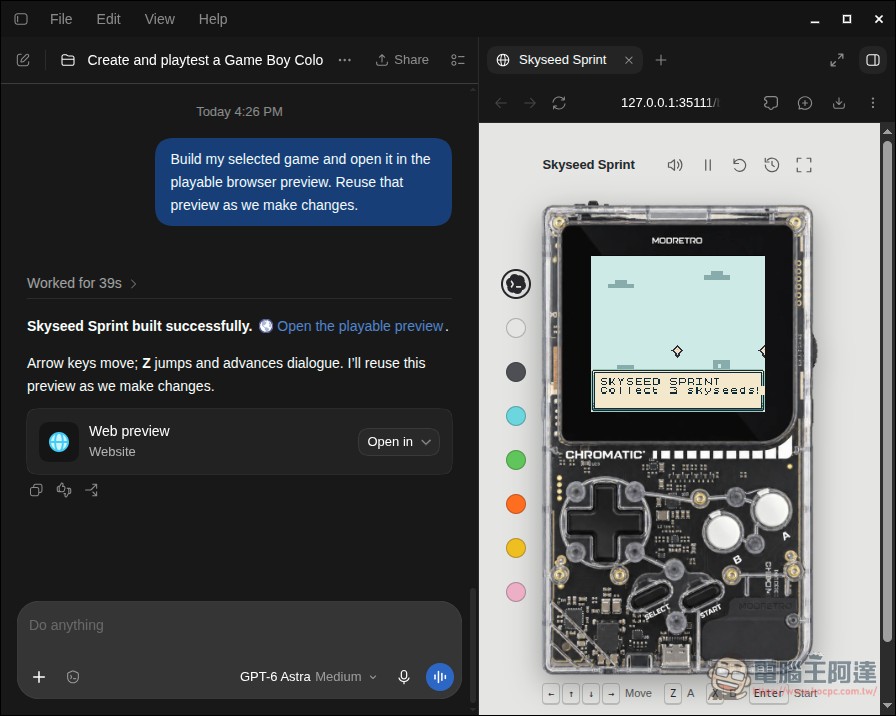
The finished product doesn’t just stay on your computer. After trying it out in an emulator, you can stream the game screen to a physical Chromatic to get a feel for it, then once you’re satisfied, burn the ROM to a cartridge with a single command and make a real physical game cartridge. The official team will even walk you through the boot-up, gameplay, and sound check process.
Umm. This is kinda cool. pic.twitter.com/cs5dyErp0z
— Michael Magán (@mrmagan_) September 30, 2026
This ModRetro handheld is a big deal: Palmer Luckey’s FPGA recreation of the Game Boy Color
Chromatic comes from ModRetro, owned by Palmer Luckey, the designer of the Oculus Rift; the company specializes in hardware preservation and modernization for retro games. The device uses FPGA hardware to directly emulate the Game Boy and Game Boy Color, reads original cartridges, and does not rely on software emulation. Its exterior follows the proportions and button layout of the Game Boy Color, while adding a custom LCD that remains visible in sunlight and an aluminum alloy body. When it debuted in 2024, the media described it as the “ultimate Game Boy Color.”
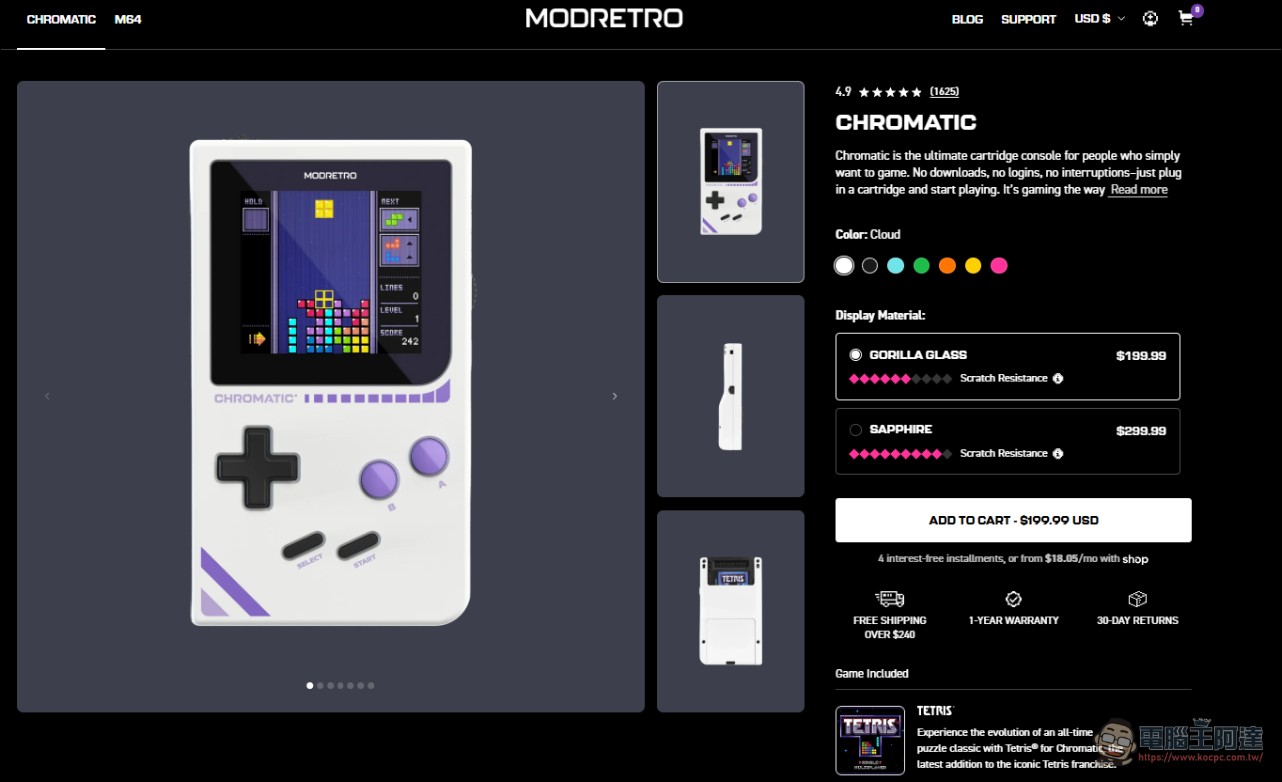
This machine also adds modern features like an IPS screen, Gorilla or sapphire glass, and USB-C. It was out of stock for quite a while at launch, and after its return it became a mainstay ModRetro product. The Shortcut gave it a perfect 5/5 in its hands-on review, describing it as “the best way to play Game Boy games, bar none.” The standard version starts at $199.99, about NT$6,500. ModRetro’s retro remake lineup hasn’t stopped at the Game Boy either; another N64 retro console, the M64, has just had its review released.
Hard rule: original games only, no piracy.
As fun as it is, the official line is very clear. The quick start guide emphasizes that this add-on is limited to “original, self-developed ROMs” and may not be used for piracy, emulating commercial games, or bypassing protection mechanisms; developer mode is at your own risk, users must ensure their assets do not infringe on anyone’s rights, and ModRetro does not review or endorse user content. The guide ends with a common but necessary disclaimer: Nintendo is not affiliated with ModRetro and does not sponsor or endorse this product.
Conclusion
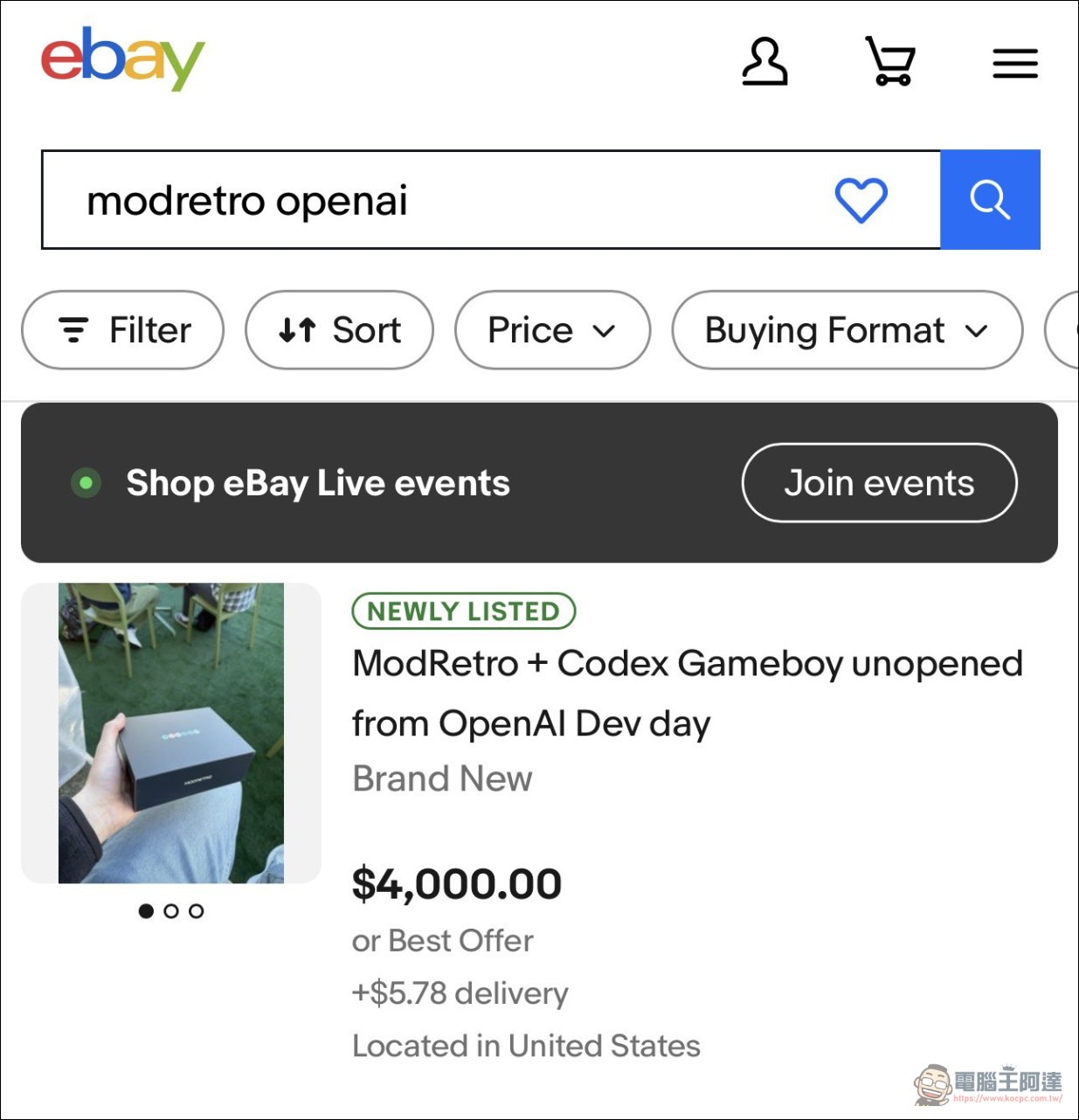
The “make games by talking” playbook has mostly played out on mobile apps and web services over the past two years; this time, DevDay moved it onto an 8-bit retro handheld, with clear spec limits, just a handful of pixels on screen, and code short enough for AI to handle in one go—just right for beginners. As 2,500 engineers walked out of the venue each carrying a blank cartridge, the barrier to entry for game development probably dropped another notch. Also, if you want to get one, it’s a bit difficult right now; someone on eBay has already listed one for $4,000, so you can wait and see whether it goes on sale officially.
Source: KOCPC Chinese