


The U.S.-Iran war continues to heat up. Iran’s Islamic Revolutionary Guard Corps (IRGC) issued the latest statement on April 1, 2026, announcing that it would launch direct military strikes on the facilities of 18 U.S. technology and financial companies in the Persian Gulf region. The list covers the world’s most influential technology giants, including Nvidia, Microsoft, Apple, Google, Intel, Meta, IBM, Cisco, Tesla, Boeing, Dell, HP, Oracle, JPMorgan Chase and GE.
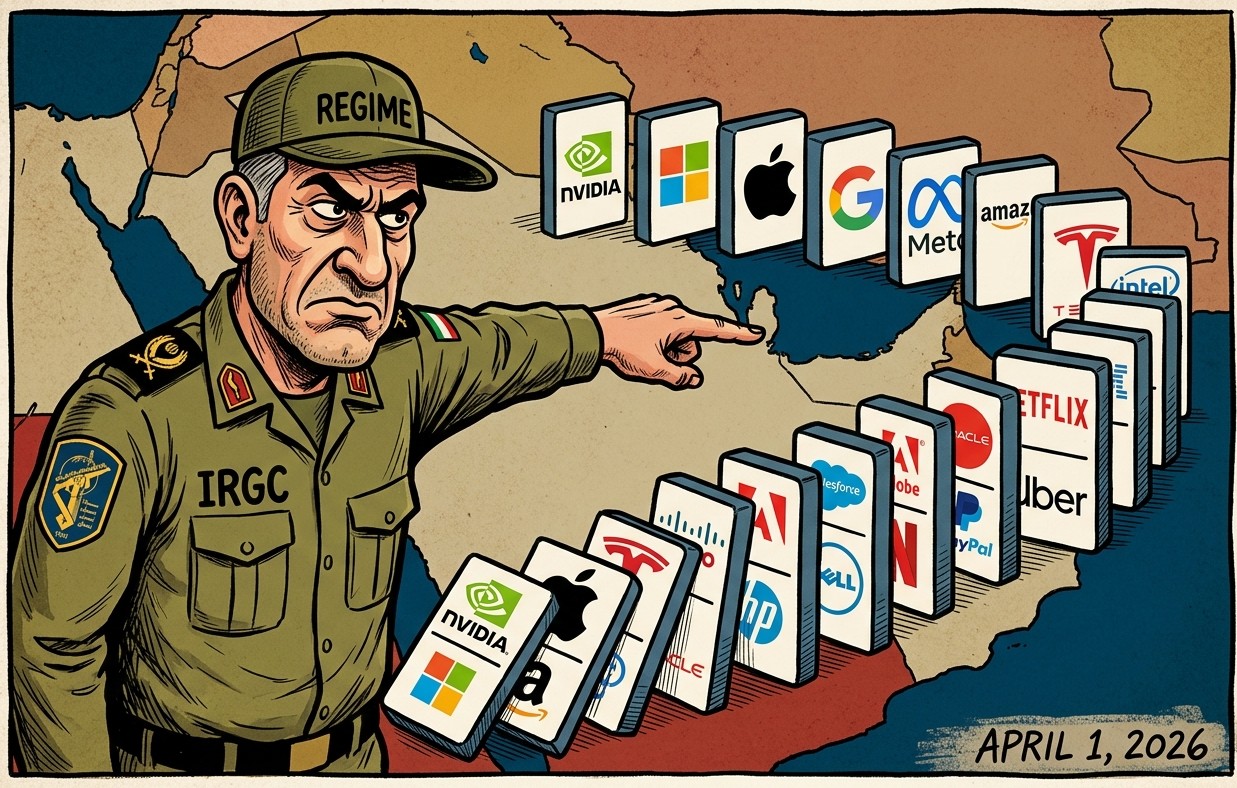
Just days before this statement was issued, the Iranian authorities had officially identified these companies as “legitimate targets.” The Revolutionary Guards issued a more strongly worded threat message through the encrypted communication platform Telegram, asking employees of these companies to “leave the workplace immediately to save their lives” and warning residents within one kilometer to evacuate quickly. The Iranian Armed Forces also stated: “Every time a terrorist attack occurs in Iran, the facilities of these companies will be destroyed in retaliation,” and hinted that the first round of strikes may be launched as early as 8 pm on April 1, Tehran time.
U.S. military strengthens Middle East deployment, defense secretary warns “decisive moment” is coming
US Defense Secretary Pete Hegseth publicly warned earlier that “the next few days” will be a decisive moment in the Middle East. According to the U.S. Department of Defense, the U.S. military has significantly strengthened its military deployment in the Middle East, including deploying additional aerial tankers, adjusting the configuration of the Fifth Fleet, and maintaining a high degree of surveillance on multiple suspected missile and nuclear facilities in Iran. U.S. intelligence agencies have assessed that Iran’s move may be in retaliation for a recent series of terrorist attacks in Iran, but the details of the specific attack plan are still under active evaluation.
A U.S. Department of Defense official anonymously disclosed to the media that the Pentagon has established an emergency response team to monitor the security status of all U.S. corporate facilities in the Persian Gulf around the clock. The official also said that the U.S. military has the ability and determination to protect the safety of U.S. citizens and businesses, but declined to comment on specific military deployment details.
Amazon cloud data center attacked
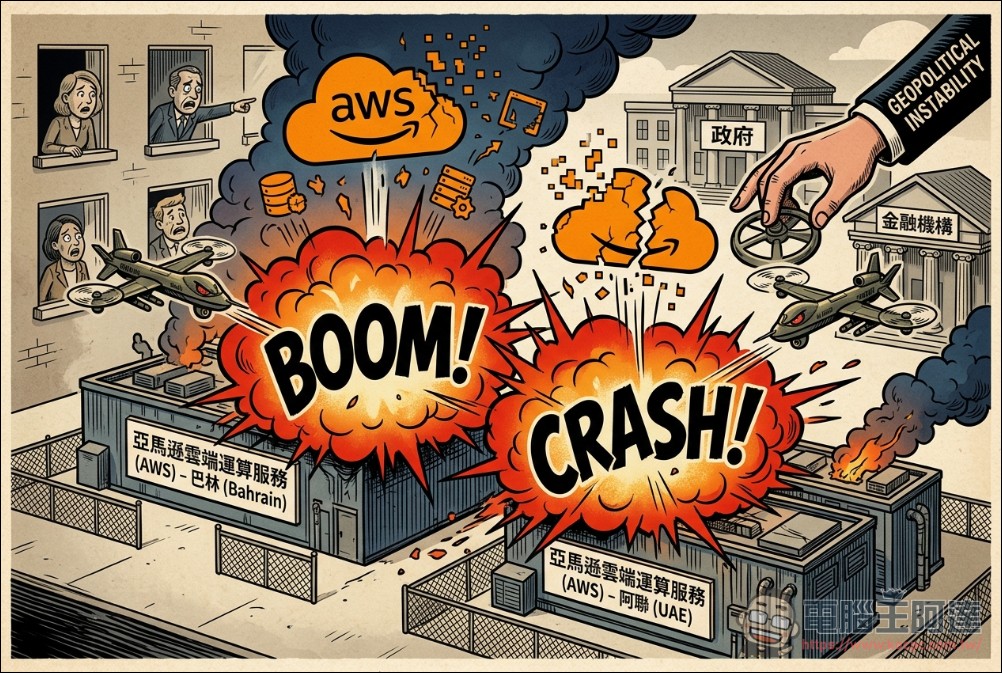
At the same time that Iran issued the threat statement, Amazon Cloud Services (AWS) data centers in Bahrain and the United Arab Emirates were confirmed to have been attacked by drones. According to local media reports, the attack caused a brief interruption of some cloud services, but Amazon has not yet issued an official statement. Industry analysts pointed out that AWS’s data centers in the Middle East mainly serve financial institutions, government departments and multinational enterprise users in the region. Once they suffer a systemic attack, it may cause widespread service interruption effects.
Global helium supply chain sounds alarm
What worries the technology industry even more is that global helium supply is facing severe challenges. Helium is a key material in the semiconductor manufacturing process and is widely used in photolithography machine cooling, atmosphere protection, leak detection and other process links. The Persian Gulf region is one of the important sources of global helium exports, and unrest there has blocked helium transportation routes. Semiconductor industry analysts warn that if helium supply continues to be tight, it could have a catastrophic impact on the chip manufacturing industry, driving up wafer production costs and exacerbating the global chip shortage.
Israel has become a direct target of technology giants, with Huida Intel bearing the brunt
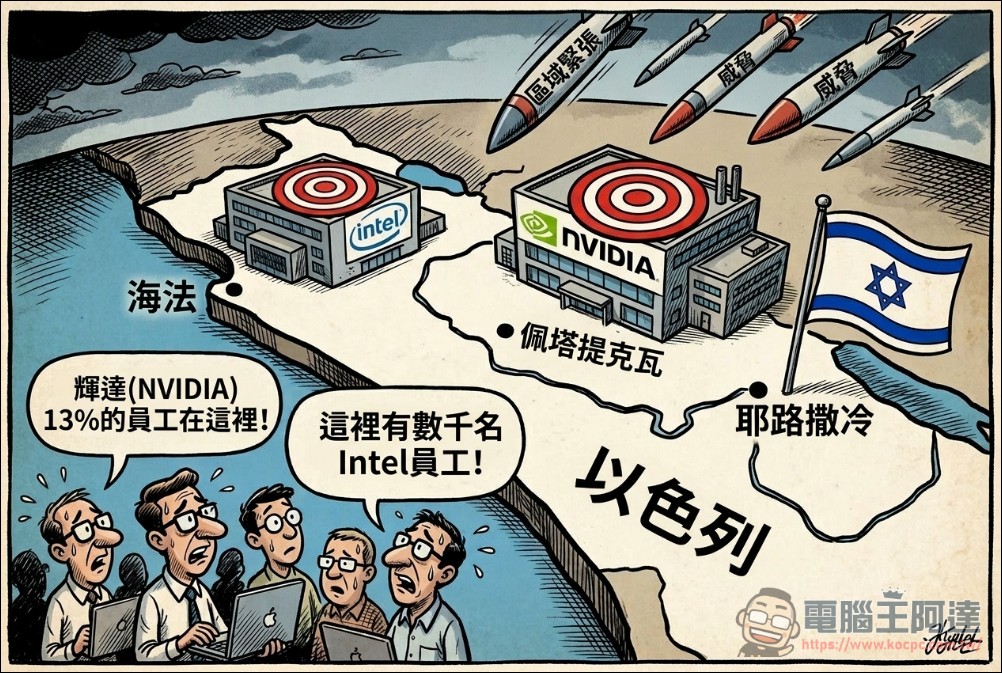
It is worth noting that many companies on the Iranian Revolutionary Guards’ threat list have important R&D bases and production facilities in Israel. Israel has always been an important country for the global technology industry’s overseas layout. Many American technology companies regard it as the location of the second largest overseas R&D center.
According to public information, about 13% of Huida’s global employees are stationed in Israel. The country is Huida’s second largest overseas R&D center and is mainly responsible for the development of advanced technologies such as autonomous driving, artificial intelligence and professional graphics chips. Intel employs about 9,355 people in Israel, mainly at research and development centers near Jerusalem and Haifa, and at its wafer manufacturing facility in Petah Tikva. This exposes technology workers in Israel directly to the threat from Iran.
An Israeli government spokesman immediately issued a statement, strongly condemning Iran’s threatening remarks and stating that Israel has the right and ability to defend itself. An IDF spokesman added that the military has raised its defense alert level and is maintaining close coordination with the United States to jointly monitor regional security situations.
Technology industry emergency response: supply chain security becomes focus
In the face of a sudden geopolitical crisis, many threatened companies have launched emergency response plans. It is understood that some companies have informed employees to avoid business trips to the Middle East and implemented additional security controls at local facilities. Technology industry supply chain experts pointed out that the Persian Gulf region is a key node for global electronic product logistics. Any escalation of military conflicts may lead to shipping disruptions, soaring insurance costs, and delays in the supply of raw materials and components.
The international community pays close attention and diplomatic mediation continues
The spokesperson of the United Nations Secretary-General called on all parties to exercise restraint and avoid actions that may aggravate regional tensions. The European Union’s High Representative for Foreign Affairs and Security Policy also issued a statement expressing deep concern about Iran’s threatening remarks and reiterated the EU’s support for the importance of resolving disputes through diplomatic channels.
At the diplomatic level, the U.S. State Department has instructed embassies and consulates in the Persian Gulf region to closely monitor the development of the situation and maintain contact with local U.S. companies. A spokesman for the Chinese Ministry of Foreign Affairs stated at a regular press conference that China opposes any form of terrorist acts and called on all parties concerned to resolve differences through dialogue and consultation and avoid taking unilateral actions that may escalate the situation.
As the critical deadline of April 1 gradually approaches, the global technology industry and financial markets are paying close attention to the latest developments in the situation in the Middle East. Regardless of whether Iran’s threats will ultimately be implemented, this incident has fully revealed the profound impact of geopolitical risks on the global technology supply chain and industrial layout. In the foreseeable future, technology companies will have to more carefully assess geopolitical risk factors when making overseas deployments.