


You may have seen this viral video recently: five Korean K-POP girl group-style characters, a city occupied by aliens, mecha battles, fighting scenes, and a complete K-pop dance, all generated by AI, without cameras, crew, or any traditional film and television production processes. The Higgsfield AI team used Bytedance’s Seedance 2.0 model to create a sci-fi trailer called “Zephyr”. Many people are curious about how the entire film was produced using AI. The Higgsfield AI team released behind-the-scenes footage of the film, completely breaking down the production logic behind each shot. From the locking of character consistency, the construction of the world view, to how to use text prompts to guide AI to generate physical action scenes, this is not only a technical demonstration, but also a replicable AI film production methodology.
Every frame of the “Zephyr” trailer is generated by AI. Producer Tanya excitedly introduced that this trailer was completely produced using Seedance 2.0 on the Higgsfield AI platform, with zero traditional production processes. She broke down the process into three core links: how to build the character, how to build the world, and the part that she personally “can’t stop thinking about at all”: how each shot is generated.
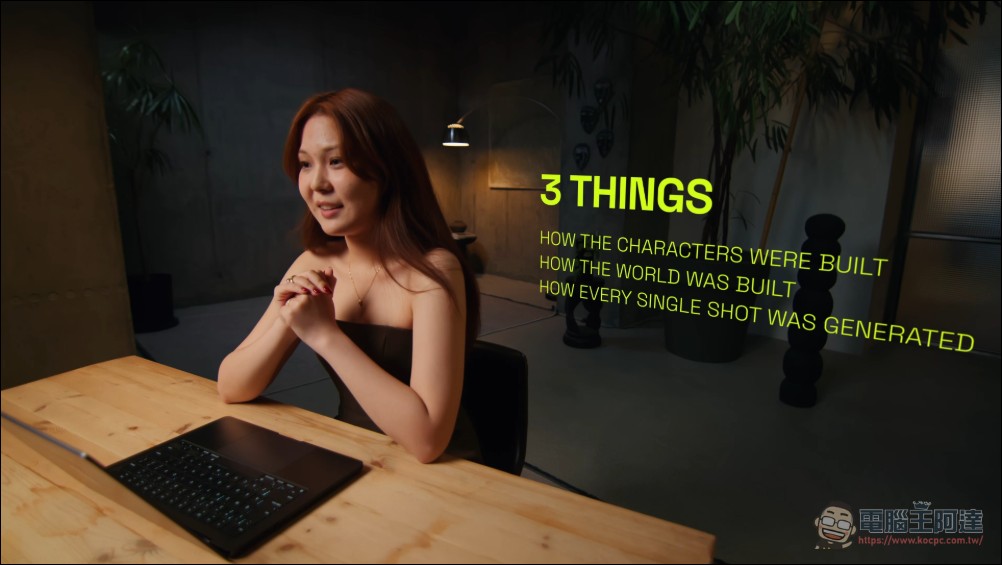
Part 1: Constructing Characters: Three Steps to Lock Your AI Actor
Tanya got straight to the point and pointed out the most common fatal problem in AI film production: you generate a character, like her very much, and start prompting various scenes. As a result, by the third scene, she looks like a completely different person. This used to be a pain point for everyone.
Zephyr’s directing team solved this problem with a three-step workflow that Tanya says “once you see it, you’ll never mess around again.”
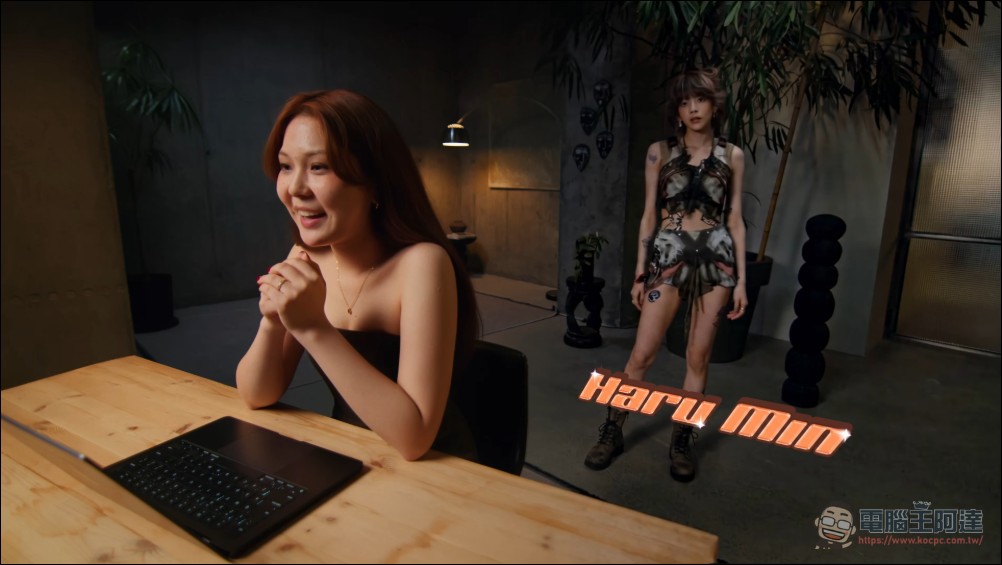
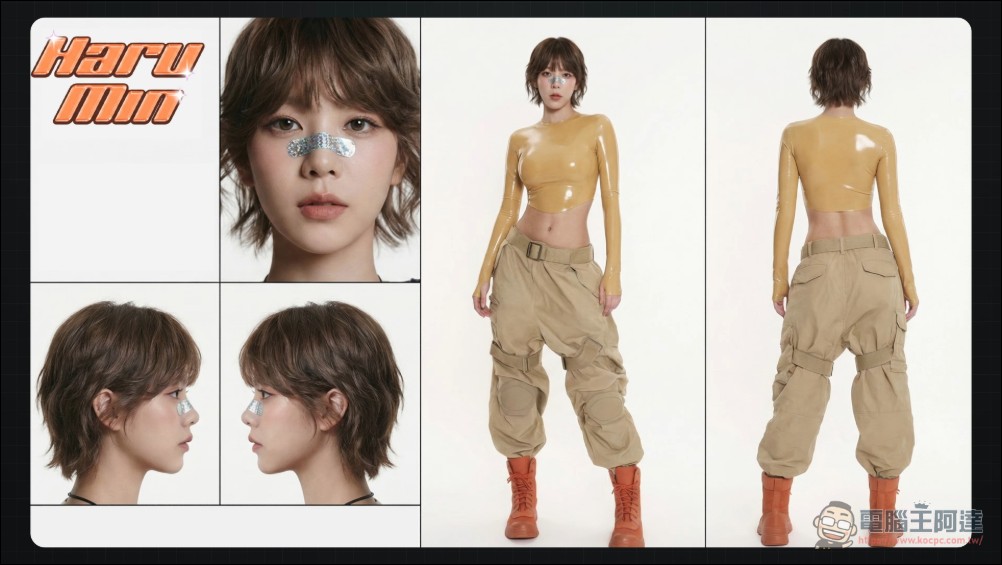
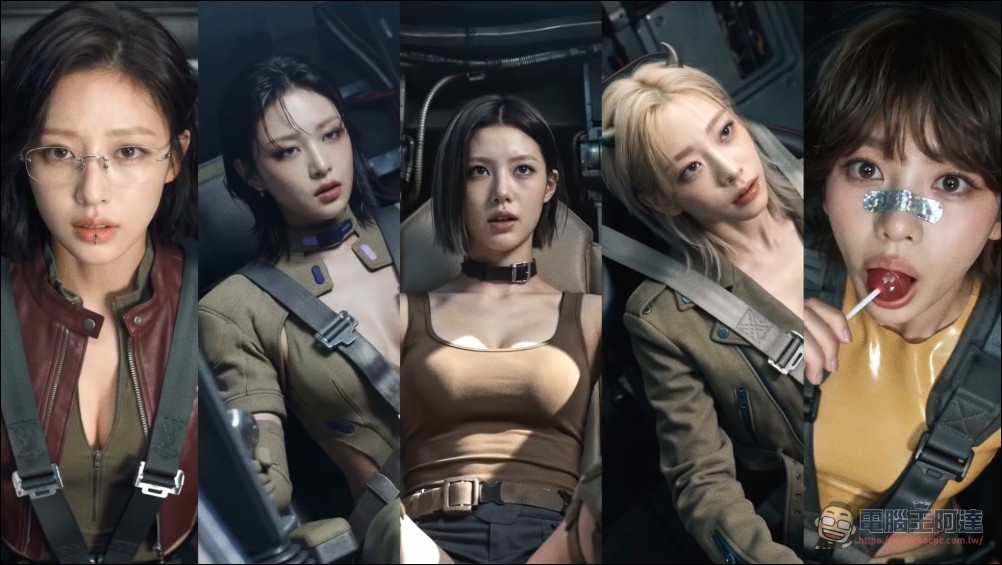
Step 1: Generate the face using Sol Cinema. They used the same base prompt to generate all five girls’ faces: same prompt, different results to pick out the correct bone structure, eyes, and aura. Tanya showed off one of the characters, Harumin, the youngest member of the team. “You can already feel the energy just from a still, right?” You can feel the character’s personality just from a still.
Step 2: Use Sol Cinema to generate the costume individually. Here is a key lesson learned by the directing team. Tanya said she personally likes this approach: Do not generate faces and clothing at the same time in the same prompt. Building them separately can gain more control and higher detail accuracy. Check carefully when generating the garment, if certain details have disappeared between generations: a belt, a shoulder strap, a specific accessory, for example. You should explicitly write it back into the prompt at this stage, rather than waiting until you are shooting to discover the problem.
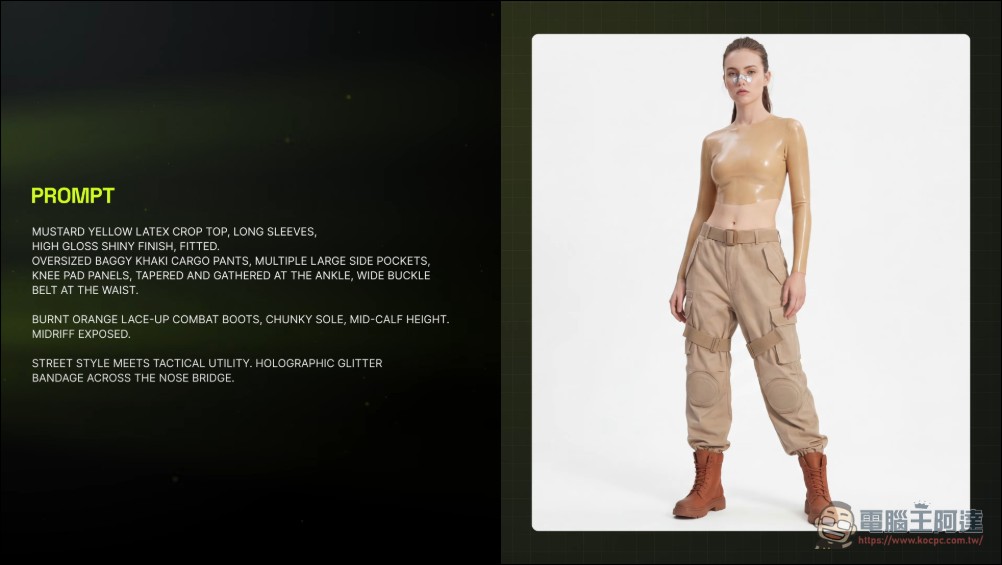
Tanya specifically mentioned that Harumin’s clothing prompt clearly stated “OK stretch on the nose.” “It’s a super small detail, but it’s this detail that makes her Harumin, not just a girl in a yellow top.” Details anchor the character, and general descriptions will only make the character drift.
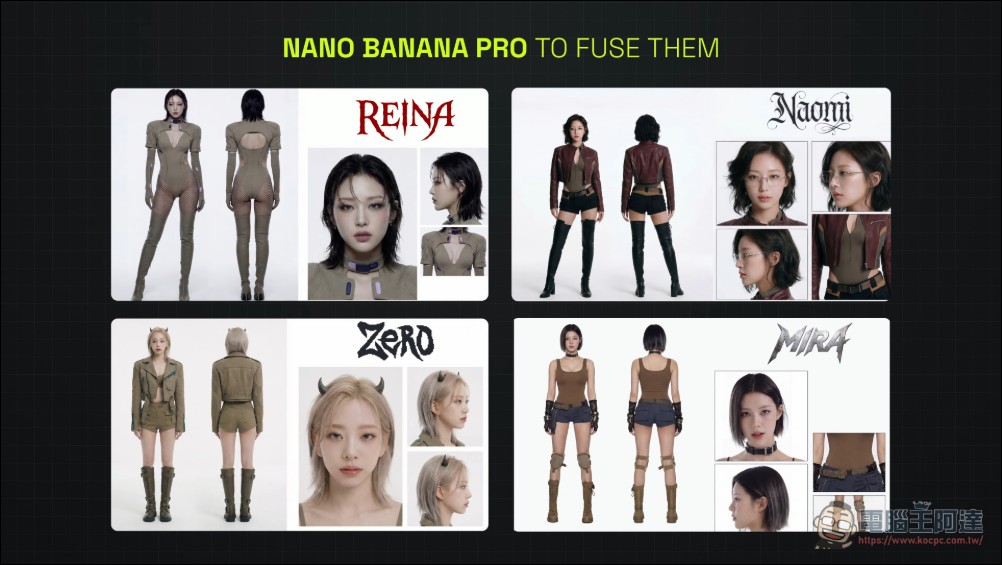
Step 3: Blend it all with Nana Banana Pro. Put the face material and clothing material into it and output a production-level reference picture. The directing team calls it a “screen test”: In traditional movies, auditions are used to let all departments know what the actors look like in front of the camera. This is the AI version of auditioning, and Seedance checks this reference image every time it generates footage to ensure consistency.
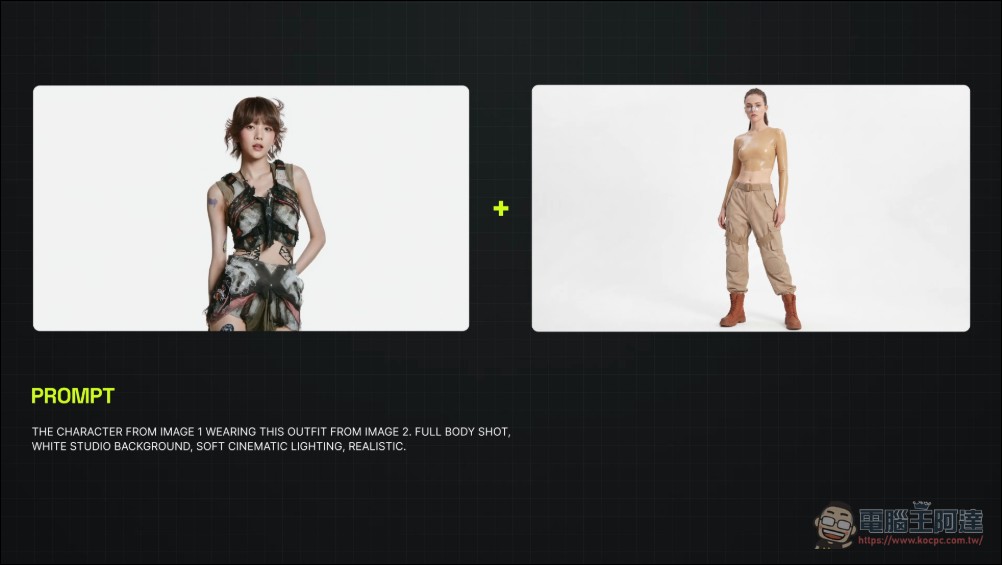
This process was run five times and produced five copies of main material. The cast is locked in and ready to build the world.
Part 2: Building the world: cities, monsters and mechas
The directing team needed three things: an abandoned city, monster creatures, and mechas. Tanya walked through this part quickly because she couldn’t wait to get into the animation part: “Seriously, the animation part is where your head will explode.”
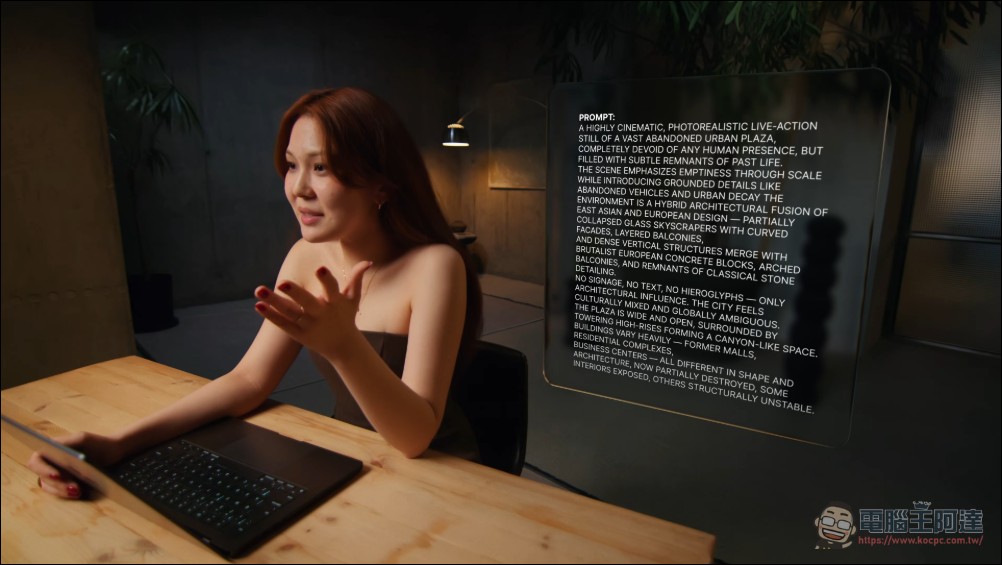
city settingsVery specific: not a dark apocalyptic atmosphere, but an “eerie warm feeling,” the hazy feeling of the golden hour, as if the city is being slowly swallowed by something. The directing team first threw the concept to Claude to expand the prompt. Tanya especially recommended this approach, “Claude is incredible at converting an emotion into a real photographic language.” The result generated the first time was close but not destructive enough. They strengthened the description of debris, vegetation spread and the passage of time, and got a satisfactory city the second time.
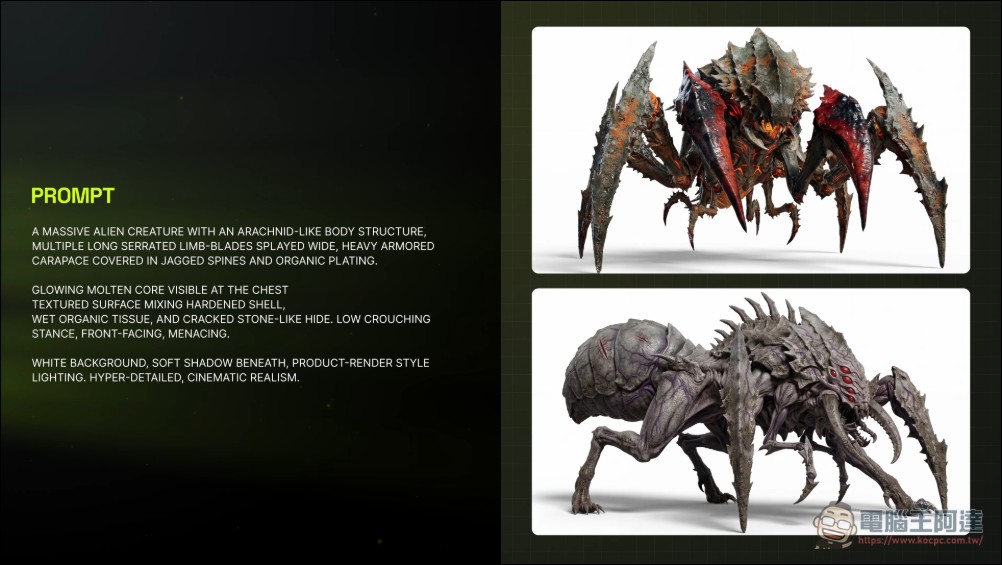
monster designIt was an interesting process: first generate multiple creature variants, and then mix the best ones together using Nana Banana Pro. Tanya says this is a trick worth saving. If you like a generated result but feel it’s not quite there yet, combine it with another generated result you’ve made. “You’ll get something you’d never be able to generate directly with prompt.”
Mecha designThe individual colors of each character are bound: Ra’s mecha is lavender, dark blue and silver; Dia’s is white and cyan. “When you see the mecha, you should know who it belongs to before the cockpit opens.” This level of intentionality is the key to making the entire work feel like a real film and television production.
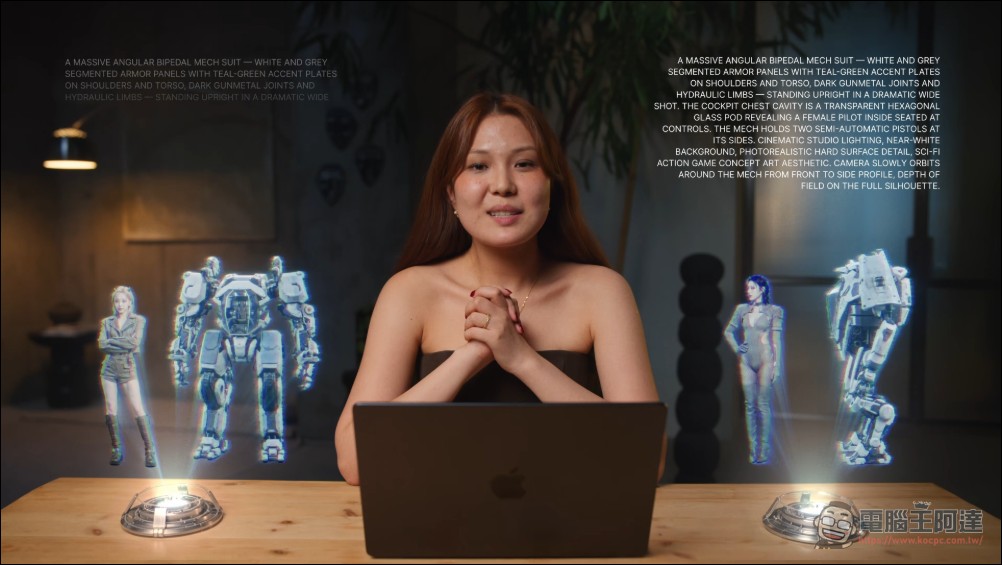
Part 3: Director Animation: Behind the Scenes of Nearly Hundreds of Generated Shots
Nearly 100 generated shots made it into the final film, with hundreds more not being used. The directing team had a simple structural rule: Each character was introduced twice: once in the cockpit, to establish who she was; and once in combat, to show what she could do. This structure is planned before any generation begins.
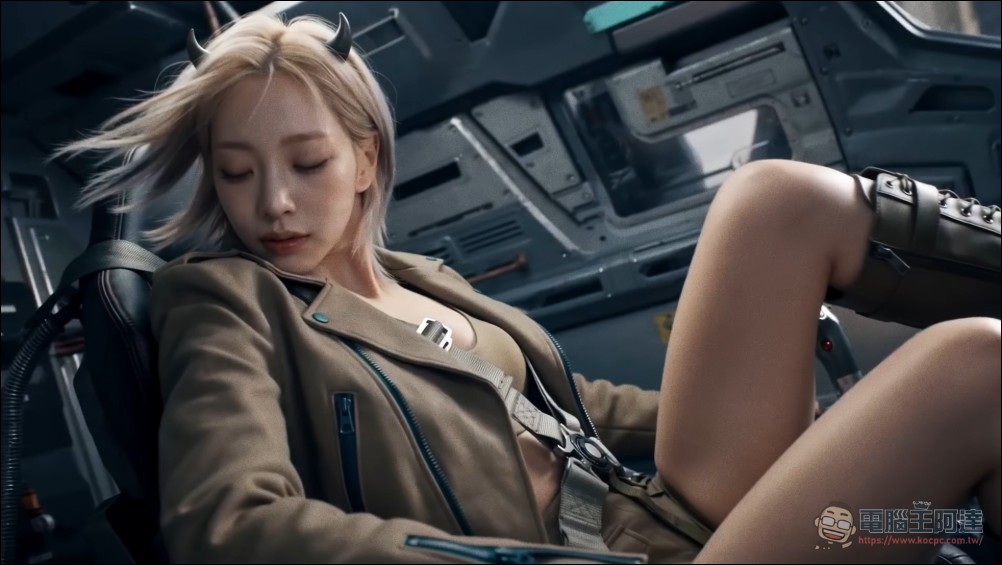
Harumin’s appearance: Her mech is down, the monster is approaching, and she’s lying on the cockpit floor with a lollipop in her mouth, completely unfazed. This contrast is the character itself. Tanya places special emphasis on the way prompt is written: it doesn’t just describe what the character looks like, but how the camera behaves: shaking, re-stabilizing, stabilizing after impact. “This is the director. This is the difference between a cool static image and a real scene.” And the expression and the lollipop were in place the first time they were generated.
Dia’s appearance: It’s all about the sense of scale. The first thing you see is not her, but the mecha: a giant white and teal machine kicking up dust as it stomps through the ruined city, the camera zooming low and wide just to capture how massive it is. Then the camera cuts to the cockpit, and there she is, blond, with little devil horns, completely calm, like it’s just an ordinary Tuesday.
Raina’s appearance: Tanya said she was the coolest one. She looks arrogant and independent, “and that’s definitely not an accident. These qualities are explicitly written into the prompt.” Because Seedance understands personality descriptions and conveys the correct emotions when generated. There was even a line written in the prompt as a performance guide: “I hope I can become MVP today.”
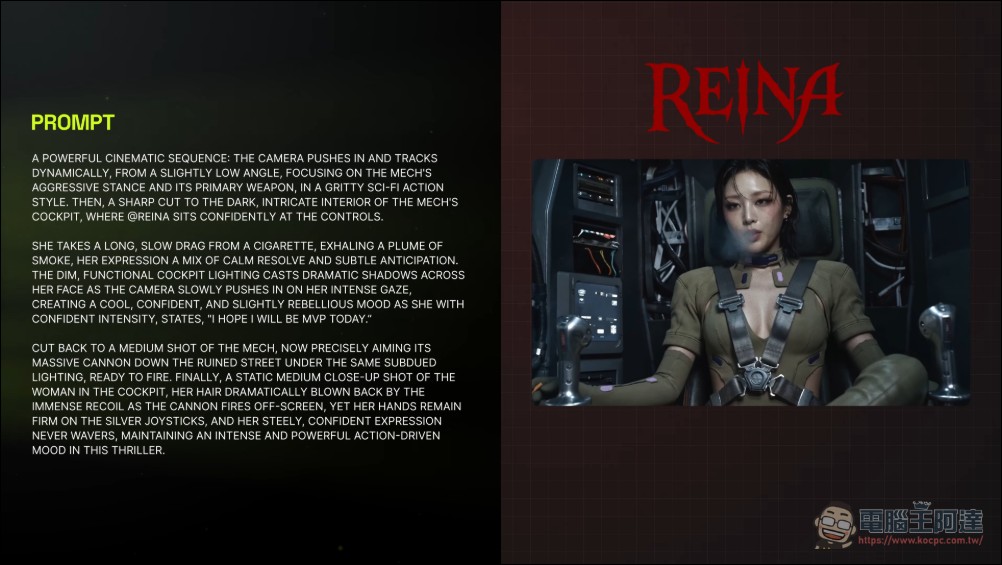
Seedance generates the corresponding rendition. The recoil after shooting, the hair being blown back, and the hands being held firmly, prompt describes not a shot, but the process of force passing through the body. “That’s the key to getting a real reaction, rather than the character just sitting there and something exploding offscreen.”
Naomi’s appearance: She is the funny person in the team. Tanya admitted that she was originally convinced that the model could handle the appearance of this character, but the result still surprised her: the mood was right, the rhythm was right, and the laughs were where they should be. Seedance understood the prompt and the first generation was successful.
Mera’s appearance: Her friend is in danger and she must get there. The directing team was very concerned about this shot, because such a large machine must have a sense of weight when moving at high speed: “It can’t bounce, it can’t be light. It has to have weight.” The results returned by Seedance are completely consistent: the ground yields slightly with each step, not an explosion, not a bounce, but a reaction that occurs when that kind of mass is real. “It’s physics. That’s why the director chose Seedance to create every action scene in this trailer.”
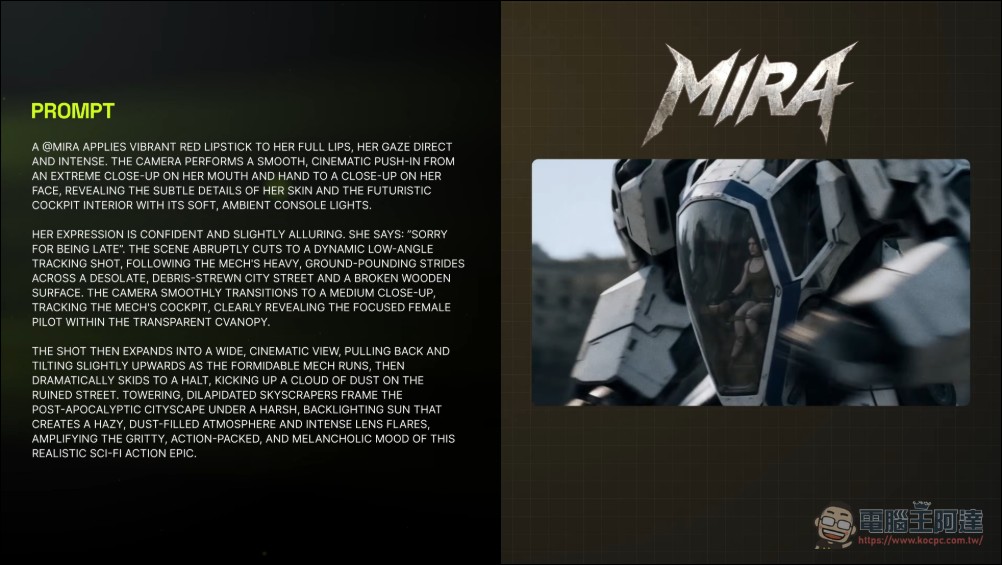
Battle Scene: Seedance’s moment to prove herself
Raina’s artillery sequence: Her mech stood in the rubble, not panicking, just shooting at the creatures. The director needed this scene to feel overwhelming – monsters are everywhere, and a woman with a giant cannon is determined to end it all.
Mera’s punch to save Harumin: This is the passage that Tanya spends the most time explaining because it reveals a mistake that most people make. Most people would write “The mecha punched the monster,” but Tanya said bluntly: “That’s not the director, that’s the caption.” Zephyr’s director writes about physics: the weight of the body after the punch hits, the consequences of the impact, and the specific visual aftermath.
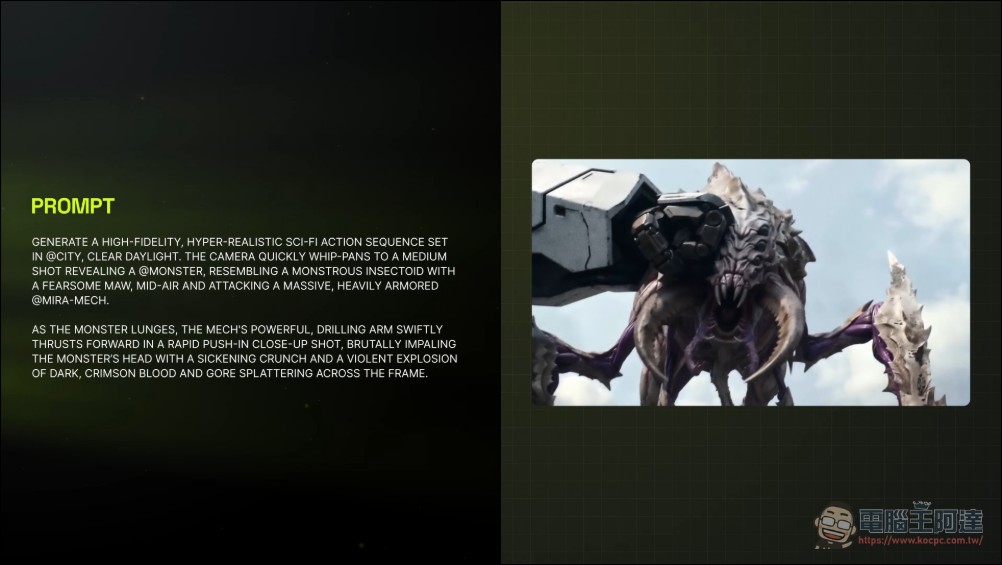
“Feel the difference?” Tanya asked. When you describe what force does to the body, the model understands mass, understands momentum, and what you get is a punch that actually lands. This is the fundamental difference between “describing an action” and “directing a scene” in prompt writing.
K-pop group dance sequence: everyone’s favorite
The five characters dance in sync and in unison. Tanya admits that this is a really difficult challenge for AI movies: most models tend to focus on one subject and let other characters drift. But the directing team has two advantages.
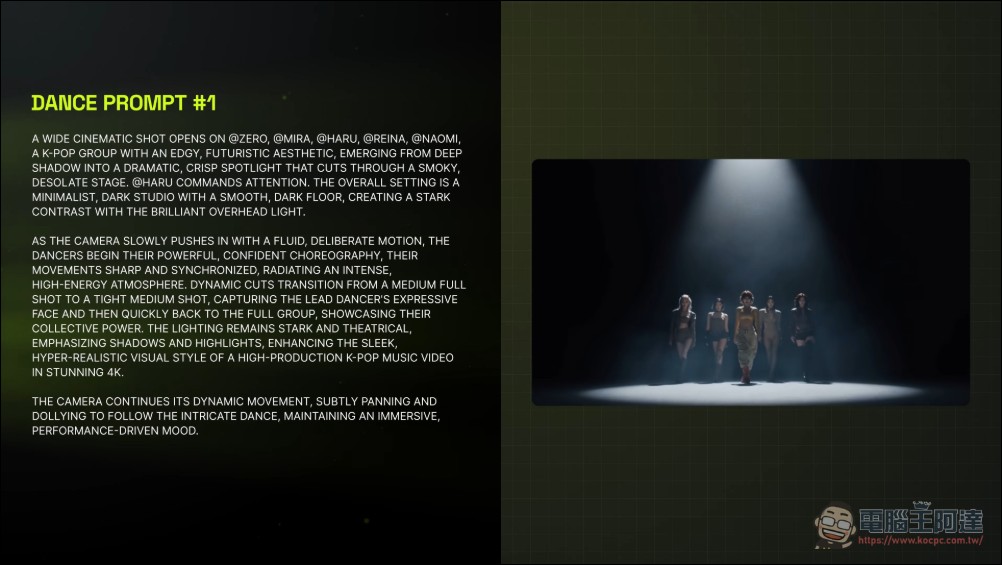
First, music comes first. They generated the audio track separately and then uploaded it to Seedance along with the lyrics as a generated element. Seedance masters the beat, rhythm, and energy of the song before even a single frame of movement is generated. “Music is not added later, it is part of the process of becoming.”
Second, let go and let the model play out. Tanya showed off the prompt for the group dance, and it was surprisingly brief—there were no step-by-step instructions like “Left foot out, arm up, turn,” and the only actual choreographic guidance was one word: K-pop. “Seedance knows what that means. It knows what the energy of a synchronized formation looks like, what the body rhythm feels like, how the camera should move.” The less control they have, the better the model performs.
The final closing shot: new monsters are coming, five people are arrayed, smoke is billowing, and lights are coming down from above. Tanya said that when this shot was generated, “everyone stopped.” It was the final shot of the entire trailer. It was generated, not programmed. (TIM of Film and TV Hurricane also said that he believes that Seedance 2 has a strong sense of camera and certain directing ability)
Summary review
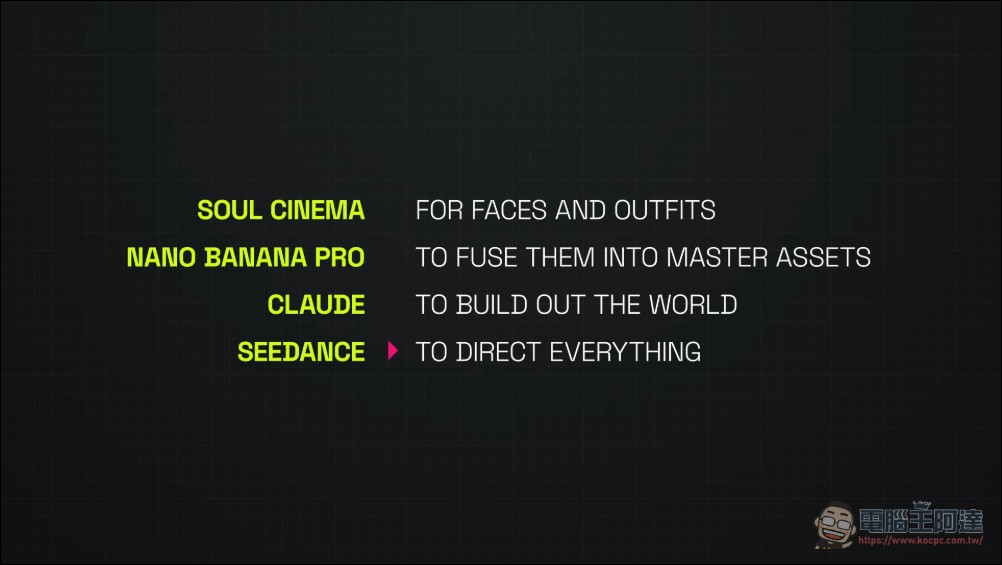
Tanya finally gave a clear summary of the tool chain: Sol Cinema is used to generate faces and costumes, Nana Banana Pro is used to merge into the main material, Claude is used to expand the prompts of the world view, and Seedance 2.0 is responsible for directing everything: personality shots, battle scenes, dialogue, choreography.
She reminds viewers that this is just the beginning of Zephyr and there is much more to come. The core revelation of this workflow is: AI film production is not randomly generated and then left to chance, but like real film and television production, it requires planning, character design, and understanding of photography language, except that your camera and actors all live in the same prompt. You can also watch the detailed video explanation, which is very exciting. It can be used as a very useful workflow reference for friends who want to make AI videos. However, the Higgsfield AI team should use Seedance 2, which is specially used in the film and television industry. The general version with human faces is not produced at all. Their website itself sells AI services. I am not sure whether your face will be locked after buying a membership. Friends who are interested can try it.
Source: KOCPC Chinese