


OpenAI CEO Sam Altman has even publicly predicted that the AI wave will eventually give rise to a “One-Person Company (OPC)” worth a billion dollars but with only one employee. However, when a telemedicine start-up company called “Medvi” claimed that its founders, Matthew Gallagher and his brother, had used AI tools to create annual revenue of up to NT$13 billion (approximately US$401 million) in two years, and expected to break through the “myth” of NT$58.5 billion (approximately US$1.8 billion) by the end of 2026, everyone thought it was about to happen in April 2026. When it was realized at the beginning of the month, it was discovered to be a fraud in just 4 days. According to the investigation, behind the revenue of this “one-man company” unicorn is actually batch-generated false data, stolen face-swapping photos, and illegal drug trade that ignores regulations.
Two people, two months, 20,000 US dollars: the birth of Fengshen Works
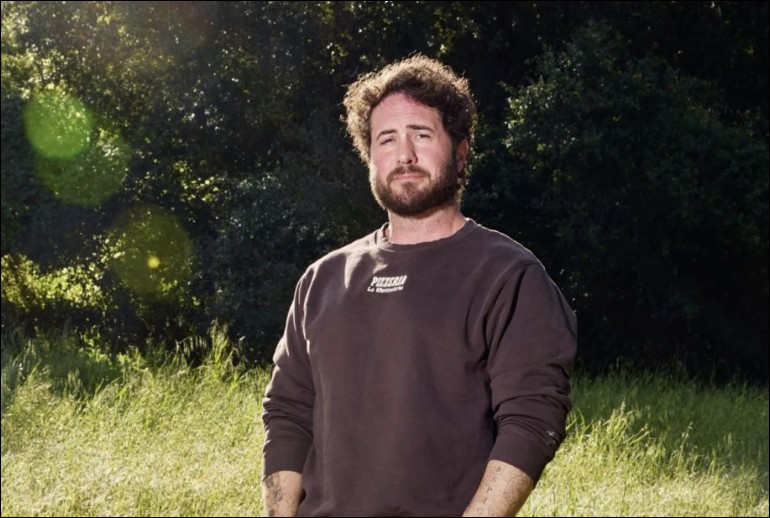
The starting point of the story begins with an in-depth article in the New York Timesreport, 41-year-old Matthew Gallagher claimed that he invested only US$20,000 (approximately NT$650,000) in startup funds in 2024, completed research and development within two months, and founded “Medvi”. Medvi’s core business is locked into the craziest trend in the US medical market in 2024-2025: GLP-1 weight loss drugs (such as the compound versions of Wegovy and Ozempic). Gallagher shrewdly discovered that a large number of obese patients were eager to bypass the complex offline clinics and obtain cheap alternatives to these expensive drugs directly online.
In Gallagher’s description, Medvi is the ultimate embodiment of AI empowerment:
- code and system: Use ChatGPT, Claude and Grok to write website code and backend logic.
- visual merchandising: Generate incredibly realistic advertising clips and images with Midjourney and Runway.
- customer service: Use ElevenLabs’ speech synthesis technology to create a 24-hour online AI customer service system.
- Automated process: Use AI Agents such as OpenClaw to connect various outsourced medical compliance, prescription issuance and logistics distribution links.
This “extremely asset-light” model allows Medvi to claim a net profit margin of 16%. Without receiving a penny of external financing, Medvi seems to have become the best example of the “billion-dollar one-man company” predicted by Sam Altman.
Medvi’s success does not come from technological innovation, but from “all-round fraud”
However, just four days after the report was published, well-known AI researcher and critic Gary Marcus publishedLong investigation article, pointing out that Medvi’s success does not come from technological innovation, but from “all-round fraud.” Subsequent investigations by Futurism and Business Insider further corroborated the allegations:
1. “Zombie Doctors” generated in batches by AI: Medvi claims to have a strong team of professional doctors, but the photos labeled “doctors” on its website were found to have conspicuous Gemini or Midjourney watermarks.Business Insider The investigation found that one of the so-called “expert” photos was actually stolen from a musician in Angola, and even some of the doctor’s profile pictures were linked to the account of a clothing store in the Republic of Congo.

They made facebook accounts for 800+ fake doctors (I had Claude verify, none of them are actually doctors, especially not “Dr. Tuckr Carlzyn MD”)
to advertise on Facebook.This is extremely illegal, just takes FTC to notice it and it’ll be hard for them to advertise on FB pic.twitter.com/84wOBjDC2I
— Sheel Mohnot (@pitdesi) April 2, 2026
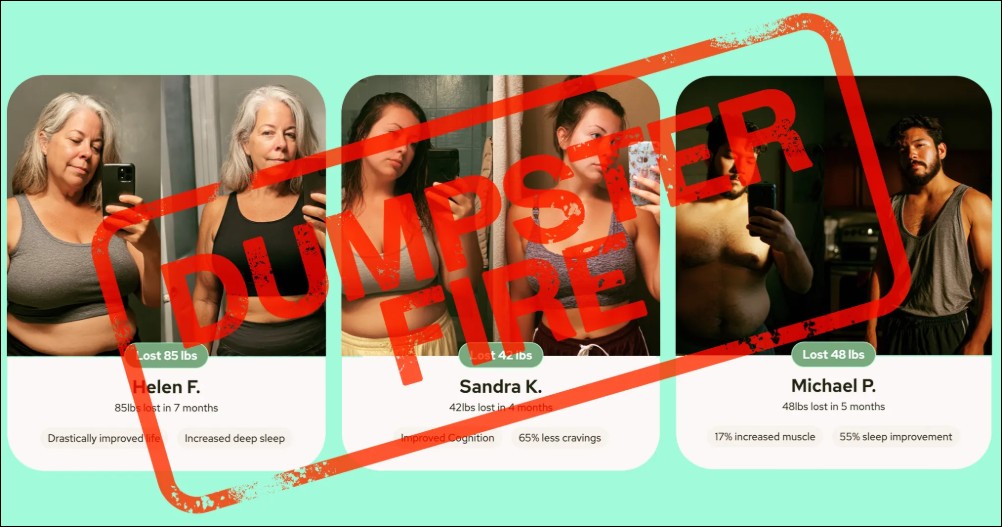
2. Stolen pictures, face-changing and false comparisons: Medvi’s most attractive advertisement is the “before and after” photos of patients. However, factual investigation found that most of these photos were stolen from real users on the Internet. Medvi only used AI tools to change the faces of the people in the original pictures to another appearance, and falsely claimed that it was the efficacy of the drug. Even the drug packaging photos were faked by AI.

3. Ignored FDA warning: Back in February 2026, the US FDA has issued a warning letter to Medvi (and its related domain names), pointing out that the packaging labels of the drugs it sells are misleading, and that the company is not a drug formulator but claims to be responsible for the product. What is surprising is that the New York Times completely ignored this public legal risk when writing the “Feng Shen Report.”
4. Spam and data security: A California court has accepted a class action lawsuit against Medvi, accusing the company of using AI to batch generate spam emails with forged headers for illegal marketing and posing a serious risk of leaking user privacy data.
Medvi was sued in a class action last month for violating California’s anti-spam law.
“MEDVi’s affiliate marketers send spam use falsified header information, spoofed domains and nonsensical sending addresses to evade spam filters.
They also use false and deceptive subject… pic.twitter.com/rsSwWxla2h
— Rob Freund (@RobertFreundLaw) April 5, 2026
Industrial reflection: When “efficiency” overrides “reality”
The collapse of Medvi is not only an integrity issue for the Gallagher brothers, but also an extreme microcosm of the current wave of AI entrepreneurship. After OpenClaw triggers a revolution in AI program development in 2025, One Person Company (OPC) has indeed become a reality. The proportion of new startups founded by a single founder has soared to 36.3% in 2025, according to Carta 3. In China, Shenzhen, Hangzhou and other places have even launched special OPC support policies to encourage entrepreneurs to use AI to improve efficiency.
However, Medvi revealed a cruel fact:AI gives a person the ability to “build a tens-billion empire shell”, but it cannot give a person the ability to “build real credit.”
Upfront Ventures investor Kobie Fuller pointed out that Gallagher did have extremely high marketing intuition and the ability to skillfully operate AI tools, but he used these abilities for “fake compliance” and “false packaging.” When AI can copy medical certificates, patient testimonies and professional images in large quantities at very low cost, the core “trust mechanism” of business society is facing an unprecedented threat.
Summary: Investors’ “Unplug Test”
With the myth of Medvi shattered, in an era where “everything can be generated”, where is the moat of the enterprise? What really allows a company to survive the cycle is still the bottom line of compliance, real product delivery, and credit that cannot be arbitrarily brushed out by algorithms.
For future entrepreneurs and investors, the Medvi case provides a profound lesson:
If you unplugged all of a company’s AI tools, what would it have left in the real world?
If all that’s left is a fake prescription, a bunch of stolen photos and the lies of the two brothers, then it’s just another old Ponzi scheme in a “future technology” box.
Source: KOCPC Chinese