


As AI advances into the AI agent stage, computers also seem to be undergoing gradual changes. A few days ago, NVIDIA unveiled “the product that will reshape the Windows PC era”—RTX SparkIn addition, Microsoft also unveiled a… at Build 2026. Project SolaraAI agents will be everywhere, and this may be what the next-generation computer platform looks like.
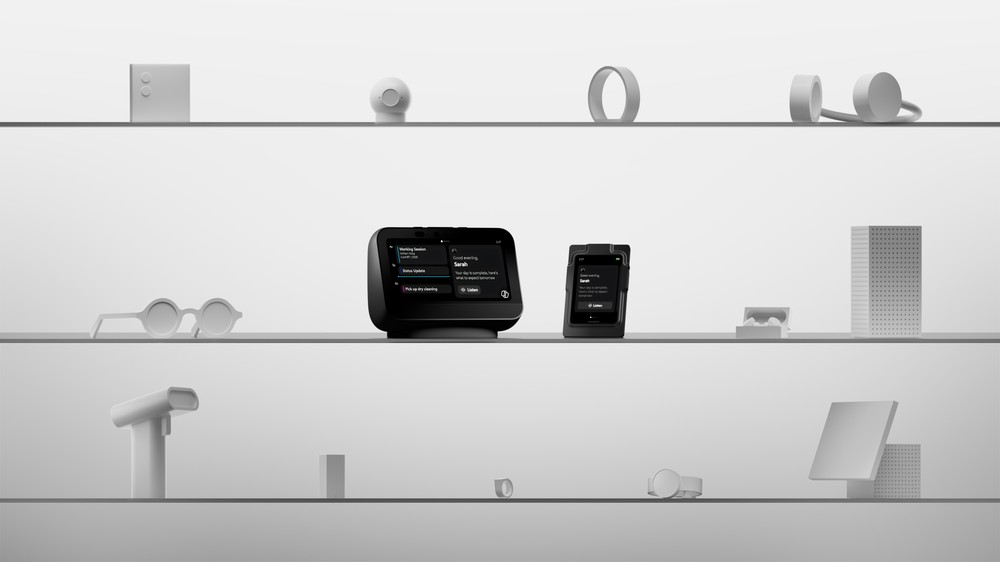
Microsoft Unveils Project Solara: From App-first to Agent-first, Platform Spans Devices and Cloud
According to Microsoft, Project Solara is a “chip-to-cloud” platform, meaning the design spans from chips to devices to cloud services, rather than simply launching a new hardware device.
Simply put, Solara wants to build a device platform that lets users quickly call up AI agents. These devices themselves can serve as the entry point for AI agents, while behind the scenes, through services like Azure, Microsoft 365 Copilot, and WorkIQ, they connect users’ work data, enterprise context, identity verification, security management, and multiple agents, so AI agents can assist across different scenarios such as desktops, mobile devices, and worksites.
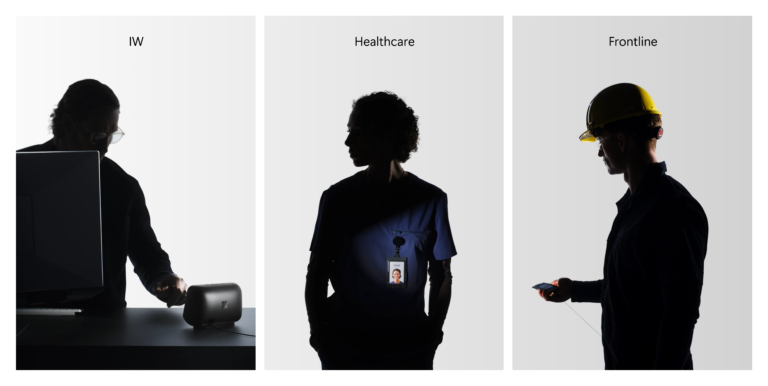
Microsoft said: “Solara’s goal is not to squeeze intelligence into PCs, browsers, or phones, but to put intelligence where workflows, contexts, and tasks actually happen.” This is also the core concept behind Project Solara: instead of having to open software yourself, you simply call on intelligence to handle it.
Microsoft showcased two conceptual reference designs; the first is the “Badge concept device,” a portable, small badge-like device that features a touchscreen, Hello for Business fingerprint recognition, a physical privacy switch, a microphone, speakers, a side camera, Wi-Fi, Bluetooth, GNSS, and 5G, and is powered by a Qualcomm wearable device chip.
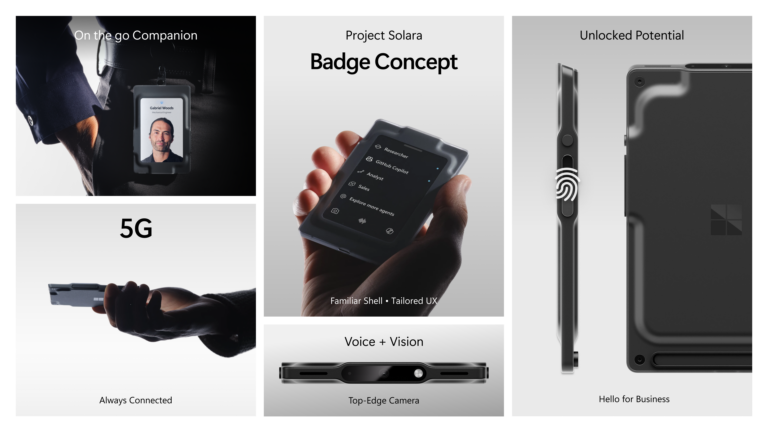
Use cases include quickly checking Priority Agent alerts, or using the camera and microphone to help the Agent understand the surroundings, with the user’s permission.
Another model is the “Desk concept device” (桌上型概念裝置), more like an AI assistant device meant to sit on a desk. It features a touchscreen, Hello for Business facial authentication, a privacy lock button, a microphone mute button, dual far-field microphones, a full-range speaker, a UWB ultra-wideband presence sensor, two USB-C ports, Wi-Fi and Bluetooth, and is powered by MediaTek IoT silicon:
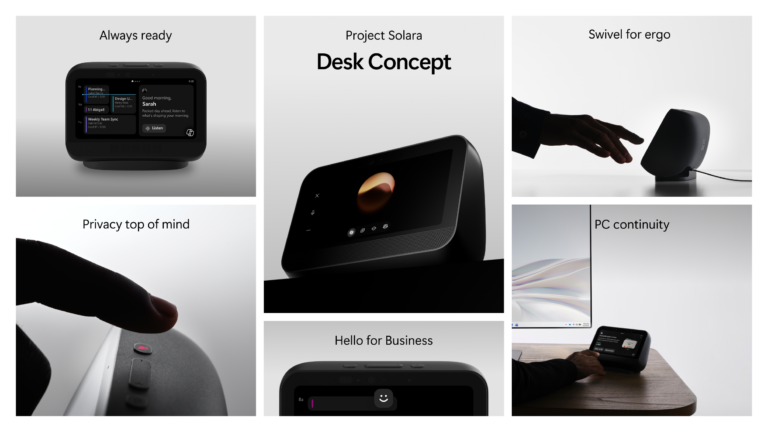
This device can be used independently or as a companion device for a Windows PC; when connected to an external display, it can also become a Windows 365 client, allowing direct access to a cloud PC.
You should understand it better by watching the video directly:
Obviously, this is not merely a concept product, but is already under development.
It has been confirmed that Qualcomm and MediaTek are the first chip partners. Microsoft also noted that these concept devices are already being used internally by hundreds of employees to test how such agent-first devices can improve daily work.
Over the next few months, Microsoft will also conduct small-scale closed beta testing with companies such as AccuWeather, Best Buy, CVS Health, Levi’s, and Target.
Source: KOCPC Chinese