


OpenClaw has risen rapidly in recent years, becoming one of the most closely watched personal AI assistant projects. Unlike traditional chatbots centered on “answering questions,” OpenClaw is positioned closer to a true personal agent: it can perform tasks on behalf of users, including organizing emails, managing schedules, and even interacting with others through messaging platforms such as WhatsApp and Telegram. This ability to “get things done for you” has drawn considerable attention from developers and the tech community.

Microsoft launches “Scout,” an OpenClaw-based personal agent for enterprise users.
Microsoft is now bringing this concept into the enterprise with the launch of its new personal AI agent, Microsoft Scout. Scout is available inside the Microsoft 365 Copilot app, as well as via desktop versions for Windows and macOS, and is currently rolling out first to Microsoft 365 Frontier customers. Microsoft’s goal is clear: to make Scout an always-on, autonomous assistant that proactively handles tasks, rather than a passive chatbot waiting for instructions.
Scout is built on two core technologies: the OpenClaw framework and Microsoft Work IQ. Work IQ is an intelligence layer that Microsoft has been actively promoting in recent years, combining data, memory, and reasoning to connect with a wide range of internal enterprise information sources, such as SharePoint documents, Outlook emails, and Teams meeting transcripts. More importantly, it can build personalized memory based on user preferences and work habits, making AI responses not only accurate but also more closely aligned with users’ actual needs.
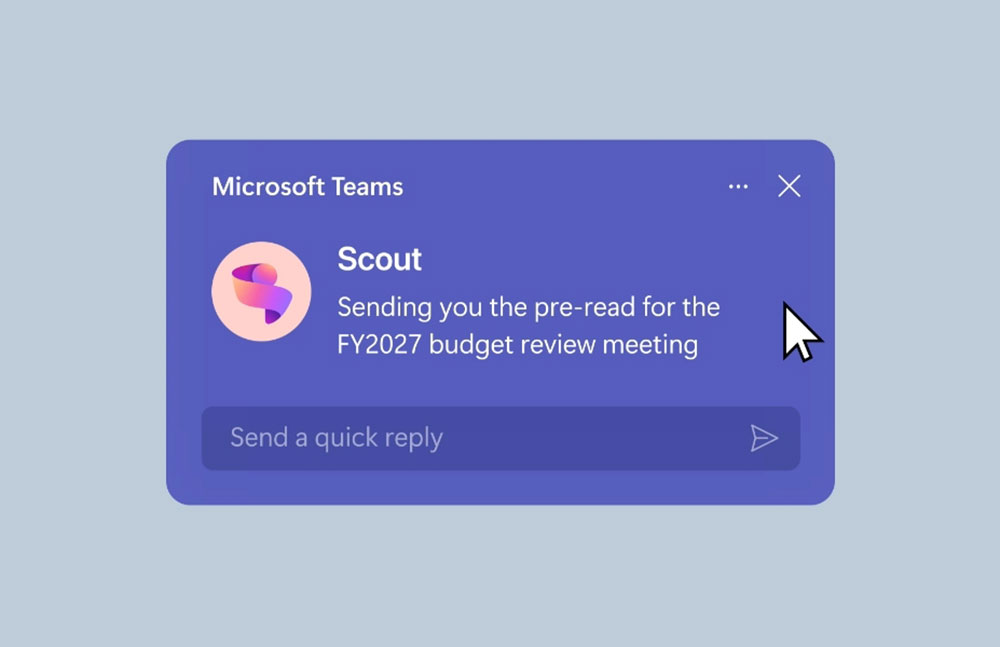
With Work IQ powering it, Scout can proactively assist with work without users having to give explicit instructions. For example, it can prepare materials for upcoming meetings ahead of time, detect and resolve scheduling conflicts, or automatically handle routine tasks in the background. Microsoft emphasizes that Scout aims to let enterprise users avoid repeatedly prompting the AI, and instead enable the AI to understand the context and take action on its own.
On the capabilities front, Scout has a complete feature set. Microsoft said that as Scout’s capabilities continue to expand and are gradually rolled out to more enterprise customers, more details will be announced in the future:
- Document Processing: Create, edit, and search documents in the workspace; supports Word, Excel, PowerPoint, and even code files.
- Command execution: can execute shell commands, build and test code, and employ a hierarchical permission system to ensure security.
- Automate Browser Operations: Use Playwright to automatically browse web pages, fill out forms, and interact with web applications.
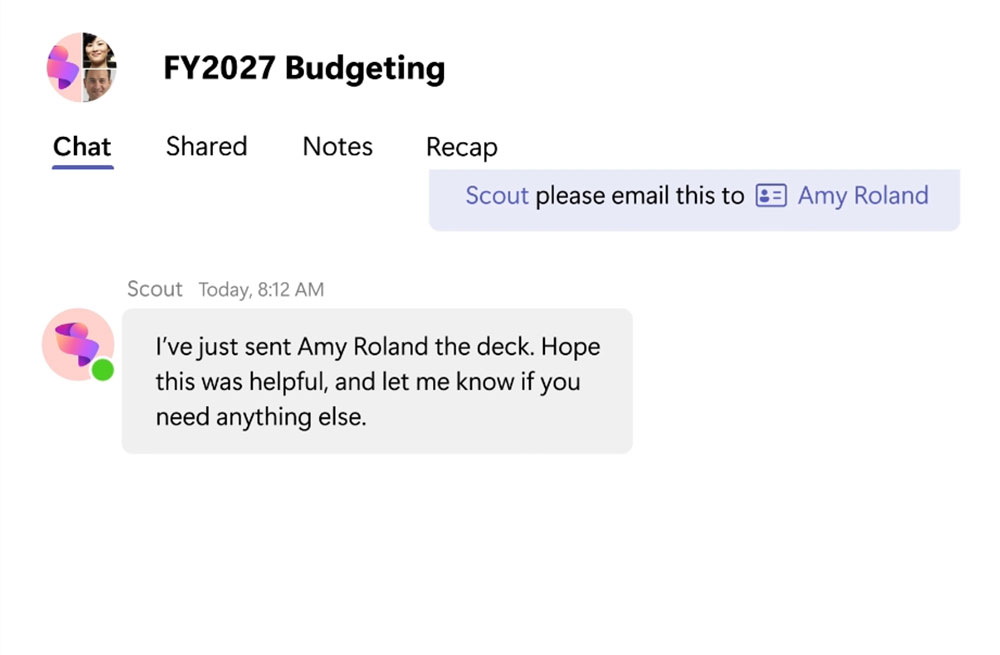
- Deeply integrated with Microsoft 365: manage email, calendars, Teams messages, OneDrive documents, and meetings.
- Autonomous Operation: Capable of executing tasks in the background according to user-defined schedules or trigger conditions.
- Agent collaboration: Can spin up sub-agents to conduct parallel research, code reviews, or other complex workflows.
Notably, AI personal agents are becoming the new competitive focus for tech giants. At the 2026 Google I/O conference, Google also introduced Gemini Spark, a personal AI agent that operates around the clock. Spark is built on Gemini 3.5 and Google’s Antigravity platform, can proactively manage tasks in the background, and is deeply integrated with Google tools such as Gmail, Docs, and Slides, enabling it to take action on behalf of users based on their instructions.
Whether it’s Microsoft’s Scout or Google’s Spark, both show that personal AI is shifting from “answering questions” to a new phase of “doing things for you.” AI assistants are no longer just tools, but are gradually becoming proactive work partners.
Source: KOCPC Chinese