


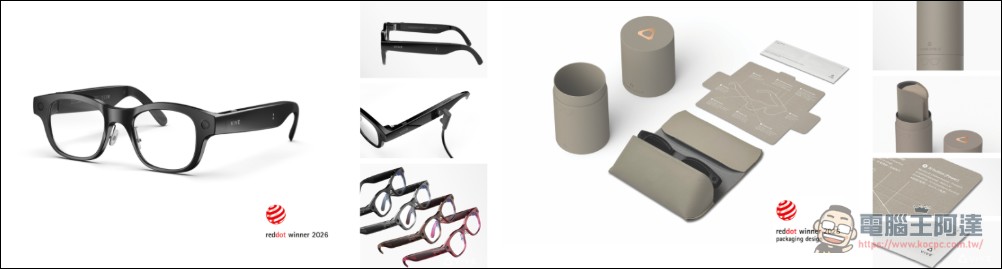
HTC’s AI smart glasses global expansion plan has another success. On April 21, 2026, HTC announced that its AI smart glasses VIVE Eagle officially joined hands with Japanese telecommunications giant KDDI to enter the Japanese market. It will be sold through the au +1 collection channel starting from April 24, priced at 82,500 yen (approximately NT$17,300). At the same time, VIVE Eagle’s product body and packaging design both won the “Red Dot Award: Product Design 2026” Red Dot Design Award, providing international endorsement for HTC’s product strength in the field of smart wearables.

Join hands with KDDI to open up Japanese telecommunications channels
At the heart of the collaboration is KDDI’s au +1 collection brand. VIVE Eagle will be sold and displayed simultaneously at KDDI and Okinawa Cellular’s direct stores, au Online Shop, and designated channels such as Yamada Denki. KDDI is open for pre-order on au Online Shop from April 21st.
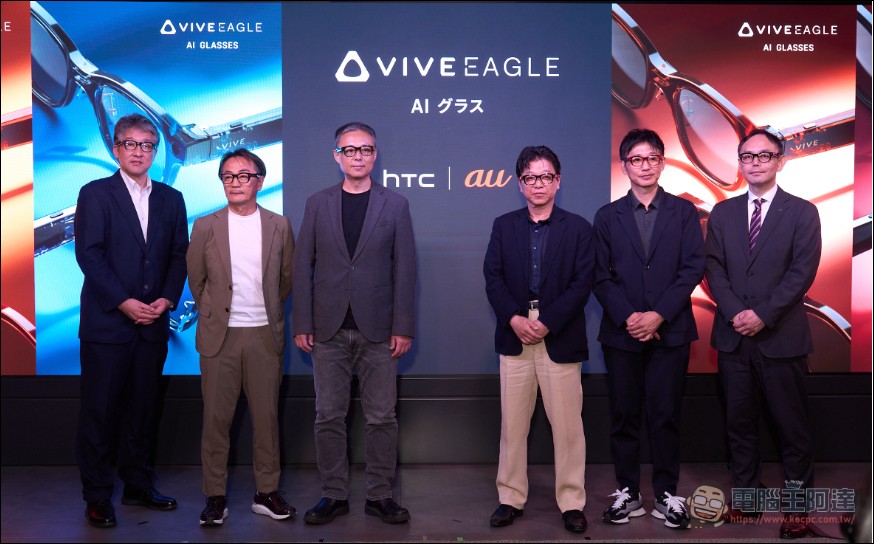
For HTC, the cooperation with KDDI means more than just increasing sales points. As a key market for global consumer electronics products, Japan has a mature telecommunications channel system and consumers have extremely high requirements for brand trust. Providing real-life experience through KDDI’s directly operated stores can effectively lower consumers’ awareness of new categories such as AI smart glasses.
HTC Senior Vice President Charles Huang said: “VIVE Eagle’s official entry into the Japanese market symbolizes an important milestone for HTC to continue to promote the global layout of AI smart glasses. This cooperation with KDDI will help expand the product’s channel coverage and experience points in the Japanese market, and further accelerate the application of AI smart glasses in daily life.”
Product positioning: 49g AI portable assistant
VIVE Eagle continues HTC’s technical heritage accumulated in the VIVE series and locks in the use situation of “AI integrated into daily life”. The product weighs about 49 grams and adopts a lightweight design, emphasizing the comfort of long-term wearing. Four color options will be available in the Japanese market, and the attached lenses can be replaced with prescription lenses as needed. Thanks Optical stores across the country provide lens replacement services.

In terms of functionality, VIVE Eagle supports hands-free operations using voice and image information, and can be used in daily scenarios such as information query, phone calls, photography, and real-time translation. The product supports Google Gemini as the AI model backend, and has recently added the option of OpenAI GPT (Beta).
VIVE AI continuous dialogue and instant translation
A recent important software update for VIVE Eagle is the launch of the VIVE AI continuous conversation function. Users do not need to repeat the wake-up command every time, and can naturally extend questions in the same conversation context, improving the fluency of usage situations such as information inquiry and life Q&A.
In terms of translation capabilities, VIVE Eagle supports instant translation function. When the user selects Google Gemini as the VIVE AI model in the VIVE Connect App, image translation can support more than 71 languages; when selecting OpenAI GPT (Beta), it can support more than 59 languages. The relevant support scope will continue to expand with software version updates.
On the most sensitive privacy issue of AI wearable devices, HTC emphasized that VIVE Eagle has passed ISO international double verification and uses military-grade encryption and de-identification design. The product also introduces two intuitive privacy protection mechanisms: a warning light will be displayed when shooting, and shooting will automatically stop when the glasses are removed, which physically enhances the user’s and surrounding people’s sense of security.
Red Dot double award affirmation
VIVE Eagle’s product body and packaging design both won the “Red Dot Award: Product Design 2026” Red Dot Design Award. The Red Dot Design Award is one of the most influential design competitions in the world. VIVE Eagle won the judges’ favor for its lightweight, daily wearing comfort and simple appearance design; the packaging won the award for its simple and environmentally friendly design thinking, demonstrating HTC’s overall design integration strength in smart wearable products from hardware to unboxing experience.
Global expansion continues
VIVE Eagle’s global footprint is accelerating. According to previous reports, HTC plans to gradually enter the European and American markets starting in mid-2026, with Japan and Southeast Asia being the key areas for the first wave of deployment. Starting from Taiwan, expanding via Hong Kong, and now joining hands with KDDI to enter the Japanese market, HTC is gradually positioning VIVE Eagle from a regional product to a global AI wearable device.
For HTC, VIVE Eagle is not only a new product, but also a key attempt to develop a second growth curve besides VR. On the track of AI smart glasses, whether HTC can gain a foothold through local channel cooperation and continuously optimized user experience will determine HTC’s strategic position in the post-smartphone era.
Source: KOCPC Chinese