


The game handheld market has experienced explosive growth in the past two years. From the phenomenal success of Steam Deck to the proliferation of Windows handheld machines such as Asus ROG Ally and Lenovo Legion Go, this category that was once considered a niche has become a battleground for military strategists. In this wave, AMD has taken the lead with its Ryzen Z1 series processors designed specifically for handheld consoles, almost monopolizing the computing cores of mainstream handheld consoles on the market. However, Intel doesn’t intend to let AMD have this piece of the pie all to itself. At the CES show in early 2026, when Intel released the Core Ultra 300 series (codenamed Panther Lake), it announced the launch of a handheld processor. Now, the official names of this product have finally been revealed: “Arc G3” and “Arc G3 Extreme”, which are expected to be officially unveiled at the 2026 Taipei International Computer Show (Computex).
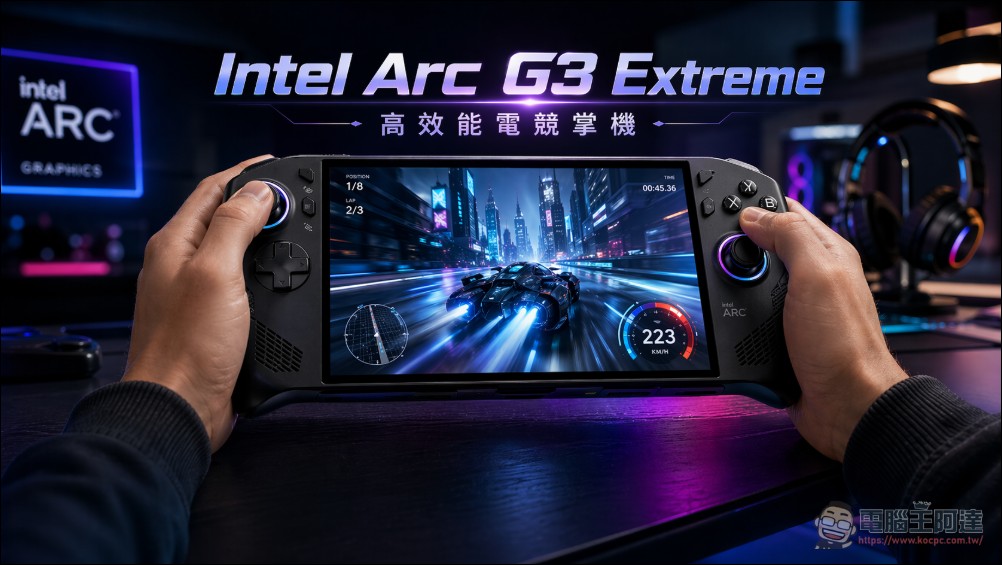
This time Intel chose to name these two processors after the “Arc” brand instead of “Core”, which is a first in the x86 processor industry. Because neither NVIDIA nor AMD has ever named the entire SoC with “GeForce” or “Radeon”, these brands are only used for the graphics processing unit within the chip. Intel’s move clearly declares that in the field of handheld devices, GPU image performance is the core that determines the experience.
From CES preview to Computex debut
Intel’s ambitions for handheld processors are not just a whim. As early as January 2026, Intel announced the “Handhelds Unleashed” project in its pre-show keynote speech, announcing that it would cooperate with major OEM manufacturers such as Acer, Asus, Dell, Lenovo, and MSI to jointly create handheld gaming devices equipped with the Panther Lake platform.
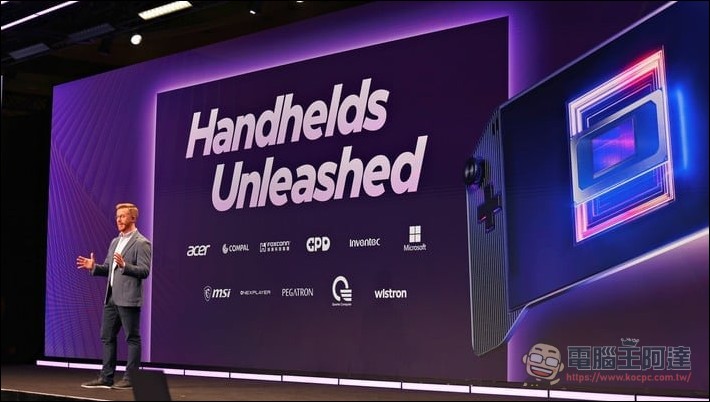
According to rumors, Intel plans to officially release these two chips at Computex 2026. OEM manufacturers will display handheld prototypes equipped with the new chips at the exhibition, but the actual consumer products will be sold later. The document also shows that Intel’s planning life cycle for this product line is tentatively scheduled to 2027.
Specs revealed: B370 and B390 dual-GPU configurations
According to the exposed specifications, the Ruixuan G3 will be equipped with the Arc B370 integrated graphics processor, while the higher-performance G3 Extreme will be equipped with the Arc B390. The latter is expected to use the same 12 Xe core configuration as the existing Core Ultra X9 388H, which means that its graphics performance will be close to the top level of the current Panther Lake mobile platform.
In terms of power consumption, the basic TDP of both chips is 25 watts, but the maximum peak power consumption is far different: G3 is 65 watts, and G3 Extreme reaches 80 watts, which has entered the power consumption range of high-end mobile processors such as AMD Strix Halo. In terms of memory, Intel aims to support LPDDR5X-8533 to meet the needs of high-bandwidth memory for GPU reasoning.
The chip is ready, the handheld console has to wait a little longer
It is reported that the silicon chips of the Ruixuan G3 series have been manufactured and passed early testing, and the hardware itself is ready. However, there is still some distance between the release of the chip and the actual launch of the handheld console. OEM manufacturers need time for system integration, thermal design and software optimization.
Currently, MSI is one of the most promising first batch manufacturers. MSI’s Claw series of handheld consoles have used the Intel platform since the first generation, and have accumulated the most experience and market share in the Intel handheld console ecosystem.
Surrounded by opponents: AMD, Qualcomm and the three-way competition in the handheld market
Intel chose to enter the handheld processor market at this point in time, obviously seeing the growth potential of this category. Although the handheld market is still a niche relative to the overall gaming industry, it is already a multi-billion dollar industry in its own right. Current handheld processors are almost exclusively owned by AMD. From the custom Aerith chips on the Steam Deck to the Ryzen Z1 Extreme on ROG Ally, AMD’s solutions have established a deep moat in terms of performance, power consumption, and game compatibility. Qualcomm uses the Snapdragon X series to start from the Arm architecture. Although it still has inherent disadvantages in the gaming ecosystem, it has unique advantages in battery life performance.
If Intel’s Ruixuan G3 series can produce convincing performance data at Computex and persuade more OEMs to invest, it is expected to bring a true three-power alliance to the handheld market. For consumers, more competition means more choices and more reasonable prices. But the premise of all this is that Intel must ensure the stability and game compatibility of the software driver. However, judging from the recent performance of Panther Lake laptops and Intel’s official enthusiasm for game driver optimization, we can expect a wave of performance.
內顯直逼獨顯效能!MSI Prestige 14 Flip AI+ 實測:Panther Lake 處理器讓 3A 大作也能帶著走
Source: KOCPC Chinese