


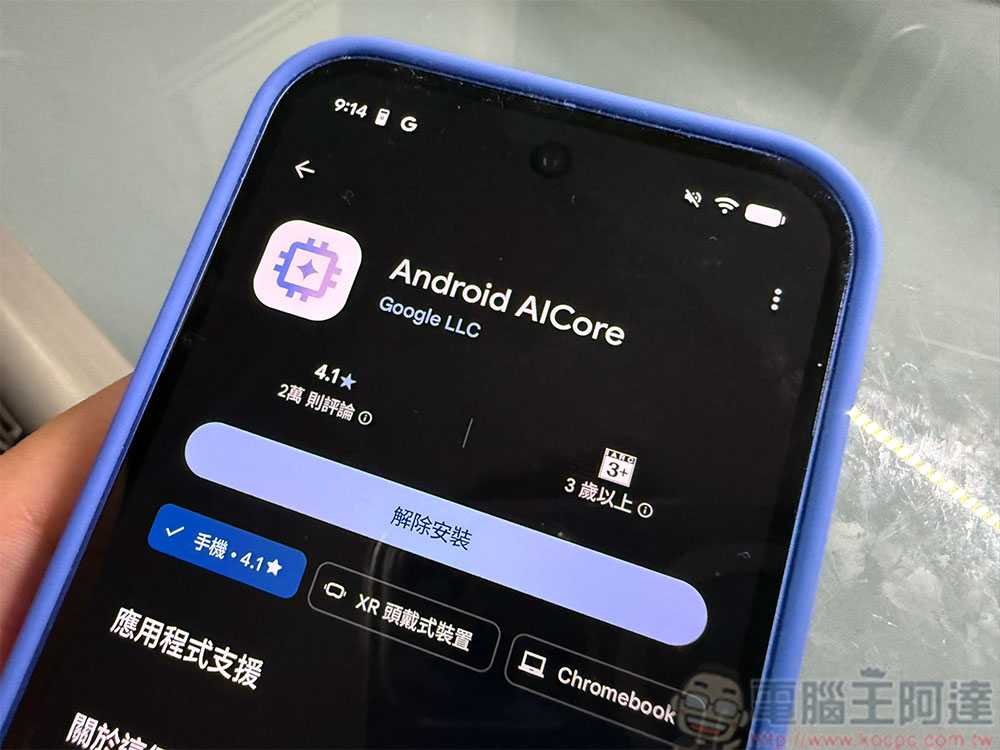
AICore is an increasingly important core system component in the Android ecosystem in recent years. As Google decentralizes more AI capabilities to the device, AICore has become standard equipment for almost all mid- to high-end Android phones. It is responsible for managing onboard artificial intelligence functions at the system level, including executing miniaturized models such as Gemini Nano, and providing a series of AI experiences such as fraud detection, smart replies, summarization, translation, and grammar enhancement.
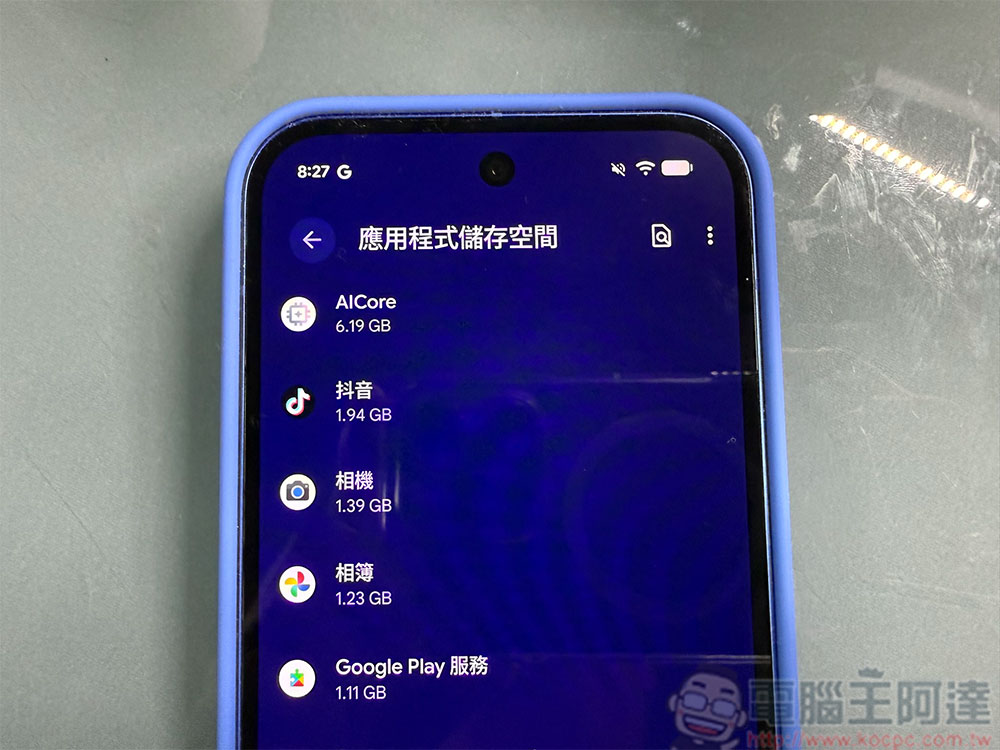
However, when many users check the storage space, they occasionally find that AICore occupies several GB or even close to more than ten GB of capacity, which raises many questions. Google’s recently updated official support document finally gives a more specific explanation for this phenomenon.

Why does Google AICore take up more storage space on my phone than expected?
According to Google, the main reason why AICore takes up “more storage space than expected” is that it automatically updates AI models in the background. These models do not only replace part of the files like normal App updates, but are downloaded in the form of complete model packages. In order to avoid reliability problems after the update, AICore will retain both the old and new versions of the model on the device, and maintain a “dual-version coexistence period” of up to three days. This buffer time is deliberately designed by Google to ensure model stability.
The logic of this approach is simple. If the new version of the model encounters errors, performance degradation, or compatibility issues in actual operation, the system can immediately switch back to the old version without re-downloading. For users, this can avoid functional interruptions caused by failed model updates and reduce additional troubles caused by network instability. When AICore confirms that the new model is functioning properly, the old version will be automatically deleted to free up the space previously occupied temporarily. In other words, fluctuations in the space occupied by AICore are actually part of the model update cycle, rather than abnormal behavior.
In addition to storage space, some users have also reported that AICore occasionally consumes high CPU or power in the background. Although Google’s document does not directly explain it, it is inferred from the model update process that this usually occurs during the model download, decompression, verification or initialization stages. These steps themselves require certain computing resources, so it is reasonable to temporarily increase power consumption during the update period.
From a reliability perspective, Google’s design is indeed necessary, but it also brings a practical problem: devices with insufficient storage space will bear the brunt. Nowadays, the basic capacity of most flagship and high-end Android phones has been increased to 256GB. For such models, AICore takes up 7GB and even briefly expands to 11 to 12GB, which usually does not cause too much pressure. However, for phones that still use 128GB or less, such a footprint may become a burden, especially for users who are already tight on storage space. For users with 256GB or more of NAND flash memory, AICore’s storage footprint usually only affects heavy users, or people who don’t clear out their phone’s storage space often.
If users really need to free up space, they can technically disable AICore. This will indeed immediately reclaim the storage space it occupies, but the cost is also quite obvious: all device-side AI functions that rely on Gemini Nano will stop functioning, including fraud detection, smart replies, summarization, translation, grammar enhancement, etc. For users who are accustomed to these features, disabling AICore may set back the overall experience.
In summary, AICore taking up a lot of storage space is not a bug, but a design trade-off made by Google to ensure the reliability of model updates. As Android on-device AI continues to grow in importance, these models will only get larger. It will be worth watching whether Google will further optimize the model update method or increase the basic capacity of the Pixel series in the future.
Source: KOCPC Chinese