


A brand new graphics card had just been bought, and before it could even be enjoyed for gaming, it suffered a serious rear-end collision along with the car, leaving the entire card bent and warped. Seeing the card like this, many people would think it’s beyond saving, but that’s not necessarily the case.
Recently, a Chinese gamer suffered a tragic accident: his newly purchased GeForce RTX 5060 Ti was in a severe car crash, and the graphics card ended up nearly snapped in half, looking practically destroyed. Treating it as a last-ditch effort, he sent the card to Zhang Ge for repair attempts. Surprisingly, it was actually revived successfully, and the key lay in that “short PCB” design.
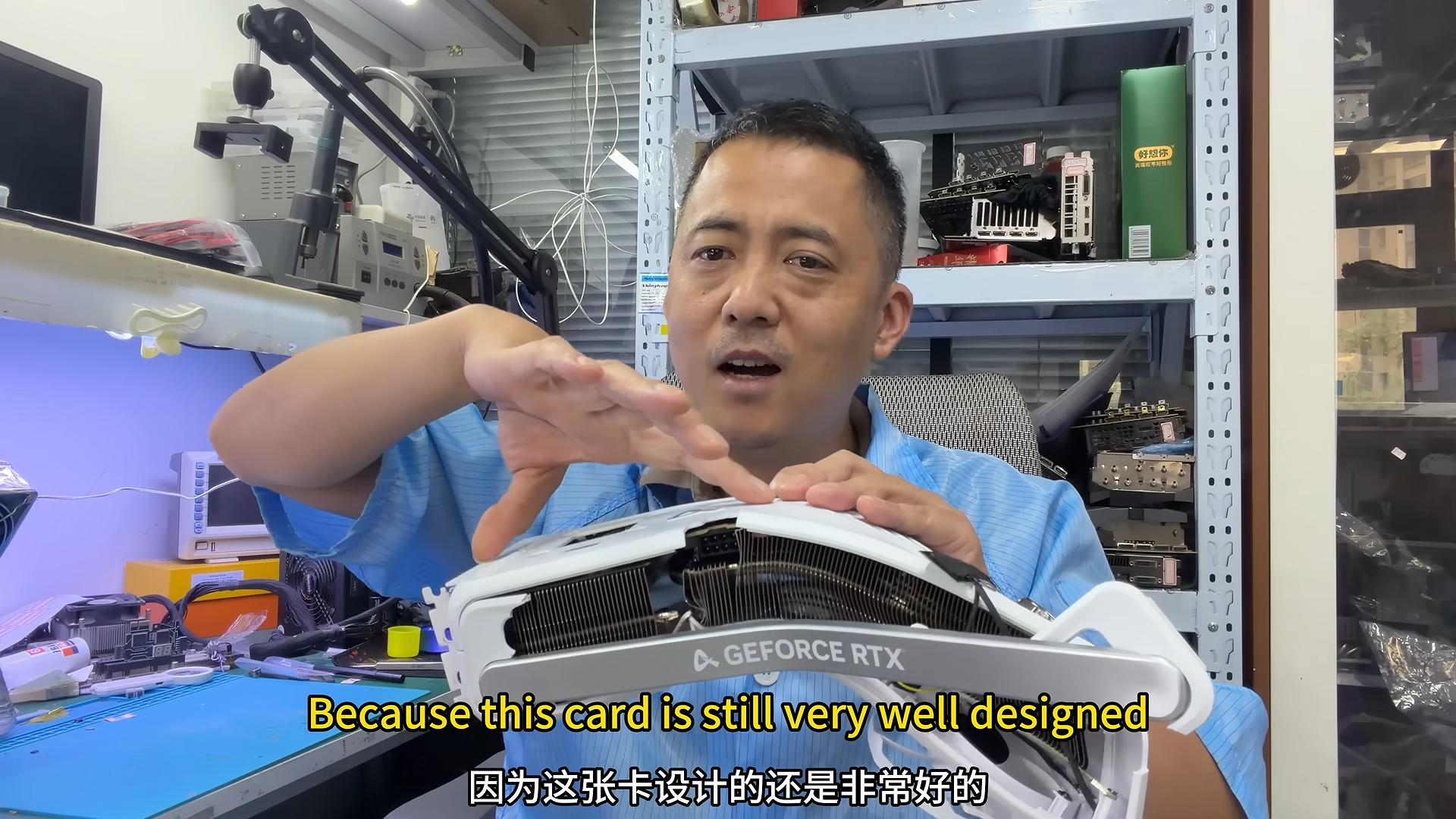
The RTX 5060 Ti bent in a car accident was actually saved! The short PCB was key—only one memory chip needed to be re-soldered.
According to the video shared by Brother Zhang, a Chinese user encountered a serious car accident right after purchasing an AX Gaming RTX 5060 Ti, and both the vehicle and the graphics card inside were impacted. The card’s metal backplate is clearly bent, and the heatsink fins, shroud, and fan module are all deformed, meaning the original cooling system can no longer be used as-is.
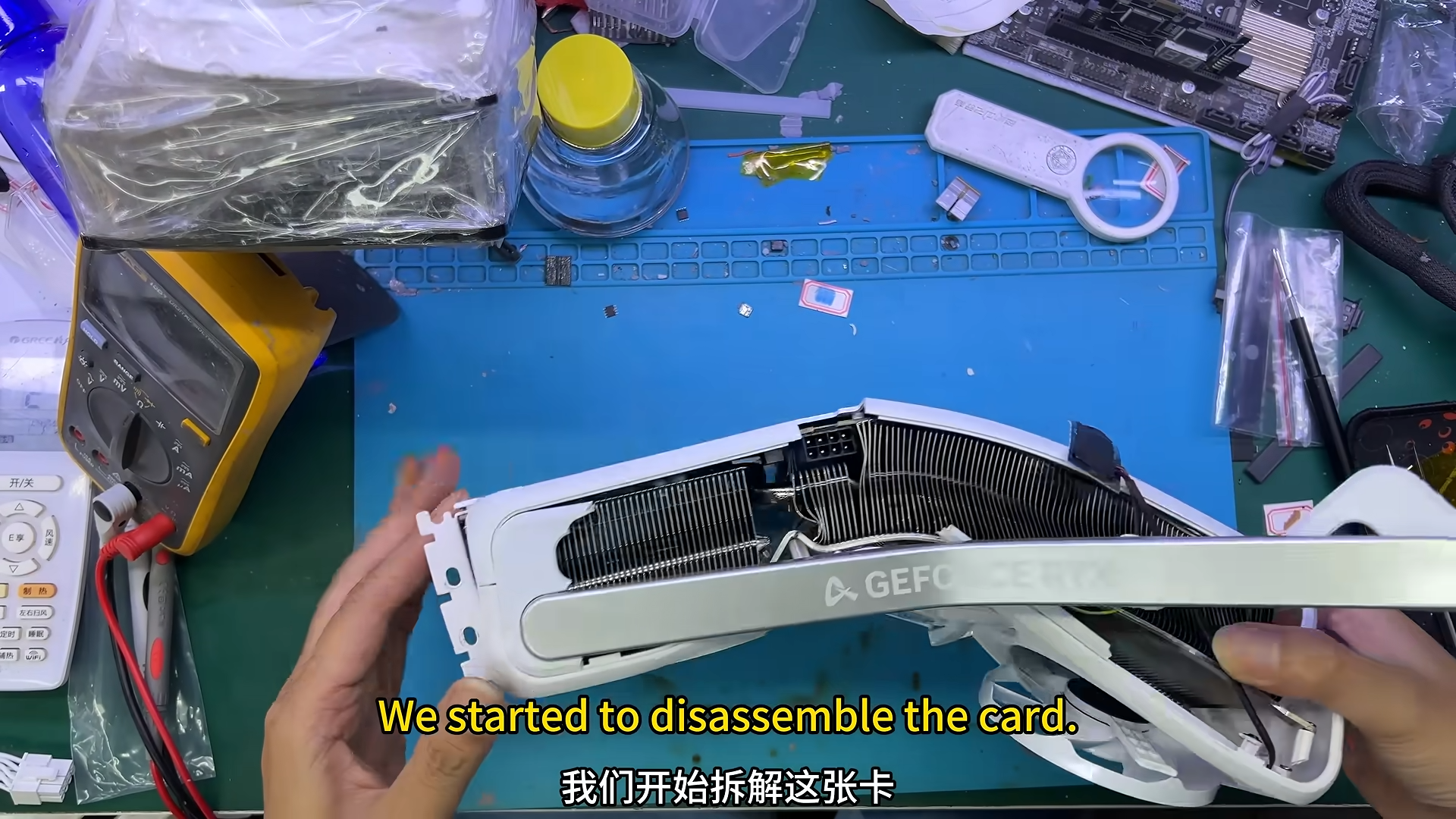
Before even opening it up, Brother Zhang mentioned that this card still had a chance to be repaired, because it uses a very short PCB design. Many mid-range graphics cards these days may look long on the outside, but the actual circuit board holding the GPU, power delivery, and video memory doesn’t necessarily extend all the way to the end of the card. A large portion of the rear half is left for the heatsink and airflow.
The main bending point from this impact happened to be near the tail end of the short PCB, not directly through the central GPU core area, and the circuit board was not snapped either.
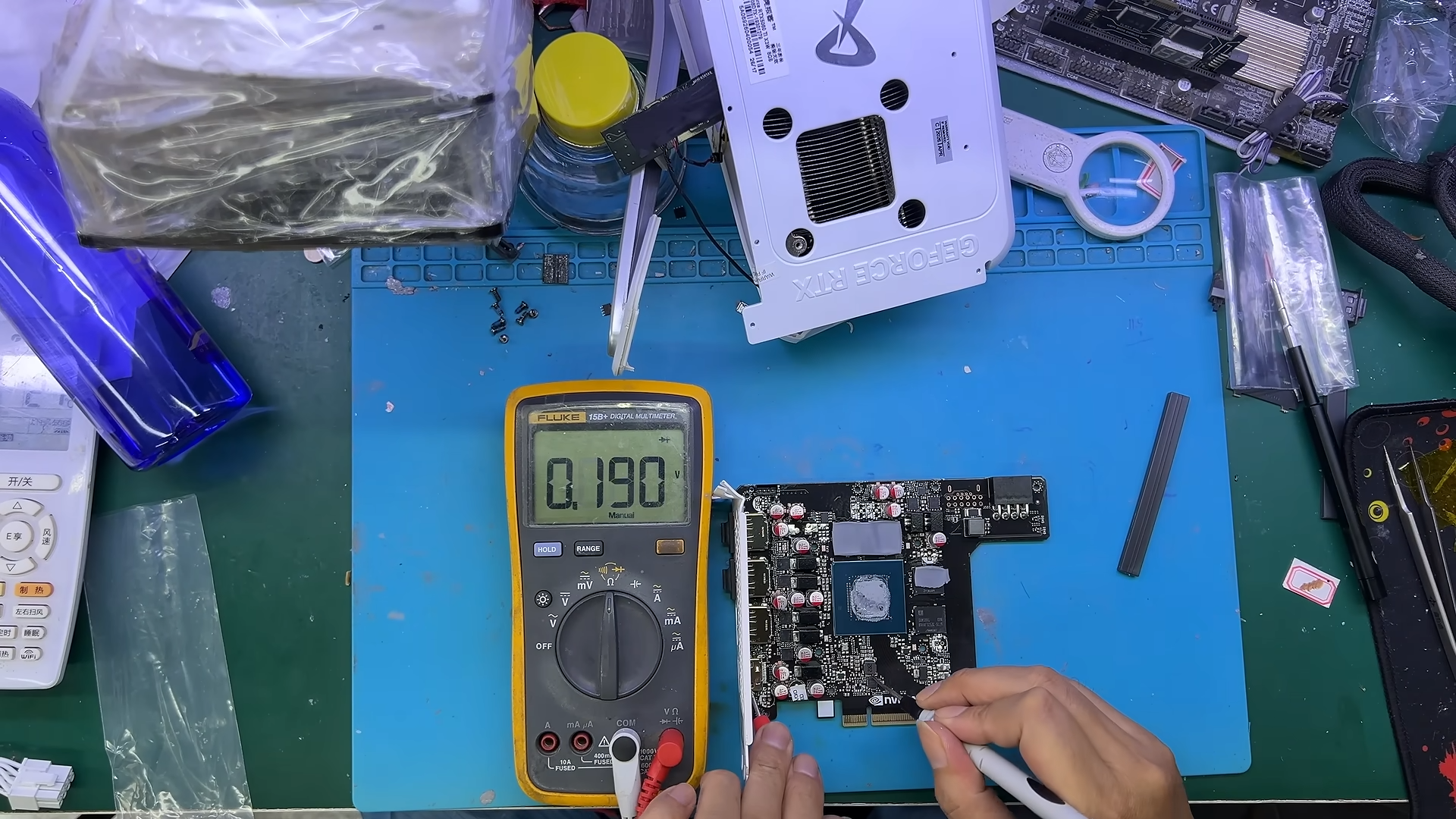
After removing the damaged radiator, we again first measured the power supply lines of each group, found no obvious short circuits, and the resistance values also showed no abnormalities:
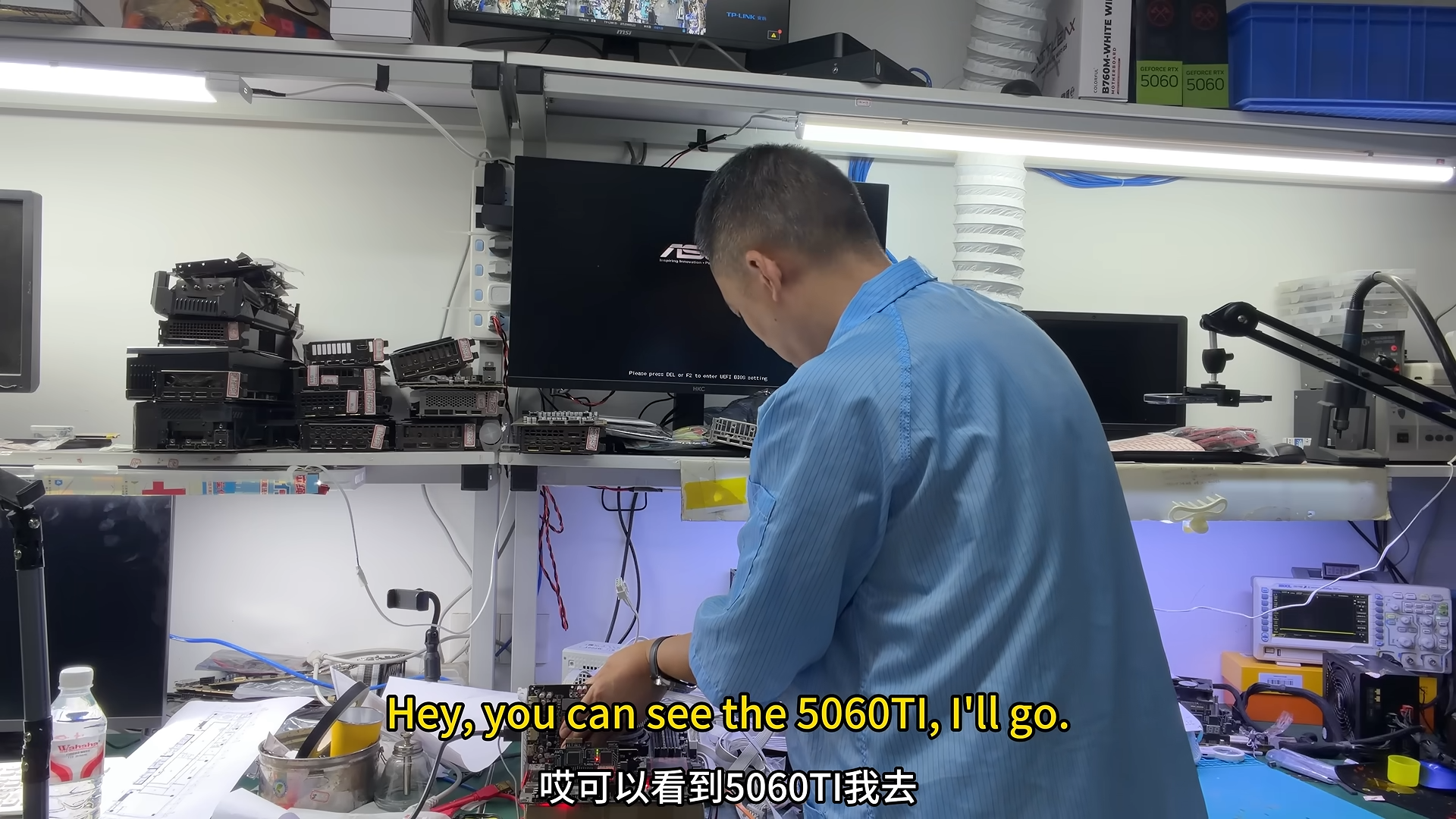
Next, after connecting the bare board directly to the test bench, this RTX 5060 Ti really did manage to output a display and boot into the OS. Since it can boot, that means the GPU has display output capability and the core is basically fine. Next, let’s move on to actually testing whether the GPU can run properly:
However, before that, we need to sort out the cooling first. Although the original heatsink had been knocked askew, Zhang still managed to straighten the cooling fins, then took two 120mm fans and attached them directly to the fins with cable ties, piecing together a makeshift jury-rigged solution:
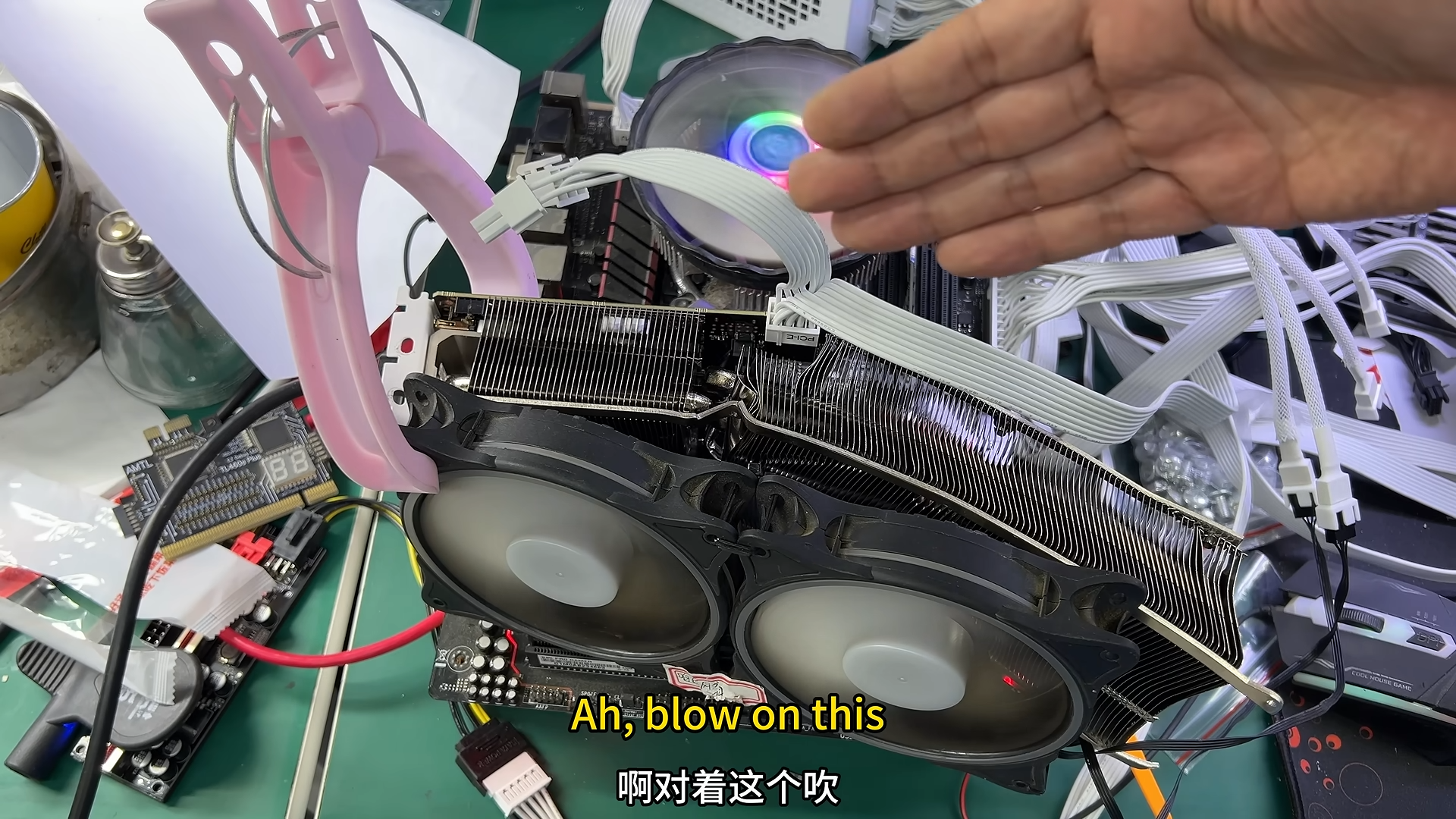
As expected, with a car accident this severe, it’s unlikely the GPU would be completely undamaged.
The graphics card can enter Windows normally, but whenever I try to install the NVIDIA driver, the system goes to a black screen and crashes hard:
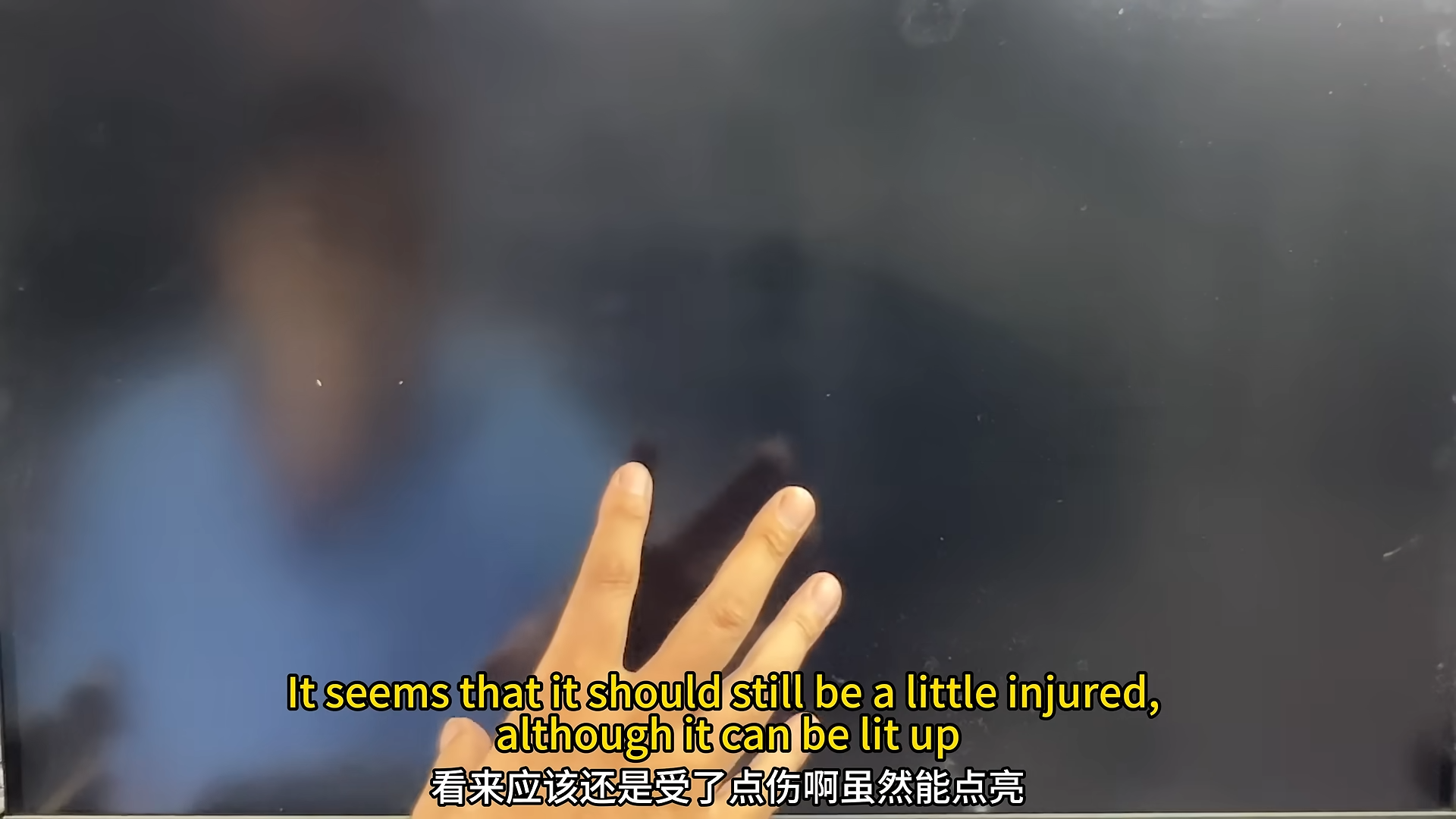
After re-inspecting the PCB, it was observed that the display memory closest to the edge (A1 in the figure below) experiences the greatest torque. Although it looks normal, when the PCB is significantly bent, even if the body does not crack, the solder joints underneath may develop cracks or poor contact:
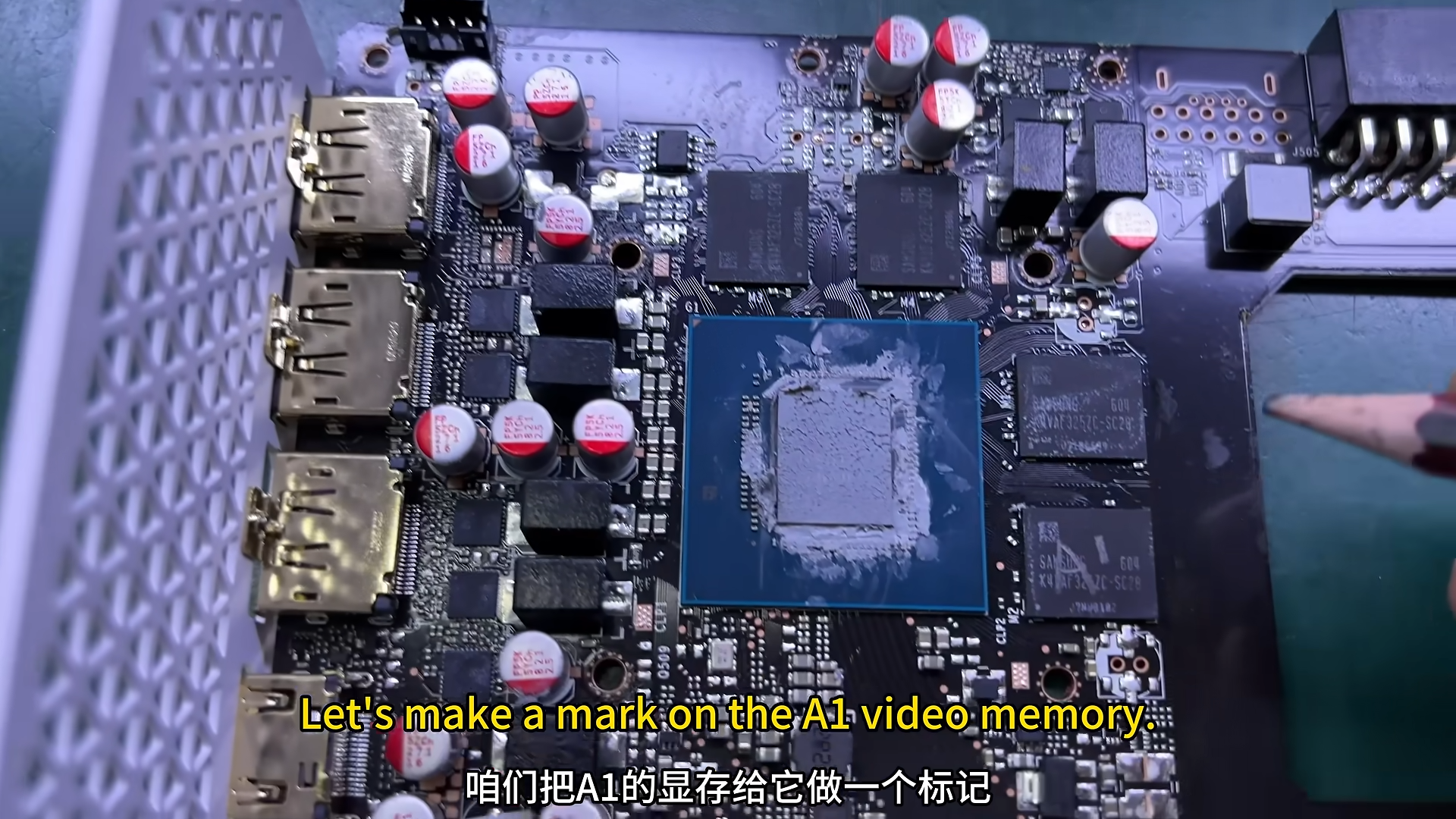
Therefore, Brother Zhang removed the memory chip, reworked the BGA solder joints, and then soldered it back onto the PCB:
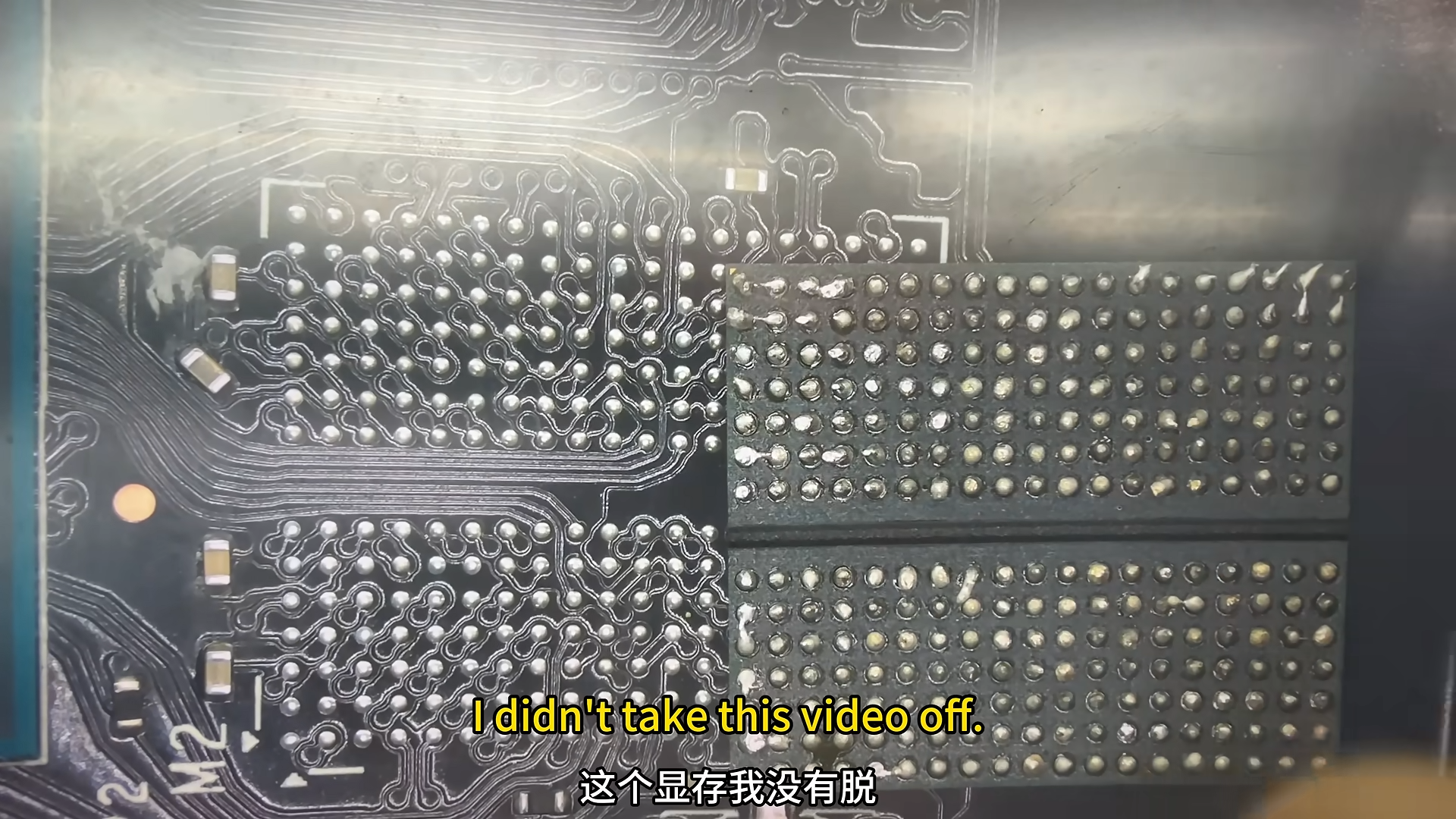
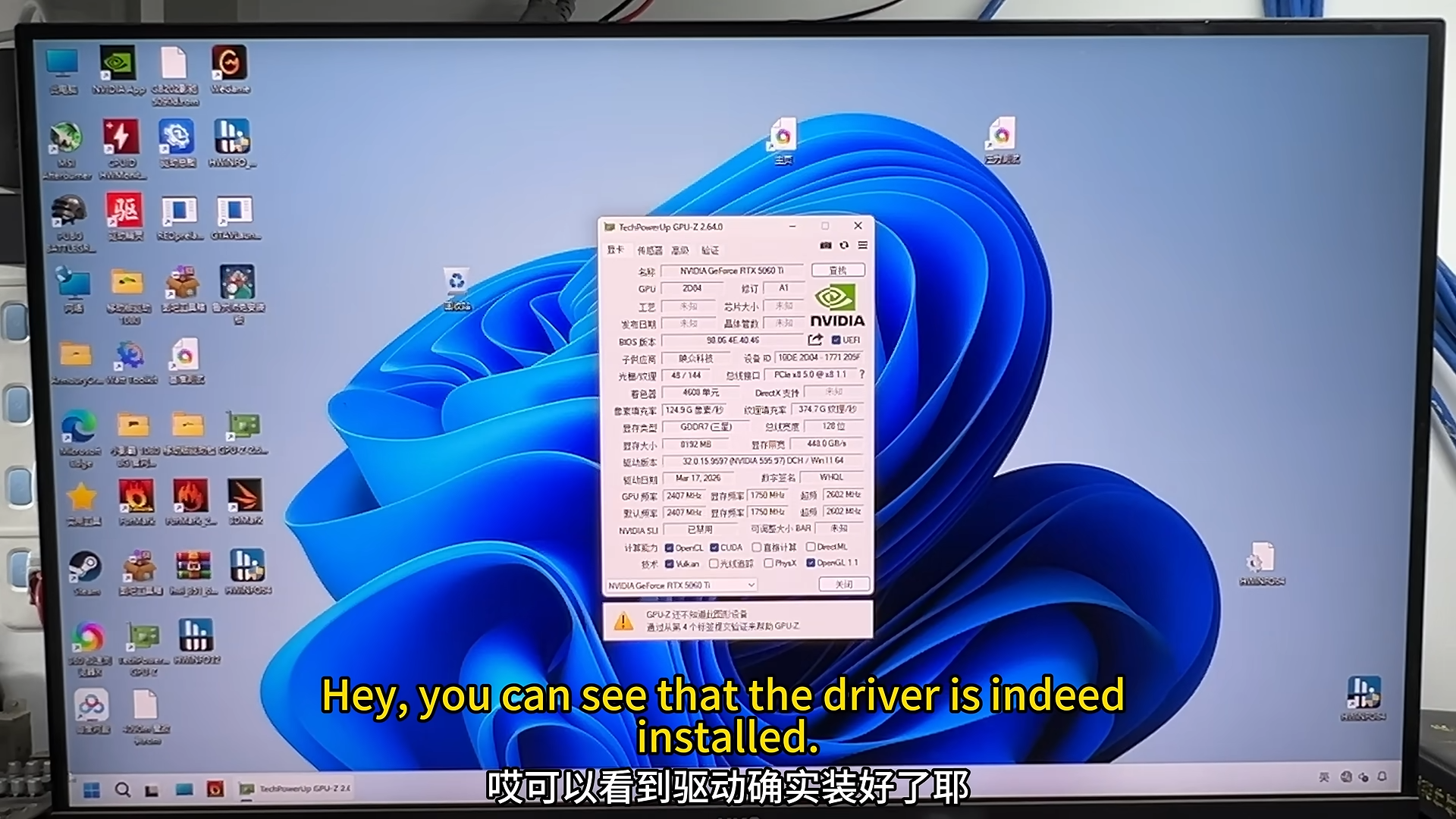
After completing the soldering, I installed it back into the system. This time, Windows successfully recognized the RTX 5060 Ti, and the full 8GB VRAM displayed correctly. Most importantly, the driver loaded smoothly without any further black-screen crashes:
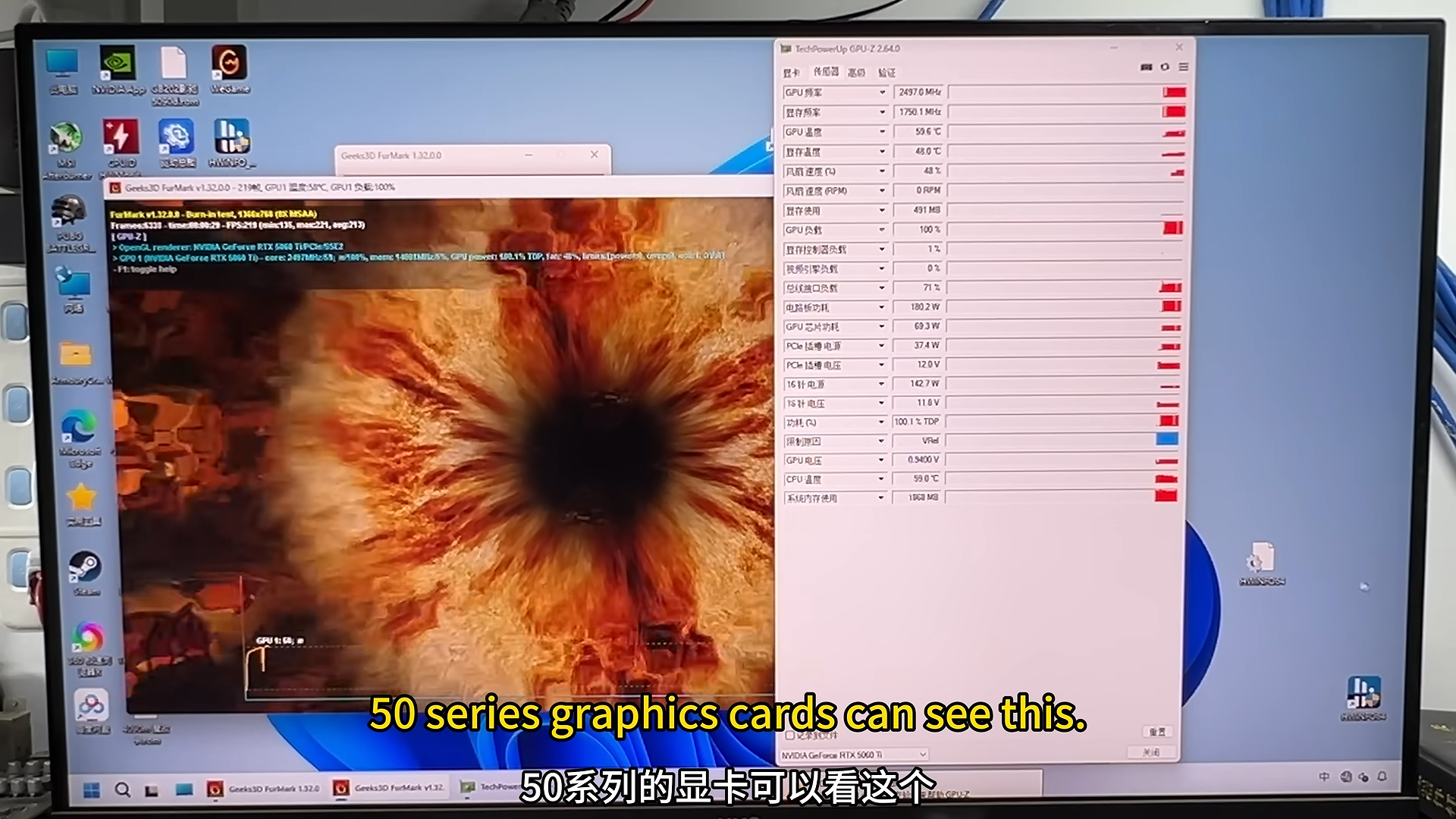
Finally, a stress test was conducted. During FurMark burn-in, the GPU temperature rose to about 64°C and remained stable, and the test screen showed no artifacts or other obvious anomalies:
3DMark loop stress test, game tests also had no issues, successfully revived this RTX 5060 Ti:

Full video:
Source: KOCPC Chinese