


Google has been steadily strengthening NotebookLM over the past few years, evolving from its original role as an AI note-taking assistant toward something more like an AI research agent. Recently, Google announced a fairly major update for NotebookLM, upgrading it to Gemini 3.5 and Antigravity and equipping it with a secure cloud computer that lets you safely write code, run programs, and analyze data, then export results as PDFs, Excel files, PowerPoints, and other formats.
NotebookLM Upgrades to a More Complete AI Research Tool: It Can Run Code to Analyze Data, Find Web Sources, and Generate PDF, Excel, and PPTX Files.
According to GoogleThis time, the technology and models behind NotebookLM have been upgraded to Gemini 3.5 and Antigravity. Compared to before, responses are more accurate and reliable, and you can also see more of the AI’s thought process as it works through questions.
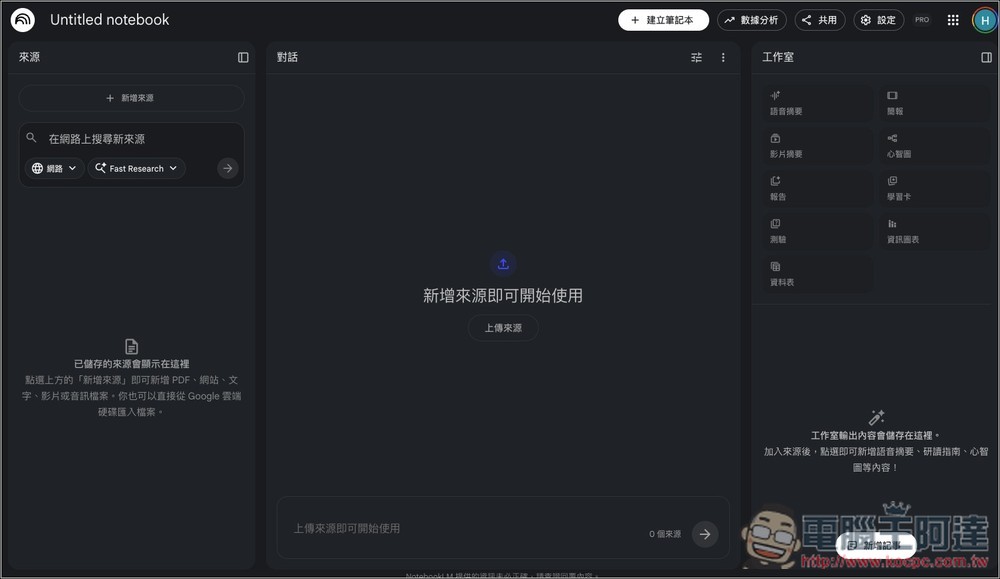
Many people may wonder whether the Antigravity mentioned here is a new model or one of Google’s AI agent tools. Although Google has not explained in detail, publicly available information suggests that Antigravity is not another large language model, but an execution environment and workflow framework that supports AI agent operations.
After integration, NotebookLM is no longer limited to simply answering questions; it can also search for data, execute code, analyze documents, and produce deliverables, giving it a more complete research workflow capability.
In addition, each NotebookLM notebook now comes with a “secure cloud computer” that lets you write and run programs for research tasks, enabling more advanced data analysis. Google added that the system includes more than 100 pre-configured software skills, allowing NotebookLM to perform more analysis and organization based on source material.
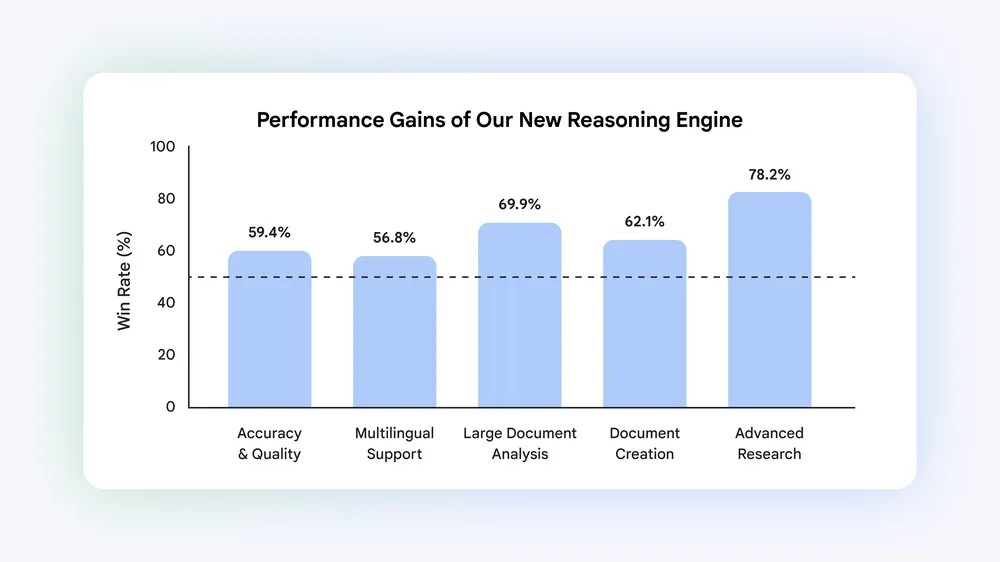
Google also released some official internal evaluation data. Compared with the previous-generation system, the upgraded NotebookLM achieved an average evaluation win rate of over 65% across five core evaluation dimensions—15% higher than the equivalent baseline. Specifically, large document analysis scored a 69.9% evaluation win rate, while advanced web research and source exploration reached 78.2%:
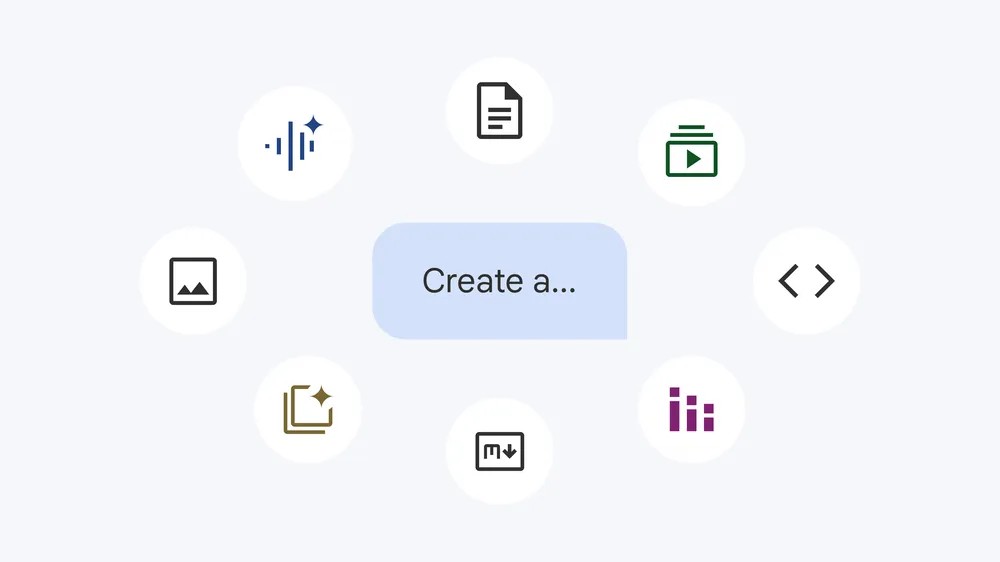
Output formats are another key focus of this upgrade. Users can now ask NotebookLM to generate additional formats based on source content—such as PDF reports with charts and tables, detailed budget spreadsheets, or customized student worksheets—and download them directly from the Studio panel.
New supported formats include:
- PNG / SVG Data Visualizations and Charts
- Document file types: PDF / DOCX / Markdown / TXT
- PNG / JPG / GIF images generated through Nano Banana
- CSV / JSON for structured data
- XLSX and PPTX
In addition, Google has also improved the process of getting started with research.
In the past, NotebookLM worked best when you already knew what you wanted to research and had a reliable set of sources ready.
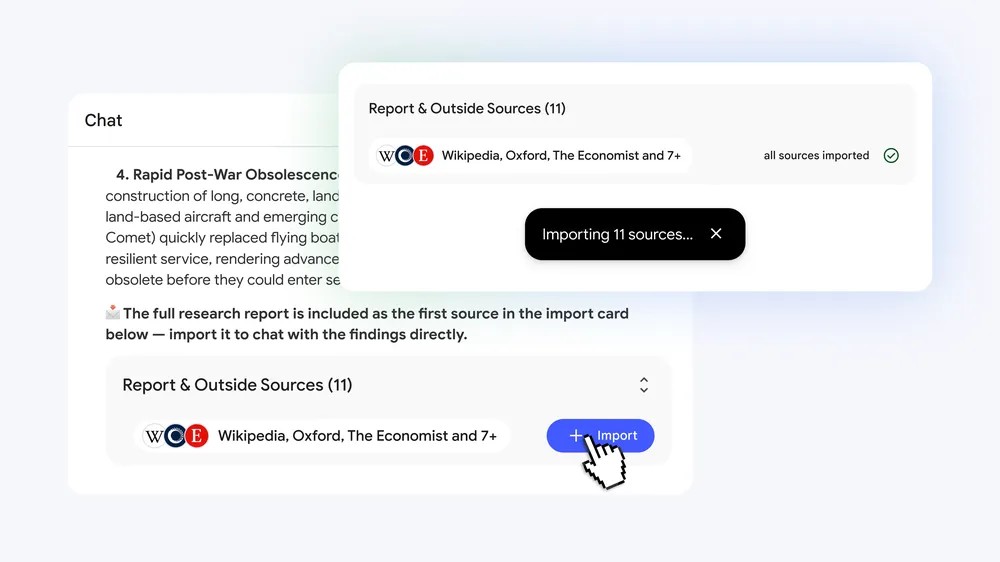
Now users can start with a fairly vague idea or question, and NotebookLM will guide them in chat to build a source library, even using Google Search to find relevant, high-quality web sources and add them to the notebook.
Google said these updates have been rolling out globally on the web starting June 8, 2026. However, the first wave is only available to Google AI Ultra users and Workspace business customers with AI Ultra Access and AI Expanded Access permissions, with broader availability coming later.
Source: KOCPC Chinese