


The introduction of new technologies does not mean the death of old technologies. Wireless technology has made great progress in recent decades, but many IoT and smart home devices still rely on 2.4GHz. Compared with the 5GHz and 6GHz we have now, although the 2.4GHz frequency band has many shortcomings, it is still worth using today. Why? This time we will find out together.
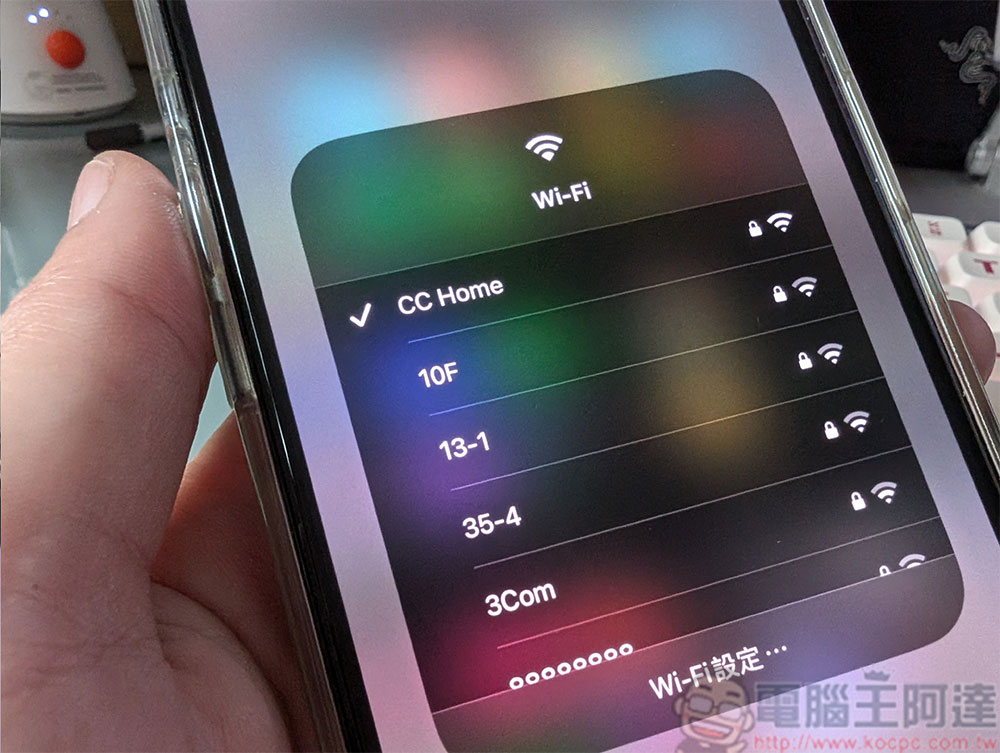
Why is 2.4GHz Wi-Fi still important today?
What is 2.4GHz Wi-Fi?
In 1985, the U.S. Federal Communications Commission (FCC) launched 2.4GHz, which was quickly adopted as the standard for the first wireless protocol, 802.11, because it was free of charge. You may have heard of 802.11, as the version of the protocol is now commonly used to describe improved connectivity in hardware such as laptops. So, what is the 2.4GHz band? A frequency band is a group of frequencies used to transmit radio waves. Currently, the frequency bands approved by government agencies for wireless transmission of data are 2.4GHz, 5GHz, and 6GHz.
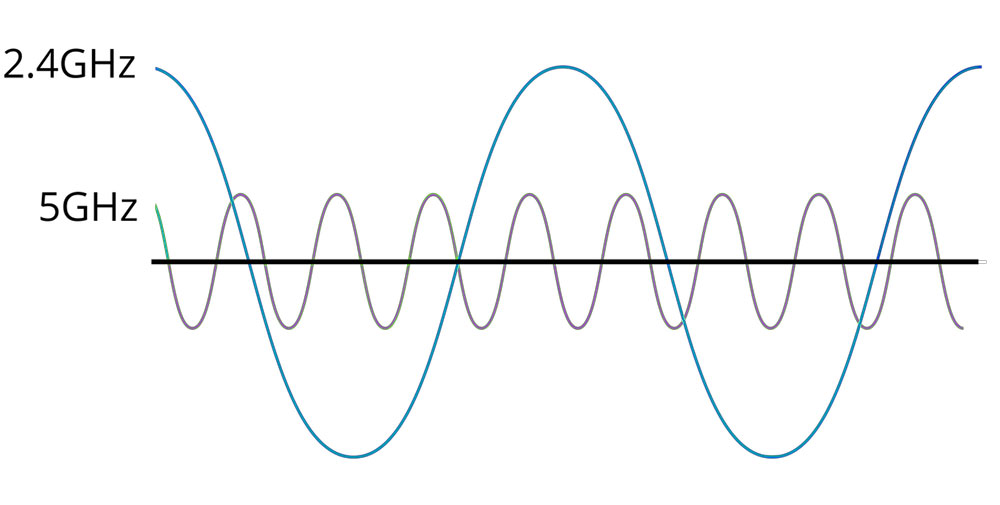
There are 1,000,000,000HZ in 1GHz. The higher the number, the more frequently the waveform pattern repeats, and the greater the range of the waveform. The higher the number of repetitions and the number of channels, the greater the bandwidth available to the network. Think of each band as a water pipe with liquid flowing through it. The larger the diameter of the pipe, the more liquid can flow through it. Older hardware does not support newer frequency bands such as 5GHz and 6GHz, and modern smartphones, for example, may support all three technologies for fast data transfer and reliable connections. 2.4GHz is limited to specific speeds and is much slower than other available frequency bands. Most modern routers support 2.4GHz, 5GHz, and 6GHz, giving wireless technology more flexibility.
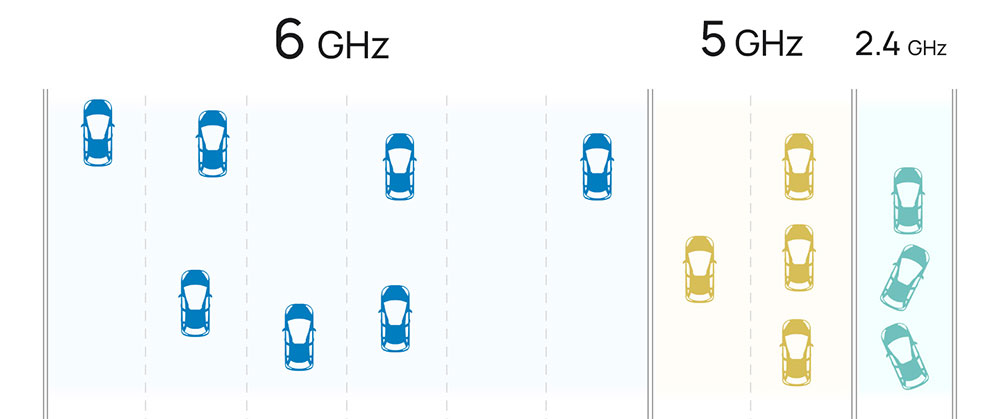
Why is the 2.4GHz band becoming congested?
As expected, putting everything in the same band will inevitably cause problems, especially as technology continues to improve and there is a need for more bandwidth. Almost everything connects to wireless networks through 2.4GHz. Since the beginning of time, your phone, TV, computer, and game console all used the same band. After adding various up-and-coming smart devices (smart light bulbs, smart sockets, etc.), the 2.4GHz band has now become too crowded. Just look at the list of devices connected to Wi-Fi on your router to see how many devices are using 2.4GHz, which is mostly what a typical home would use.
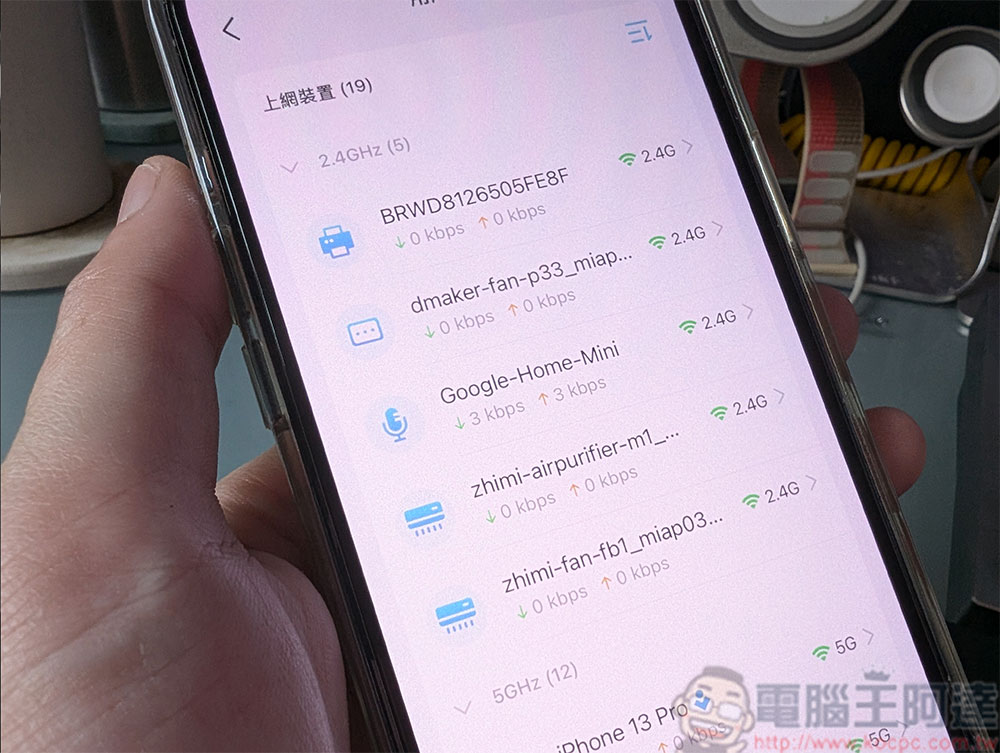
Even as wireless technology advances by leaps and bounds, 2.4GHz is still here to stay, thanks to wider range and the fact that most routers (including all models used by ISPs) can use 2.4GHz, which is especially helpful for devices that will be installed around (and outside) the home. For example, a smart doorbell installed outside the door, 2.4GHz ensures a stable connection to see who is knocking on the door, it is not fast, but it is enough to meet all our needs of using it. Since almost all devices support 2.4GHz, you’ll find the band congested, especially in a busy home or office, where even devices that support higher bands will use 2.4GHz for better coverage.

It’s hard to understand how congested a wireless network can become because it’s not visible to the naked eye like a traffic jam on the road. Your devices must compete with each other for a limited space to be clearly received by the router (or access point). This won’t be a problem if there are only a few devices on the same band, but if you increase the number of smart home devices using the band to 20 or more, you’ll have the problem of too many devices competing for each other. Have you ever wondered why smart plugs take a few seconds to respond to your commands? Network congestion may be the cause.
Why is 2.4GHz Wi-Fi still vital in today’s connected world?
Current trends include smart home technology. In order to be more convenient and reduce manual labor to complete more work, we are adding more smart products to our homes. Air conditioners can be controlled through mobile phones, and more and more people are buying smart lights, smart sockets, and even home appliances such as washing machines, refrigerators, and sweeping robots that can be wirelessly connected to local networks. The 2.4GHz wireless band provides convenience for smart homes, and 5GHz and 6GHz help the network spread the load to various channels, which is very important for smart homes, but the 2.4GHz band cannot be ignored.
Support for 2.4GHz makes smart home devices smaller, more affordable, and more compatible, which is important to consider when planning your network infrastructure and purchasing a host of smart home accessories.
Source: KOCPC Chinese