


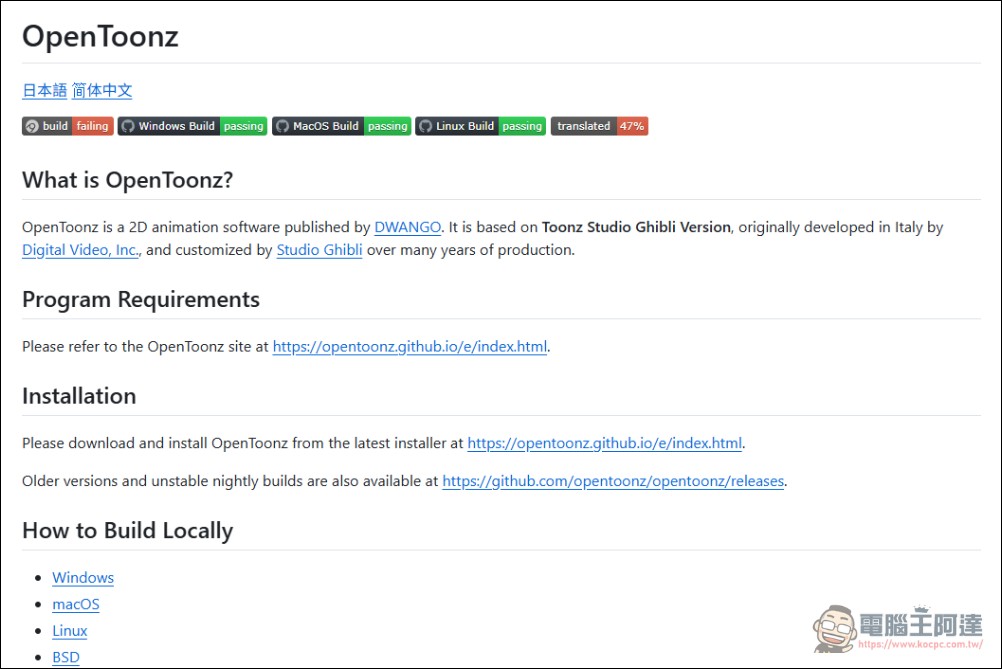
You may have heard of or seen Ghibli classic animations such as “Spirited Away”, “Magic Princess” and “The Heron and the Boy” that are popular all over the world. But what you may not know is that behind them there is a low-key but extremely crucial software called Toonz, and its open source version OpenToonz, now available for anyone to download and use for free from GitHub.
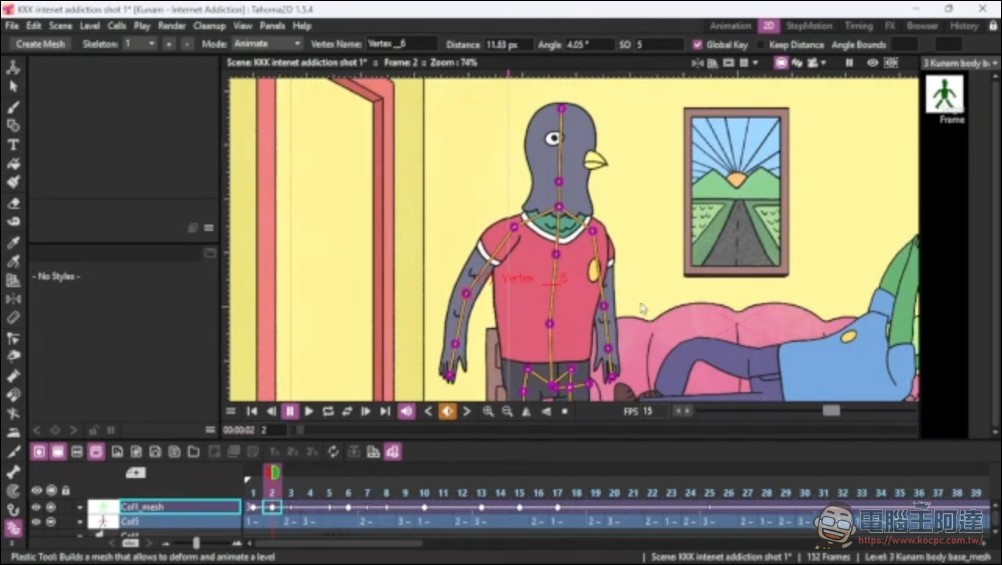
Studio Ghibli’s official animation software OpenToonz is completely free and open source
From Toonz to OpenToonz: A saga of animation tools spanning 30 years
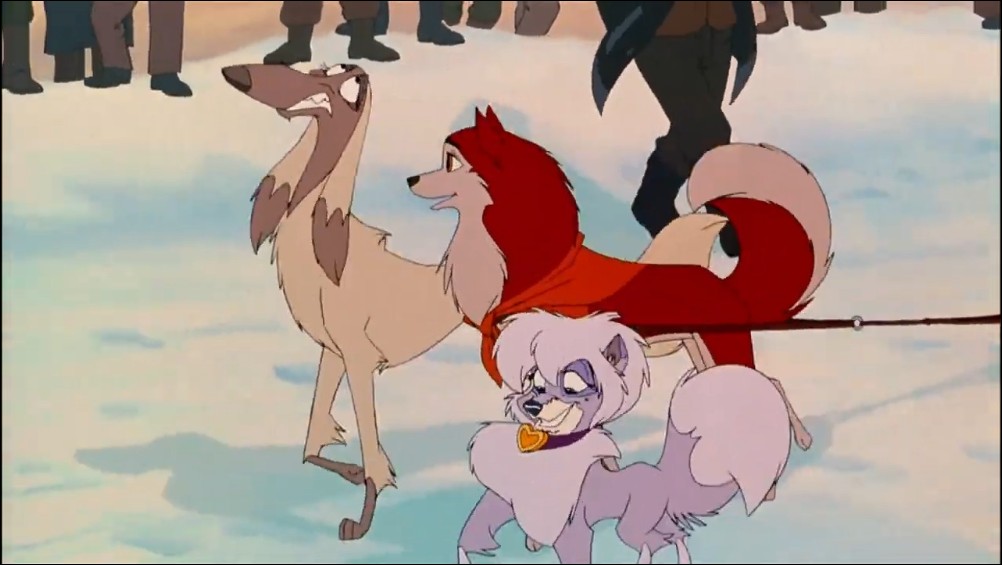
The story of OpenToonz begins in 1993. At that time, Italian CGI software development company Digital Video S.p.A. A suite of tools called Toonz 2D animation software and signed an exclusive distribution agreement with Softimage to sell it on the market under the name “Creative Toonz”. One of the earliest commercial applications of this software was the animated film “Balto” by Amblimation Studio.
After Microsoft acquired Softimage, Toonz was ported to the Windows platform and renamed Microsoft Toonz. At that time, the software added key modules such as Pencil Test, Palette Editor, Xsheet, Ink and Paint, etc., creating a complete digital workflow for traditional cel animators.
Deep customization with Studio Ghibli
In 1995, Studio Ghibli introduced Toonz for the first time when producing “Magical Princess” (もののけhime), and carried out a large number of in-depth customizations of the software. Nearly 10,000 digital animation frames and CG scenes were completed using Toonz.
A modified version within Studio Ghibli is called Toonz Ghibli Edition(or Toonz Studio Ghibli Version). This is not a simple reskin, but an in-depth transformation of the entire process from scanning to coloring, from special effects synthesis to rendering. Ghibli even developed their own scanning tool GTS(Ghibli Toonz Scanner), specially used to digitize hand-drawn originals with high precision.
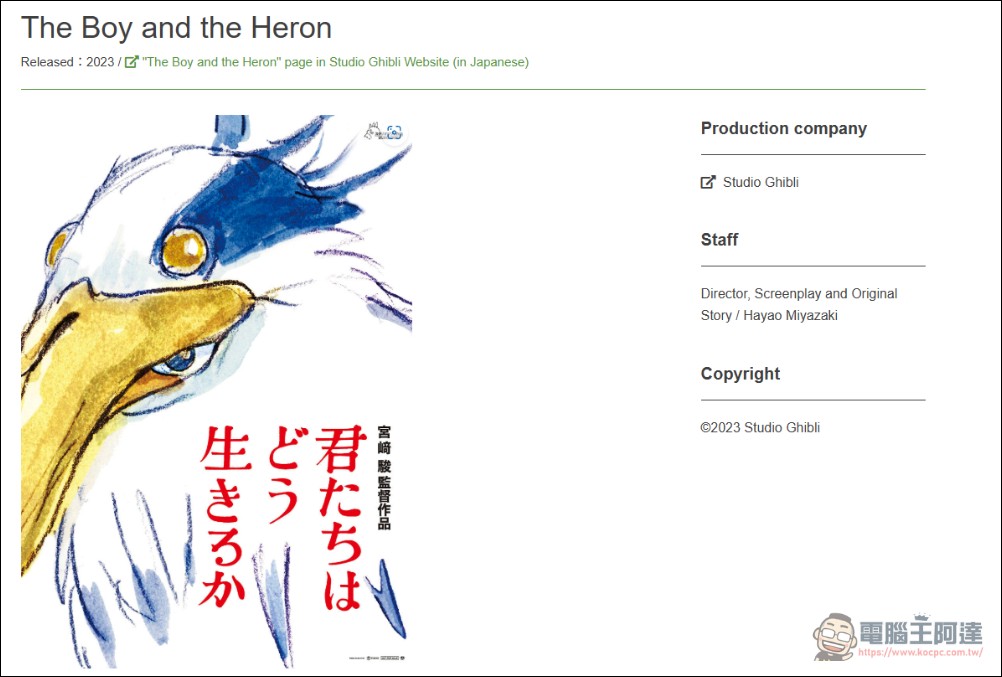
After “Princess,” almost all of Ghibli’s subsequent films were built on Toonz: including the Oscar-winning Best Animated Feature “Spirited Away”(2001)、“The Story of Princess Kaguya”(2013), as well as Miyazaki’s 2023 comeback “The Heron and the Boy”(The Boy and the Heron). In other words, this software has accompanied Ghibli through nearly 30 years of creation.
2016: Open source release after Dwango acquisition
In March 2016, the parent company of Niconico, Japan’s largest video sharing platform Dwango Announced the acquisition of Toonz and decided to release it as open source to the global animation community.
March 26, 2016OpenToonz The source code is officially released on GitHub, using Modified BSD License Authorization. This means that anyone can freely use, modify, and even use it for commercial projects completely free of charge.
It is worth noting that while Dwango announced open source, it also retained Toonz Premium The development and sales rights of the commercial version will continue to be maintained by Digital Video to meet the technical support and stability needs of professional animation studios.
Features: Professional-grade 2D animation full-process tool
OpenToonz is not the kind of free software “just for fun”. It has complete professional animation production pipeline capabilities. Unlike general consumer-oriented drawing software, OpenToonz is designed to support the huge output of a 90-minute feature film:
- hand drawn scan: Using GTS (Ghibli Toonz Scanner) tool developed in-house by Ghibli, hand-drawn originals are digitized with high precision, retaining the subtle texture of pencil strokes
- Line drawing processing and cleaning(Cleanup): Automatically remove pencil noise, smooth lines, and adjust scan brightness contrast to turn rough manuscripts into clean digital line drawings
- digital drawing: Completely supports drawing tablets and pressure-sensitive pens, and can draw original paintings directly in the software
- coloring system(Ink & Paint): Supports smart palette management, batch coloring and automatic color filling of closed areas – for traditional cel animation, this is the most significant efficiency improvement function
- Bone binding and mesh deformation(Mesh Deformation): Added since version 7.0, the skeletal system can be used to control character body movements, reducing the workload of frame-by-frame redrawing.
- Special effects synthesis(Fx Schematic): A node-based visual effects editor that can superimpose light and shadow, particle, blur and other effects, similar to After Effects but completely built-in
- Xsheet and Photography Sheet: Timing and layer management tools familiar to traditional animators, supporting multi-layer camera movement
- Vector and lattice hybrid support: Vector graphics and scanned bitmaps can be used simultaneously in the same project, with flexible switching
- 3D stereoscopic rendering support: Can import 3D models as background reference or composite materials
- ECMAScript script automation: Support JavaScript scripting for batch processing tasks, saving time on repetitive work
Tahoma2D: A friendlier branching version
Although OpenToonz is powerful, its user interface is quite complicated by modern standards and the barrier to entry is high – which is understandable, since it was originally designed as a tool for professional animation companies to collaborate in teams of dozens of people, not individual creators.
This prompted the developer community to launch around 2020 Tahoma2D,A fork based on the OpenToonz source code, focusing on improving user experience and simplifying workflow. The core engine of Tahoma2D is the same as OpenToonz, but the menus have been reorganized, the default workspace is more intuitive, and modern timeline control and dynamic tweening functions have been added.
If you use one sentence to distinguish the two:OpenToonz is a fully functional engine, and Tahoma2D puts this engine into a better-driving car.. Tahoma2D is often the recommended starting point for creators new to 2D animation.
Current status and ecosystem
As of 2026, OpenToonz is GitHub has accumulated more than 5,400 starsand 624 forks, the community continues to be active, and there are still stable commits in the past year. Supported platforms include Windows, macOS and Linux, and there is also a community-contributed Android version.
It is worth mentioning that the complete “The Ultimate Introduction to OpenToonz & Tahoma2D 2026” (The Ultimate Introduction to OpenToonz & Tahoma2D 2026) will be available on YouTube in early 2026. Friends who want to learn can directly watch the master’s teaching.
Although OpenToonz’s market share in the global 2D animation industry is still unable to compete with commercial software such as Toon Boom Harmony or TVPaint – after all, large studios value technical support and stability rather than price, but as aCompletely free and open sourceA professional-grade tool that plays an important role among independent animation creators, educational institutions, and animation studios in developing countries. Especially when a world-class brand like Studio Ghibli publicly endorses it, it adds to the legendary nature of this software in the community.
OpenToonz GitHube official website
summary
From commercial software in the hands of Italian engineers in 1993, to the official tool of Japan’s most prestigious animation studio, and then to being given back to the world in the form of open source in 2016, the story of OpenToonz itself is a history of animation technology spanning three decades and three continents. If you are interested in 2D animation, or just curious about how the fantasy world written by Hayao Miyazaki was born, you may want to download OpenToonz on GitHub and give it a try. After all, you are probably using the same tools that Hayao Miyazaki used when he drew Chihiro and the White Dragon.
Source: KOCPC Chinese