


Meta recently announced a partnership agreement with renowned image generation platform Midjourney to jointly develop AI technology for image and video creation. This collaboration not only signals Meta’s further expansion of its technological footprint in multimodal generative models, but may also reshape the future of social media and digital creation. Meta’s chief AI officer, Alexander Wang, revealed that Meta’s AI research team will work closely with Midjourney, integrating the latter’s core technology for application in future AI models and product development.
1/ Today we’re proud to announce a partnership with @midjourney, to license their aesthetic technology for our future models and products, bringing beauty to billions.
— Alexandr Wang (@alexandr_wang) August 22, 2025
Meta is actively expanding its generative AI footprint.
In recent years, Meta has continued to ramp up its investment in generative AI. The image generation tool “Imagine,” launched in 2023, is the result of integrating its Emu model. This tool not only generates four images in strikingly different styles based on users’ text prompts, but also integrates with Meta’s social and communication services such as Facebook, Instagram, and Messenger to enhance user interaction experiences (Editor’s note: The service is only available in the United States).
Then, in October 2024, Meta unveiled another video generation AI, Movie Gen, which can automatically generate video content from simple text descriptions and further supports features such as specifying characters, adding background music, and remaking or editing existing videos. This demonstrates that its R&D capabilities in multimodal generative applications have already reached a considerable scale.

Midjourney: Pioneer of AI Image Creation
Midjourney has risen rapidly in the AI image generation field since 2022, gaining widespread traction especially within the artistic creation community. The platform uses Discord as its primary interaction interface, allowing users to enter commands directly in the chat interface to generate images rich in creativity and style, dramatically lowering the barrier to creation. Compared to similar technologies such as OpenAI’s DALL·E and Stability AI’s Stable Diffusion, Midjourney does not offer a full API or modular architecture for external use. However, its closed yet highly optimized generation quality and stylistic consistency have established a distinctive brand identity among designers and creators. In particular, the aesthetic quality of images produced by Midjourney has consistently remained at the top tier among all current large image models.
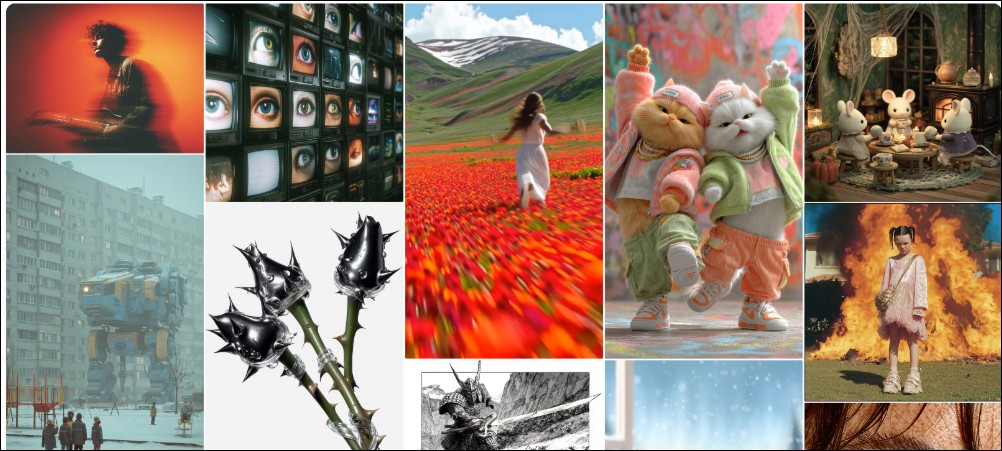
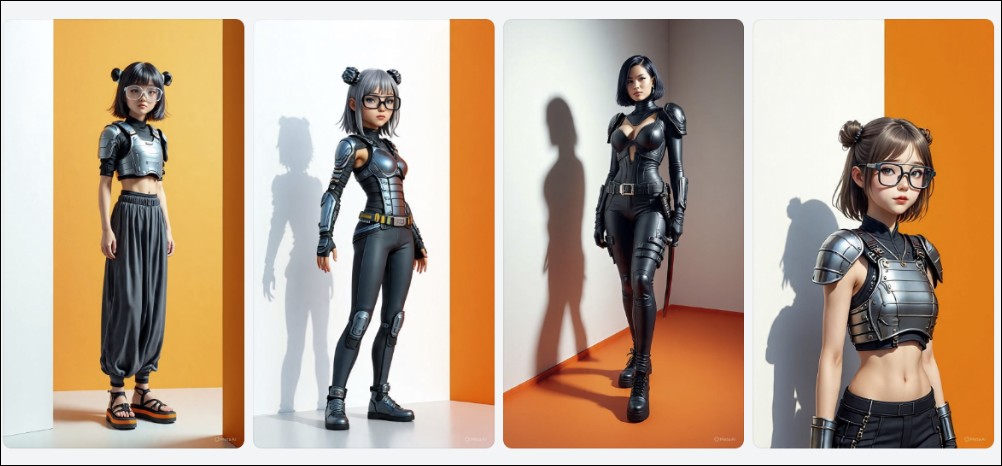
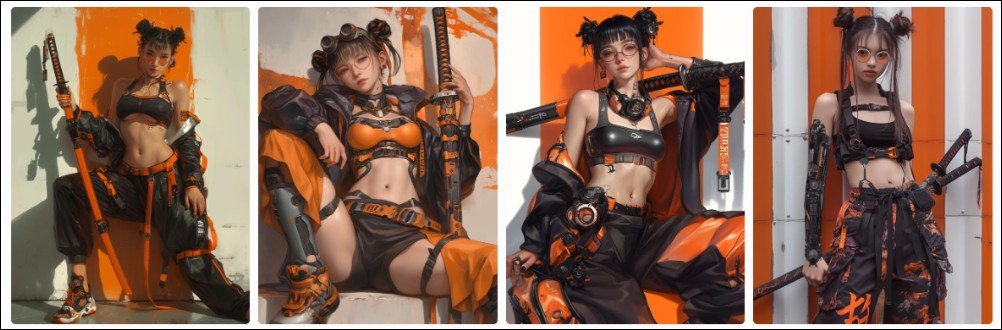
For example, with the same prompt, the difference in performance between META (top) and Midjourney (bottom) is quite large (META has improved a lot recently; otherwise it was even uglier before):
Through this collaboration, Meta will have the opportunity to incorporate the generative model expertise and aesthetic dataset accumulated by Midjourney, accelerating the evolution of its own AI image and video generation technology. For Meta, which focuses on general-purpose AI tools, this will be a win-win opportunity for “vertical integration” and “enhanced creative refinement.”
Alexander Wang said: “To ensure Meta can deliver the best products for people, a comprehensive approach is needed. This means top talent, an ambitious compute roadmap, and collaboration with the best players in the industry.”
4/ To ensure Meta is able to deliver the best possible products for people it will require taking an all-of-the-above approach. This means world-class talent, ambitious compute roadmap, and working with the best players across the industry.
— Alexandr Wang (@alexandr_wang) August 22, 2025
The two parties have not yet disclosed specific contract terms and licensing details, but this move shows that Meta clearly intends to integrate outstanding external technology to compensate for its own shortcomings in artistic quality and stylistic consistency, strengthening the competitive edge of its AI tools.
Midjourney’s Independence Statement and Future Positioning
Despite partnering with Meta, Midjourney still emphasizes its independence. Co-founder and CEO David Holz stated: “We remain an independent research lab supported by the community, with no external investors.”
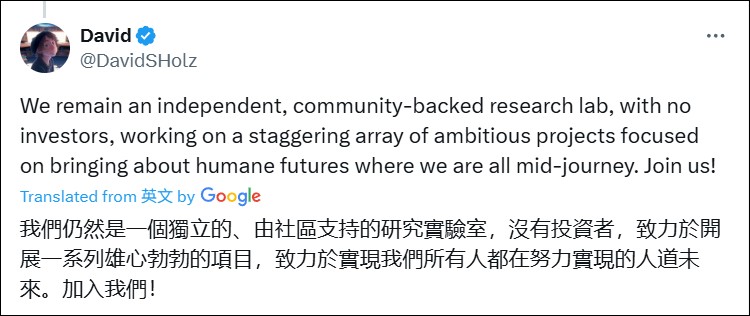
This statement can be seen as a clear response to external concerns about whether Midjourney will be acquired or controlled by Meta. Midjourney, led by Holz, has consistently upheld independence and community-driven development as its core principles, choosing not to bring in venture capital, sustaining operations through subscriptions, and relying on a small core team for model training and development.
The Next Chapter of AI Creation: Cross-Dimensional Evolution from Images to Video
From Imagine to Movie Gen, from image to video generation, and now this alliance with Midjourney, it’s clear that Meta’s development strategy for “multimodal generative AI” is continuously deepening. Through cross-platform and cross-media technical integration, Meta aims to build a complete AI tool ecosystem covering social, creative, entertainment, and communication.
Wang concluded: “We are very excited to show everyone the results of this collaboration. Stay tuned — we’ll have more news to share soon!”
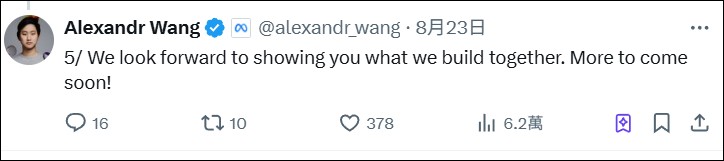
This statement suggests that the cooperation results between the two parties may have already entered the development and implementation stage, and integrated products or model demonstrations could be released in the coming months, which is worth keeping a close eye on. Personally, I hope Meta AI’s aesthetic sense stays on point going forward…
Source: KOCPC Chinese