


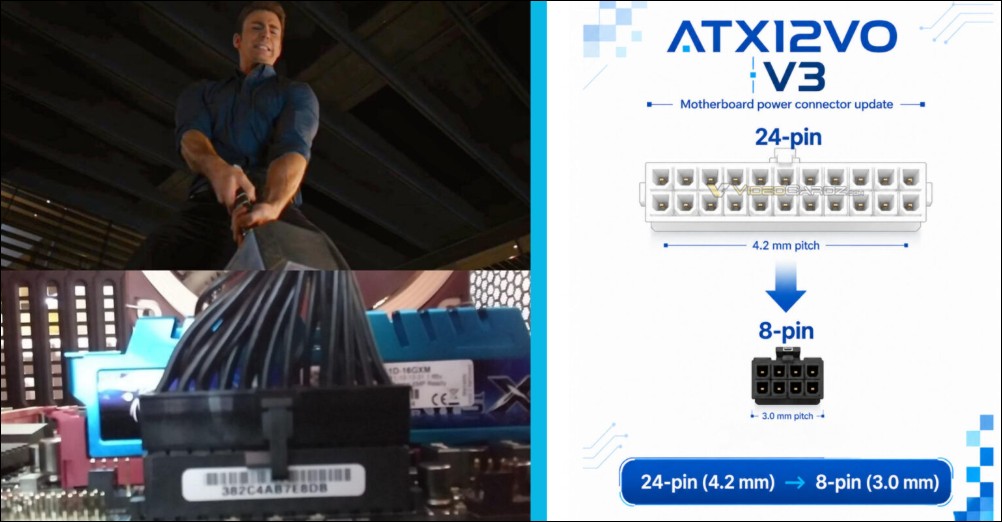
Recently, according to multiple technology media and Intel internal briefings, Intel is preparing to launch a new ATX12VO V3 power supply connector standard. The most eye-catching change is to cancel the 24-pin motherboard power connector that has been used for decades and replace it with a smaller 8-pin connector. If this change is successfully promoted, it will have a profound impact on the PC DIY market and the power supply design of OEM systems.
What is ATX12VO?
ATX12VO (12 Volt Only) was proposed by Intel in 2020Power supply standards, the core concept is to have the power supply only output 12V power, while low voltages such as 5V and 3.3V are handled by the voltage conversion circuit on the motherboard. The advantage of this is to simplify the power supply architecture and achieve higher conversion efficiency under low load conditions. However, ATX12VO has always been in an embarrassing situation in the DIY market, because to use this standard, the motherboard and power supply must support it at the same time. Existing ATX power supplies and motherboards cannot be directly used, and compatibility issues have made most DIY players lack interest.
Three major changes in Intel ATX12VO V3 version
According to well-known whistleblowers @momomo_us According to Intel briefing materials shared on the X platform, ATX12VO V3 brings three major updates:
New 8-pin main power connector
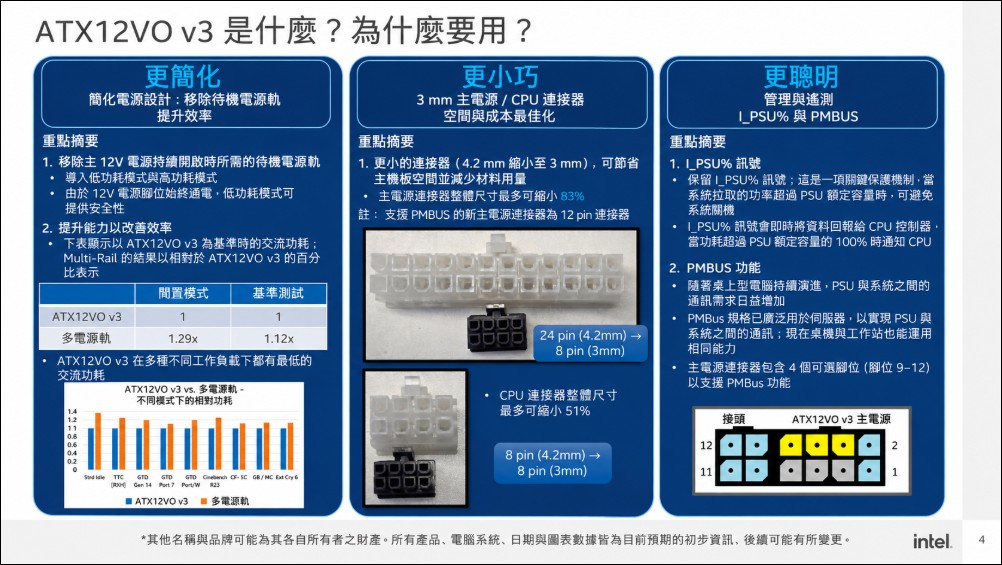
The 24-pin connector used in the current ATX standard has been used since the Pentium 4 era and is bulky and takes up motherboard space. ATX12VO V3 will switch to an 8-pin connector with a 3mm pitch design. Intel claims that the connector size can be reduced by up to 83%. This is a substantial space savings for compact OEM systems, small form factors (SFF) and compact motherboards. At the same time, the CPU power supply connector will also be reduced simultaneously, further reducing the problem of messy wires inside the case.
PMBus digital power management
Another highlight of ATX12VO V3 is the introduction of the PMBus (Power Management Bus) communication protocol from the server field. Through PMBus, information such as voltage, current, temperature and power consumption can be exchanged in real time between the power supply and the motherboard. For this reason, the main power connector will be optionally equipped with an additional 4 pins, bringing the total number to 12 pins, enabling complete digital power monitoring functions. In addition, the original I_PSU% signal of ATX12VO is retained, allowing the power supply to report the current load status to the system. For ordinary users, this means that in the future, they can more accurately grasp the working status of the power supply, and have a more reliable data basis when diagnosing problems or planning upgrades.
Efficiency significantly improved
According to leaked briefing data, the efficiency improvements of the ATX12VO V3 are considerable. In the idle state, the efficiency can be improved by up to 29% compared to traditional multi-Rail ATX power supplies (Multi-Rail ATX); in load tests, the efficiency can also be improved by up to 12%.
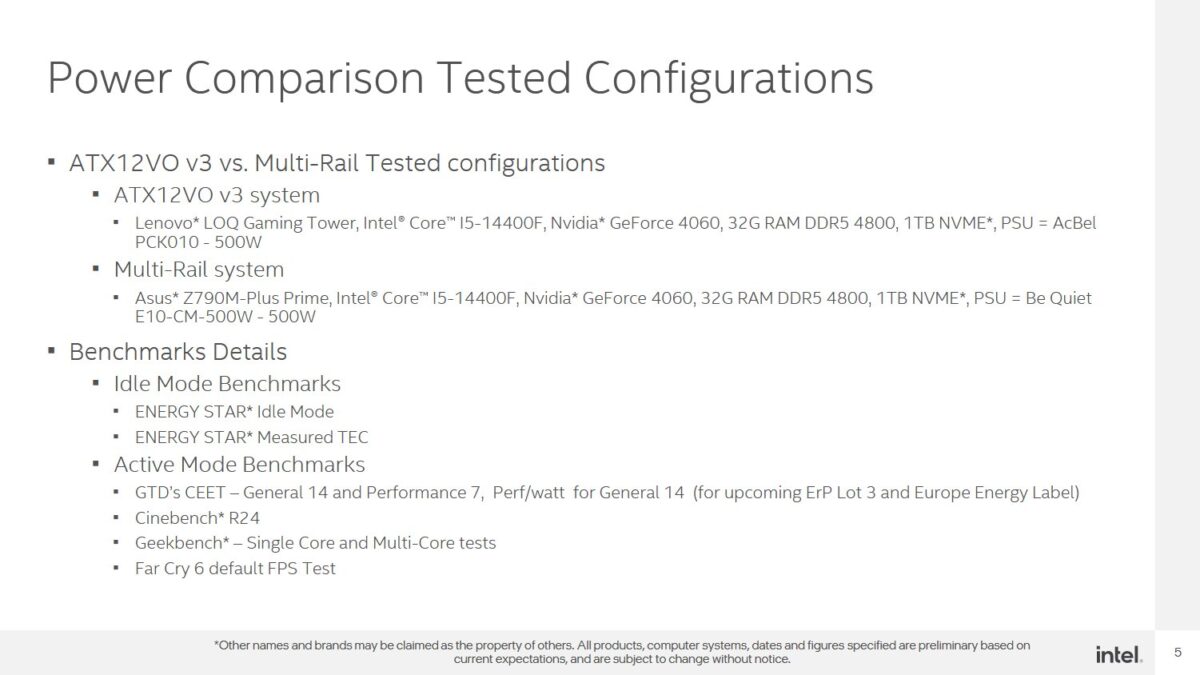
This efficiency improvement mainly comes from the architectural advantages of ATX12VO: since the power supply only needs to handle a single 12V voltage rail, the internal conversion losses are naturally less, especially under low load conditions (modern PCs are under low load or idle most of the time). This difference is more obvious.
Market prospects: OEM priority, DIY has to wait
Although the ATX12VO V3 is quite attractive in terms of technical specifications, its road to popularity may not be smooth. Looking back at the development history of ATX12VO since its launch in 2020, the acceptance of this set of standards in the DIY retail market has been very low. The main reason is that the motherboard and power supply must be upgraded at the same time, which is a high threshold for the existing DIY ecosystem.
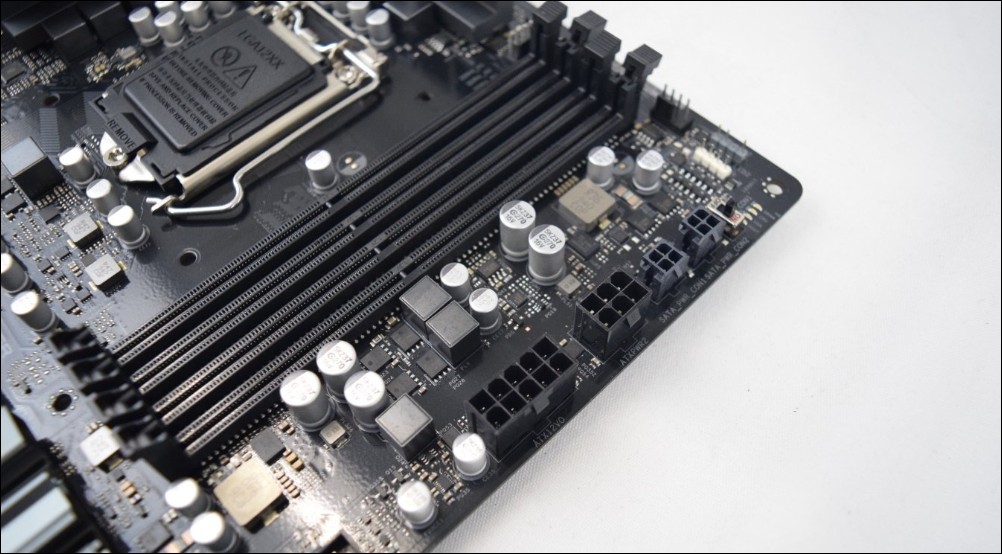
The more likely direction is that ATX12VO V3 will first be popularized in brand OEM systems (such as packaged computers from Dell, HP, Lenovo and other brands), because OEM manufacturers can fully control the specifications of the motherboard and power supply. For office PCs, mini-desktops, and slim workstations, smaller connector size and greater efficiency are clear pluses. Only after sufficient shipments are established in the OEM market, component manufacturers in the DIY market will be motivated to follow up and launch products that support ATX12VO V3.
When will it be launched?
As of now, Intel has not officially announced the ATX12VO V3 standard, and all information comes from leaked internal briefing materials. However, many media have speculated that Intel may officially announce this new standard during Computex 2026. The Computex show has always been an important stage for the announcement of new standards and new products in the PC industry. If ATX12VO V3 is indeed unveiled at Computex, related products may be launched as soon as the second half of 2026 or early 2027.
Source: KOCPC Chinese