


In the COMPUTEX keynote speech, Qualcomm CEO Cristiano Amon shared his long-term observations on the development of edge computing and AI. He emphasized that technological evolution is never the result of a single company, but the result of the joint promotion of the entire supply chain. He was particularly grateful to Taiwan’s partners and developer ecosystem, including TSMC, for making past technological visions gradually become a daily experience through close semiconductor and software collaboration.
Qualcomm said that 2026 is the first year of AI agency, and Token is the currency of the era.
Two years ago, the industry began discussing the impact of AI on human-computer interaction and personal computing architecture; by 2026, this change has fully taken shape. AI is evolving from a tool that responds passively to “AI Agents” that can proactively perform tasks. These agents can help organize itineraries, mark decision-making priorities, or provide personalized information updates in life, becoming cross-scenario smart assistants.
Under this new architecture, the center of digital life is also shifting. In the past, smartphones were the centerpiece of all experiences, with wearable devices operating around the phone; today, AI agents are the new centerpiece, with phones, headphones, watches, and in-vehicle systems transformed into physical end nodes for AI agents. AI is no longer limited to a single app, but accompanies users across devices.
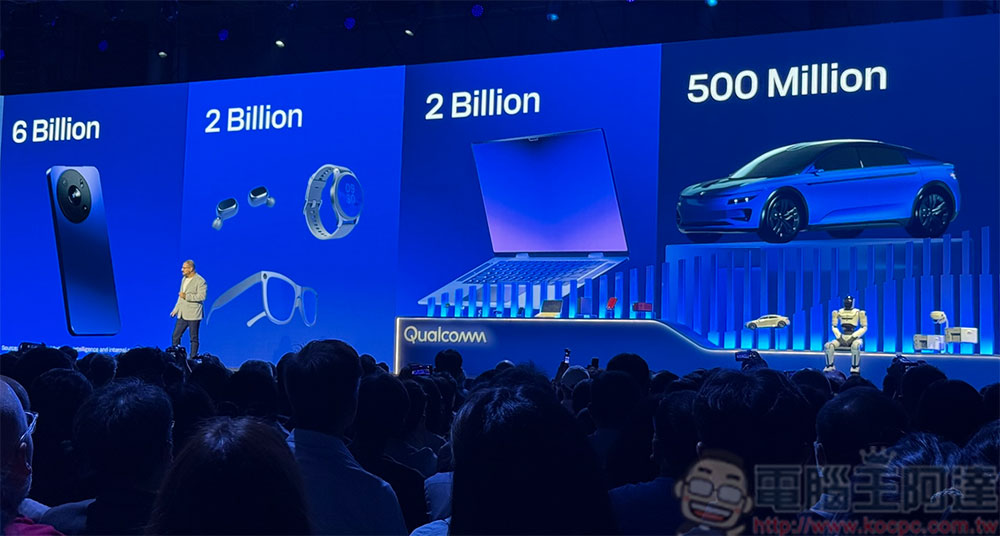
There are currently about 6 billion mobile phones, 2 billion personal AI wearable devices, 200 million personal computers and 50 million connected cars in the world. In the future, they will all become the interface for AI agents to interact with users.
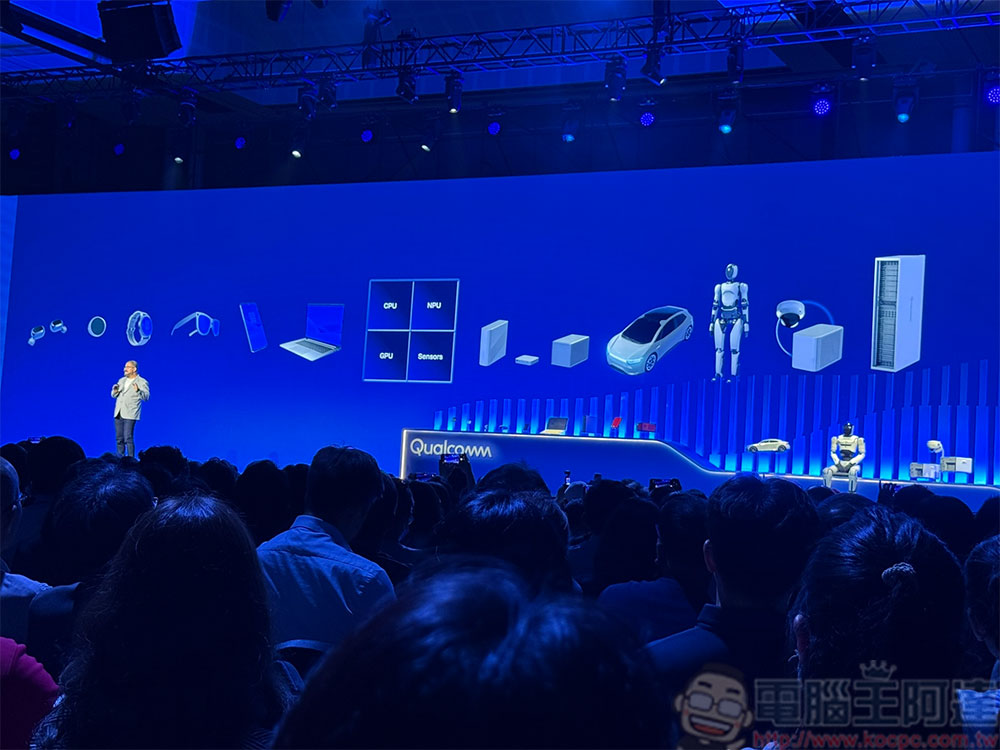
Today’s hardware is mostly designed for “user-initiated operation”, but when AI agents become dominant, the hardware architecture must be readjusted. AI agents need to operate in the background for long periods of time, maintain contextual memory, and coordinate tasks across systems, which requires the device to understand user intent, decompose tasks, and allocate operations among local devices, personal databases, and the cloud. This model places more stringent requirements on power consumption and latency. Taking mobile phones as an example, it is challenging to maintain full-day battery life even under active user operation. If the AI agent continues to operate in the background, power management will become a key engineering problem. Therefore, the future computing architecture will have a clearer division of labor:
- CPU: handles task scheduling and logic orchestration with high energy efficiency
- NPU / GPU: Provide high-density computing power to support local AI models
- Sensor system: Provides the AI agent with immediate environmental context
Different devices also have different needs: headsets and mobile devices require extremely low power consumption and high-speed connections; cars and robots need to maintain stable computing in changing environments. Qualcomm’s current chip solutions range from microwatt-level headsets to kilowatt-level data center equipment.
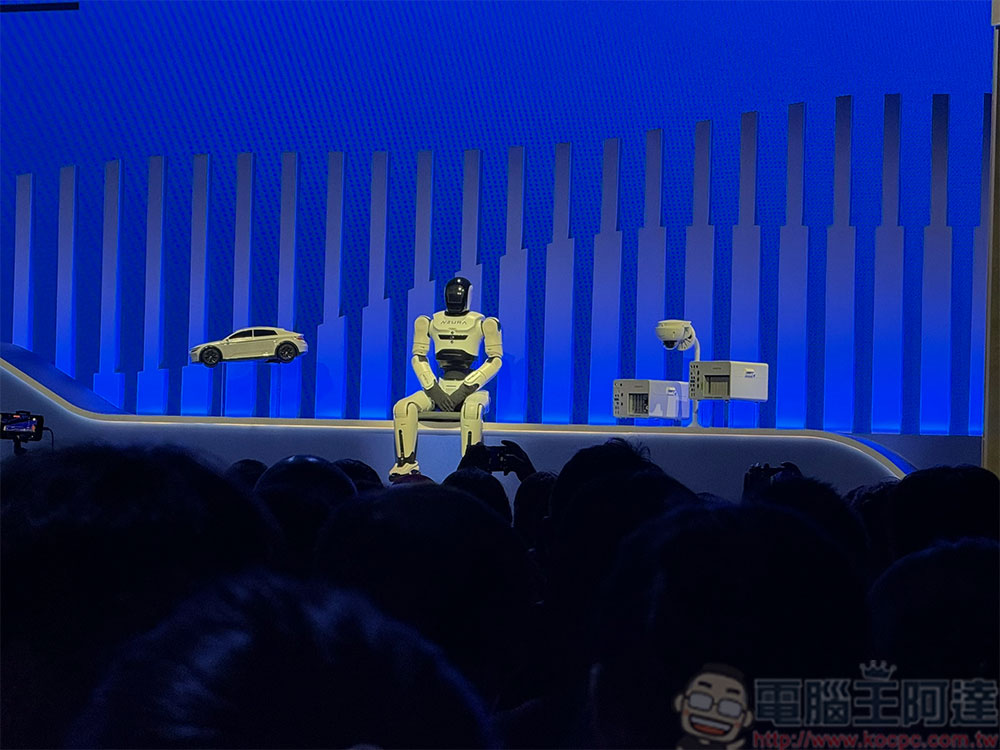
Entity AI is an important direction for edge computing.
- Automotive field
The AI agent will move with the user, keeping the experience consistent across the car and personal devices. The on-board system senses the environment through lenses, radar and map data, and integrates navigation and personalized cockpit into a unified computing architecture. - Robot field
The robot combines computer vision, sensor integration and automotive-grade safety technology. Its computing architecture is divided into three layers. In addition to stand-alone computing, it also requires fleet management through the cloud. Qualcomm currently provides a complete platform covering industrial robots, humanoid robots and drones to assist manufacturers from prototypes to mass production:- Execution layer: responsible for real-time actions and balance
- Perceptual layer: understanding the environment
- Decision-making layer: carry out logical reasoning
- Enterprise applications
Including computer vision security inspection, smart city traffic flow monitoring, logistics and building automation management, etc. Edge devices can perform real-time processing locally, and then connect to the cloud to call large models when needed, taking into account both speed and depth.
As computing shifts from human operations to AI agents operating autonomously, the global demand for AI-generated tokens will explode. In the past, a single prompt word only required a small amount of Tokens; but in the agent mode of multi-round reasoning and multi-tool collaboration, the Token consumption of a single task will increase hundreds of times. According to predictions: global token demand will be approximately 3.17 billion in 2026 and will rise to 1.27 trillion in 2030. This reflects that future network and computing architecture must have higher throughput and lower energy consumption to support the popularity of AI agents.
In the future, the boundary between the cloud and the edge will become even more blurred. The device-side coordinator will automatically determine which tasks are executed locally and which are handled by the cloud to maintain overall smoothness. Qualcomm said it will continue to work with global partners to provide complete chip platforms from mobile phones, PCs, automotive computing to robots.
Source: KOCPC Chinese