


A smart power panel startup in the United States called SPAN is trying to use abold ideasTo solve the problem of AI computing power shortage: disassemble the data center into micro-units “XFRA” the size of air conditioners, install them outside the residence, and use the idle power capacity in each household to run AI inference. Participating residents only need to pay a fixed monthly fee, and all electricity and broadband network expenses will be taken care of. No matter how many air conditioners are turned on or how much electricity is consumed by the XFRA nodes, SPAN will be responsible for it.
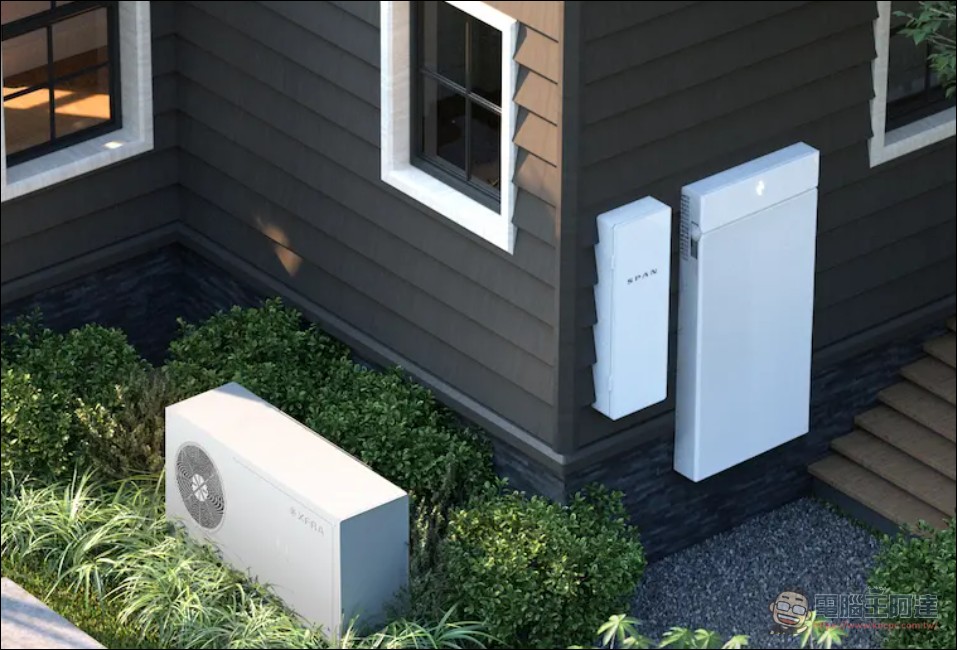
An American startup launches XFRA, which installs an AI data center outside your home and takes care of the electricity bill and Internet connection
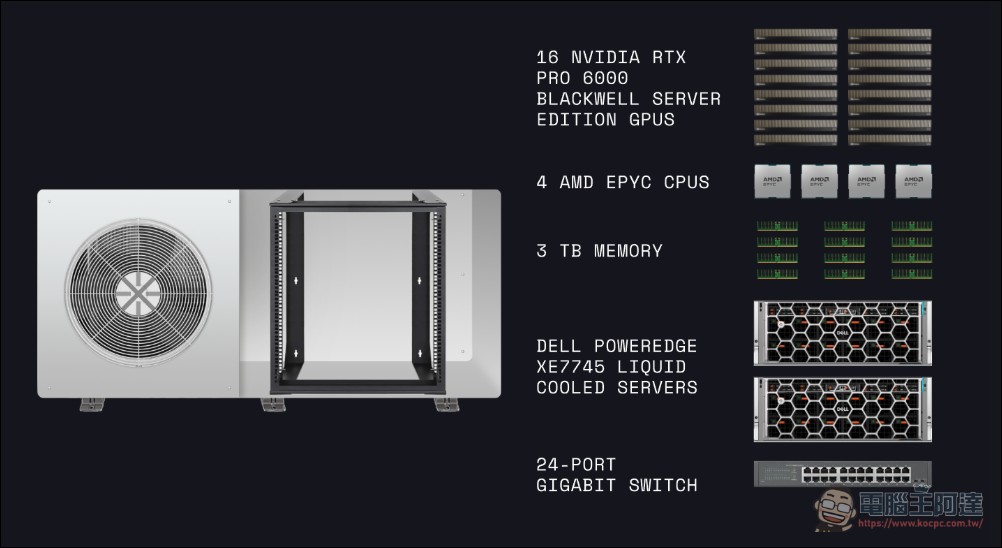
This one is called XFRA The distributed data center solution was announced in April 2026, and the first partner is Nvidia. Each XFRA node is equipped with 16 enterprise-class liquid-cooled NVIDIA RTX PRO 6000 Blackwell Server Edition GPUs, 4 CPUs and 3TB RAM, with a full load power consumption of approximately 12.5kW.
Why do homes have idle power?
SPAN’s core insight: Most new single-family homes have electrical service capacity of 200 amps, but actual peak demand is typically only around 80 amps. Even with a 40-amp buffer, there’s still about 80 amps of capacity “just sitting there, never used.” This is not the fault of households, but due to the planning logic of power companies: in order to cope with peak demand for electricity, power infrastructure must be designed for maximum load, resulting in a large amount of idle capacity for most of the year. XFRA’s approach is to convert these remaining capacities “hidden in plain sight” into distributed AI computing power.
Arch Rao, founder and CEO of SPAN, said: “SPAN’s unique intellectual property in power control allows us to improve the utilization of existing grid infrastructure. We have successfully applied this capability to accelerate residential electrification, unlock power for new homes, and improve utility grid utilization. Decentralized computing is the next natural extension of our technology.”
What does an XFRA node look like?
Each XFRA unit is about the size of a typical air conditioner outdoor unit and is installed in the side yard of the home, close to existing electrical equipment. It uses a liquid cooling system paired with a heat pump to extract heat from a closed circuit without using water. “We expect it to be quieter than a typical HVAC system,” said Chris Lander, SPAN’s vice president of XFRA.
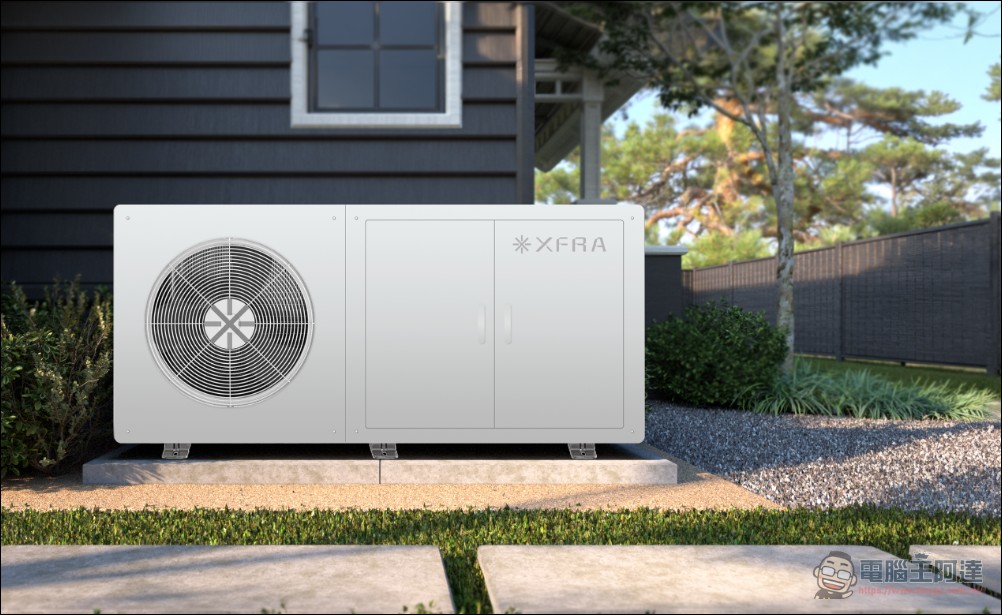
Each unit has a built-in backup battery in case of a power outage or sudden surge in residential electricity demand. SPAN can also downclock non-critical workloads or move them to other units across the node fleet. “We have a lot of knobs that can be adjusted to ensure that residents’ electrical experience is not affected at all,” Lander said.
What will residents get?
For households who are willing to let SPAN install XFRA nodes in their homes, the options are as follows:
- Hardware free: XFRA units, SPAN smart power panels, and backup batteries are all installed by SPAN, so residents don’t have to pay for the hardware.
- fixed rate: Residents pay a fixed monthly fee that covers all electricity and broadband network charges, regardless of actual electricity or computing power consumption.
- Optional solar power: Solar panel system can be installed
- compensation mechanism: Get compensation based on the usage and energy consumption of the computing power network
To put it simply, residents lend their “idle power capacity” to SPAN to run AI computing power in exchange for free hardware, fixed electricity bills and Internet services. No matter how fierce the air conditioner is in summer, the monthly fee remains the same.
Why is it suitable for reasoning but not suitable for training?
Decentralized architectures have a key limitation: bandwidth between nodes. Training large AI models requires thousands of chips to exchange large amounts of data at near-instantaneous speeds, which requires a centralized, high-speed interconnected infrastructure. Distributing nodes among various residences cannot meet training needs.
But inference is completely different. Inference is a trained model that answers queries or generates content. The coordination requirements between processors are much lower than training. Many requests can be processed independently and routed to the node closest to the user.
Mahadev Satyanarayanan, a distributed computing expert at Carnegie Mellon University, said: “The distance of the nodes is very important. What users see is the performance benefit.” For tasks that require fast round-trips, such as voice assistants, real-time translation and augmented reality, placing computing power closer to users can reduce congestion on long-distance networks and shorten response times.
Lander also made it clear: “We know that we can support most chat, enterprise applications, coding, Agentic AI and other inference computing power needs.”
Deployment timeline and scale
SPAN is partnering with one of the largest homebuilders in the U.S. PulteGroup Collaborate to install XFRA units in new construction communities. They have already tested prototype nodes in paying customers’ homes. In the fall of 2026, it is planned to deploy the first batch of XFRA nodes in 100 homes in the southwestern United States, totaling approximately 1.2MW of computing capacity. The high temperature environment in this area will also be an immediate test for the liquid cooling system.
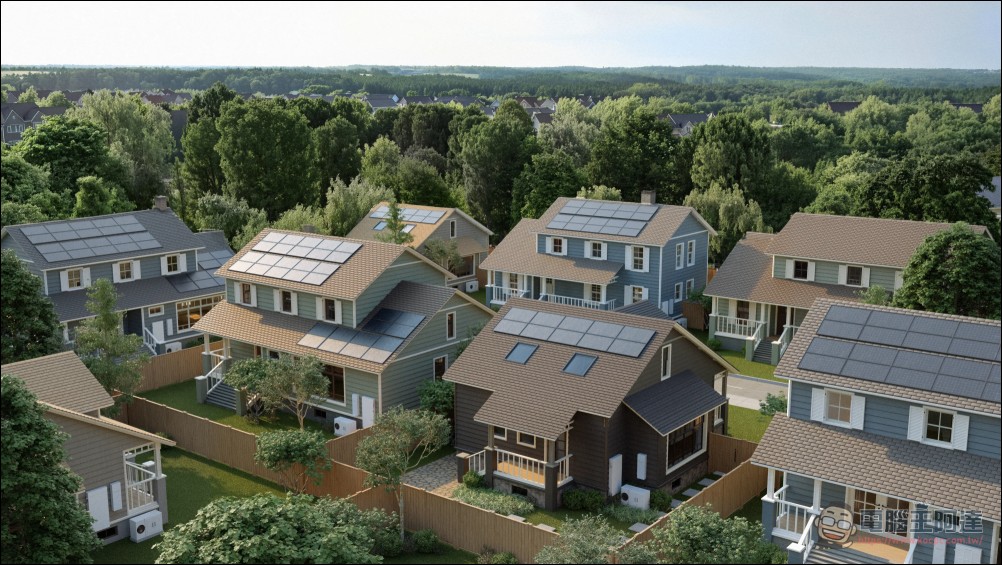
SPAN’s ultimate goal is to scale deployment by 2027 to 80,000 XFRA nodes, providing more than 1GW of distributed computing power. For comparison, approximately 8,000 XFRA nodes consume as much power as a mid-sized 100MW data center.
Solving the “speed versus power” gap
The industrial background behind XFRA is that AI infrastructure faces serious power bottlenecks. In 2024, U.S. data centers consumed 183TWh of electricity, accounting for more than 4% of the country’s total electricity consumption, and experts predict that this may exceed 9% by 2030. In the United States, upgrading a substation to support a 100MW data center now takes four to seven years, and as of the end of 2025, data from Lawrence Berkeley National Laboratory shows that more than 2,060GW of generation and storage capacity is still awaiting grid approval.
“As the demand for AI and inference computing power continues to accelerate, there is an urgent need for solutions that are low-latency, close to end users, and can scale quickly,” said Marc Spieler, senior director of global energy industry at NVIDIA. “SPAN is pioneering new ways to deploy enterprise-class GPUs in distributed environments.”
Scholars’ concerns
Not everyone is optimistic about XFRA’s prospects for scale. “They’re talking about the speed of data center equipment being brought to market,” said Jonathan Koomey, a long-time scholar on data center energy. “It’s true that large facilities now have bottlenecks. But the benefits of this new approach have to be large enough to offset the economies of scale of standard purpose-built data centers.”
Rich Brown, senior energy researcher at Berkeley Lab, is worried about the impact on the grid: “Power dispatchers and planners rely on load diversity to average out peaks and valleys. Distributed data centers will fill in all valleys and may even create new peaks.” Koomey also added that the current idle capacity may not necessarily exist in the future: “When planning these installations, you need to take into account the growth of solar energy behind it, as well as the trend of heating, hot water and vehicle electrification.”
Satyanarayanan is cautious about the unknowns of the business model: “The cost of workload migration, as well as other expenses such as maintenance, may be higher than SPAN expects. These factors will determine whether XFRA can truly scale or remain just a clever concept.” But he is “completely convinced” of the technical feasibility.
This is not a replacement for a centralized data center, but a complement
SPAN emphasized that XFRA is not positioned to replace traditional large-scale data centers, but as a supplement to accelerate the growth of computing power capacity at the edge of the power grid. It leverages underutilized power infrastructure close to end users to serve inference workloads that require low latency.
For the AI industry, this represents a new infrastructure idea: instead of waiting 5 years to build a substation, computing power is distributed to thousands of households that are already connected to the power grid. For residents, it is a transaction of “exchanging idle power for free hardware and fixed electricity bills.” Whether this model can really work, the first 100 households deployed in the southwestern United States in the fall of 2026 will be a key verification.
Source: KOCPC Chinese