


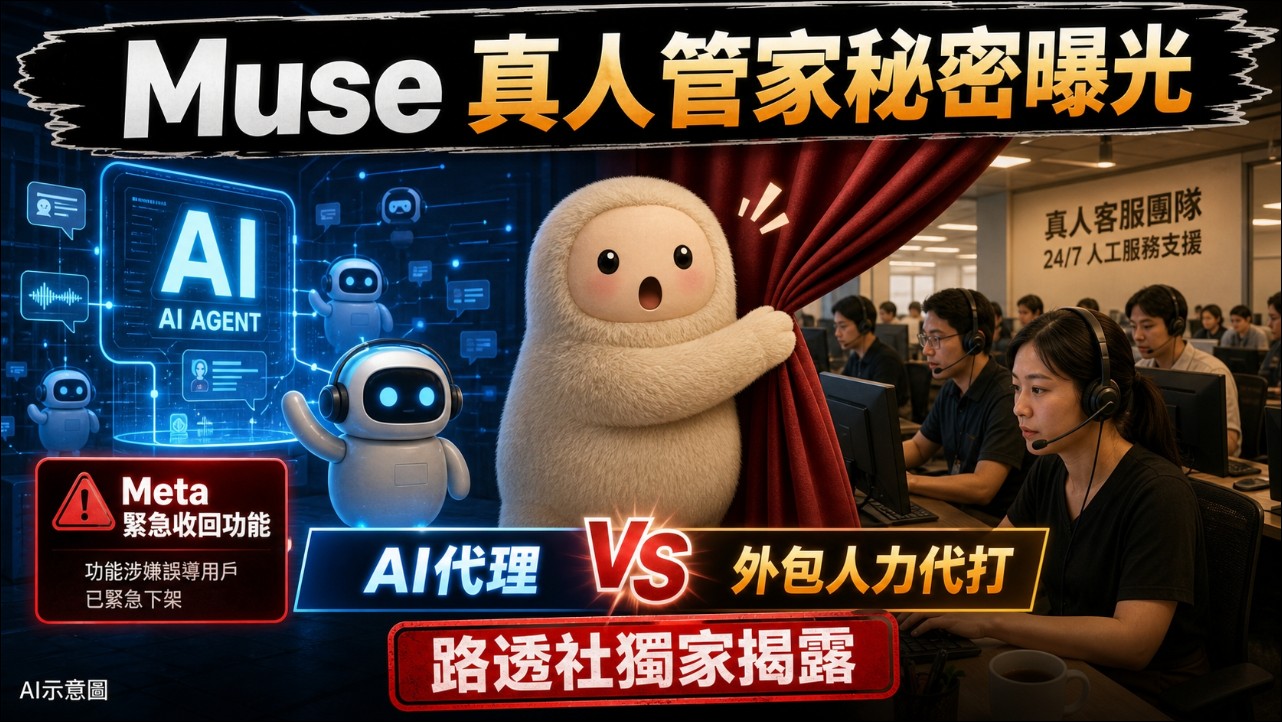
Topped the U.S. App Store with over 2.5 million downloadsBut a Reuters exclusive report today revealed a secret behind the hype: Meta had been internally testing a “human concierge,” with outsourced workers quietly handling some calls placed by AI agents. After the news broke, it sparked strong privacy concerns among internal employees, and combined with an incident involving racial discrimination by an outsourced worker during a call, Meta has urgently pulled the feature.
The Full Story: From AI Making Phone Calls to “human agent calls”
According to Meta internal posts obtained by Reuters, Muse’s calling feature was first tested by employees in August this year and gradually rolled out to users within days after the app launched on September 8. The feature lets users ask Muse to call U.S. businesses and talk with people on the other end, such as booking a haircut, checking whether a store has an item in stock, or requesting quotes from multiple contractors.
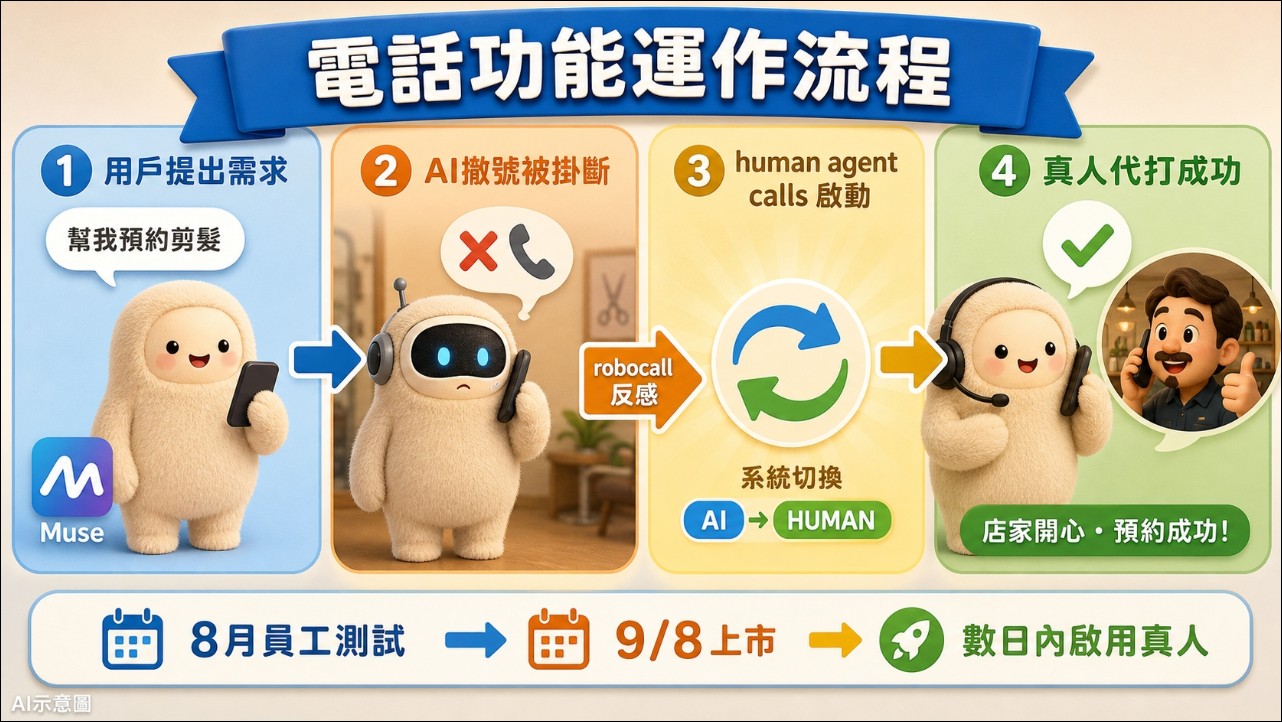
The problem is that the other party won’t answer the phone. In an internal post, an employee complained that he asked Muse to call an insurance company to handle a policy, but “as soon as they heard it was an AI, they kept hanging up on Muse” (honestly, a very normal reaction—who knows if it’s a prank call, but not disclosing that it’s an AI is an even bigger problem). The long-standing resentment caused by robocalls has left AI agents’ calls hitting a wall everywhere. To break the deadlock, Meta last week enabled “human agent calls” for half its employees: an internal announcement said, “Muse can now hand off requests to trained agents, who will make the calls and complete the tasks,” and employees who don’t want to participate can join an opt-out group.
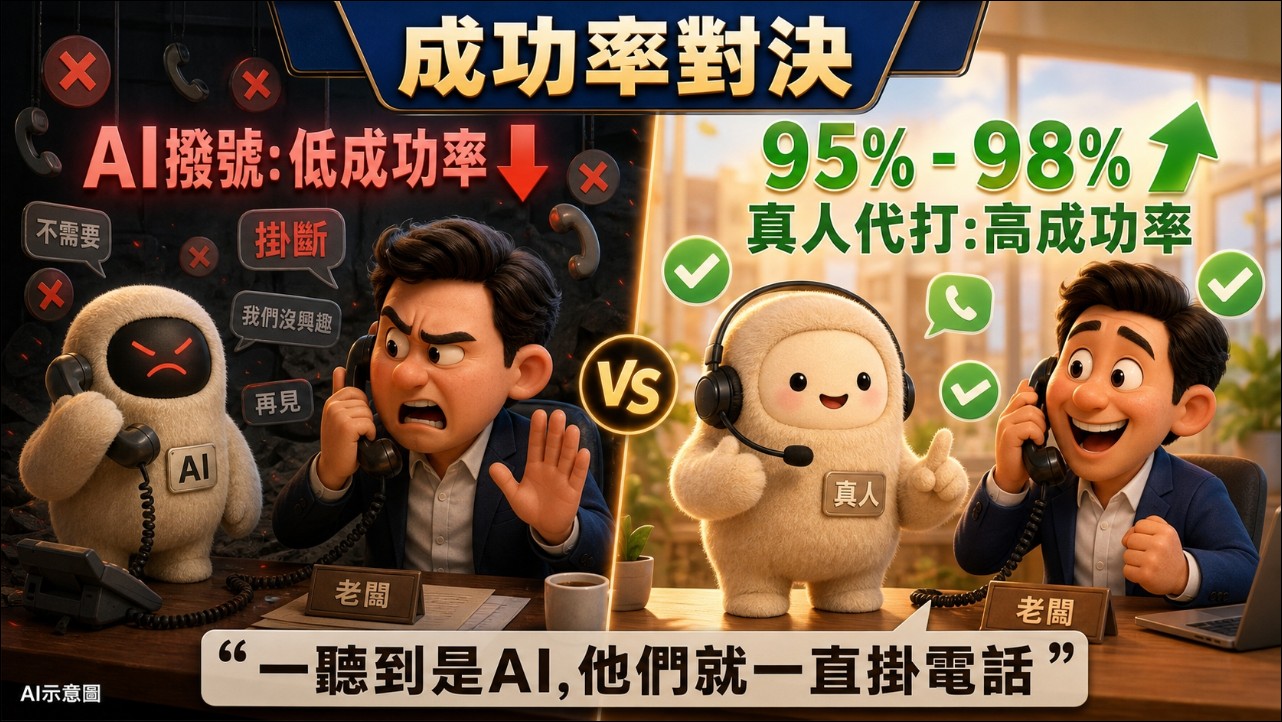
It was only after Muse publicly launched its phone feature that Meta internally disclosed the human stand-in tests—meaning users thought the voice on the other end was AI, when the person actually making the call might have been an outsourced worker. The VP of Meta Superintelligence Labs noted that some tests showed human callers could raise the success rate to 95% to 98%, far above “AI dialing’s lower success rate,” which is exactly what incentivized the use of human stand-ins. That 95% to 98% versus “the lower AI success rate” sums up the real-world bottleneck facing AI agents today: a model can write a perfect conversation script, but it cannot get past the human operator on the other end of the line. When AI performance isn’t enough to carry the KPI, bringing humans in to fill the gap becomes the fastest solution—at the cost of also sacrificing the public claim that the AI is fully autonomous.
Internal Backlash: Privacy Concerns and Racial Discrimination Incidents
Employees strongly questioned the practice in internal posts, worried that sensitive information could unintentionally leak to contractors at the phone customer service center. “I don’t understand why we think this feature is worth that risk,” one employee wrote. “We’re one bug away from unnecessarily leaking information to human agents.” Another employee asked Muse to call internet and cable TV providers to negotiate, then found from the call transcript that human contractors mentioned race-related terms during the call.
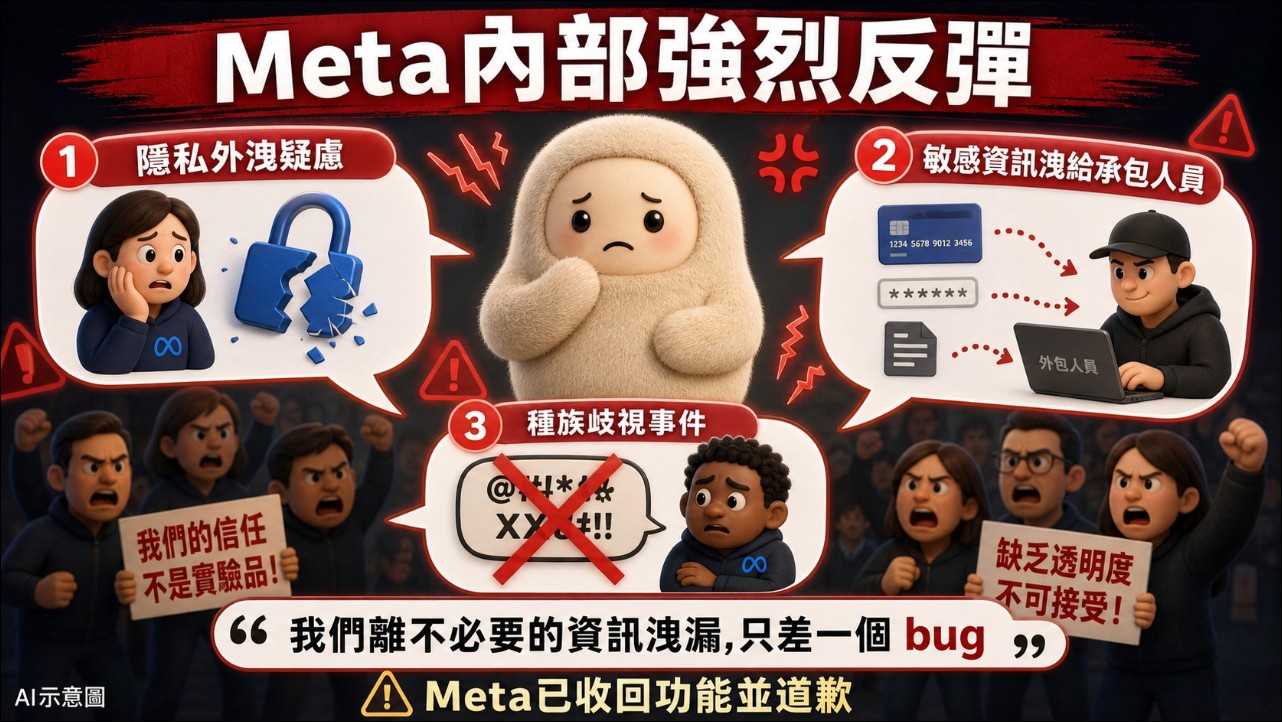
A vice president at Meta Superintelligence Labs acknowledged in an internal response that starting to test human agents making calls without proper disclosure “was a mistake,” and said it had “pulled this feature,” but would continue “climbing the performance curve for AI dialing.” She apologized to the employee who reported the racial slur incident and promised that the “human agents” involved would not take part in any Meta projects going forward.
Undermine Muse’s core selling point
Another focus of employee backlash is that this practice directly undercuts the security promises touted when Muse launched. When Meta announced it, it heavily emphasized security protections, telling users that each agent has its own secure “virtual machine” (an isolated dedicated computer in the cloud that separates each user’s session), while sensitive information such as passwords is stored in a separate secure storage area. Internal critics pointed out that having real people make calls on users’ behalf amounts to tearing down this key selling point themselves.
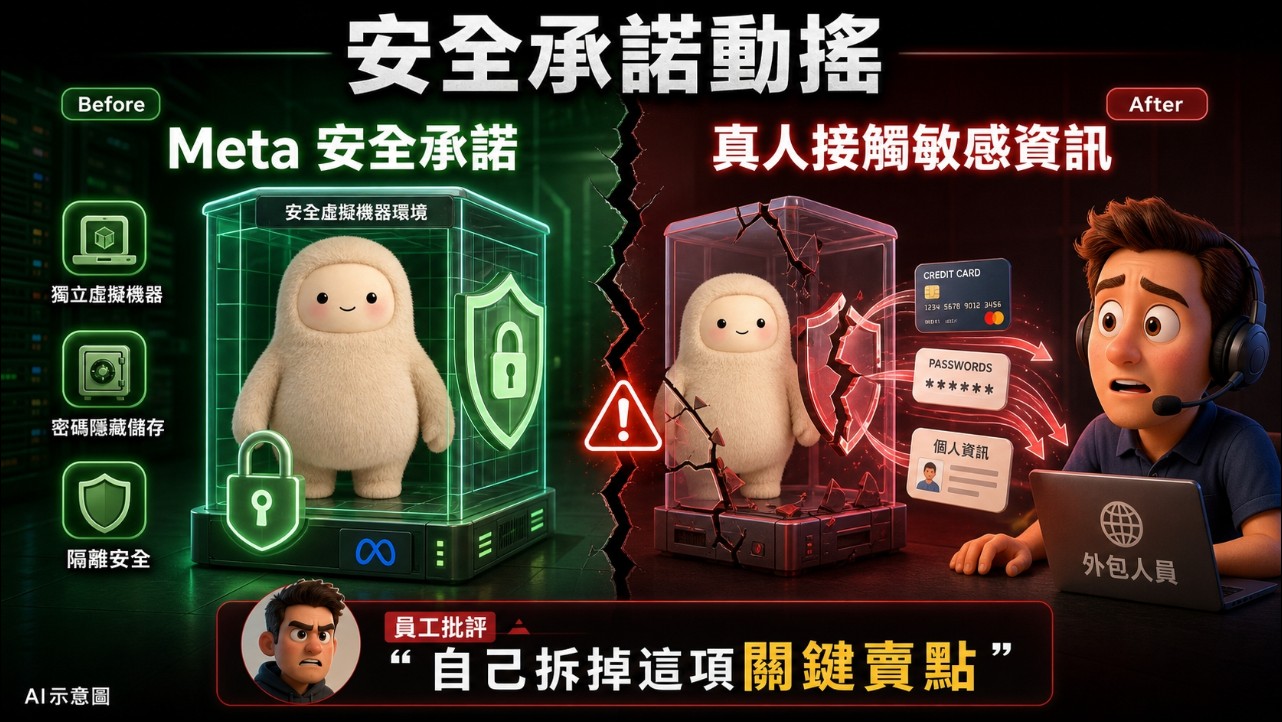
Ironically, this stumble is happening right at the peak of Muse’s momentum. According to market research firm Sensor Tower, Muse has surpassed 2.5 million downloads since launch, and since its launch Meta’s stock has surged more than 20%, adding over US$200 billion (about NT$6.5 trillion) in market value; it closed last week at a more than seven-month high, though it slipped 0.6% on Tuesday. Before that, Muse had already been locked in a fierce dispute with Amazon over its shopping agent feature and was blocked by Amazon from accessing its shopping site, while Shopify embraced partnering on agentic checkout. The impact of AI agents on the online commerce order has only just begun.
Meta’s official response: employee reaction “overwhelmingly positive”
When asked by Reuters, Meta spokesperson Daniel Roberts said employees’ response to the human concierge program was “overwhelmingly positive,” and that the purpose of the test was “to gather feedback so we can implement safety and privacy protections and improve features before a public release.” He added: “We are working with businesses to continue improving this potential calling feature, and will only launch it when it is ready and with appropriate disclosures.” Meta also emphasized that this is only part of an internal employee test, and there are currently no plans for a permanent launch.
History Repeats Itself: The Lesson of Facebook “M”
Reuters notes that this is reminiscent of Meta’s old experiment from a decade ago: when the company was still called Facebook, it piloted a digital assistant, “M,” in Messenger, and the media later estimated that about 70% of the assistant’s tasks were handled by humans. The M project ultimately fizzled out, and now Muse’s human concierge test amounts to stepping into the same pit again.
The deeper industry reality is that in fulfilling their “autonomous AI” promises, tech companies often have to rely on behind-the-scenes human labor to pick up the slack, especially in phone scenarios: outbound calls made by AI are often treated as robocalls and hung up on, which in turn pushes companies to look for real people to make the calls in their place. TweakTown states outright that the disclosure obligations and privacy boundaries of such arrangements will be rules that must be made clear first in the age of AI agents.
Conclusion
This MUSE human concierge controversy inside Meta is a wake-up call for the runaway AI agent boom: when agents make calls, shop, and negotiate on users’ behalf, they touch the most intimate details of life, and “who is speaking on the other end” should not be a business secret. Meta pulling the feature and promising to relaunch it with “appropriate disclosure” is the right direction, but the biggest test is how specific that disclosure must be (telling the other party during the call that it is a human? stating how long data is retained?). Next, it is worth watching how the phone features of AI agents from various companies will identify themselves, and whether regulators will bring “AI agents + human stand-ins” under new consumer protection rules. Muse’s 2.5 million users are already on the field, and this lesson will not come too late.
Source: KOCPC Chinese