


The A20 Pro processor used in Apple’s iPhone 18 Pro series and iPhone Duo was just announced the day before yesterday, and preliminary Geekbench 6 scores have already…exposed onlineWith scores of 4,719 in single-core and 12,677 in multi-core, it represents a major leap over the previous-generation A19 Pro and opens a clear performance gap with flagship processors in the Android camp. The A20 Pro is the first mobile processor to use TSMC’s 2nm (N2) process, and also TSMC’s first shift from FinFET transistors to GAA (gate-all-around) nanosheet transistor architecture. This leap in process generation is directly reflected in across-the-board improvements in clock speed and cache.
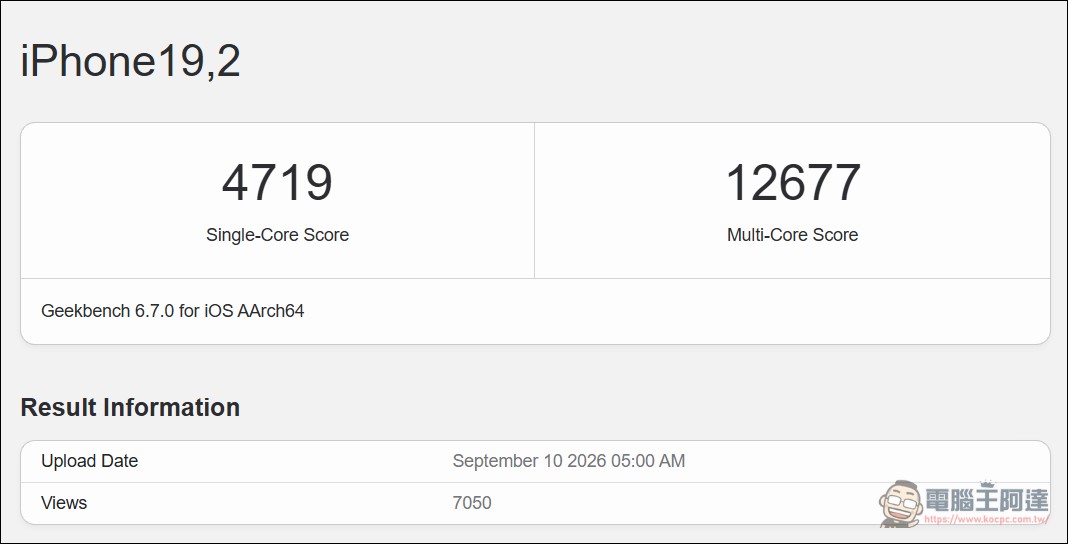
A20 Pro specs: super core clock approaches 5GHz, cache fully expanded.
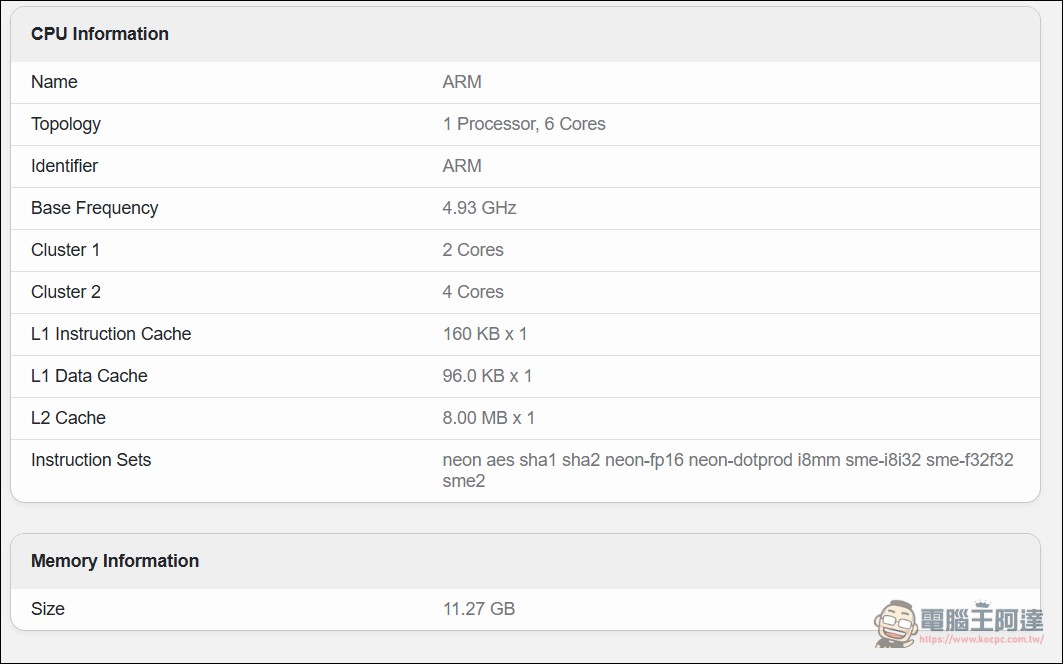
The A20 Pro maintains a 2+4 six-core configuration, but its two big cores are upgraded to “super cores” on par with the M6 (codename Everest), clocked at up to 4.93GHz, a significant improvement over the A19 Pro’s performance cores at around 4.3GHz. The four efficiency cores are codenamed Sawtooth.
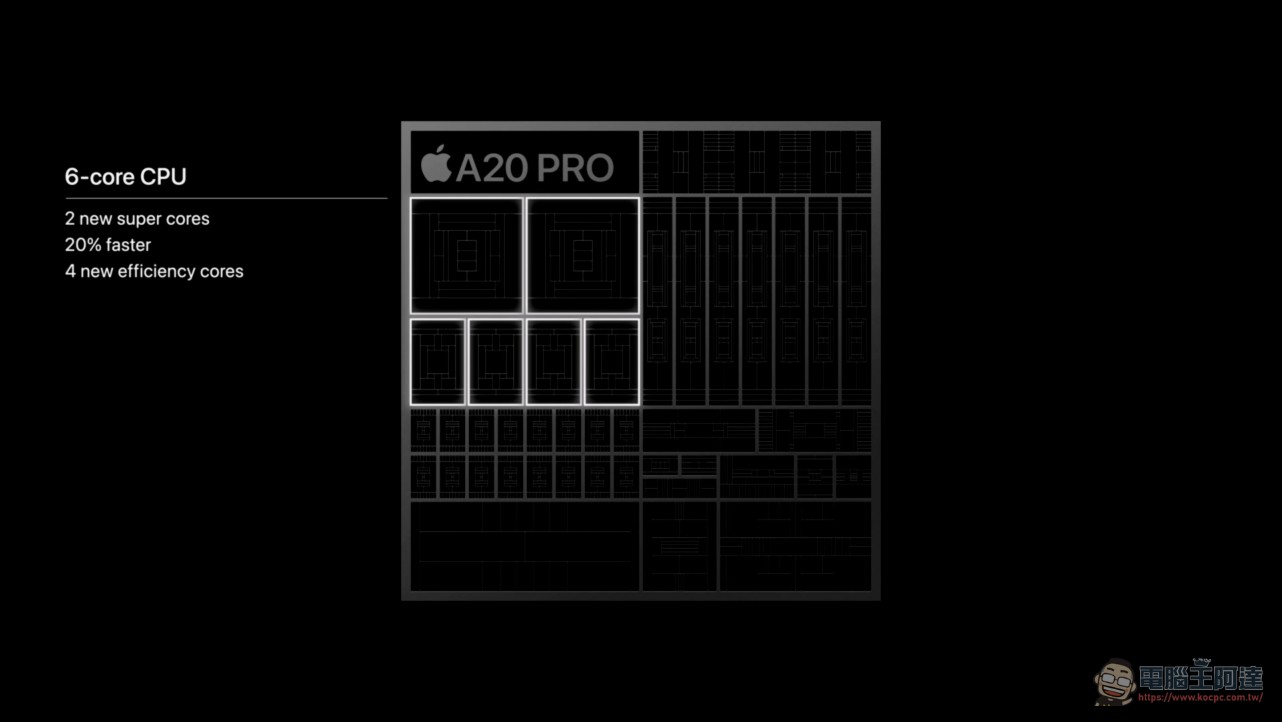
Synchronous Expansion of the Cache Subsystem:
- L1 instruction cache:128KB → 160KB
- L1 data cache:64KB → 96KB
- L2 cache:6MB → 8MB
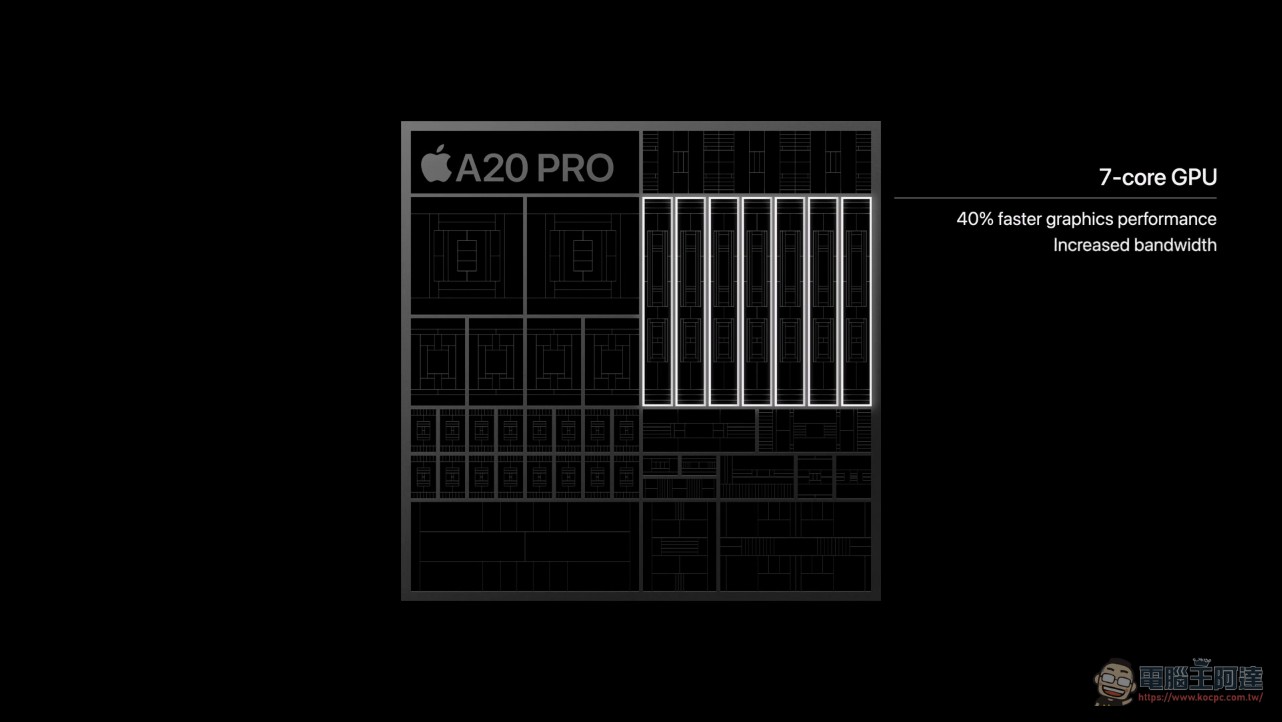
On the GPU side, it is upgraded from 6 cores to 7 cores, while the memory remains LPDDR5X. Paired with Apple’s in-house C2 modem chip, other processor details viewed on GeekBench reveal the base frequency and memory specification (12GB RAM) of the processor in the iPhone 18 Pro.
Geekbench 6 Benchmark Comparison of Five Flagship Processors
Below is a compilation of benchmark scores for the A20 Pro and current and upcoming Android flagship processors:
Apple A20 Pro(2nm TSMC N2)— iPhone 18 Pro / iPhone Duo
- Single-core: 4,719
- Multi-core: 12,677
- Architecture: 6 cores (2x Everest super cores at 4.93GHz + 4x Sawtooth)
Apple A19 Pro(3nm TSMC N3P)— iPhone 17 Pro
- Single-core: about 3,200
- Multi-core: approximately 9,000
- Architecture: 6 cores
Qualcomm Snapdragon 8 Elite Gen 5 (3nm TSMC N3P) — Galaxy S26 Ultra, etc.
- Single-core: approximately 3,300
- Multi-core: approximately 10,000
- Architecture: 2+6 cores
Qualcomm Snapdragon 8 Elite Gen 6 Extreme (2nm TSMC N2P) — expected by the end of 2026
- Single-core: 3,434 ~ 3,890 (Early leak)
- Multi-core: 9,334–14,592 (early leak)
- Architecture: Up to 5GHz clock speed, 2+3+3 core configuration
MediaTek Dimensity 9500 (3nm TSMC N3P) — vivo X300 Pro, etc.
- Single-core: 3,315
- Multi-core: 9,914
- Architecture: 8-core Arm C1 series (1x C1-Ultra 4.21GHz + 3x C1-Premium 3.5GHz + 4x C1-Pro 2.7GHz)
Samsung Exynos 2600 (2nm Samsung SF2) — Galaxy S26 (select markets)
- Single-core: 3,235 ~ 3,315
- Multi-core: 11,310
- Architecture: 10 cores
Single-core: A20 Pro leads by 21%–42%
Based on the data, the A20 Pro’s single-core score of 4,719 points is far ahead of all current flagships. Compared with its closest competitor, the Snapdragon 8 Elite Gen 5 (about 3,300 points), it leads by 43%; compared with the Dimensity 9500 (3,315 points), it leads by 42%; and compared with its own predecessor, the A19 Pro (about 3,895 points), it also delivers a 21% improvement.
This leap forward mainly stems from two factors: first, TSMC’s 2nm process allows higher clock speeds (4.93GHz vs. 4.3GHz on the previous generation), and second, the introduction of a super core architecture. Apple brought its Mac-class Everest core down to the mobile platform, combined with a comprehensive expansion of the cache subsystem, producing a leap in single-thread performance.
Multi-core: The Android camp remains competitive.
On the multi-core side, although the A20 Pro’s 12,677 is impressive, its lead is less pronounced than in single-core. The Exynos 2600 scored 11,310 with its 10-core configuration, and the Dimensity 9500’s 8 all-big-core architecture scored 9,914 as well. Leaked data for the Snapdragon 8 Elite Gen 6 Extreme even shows multi-core scores of up to 14,592, but that figure comes from early engineering samples, so actual production versions may differ.
Apple’s disadvantage in multi-core performance is an inherent limitation of core count: with 6 cores against 8–10 cores, it struggles to win in multithreaded parallel-processing workloads. But for everyday usage scenarios, single-core performance is the key metric that determines system responsiveness and app launch speed.
GPU Battle: Dimensity 9500’s Graphics Performance Still Poses a Threat
On the CPU side, Apple holds a clear advantage, while the GPU battle is much closer. The Dimensity 9500 features a 12-core Mali-G1 Ultra GPU, and MediaTek claims GPU performance is 33% higher than the previous generation, with ray tracing performance surging 119%. In 3DMark tests, the Dimensity 9500’s GPU score is about 25% higher than the 6-core GPU of the A19 Pro.
The A20 Pro upgrades the GPU to 7 cores, attempting to make up for its disadvantage in graphics performance. However, the Dimensity 9500’s problem lies in sustained performance: the chip tends to overheat under high loads, and its thermal stability is not as good as Apple’s. The A20 Pro’s vapor chamber has a surface area three times that of the previous generation, and combined with the power efficiency advantages of the 2nm process, it may gain the upper hand in scenarios such as long gaming sessions.
Real-world experience difference: high benchmark scores aren’t everything.
Geekbench scores reflect a processor’s peak performance over short bursts, but real-world experience is also affected by multiple factors such as software optimization, thermal design, and memory bandwidth. In everyday use, for example, single-core performance directly determines app launch speed, webpage loading smoothness, and system animation responsiveness, which is exactly where the A20 Pro’s biggest advantage lies.
In multitasking, although Apple’s 6-core architecture has fewer cores, the IPC (instructions per clock cycle) of each core is far higher than that of the Android camp. Combined with iOS’s highly vertically integrated hardware, the A20 Pro often performs better in real-world usage scenarios than the benchmark gap would suggest.
However, for workloads that require massive parallel computing, such as video export, 3D rendering, or AI inference, the Dimensity 9500’s 8 all-big-core architecture and the Snapdragon 8 Elite Gen 5’s 2+6 configuration are actually more advantageous. The multi-core performance gap allows Android flagships to remain competitive in these professional scenarios.
The 2nm era arrives: Android camp to catch up in the second half
A20 Pro currently has the exclusive advantage of the 2nm process, but this lead won’t last long. MediaTek Dimensity 9600 is expected to debut in Q3 2026, also using TSMC’s 2nm (N2P) process, paired with Arm C2-series cores, and may be the first to support LPDDR6 memory. Qualcomm Snapdragon 8 Elite Gen 6 Pro will also move to the 2nm N2P node, with peak clock speeds up to 5GHz.
On Samsung’s side, the Exynos 2600 has adopted its in-house 2nm SF2 process, but its benchmark performance (single-core 3,235–3,315 points) still trails the Snapdragon 8 Elite Gen 5 built on TSMC’s 3nm process, indicating that Samsung’s 2nm process yield and performance density still have room to catch up.
Conclusion
The A20 Pro has proven with real benchmark scores that the performance leap brought by the 2nm process is genuine. Its single-core score of 4,719 sets a new record for mobile processors, opening a gap of over 40% with the Android camp. This advantage comes from simultaneous upgrades across three dimensions—process, architecture, and cache—rather than a single factor.
But benchmark scores are only half the story. The Android camp still has its own strengths in multi-core, GPU, memory bandwidth, and other areas, and the Dimensity 9500’s GPU performance even surpasses that of the A19 Pro. As the Dimensity 9600 and Snapdragon 8 Elite Gen 6 arrive one after another in the second half of the year, the 2nm battlefield will no longer be Apple’s solo show. For consumers, the ultimate beneficiary of this race in process technology and architecture is still the user; no matter which camp you choose, by the end of this year there will be across-the-board upgrades in performance and power consumption.
Source: KOCPC Chinese