


Speaking of cockroaches, most people’s first impression may be that they are dirty and annoying, but who would have thought that this unpopular little cockroach would now become a rare soldier in disaster relief operations? On March 28, 2025, a magnitude 7.7 earthquake occurred in Myanmar. Rescue teams from various countries were urgently mobilized. Among them, Singapore sent not only 80 team members, 4 search and rescue dogs, but also 10 special “cyborg cockroaches”. This is the first time in the world that semi-robotic insects have been used in humanitarian relief missions. Although no survivors were found in the end, these cockroaches equipped with tiny electronic backpacks penetrated deep into the ruins beyond the reach of search and rescue dogs, providing valuable detection data and proving the practical feasibility of this technology.
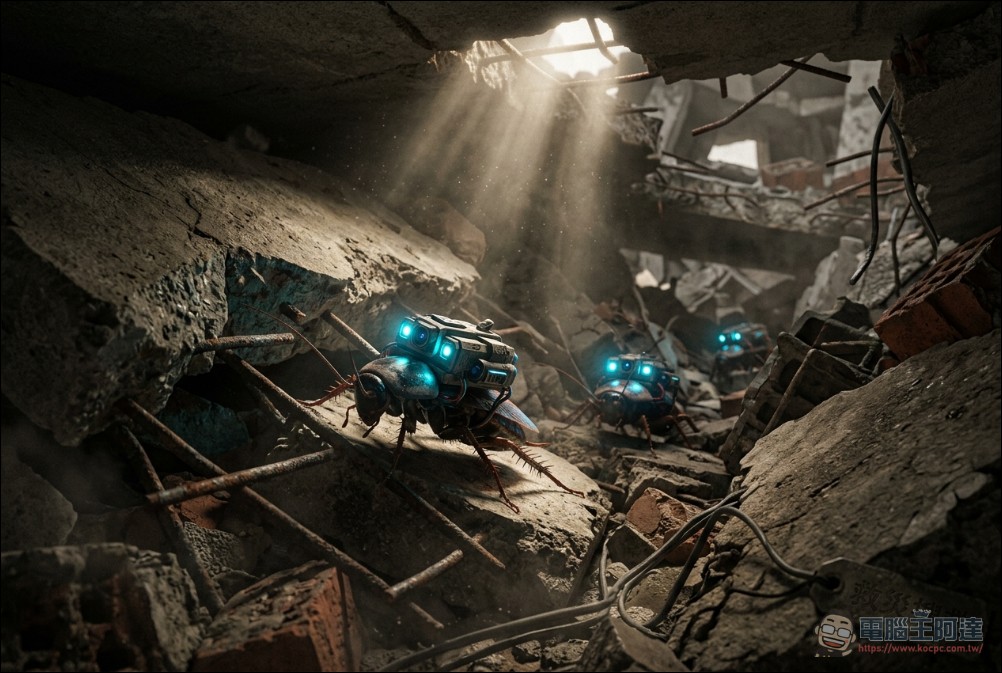
Nanyang Technological University in Singapore develops a semi-mechanical cockroach that can pull 20 times its body weight
The core technology of these semi-mechanical cockroaches comes from the research team of Professor Hirotaka Sato of the School of Mechanical and Aerospace Engineering at Nanyang Technological University (NTU) in Singapore. They installed a lightweight electronic backpack containing a control board, wireless communication module and rechargeable lithium battery on the back of a Madagascar vocal cockroach.
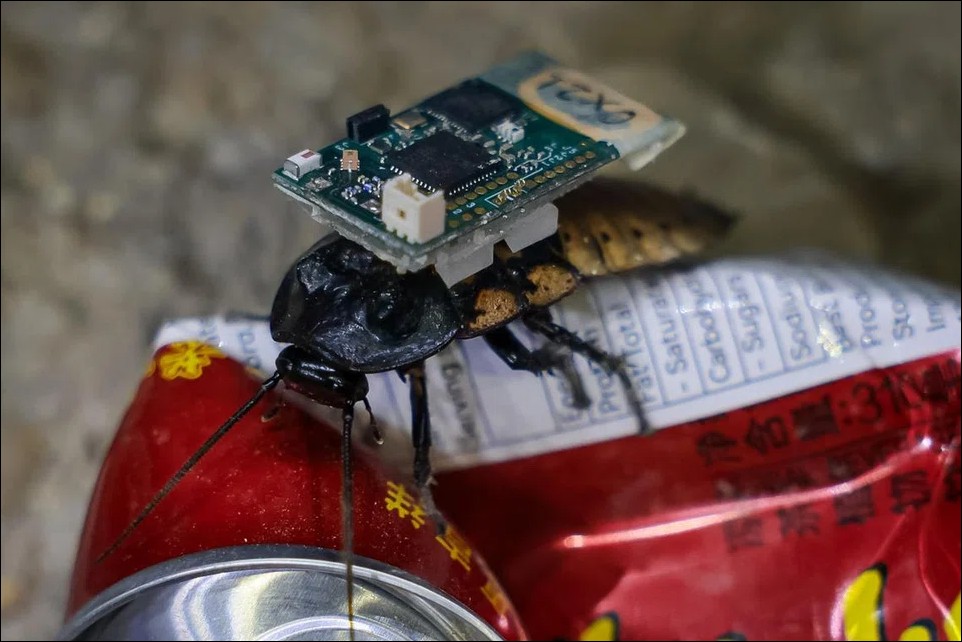
Unlike traditional robots, the cyborg cockroach relies on its own locomotion to move, and researchers use weak electrical stimulation to guide its direction. When electric current stimulates the left antennae of a cockroach, the cockroach will mistakenly think that there is an obstacle on the right side and move to the left; vice versa. This control method does not destroy the nervous system of the cockroach, but only simulates natural nerve signals to guide behavior. The basic physiological functions and autonomous activity ability of the cockroach are retained.
Professor Sato emphasized: “Cockroaches are naturally good at navigating complex environments, and we just enhanced its strength and controllability.”
Key breakthrough: able to pull 60g objects and automatically assemble with AI
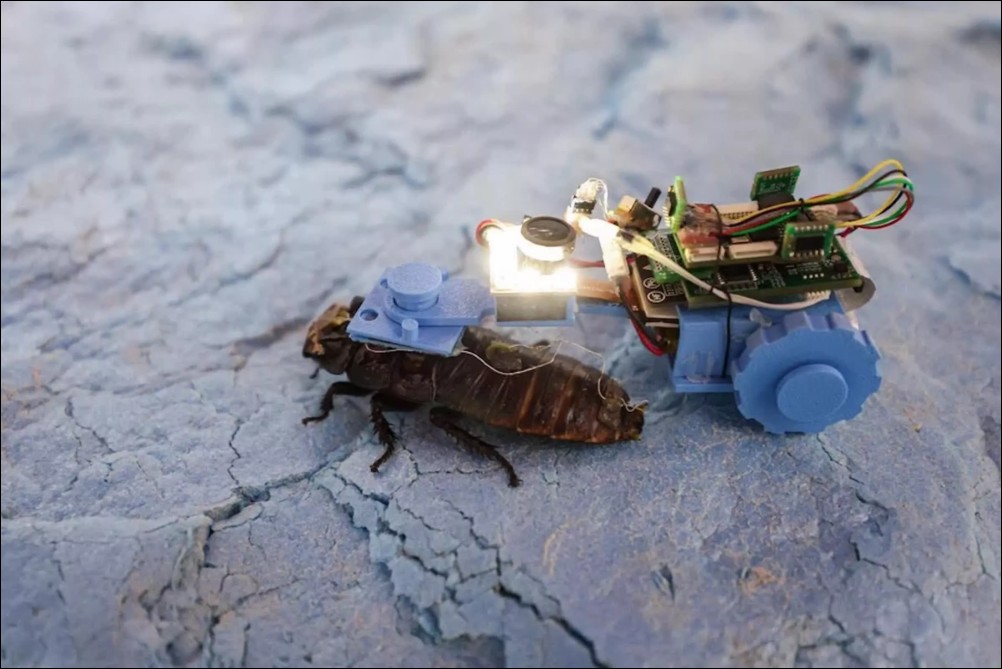
According to the latest research, these semi-mechanical cockroaches can pull objects weighing up to 60 grams, which is equivalent to more than 20 times their own body weight (about 3 grams). Experiments show that in simulated search and rescue scenarios, they can successfully traverse narrow ruins, climb vertical surfaces, and accurately locate and drag target items.
Even more amazing is the AI automatic assembly system published by the research team in July 2025. This world’s first “mass production line” can complete the installation of a cockroach’s electronic backpack in one minute and eight seconds, which is about 60 times that of traditional manual methods (about one hour). When handling four cockroaches, the entire system can complete all assembly within 8 minutes, which is about 30 times faster than manual methods.
This AI system uses computer vision and patented algorithms to automatically identify the optimal electrode implantation position on the cockroach’s back to ensure precise placement. The new generation backpack has also been optimized, reducing the voltage by about 25%, extending battery life while maintaining precise control.
In laboratory tests, the cyborg cockroach was able to achieve sharp turns of more than 70 degrees and reduce its speed by up to 68% on command. A group of four semi-mechanical cockroaches covered more than 80% of the obstacle test area in 10.5 minutes, demonstrating their excellent ability to navigate in narrow and complex spaces.
Crowd Control: Leader-Follower Algorithm
The control technology of a single cockroach has been realized as early as 2008, but to be applied to search and rescue missions, one insect is far from enough – 72 hours after the earthquake is the golden period for rescue, requiring a large-scale search.
In this regard, a multinational team composed of NTU, Osaka University, and Hiroshima University developed an advanced group navigation algorithm and published it in the journal Nature Communications. This system uses a “leader-follower” model: one cockroach serves as the leader and guides the actions of the other 19 insects.
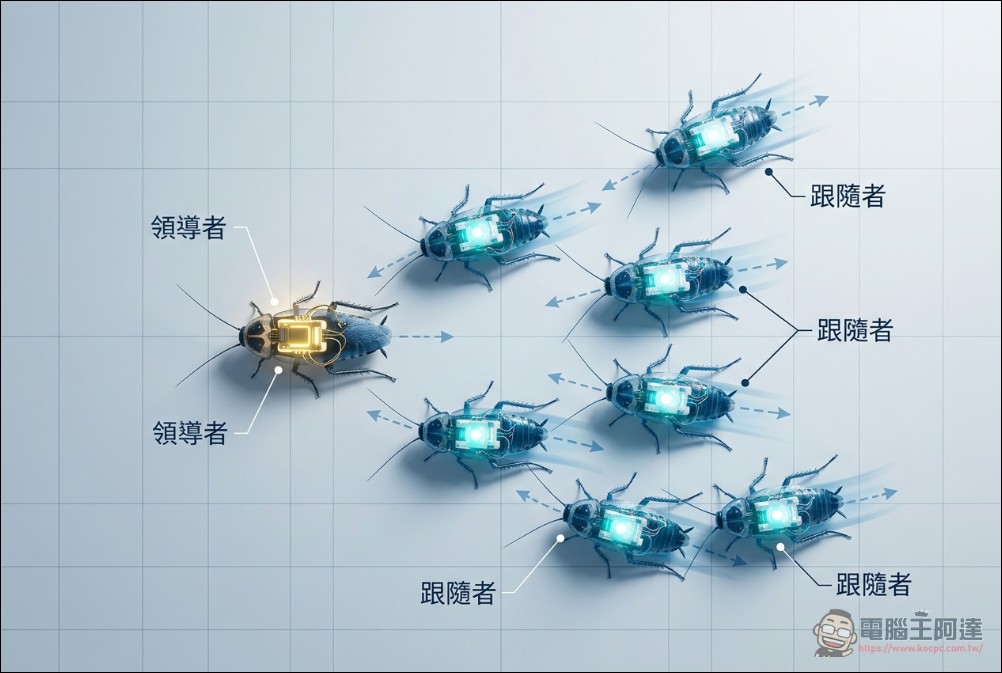
The “Tour Group Heuristic Control” algorithm simulates the behavior of tourists following tour guides. The leader insect will learn the target location, and its control backpack will coordinate with other backpacks in the group to guide the entire swarm forward. When a cockroach encounters an obstacle and slows down, other insects will instinctively avoid it, forming a natural avoidance mechanism.
The key advantage of this “decentralized swarm navigation algorithm” is that the insect swarm does not rely on central control and dispatch, but relies on local perception and cooperation among insects to complete group collaboration tasks without an external precise positioning system. Experimental results show that the new algorithm reduces the number of times that insects need to be stimulated by about 50%, greatly improving the efficiency of group navigation.
Practical Application: Earthquake Relief in Myanmar
From March 30 to April 3, 2025, these 10 semi-mechanical cockroaches participated in two search and rescue operations in the Myanmar earthquake. Each of these Madagascar cockroaches, which are about 6 centimeters long, is equipped with thermal imaging cameras, navigation sensors and wireless communication equipment on their backs. Engineers can control the cockroaches’ crawling direction by applying tiny electric shocks to stimulate their nerve muscles.
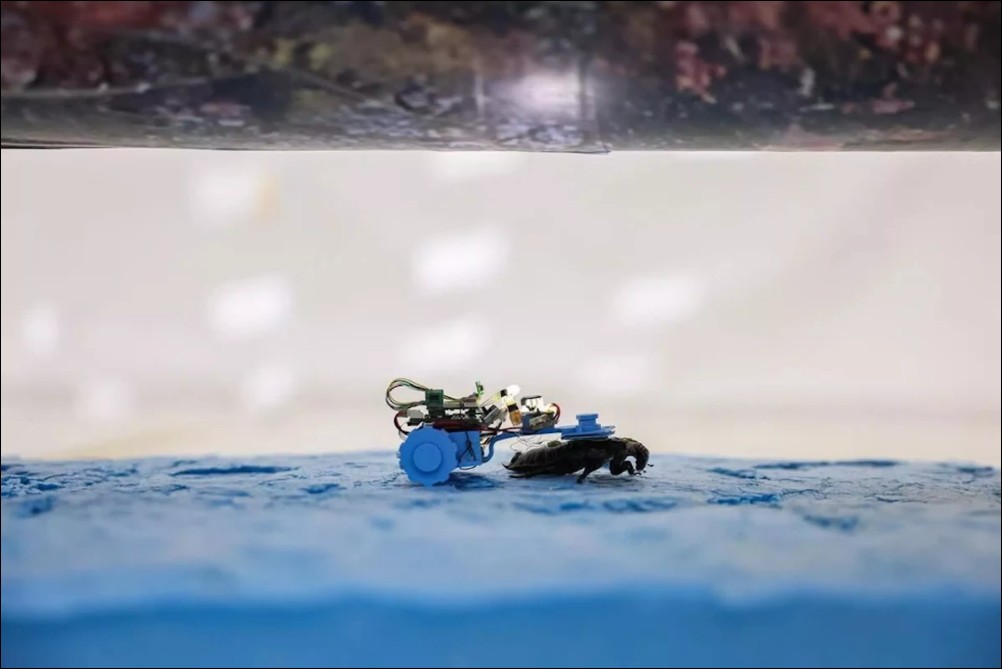
Madagascar cockroaches were chosen because they can withstand 10 times more radiation than humans and can survive for seven days without a head (breathing through side blowholes). These characteristics make it ideal for missions in harsh disaster zone environments.
Singapore Civil Defense Force (SCDF) officer Ong Ka Heng said: “The deployment of a team of insect hybrid robots that can navigate in small spaces that may be dangerous to humans and inaccessible will protect our frontline rescuers and increase the agility and efficiency of the main team’s operations.”
Looking ahead: From disaster relief to infrastructure testing
Professor Sato’s team has received support from the Japan Science and Technology Agency (MST) for the moon landing project and is committed to promoting this technology to a wider range of application scenarios. Current research focuses include:
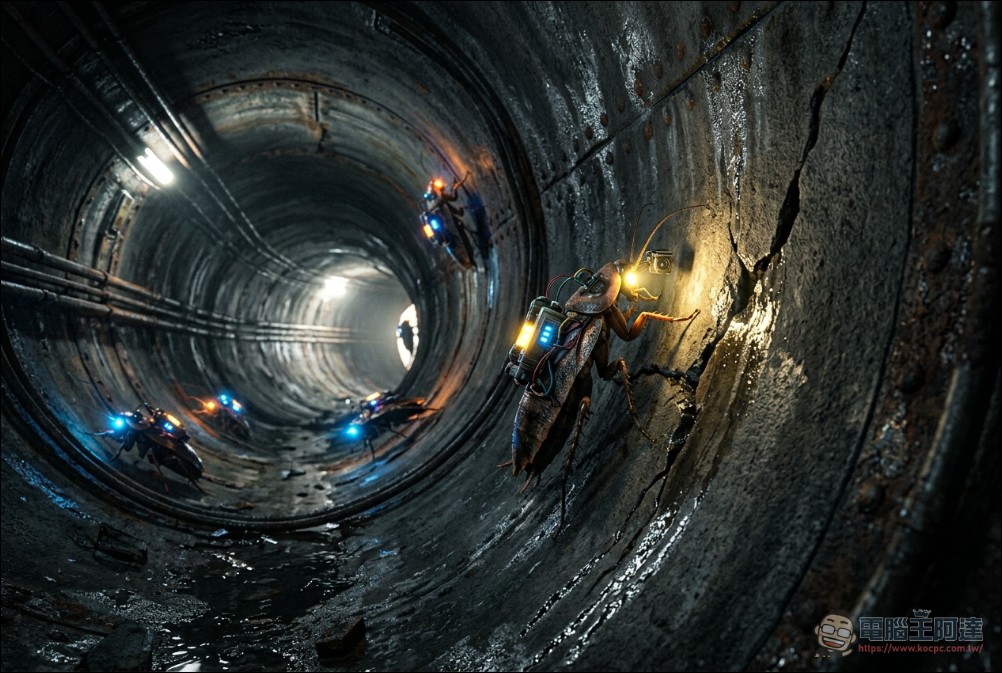
Infrastructure testing: Singapore has a 6,000-kilometer water pipe network that supplies water to about 1.7 million households and businesses every day. The team is developing a semi-mechanical cockroach specifically for pipelines, equipped with a lighting system, a camera and a small dragging device, which can collect images in pipelines and detect cracks and leakage problems.
Automated mass production: The time to install the control module on the cockroach has been shortened from about 1 hour to about 1 minute. The future goal is to further realize fully automated production processes.
Outdoor environment testing: The team plans to conduct experiments in outdoor environments, including rubble piles common in disaster areas, to verify the effectiveness of the algorithm in more complex real-world scenarios.
Other application areas: Logistics and warehousing inspections, farmland pest monitoring, toxic environment exploration, etc.
Professor Sato’s groundbreaking research has been selected as one of the “Top 50 Inventions of the Year” by Time magazine and one of the “Top 10 Emerging Technologies” by MIT Technology Review.
Controversy and Ethics: The Dilemma of Animal Welfare
Despite the promising technology, ethical issues have also arisen. Supporters believe that in disaster relief, any technology is worth trying as long as it can save lives.[5]. But critics are concerned about animal welfare and potential ecological impacts.
The research team emphasized that the electronic backpack adopts a non-invasive design and is connected to the insect’s nervous system through wireless signals, which will not cause permanent damage to the insect.[5]. When the cockroach is no longer on task or taking a long break, the backpack can be safely removed with no side effects. In the laboratory of Nanyang Technological University, these “cyborg cockroaches” can be retired after completing their tasks, and researchers will provide them with food and let them live naturally.
Conclusion
From the laboratory to the front lines of disaster relief, cyborg cockroach technology is accelerating towards reality. This kind of “insect hybrid robot” that combines biological instinct and precise mechanical control shows advantages that traditional robots cannot match in narrow spaces and complex terrains. With breakthroughs in AI automatic assembly technology and group navigation algorithms, the dream of large-scale deployment is no longer far away. In the next stage, perhaps we will see swarms of semi-mechanical cockroaches shuttle through city sewers, factory pipelines, and the ruins of earthquake-stricken areas, becoming human beings’ most powerful micro-assistants.
Source: KOCPC Chinese