


Want to experience the pleasure of watching movies on the big screen at home? Or want to see more clearly when playing split-screen games like Mario Kart with friends and family? At this time, many people will consider buying a projector to replace the TV in the living room. Although you can get a more different gaming experience, there are still some key points that you must consider. If you are hesitating, follow us to understand the advantages and disadvantages of the projector, and make a good evaluation before purchasing.
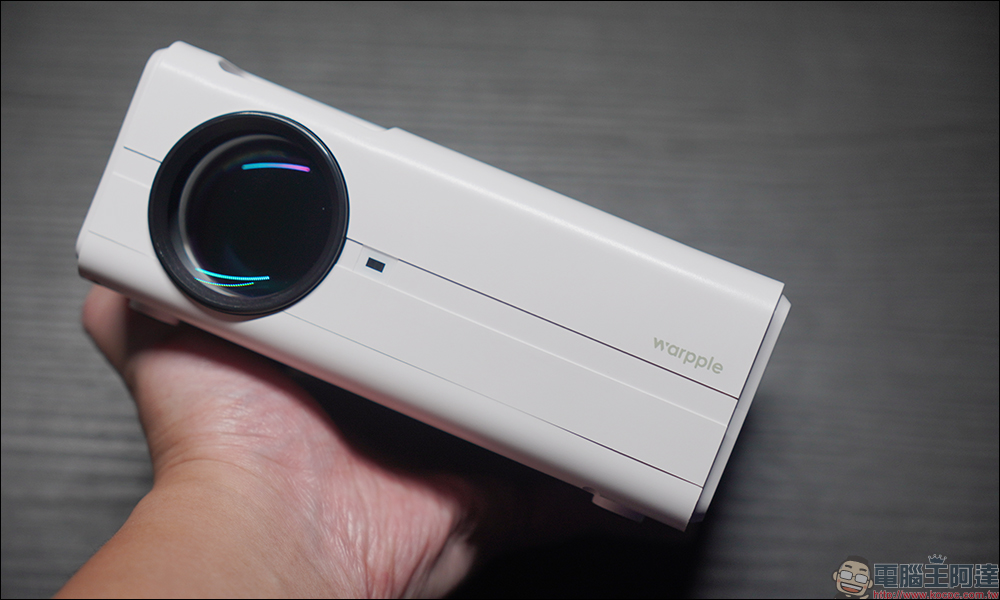
The big screen is great! Should I use a projector instead of a TV?
Projector is compact yet powerful
Moving even a moderately sized TV from room A to room B can be an uphill battle, so you have to think about where to put it before buying a TV, and it’s almost impossible to move it once you put it in. New projectors are now roughly the same size as modern game consoles, while projecting images that are prettier than an entry-level TV. To relocate the projector, you just need to turn it off, unplug it, pick up the main unit, move it to another location, put it down, and plug it in. You may need to calibrate the focus and projection distance after restarting, but it’s much easier than dragging the big TV from room to room and moving it into the cabinet yourself. You can even put the projector in your bag or take it outside for playback.
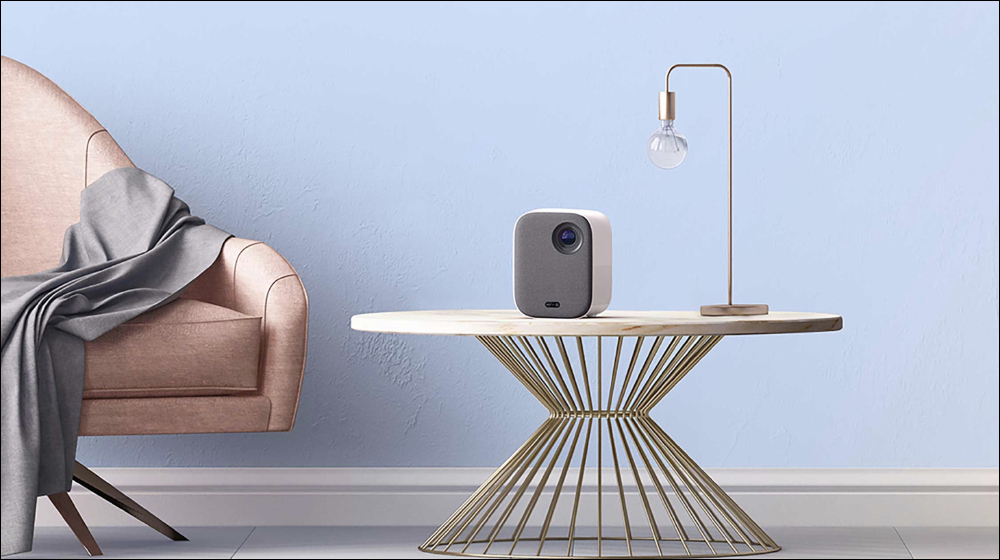
You can also get a huge display size of 100 inches or more from the projector’s small body, depending on how much wall space you have and whether you have a suitable projection screen for the image. Just like your projector, a projection screen can be rolled up for easier transport, or you can use a white sheet or cloth if you’re trying to save on a budget.
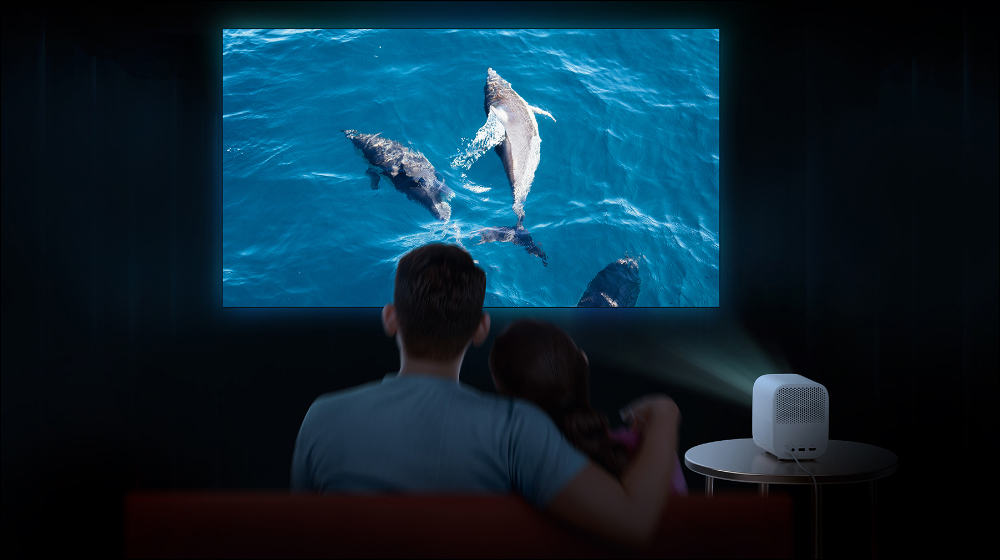
A TV of the same display size is much more expensive than your projector, is too large and heavy to move as needed, and may even be difficult to move through your front door in the first place. If you want to be able to hide your TV when it’s not in use, you might prefer a projector’s cleaner look.
Ultra short throw projector is highly convenient
In the past, you had to ensure that there was a clear space between the projector and the screen or projection surface, and the signal output source (such as a game console, Blu-ray player, etc.) had to be placed near the projector. With the birth of ultra-short throw projectors (UST), this situation of “one trigger affects the whole body” has been greatly changed.
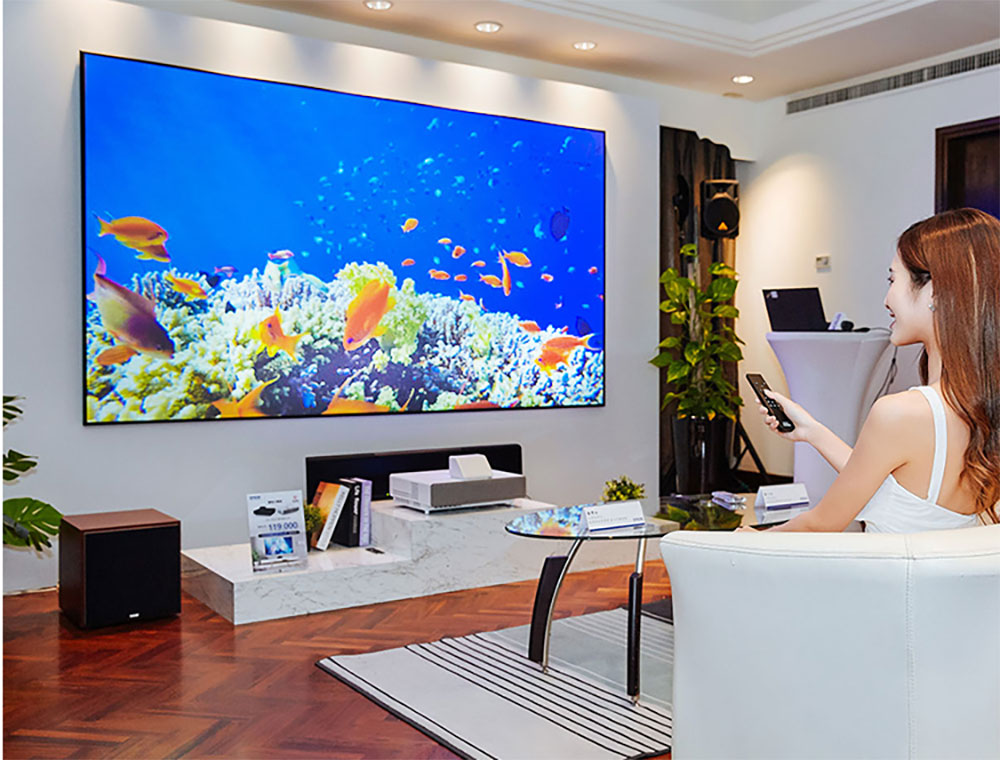
UST can be placed directly in front of the projection surface, also known as “laser TV”. Unlike standard projectors, most USTs use lasers to develop images, allowing them to last longer than traditional lamp models. Ultra-short throw projectors have a fixed screen size, and as of now, the limit is about 130 inches.
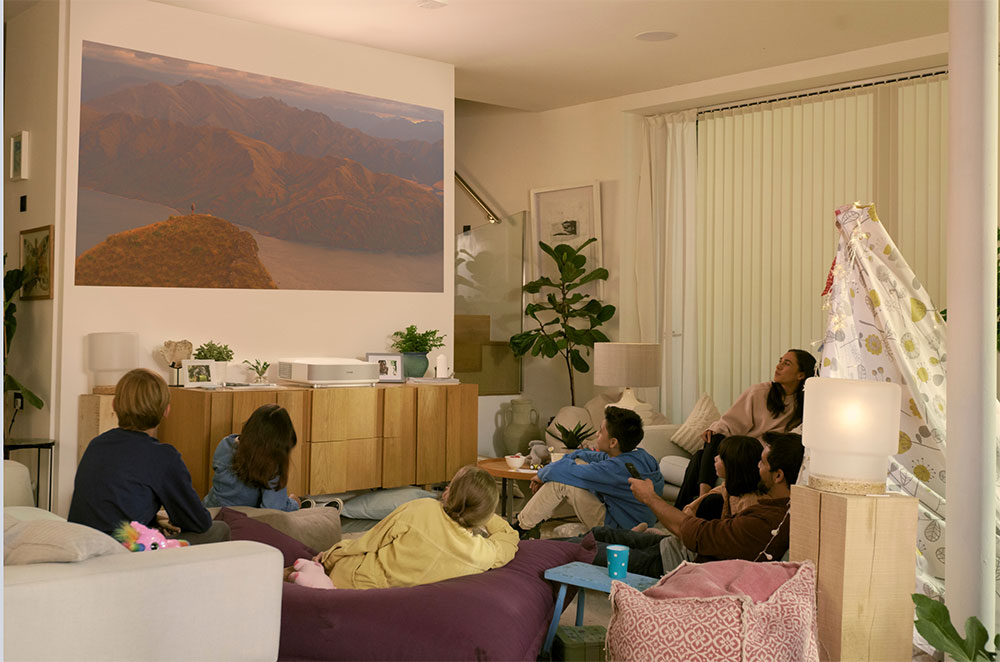
These projectors achieve the best display quality when paired with specialized projection screens with ambient light rejection (ALR), which use sloping ridges to capture and project light from the extreme angles of the projector’s positioning while avoiding light from windows or light fixtures in the space. Before you get too excited, I still have to pour a bucket of cold water on you. At this stage, the prices of UST and dedicated projection screens are very high, so you have to think carefully.
Projectors may not be a good choice for gaming
Projectors often have longer response times than TVs, especially now that some TVs include low-latency modes specifically for gaming, which is where projectors fall short compared to modern OLED TVs. The LG C2 OLED TV has an input delay of 5.3ms when playing 4K/120Hz content and 10ms at 4K/60Hz; the Optoma UHD35x projector has an input delay of 4.2ms when playing 1080P and 4K will be delayed to 16ms. If you switch to 60fps, you need to wait 16.66ms. Only then can you see the projector respond to a complete frame of input. Other projectors that are less gaming-optimized may have worse input lag, making the projector less than ideal for anything other than single-player or slow-paced gaming.
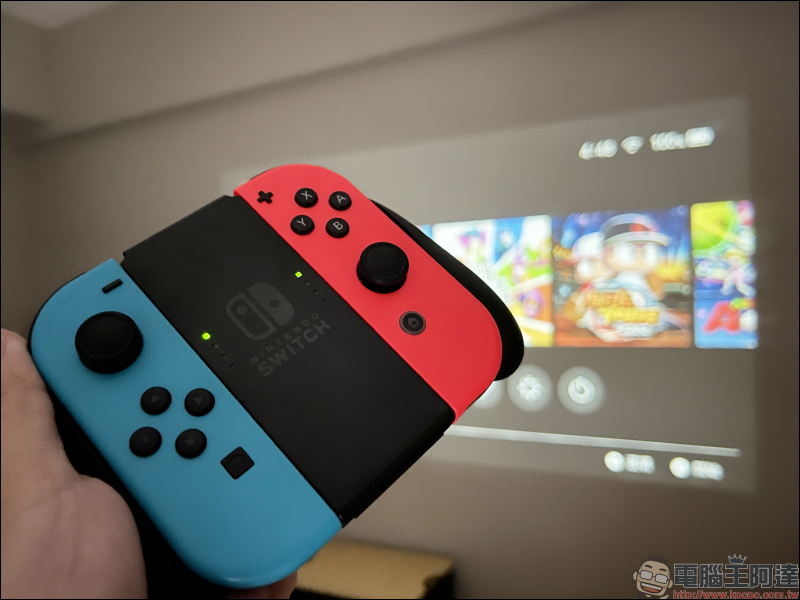
In addition, another disadvantage of the projector is the update rate. Many of today’s TV panels can play 4K content at a refresh rate of 120Hz, and there are many projectors. More importantly, projectors do not support variable refresh rate technology (VRR) like FreeSync, which is not uncommon on today’s TVs and monitors. If you often play games, maybe a projector can bring you a big screen, but for budget considerations and a better gaming experience, you might as well choose products with lower input lag, such as VRR, HDMI 2.1 and 4K/120Hz.
Don’t forget that sound effects are also important
Some projectors have built-in speakers, but the sound quality is usually terrible, worse than many TV speakers; it will sound even worse if the projector is mounted on the ceiling behind you. Some UST projectors perform much better because they are placed directly in front of the projection screen, but most are not designed with immersive audio in mind.
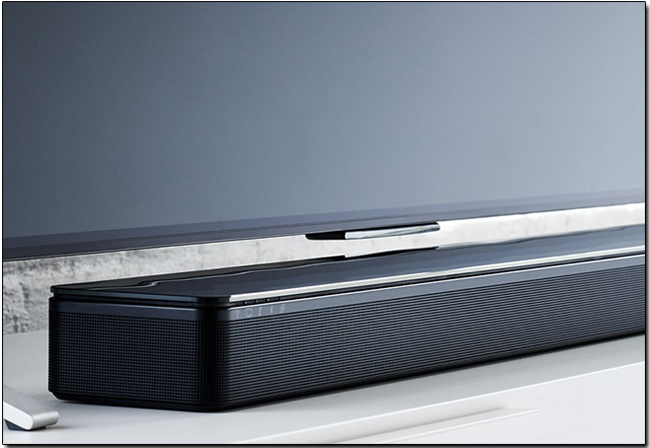
You need to include the cost of investing in sound effects into your purchasing budget. A Sound Bar solves the problem without taking up too much space. If you want a more complete theater experience, you may want to invest in proper Dolby Atmos 7.1 equipment.
A good projector will cost you more
While it’s not hard to find a cheap 1080P or 2K projector that can display a decent image, open your wallet if you want a more complete 4K HDR experience. A high-end projector like the EPSON Home Cinema LS11000 will cost 2 to 3 times as much as a high-end TV. Unfortunately, even buying an expensive projector won’t make the picture look better if it’s not paired with a good projection screen. If you are too shy to budget for an expensive ALR projection screen, consider purchasing a set of curtains with good blackout, as you will have to manually control the light in the room to obtain the best image quality.
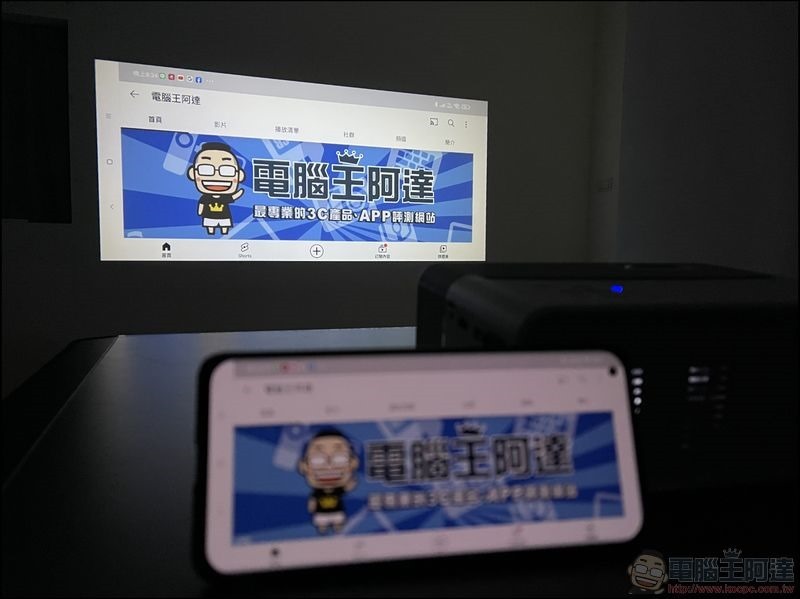
Unless you’re buying a UST projector, if you’re considering mounting the projector on the ceiling and don’t want a bunch of cables sitting right in the middle of the room, you’ll also need to consider paying for cabling and installation, a proper AV installation can go on the list, and then there’s the aforementioned sound issue. Given the above, you may want to spend more of your budget on setting up a projector.
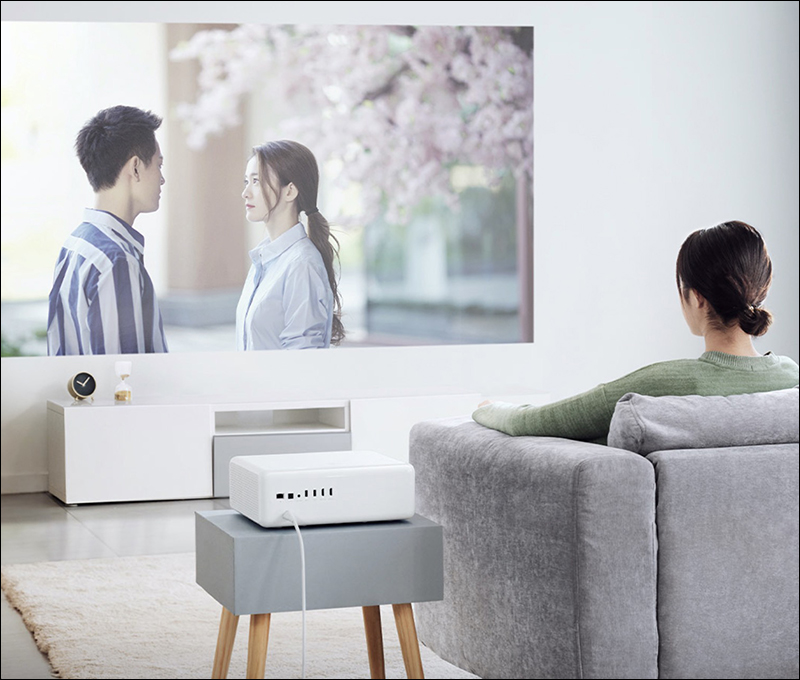
Today’s OLED TVs offer better contrast, and QLED TVs deliver bright images and fast input response times in well-lit spaces. These TVs work well with the latest gaming consoles, have 120Hz panels, have all the apps you could ever need built-in, and while they won’t last forever, at least you won’t have to replace the bulbs after hundreds of hours.
TV or projector, which one is better?
While there is a lot of what may seem like negatives above, this is not meant to crush your projector dreams. Buying a projector is not as easy as buying a TV. You need to consider not only the location, but also the matching projection screen, speakers, ambient light, gaming suitability and installation.
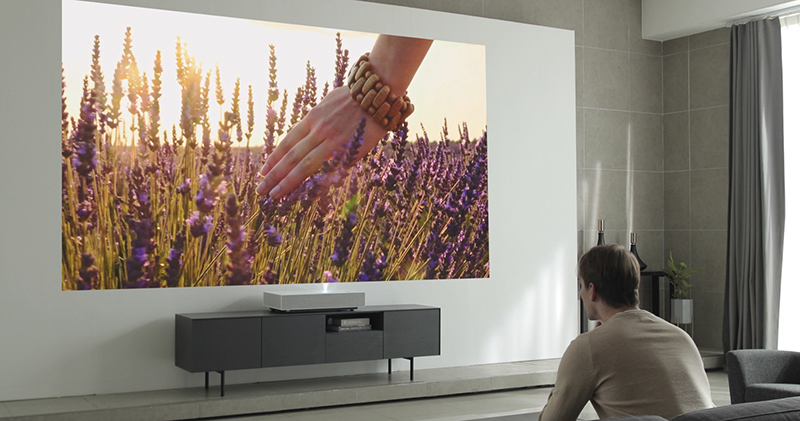
Owning a projector is equivalent to having your own big-screen movie-watching experience at home. You may not want to completely replace your TV with a projector, or you may have other specific plans for how to use it, such as using it in an entertainment room, a home movie room, or an outdoor entertainment area. With this in mind, you must think not about which one is better, but which projector is more suitable based on the use and space.
Source: KOCPC Chinese