


In recent days, more and more Chinese manufacturers have begun to produce their own graphics cards. Although I have long known that it will take several years to catch up with NVIDIA and AMD, I believe that many players are still curious about the performance of these graphics cards now. How big is the difference? For this reason, a GLENFLY Arise-GT10C0 independent graphics card launched by China Zhaoxin was recently tested. The results showed that it was only slightly faster than the old NVIDIA and AMD graphics cards from 11 years ago.
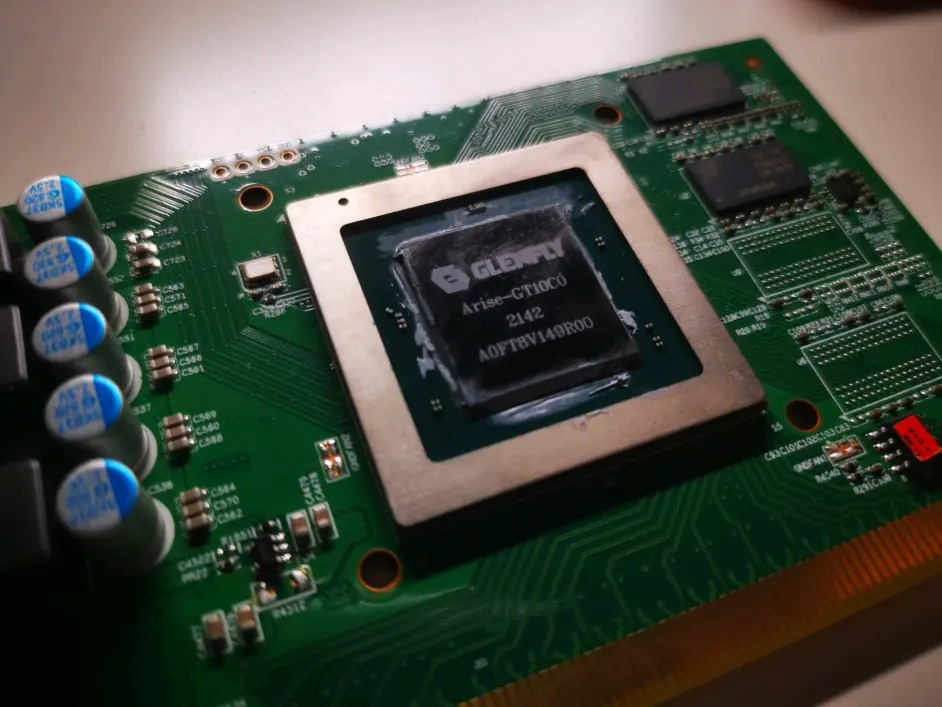
How is the performance of the GLENFLY Arise-GT10C0 independent graphics card developed by China Zhaoxin? Is it slower than NVIDIA and AMD graphics cards ten years ago?
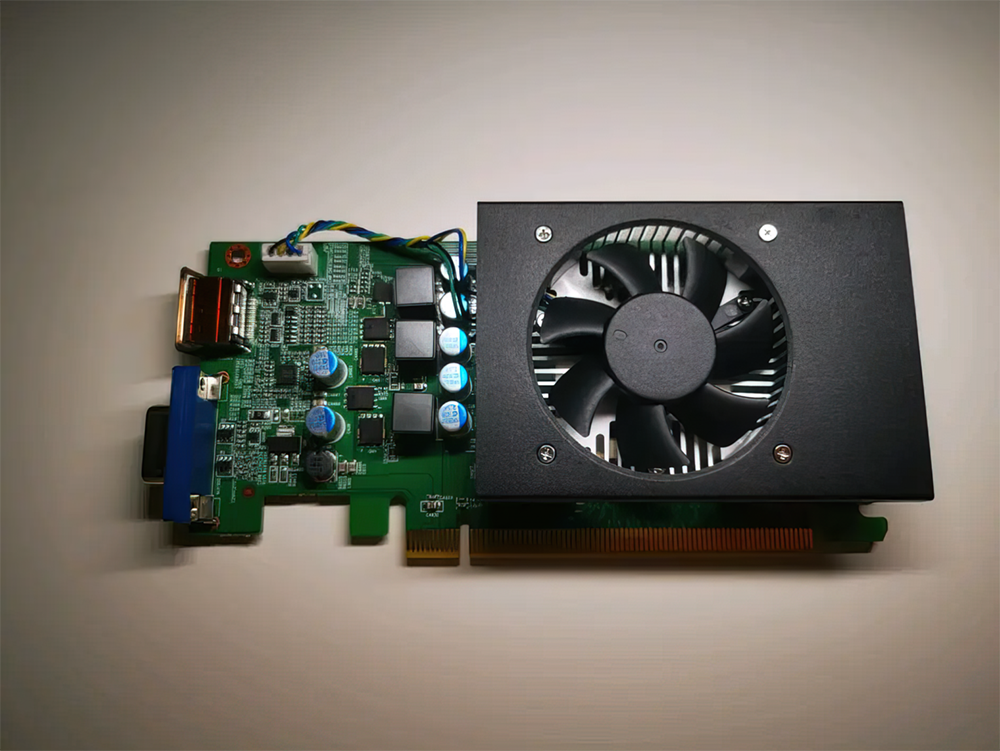
Recently on the Chinese Bilibili website, a HOKI_ user shared a quick view of the Zhaoxin GLENFLY Arise-GT10C0 independent graphics card. You can see that this design is very entry-level. It uses a common green PCB and a simple cooling system. It is equipped with a single fan and an aluminum heat sink under the black cover. It is obviously not built for gaming:
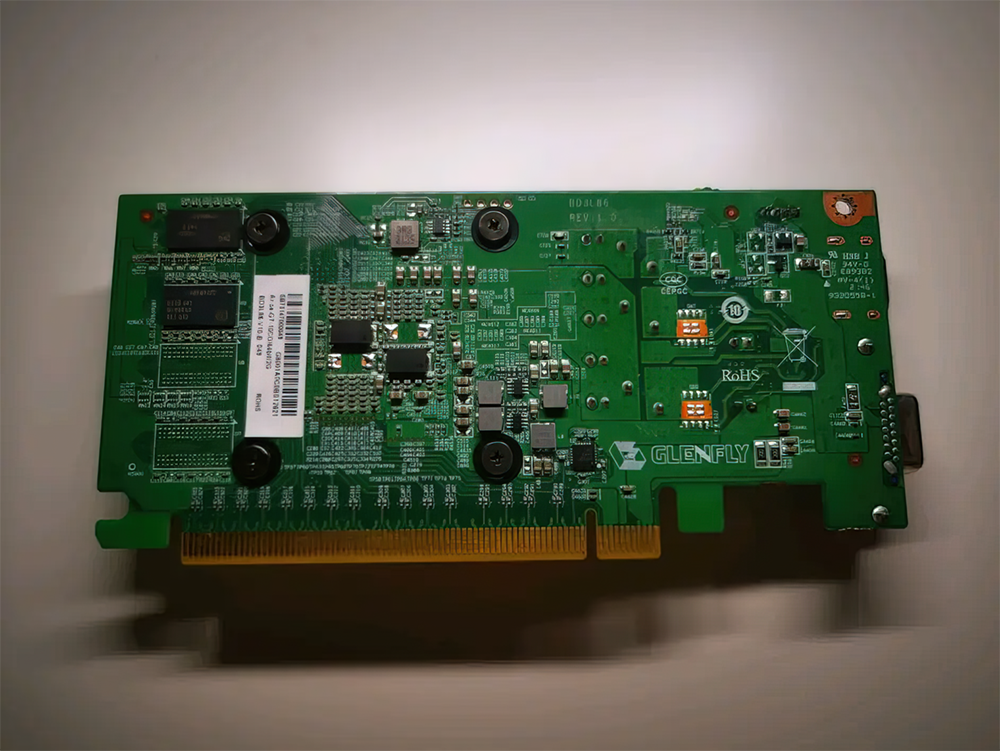
The back side of the PCB is also pretty cool. In terms of specifications, this GLENFLY Arise-GT10C0 independent graphics card has a total of 24 cores and is equipped with 2GB DDR3 memory (yes, that’s how you get started). The memory interface bandwidth is 64 bits and has two outputs, namely VGA and HDMI:
A few days ago, foreign media Tom’s Hardware also measured the performance scores of this card. The test platform processor it was equipped with was ZHAOXIN KaiXian KX-U6780A (equipped with 8 cores and a base clock of 2.69GHz). Geekbench OpenCL score of 579:
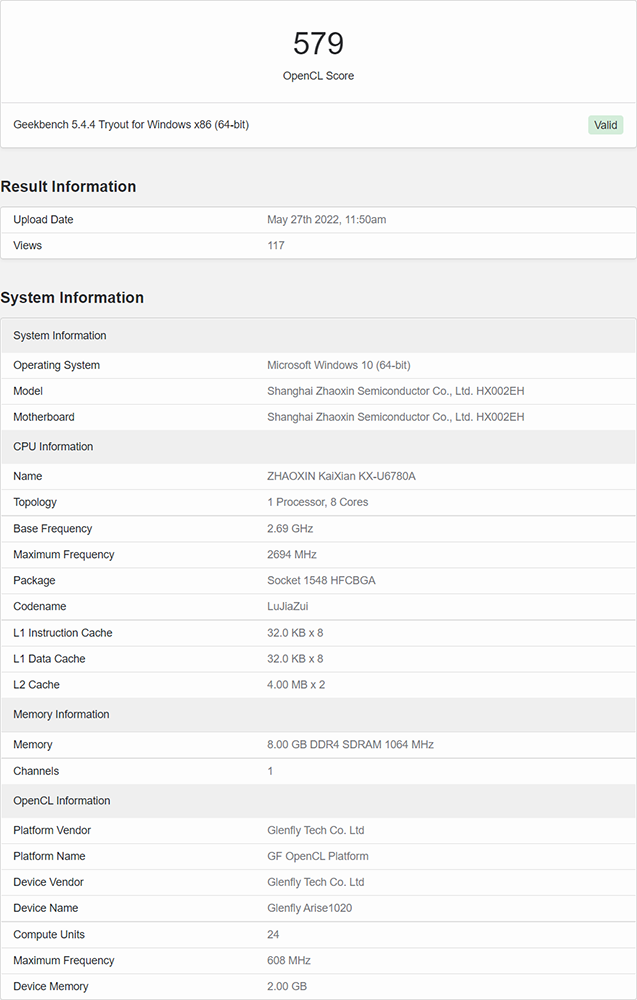
The score of 579 is so low that even graphics cards from 10 years ago cannot catch up. For example, the 2011 AMD Radeon HD 6480G with internal graphics scored over 600 points. In addition, ARM Mali GPU and NVIDIA GT 510 are also faster than this GLENFLY Arise-GT10C0.
One thing to note, however, is that although this graphics card can be used in Windows 10, a dedicated driver does not seem to be available yet. If there is any later, the performance can be improved somewhat, but don’t expect it to be improved a lot.
It can be seen that the gap between graphics cards produced by Chinese companies and AMD and NVIDIA is at least 10 years, so it seems that it will take a long time to catch up. In addition to this, Jingjia Micro and Innosilicon are also working hard on development. A while ago, they even announced that they will provide GTX 1080 and Vega-level performance in the next few years. Loongson also stated that it will launch products of the same level as AMD Zen 3 before 2023.
As far as high-end graphics cards are concerned, it is basically impossible for Chinese companies to catch up, but there is a chance for entry-level graphics cards. This also means that entry-level graphics cards may become cheaper and cheaper in the future. After all, Chinese companies are best at fighting price wars.
Source: KOCPC Chinese