


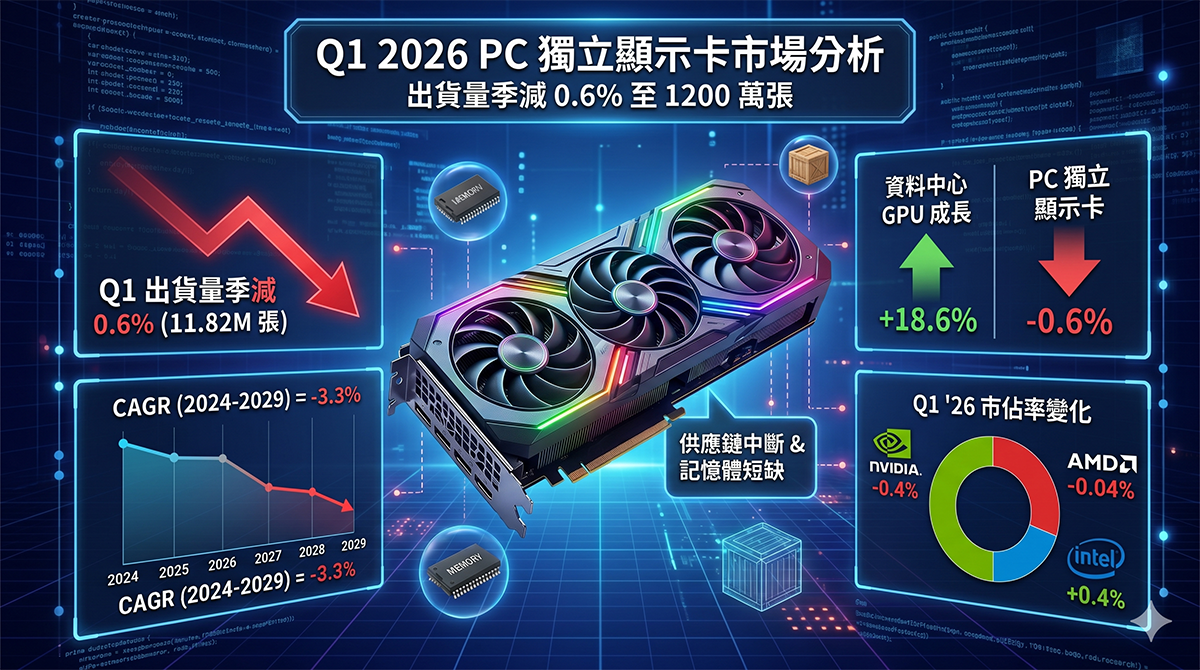
As generative AI continues to gain popularity, the graphics card market is showing a “polarized” development trend. According to the latest report released by market research agency Jon Peddie Research (JPR), global PC independent graphics card shipments in the first quarter of 2026 were approximately 11.8 million units, a slight decrease of 0.6% from the previous quarter. However, driven by the strong demand for AI on the enterprise side, data center GPU shipments achieved an impressive quarterly increase of 18.6%:
(Image source: AI generated)
Market Report for the First Quarter of 2026
Off-season performance is better than expected, supply chain challenges become a hidden concern
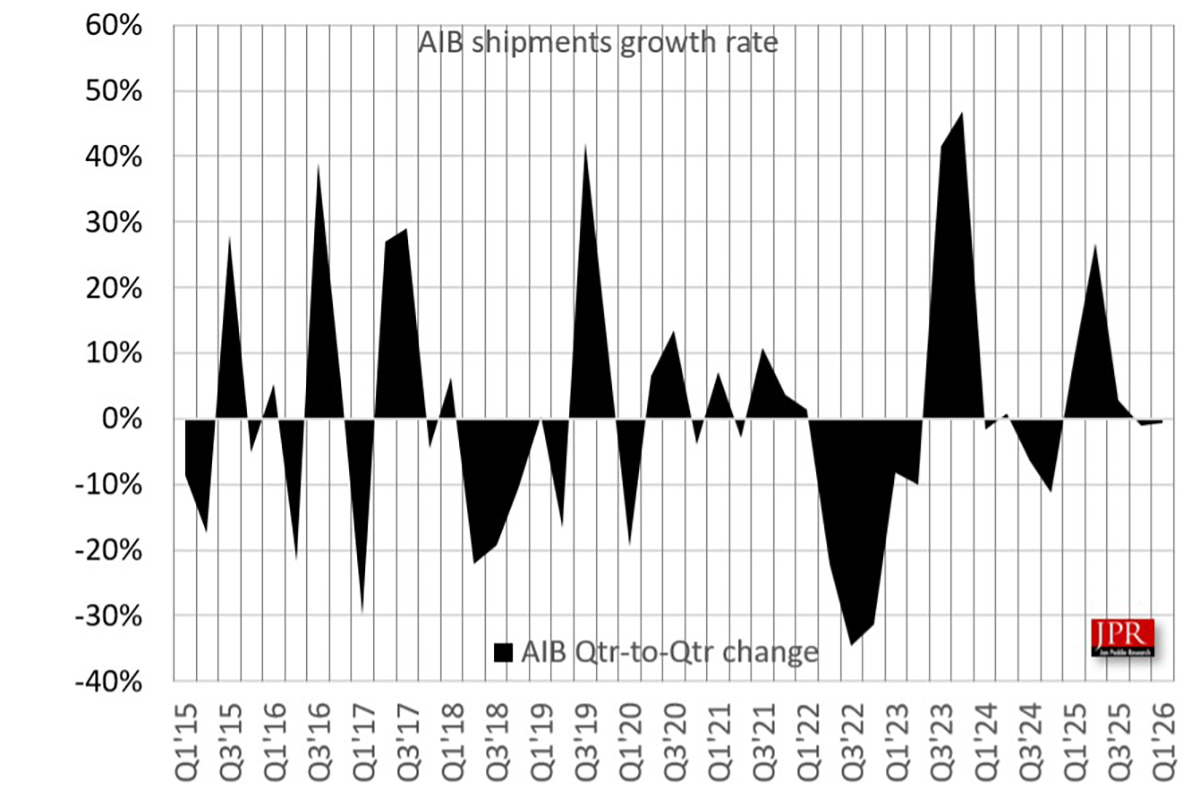
若从历史数据来看,第一季向来是 PC 市场的传统淡季,过去十年间的平均季减幅度高达 12.07%。 In contrast, in the first quarter of this year, it only fell slightly by 0.6%, and if compared with the same period last year, it actually grew by 8.3% against the trend, indicating that the market has certain support. Regarding the reasons for the decline in shipments, JPR President Dr. Jon Peddie pointed out: “The tight supply of memory and the disruption of the overall supply chain are the biggest challenges faced this quarter, which not only compressed production capacity, but also pushed up the price of end products.”
(Image source: Jon Peddie Research)
The market share of major manufacturers is shuffling, Intel bucked the trend and increased slightly
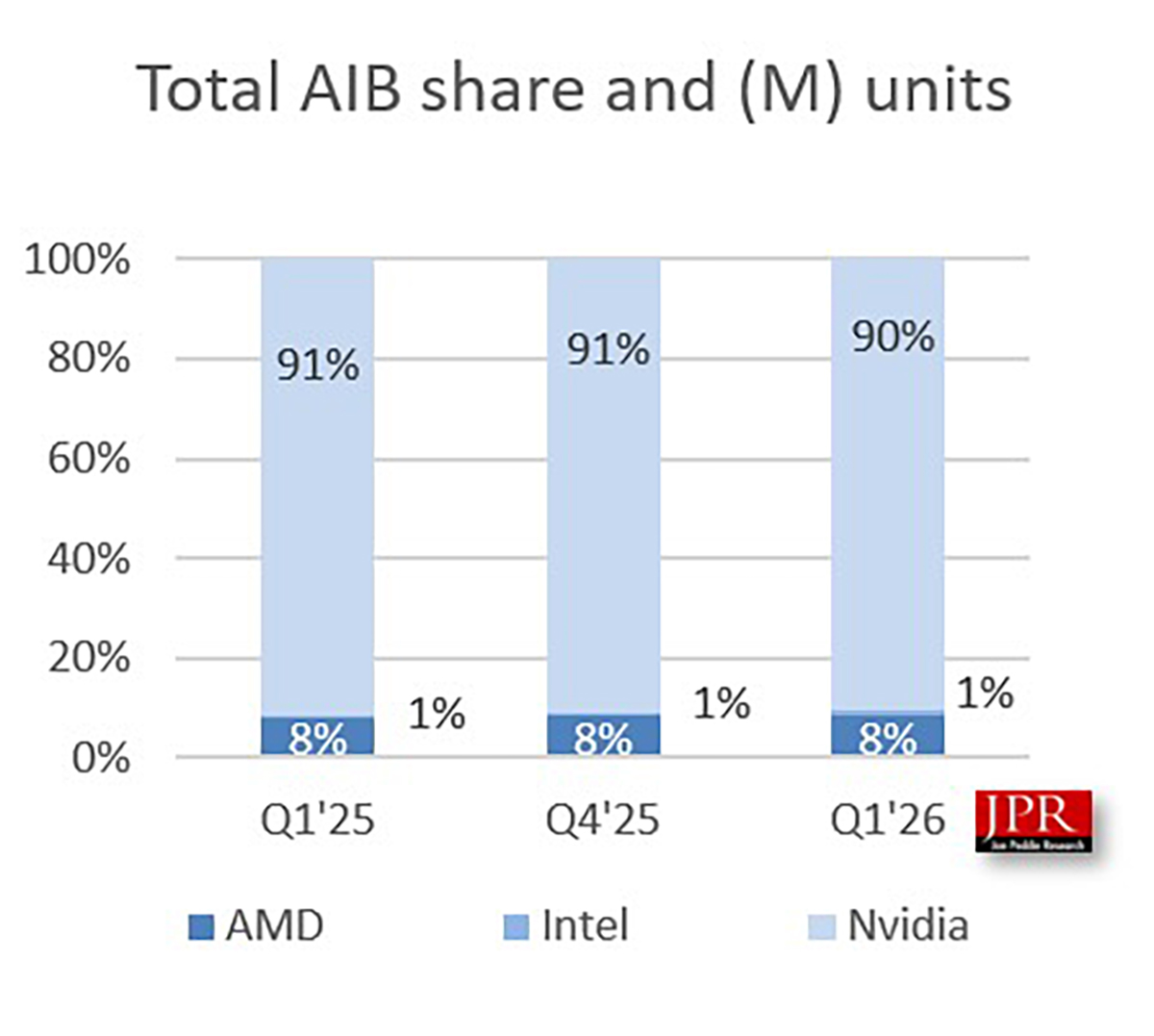
In terms of market share performance of the three major chip factories, there was a slight sector shift this quarter. Among them, Intel performed the most outstandingly, with its market share increasing by 0.4% from the previous quarter; while the two giants AMD and Nvidia slightly lost 0.04% and 0.4% of their market share respectively. I wonder if such a performance is due to Intel’s recent update of the graphics driver to make Xess optimization more complete? Or are the other two graphics cards sold too expensive, causing a decline in market share? This part is purely the author’s personal speculation, please don’t take it seriously:
(Image source: Jon Peddie Research)
The PC market is sluggish, but the trend of “no cards, no fun” is established
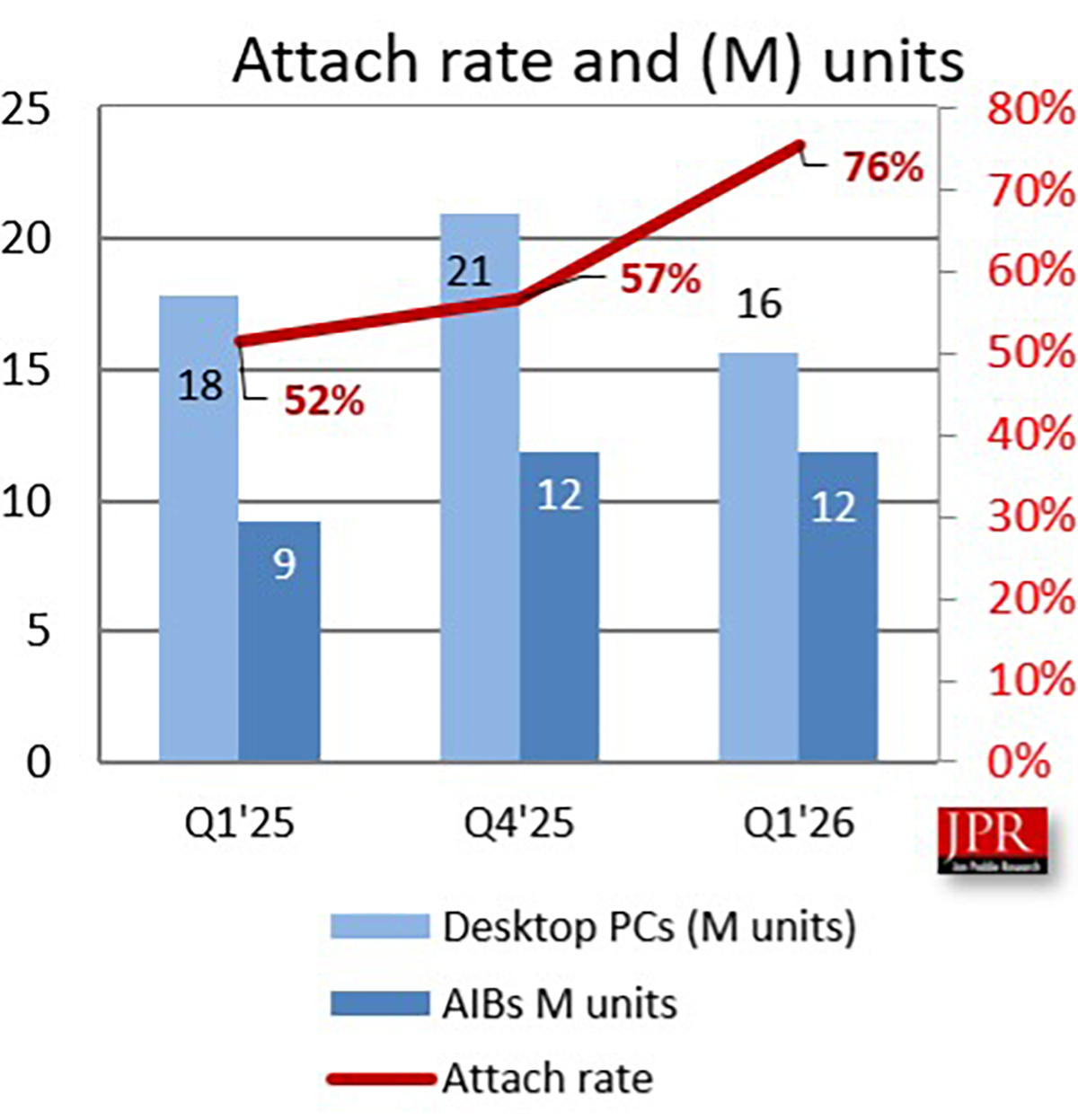
What is noteworthy about this report is that the desktop CPU market is facing a severe test, with only 15.7 million units shipped this quarter, not only a 24% quarter-on-quarter decrease, but also a sharp 25% decline compared to the same period last year. It is speculated that memory is too expensive in recent times, so many players will not want to spend a lot of money to buy a new computer unless they have an urgent need.
However, despite the overall weak purchasing sentiment for PCs, consumers’ reliance on graphics cards has not decreased but increased. Data show that the graphics card tie-in rate for desktop computers soared to 76% this quarter, a sharp jump of 33.2% from the previous quarter. This means that a very high proportion of consumers who buy desktop computers today will choose to purchase independent graphics cards. In addition to playing games, another big factor is also caused by the AI wave. When running models requires computing power, some users prefer to deploy generative AI applications locally to ensure data privacy and save huge cloud computing costs. This rigid need to “keep computing power with you” has not only greatly increased consumer demand for large-capacity display memory (VRAM) and high-performance GPUs, but has also made independent graphics cards the core and most valuable hardware investment for personal computers in this wave of AI revolution:
(Image source: Jon Peddie Research)
summary
For future development, JPR estimates that the compound annual growth rate (CAGR) of the PC independent graphics card market will fall at -3.3% from 2024 to 2029. Despite the slowdown in long-term growth momentum, it is expected that by 2029, the total installed base of independent graphics cards worldwide will still reach 183 million, and the market penetration rate in desktop computers will reach 129%, showing that independent graphics cards still play an indispensable core role in the high-performance computing and e-sports markets:
Source: KOCPC Chinese