


Recently, many American Tesla owners discovered that the “Full Self-Driving” purchase contract they signed many years ago had been quietly modified by Tesla. The word “Supervised” was added to the original document, which did not exist when they signed the contract. Some car owners’ original contracts can no longer even be opened online. Electrek firstreport this, and confirmed this problem to multiple car owners. The affected contracts were signed from 2016 to early 2024, covering the entire eight-year period during which Tesla sold FSD under the name “Full Self-Driving Capability”.
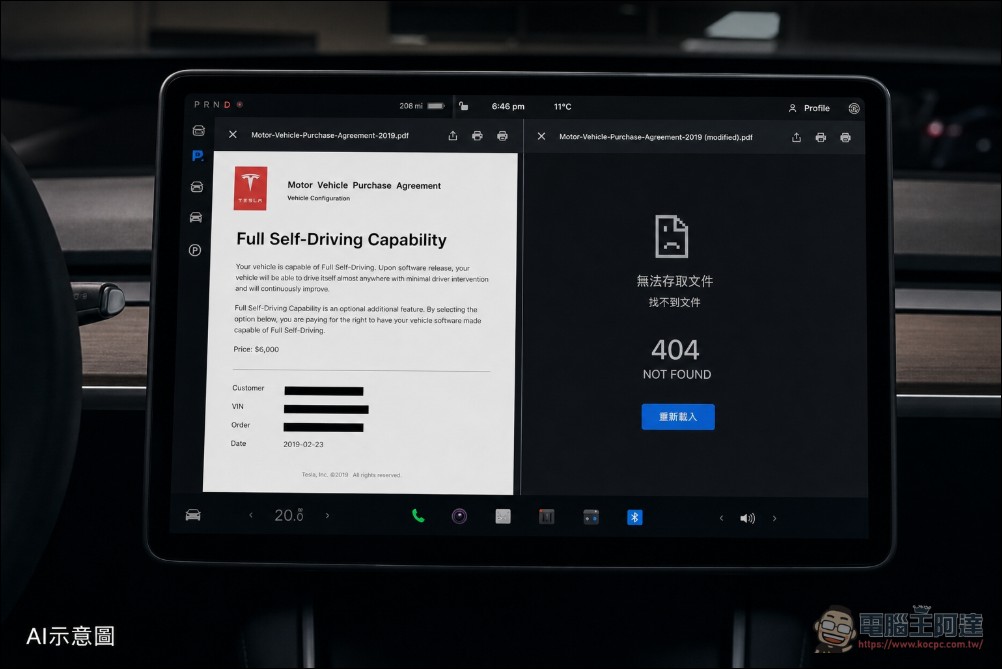
The contract was renamed, but the link cannot be opened.
Owner Oliver Abcarius owns a 2018 Model 3 that he purchased in 2019 with the FSD feature. Recently, when he tried to access the purchase contract in order to prepare a refund case, he found that the document name had been changed to “Full-Self Driving (Supervised) – August 12, 2019”, but when he clicked the link, it led to an invalid page.
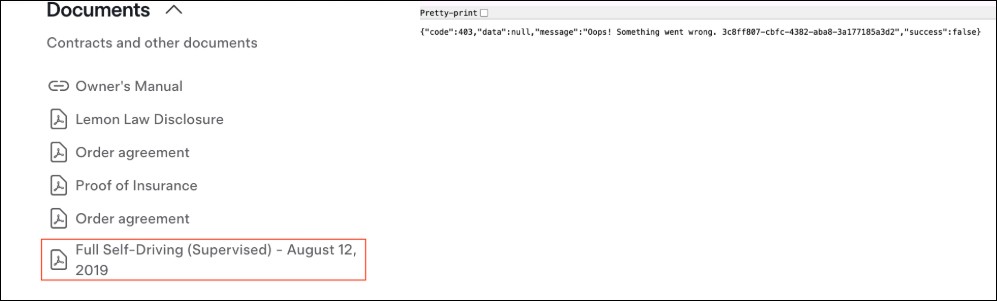
“Tesla has retroactively updated the document when I purchased the FSD in 2019. In 2019, the Tesla purchase contract did not contain the word ‘supervised’ at all. I can no longer open that document because the link leads to an invalid page,” Abcarius told Electrek.
The same thing happened with his wife’s 2020 Model Y, which came from the factory with FSD. Both of their other Tesla files can be opened normally, but the file containing FSD purchase details cannot be accessed.
“In both accounts, except for the files involving FSD purchase details, all other files can be opened normally. It is very suspicious,” Abcarius said.
Electrek confirmed that other Tesla owners with HW3 hardware are experiencing the same issue. The affected contracts happen to be from an era when Tesla was selling FSD before the word “Supervised” was used.
Eight-year commitment vs. cruel reality
This matter is sensitive because it involves an eight-year history of promises and broken promises. From 2016 to early 2024, Tesla sold “Full Self-Driving Capability” for a price of up to US$15,000 (approximately NT$487,500), promising that through future wireless software updates, the vehicle would eventually be able to achieve fully autonomous driving. CEO Musk has said almost every year since 2018 that “unsupervised autonomous driving will be achieved by the end of the year.”
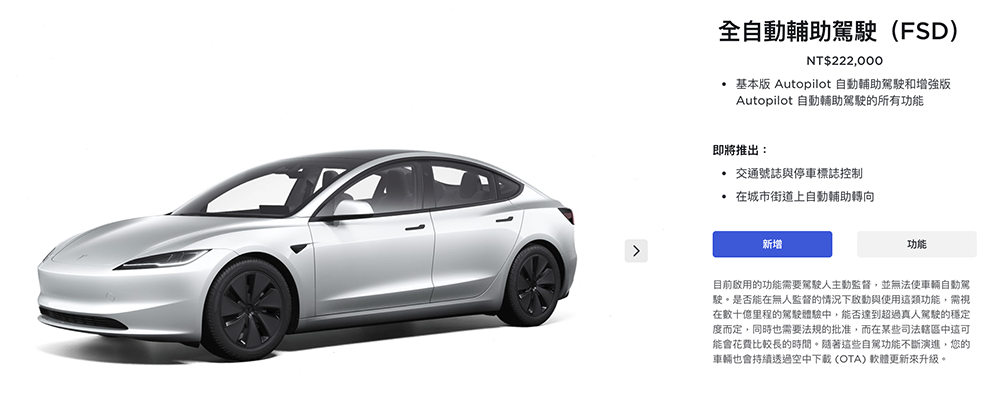
In March 2024, Tesla officially renamed the product “Full Self-Driving (Supervised)” with the FSD v12.3.3 version. The word “Supervised” appeared for the first time, and the details clearly stated that the system cannot enable the vehicle to drive automatically. By September 2025, Tesla further abandoned its original commitment and completely rewritten the definition of “Full Self-Driving”.
Musk himself admitted: HW3 will never be able to achieve unsupervised FSD
What makes car owners even more angry is that during the April 2026 earnings call, Musk personally admitted that Tesla vehicles equipped with HW3 hardware “can never achieve unsupervised FSD.”
“Unfortunately, Hardware 3… I really hope that’s not the case, but Hardware 3 really doesn’t have the ability to achieve unsupervised FSD. We once thought it could, but compared to Hardware 4, its memory bandwidth is only one-eighth of Hardware 4.” Musk said during the conference call.
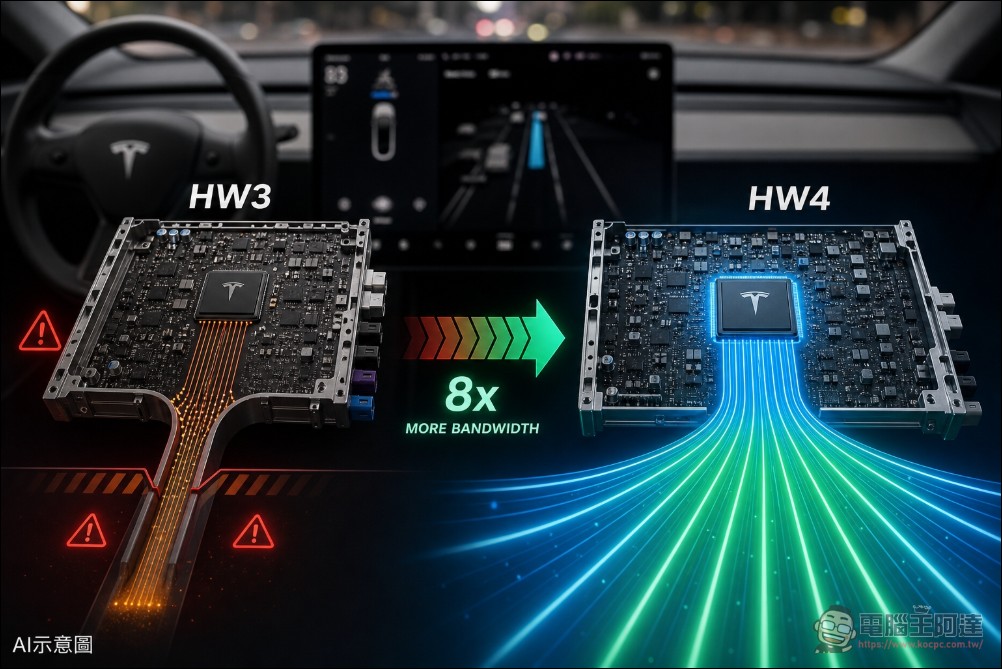
HW3 hardware is installed on Tesla vehicles produced between 2019 and 2023, the period when those owners spent up to $15,000 on FSD. Today, these vehicles are only available in “FSD Lite” versions with reduced functionality at best. Musk has previously hinted that Tesla will build a microfactory to upgrade HW3 to HW4. However, judging from the current information, if this upgrade comes true, the cost will probably be borne by the car owners themselves (but based on experience, it is also very likely that Tesla will absorb it, but it has not been stated clearly yet).
From one-time buyout to monthly fee system: FSD’s business model changes
Just before the contract tampering crisis broke out, Tesla had officially converted FSD to a subscription system on February 14, 2026, canceling the one-time purchase option, with a monthly fee of US$99 (approximately NT$3,218). Previously, the one-time purchase price of FSD increased from an early price of $5,000 all the way to $15,000. Musk also hinted that subscription prices will continue to rise as the technology matures.
This change has made car owners who spent a lot of money to buy out their cars even more dissatisfied. They paid the full amount in the era when FSD was still called “Full Self-Driving Capability”, and have waited for many years without receiving the fully autonomous driving functions originally promised. Now the contract has been retroactively modified, and the original purchase documents cannot be accessed.
Legal risks continue to rise
Tesla is facing a growing number of legal actions related to FSD and Autopilot. In February 2026, a U.S. judge upheld a $243 million (approximately NT$7.9 billion) jury verdict involving a 2019 incident in FloridaFatal Autopilot crash。
In the same month, the California Department of Motor Vehicles announced that Tesla had stopped using the term “Autopilot” for marketing in the state, saying the label was misleading. The change allowed Tesla to avoid a 30-day suspension of its dealer and manufacturer licenses in California.
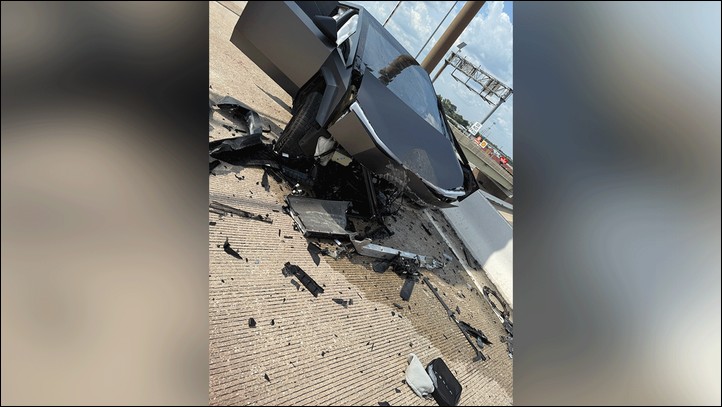
Tesla faces another Cybertruck incident in Texas car accident lawsuitPlaintiff Justine Saint Amour alleged that she purchased the Cybertruck in February 2025. When she turned on Autopilot in Houston in August of the same year, the vehicle failed to turn right when passing through a Y-shaped elevated road. Instead, it went straight towards the cement barrier and the highway below. Saint Amour claimed she tried to turn off Autopilot and regain control of the vehicle before impact, but was unable to avoid the collision. She accused Tesla’s engineering decisions and misleading marketing of being responsible for the crash (Editor’s note: This case was confirmed by Tesla that the owner did not turn on FSD when the crash occurred).
The legal implications of contract tampering
On a legal level, retroactively modifying a signed contract and rendering the original document inaccessible may pose serious legal issues. Especially when a car owner considers filing a chargeback or fraud lawsuit, the text of the original contract will be the core evidence. Nowadays, these original documents cannot be obtained, which is a major obstacle to car owners’ rights protection.
Tesla has not made a public statement about the contract modification. Some netizens in Germany left a sarcastic message on social media: “In Germany, we don’t say ‘retrospectively modify the contract’, we say ‘Urkundenfälschung’ (forged documents).”
From promising fully autonomous driving, to admitting that the hardware can never do it, to quietly revising old contracts, Tesla’s FSD story continues to evolve. And those car owners who spent thousands of dollars and waited for years now can’t even get a contract to prove what they bought in the first place. How this turmoil will end will probably have to wait for the court to give the answer.
Source: KOCPC Chinese