


Tianfeng International Securities analyst Ming-Chi Kuo released the latest industry survey on the X platform on the 16th, revealing that IC design leader MediaTek (2454) has significantly upgraded its AI business strategic positioning from “IC/ASIC design” to “system-level design.” The primary targets of the new strategy are two major directions: PCBA (Printed Circuit Board Assembly, L6 level) for Google TPU, and L10 cabinet integration orders for self-developed AI chips by Elon Musk’s company.
As soon as the news came out, MediaTek’s stock price surged 6.94% that day, closing at 4,470 yuan, an increase of 290 yuan; Creative (3443) of the same group even hit the daily limit due to the double profit of winning Google’s large order and being included in the 0050 component stock, closing at 4,815 yuan, an increase of 9.93%. AI concept stocks have exploded across the board, with Taiyao, ADLINK, and Xinxing rising by more than 6%. The market has given high praise to MediaTek’s strategic transformation.
Why does MediaTek want to move from chip design to system integration?
Ming-Chi Kuo analyzed that there are two major driving forces behind this strategic transformation, namely “opportunities” and “risks.”
我最新的產業調查顯示,聯發科內部已將 AI 事業的策略定位,從「IC / ASIC 設計」提升至「系統級別設計」,首要目標鎖定 Google TPU 的 PCBA(L6),以及 Elon Musk 旗下公司自研 AI 晶片的 L10 機櫃。
整體而言,此定位轉變符合產業趨勢,若聯發科執行順利,有助於強化客戶關係與長期競爭優勢。…
— 郭明錤|Ming-Chi Kuo (@mingchikuo) June 15, 2026
In terms of opportunities, the design complexity of AI server cabinets is rising rapidly. The new generation data center has introduced advanced technologies such as co-packaged optical components (CPO) and 800V high-voltage direct current power supply (HVDC), and the update and iteration speed of cabinets has been comparable to that of consumer electronics products. In the past, the design cycle of server cabinets lasted for several years, but now they are replaced every year like mobile phones. These factors jointly promote the added value of system-level design. In other words, only selling chips can no longer meet customer needs. Being able to provide complete solutions from chips to cabinets is the decisive point for the next wave of competition.
On the risk side, Ming-Chi Kuo put forward a key warning: the growth momentum of ASIC design may begin to slow down in 2 to 3 years due to the rise of the Semi-COT business model. The so-called Semi-COT (Semi-Custom Off-The-Shelf) is a semi-customized chip design model that allows customers to more directly participate in the chip design process, compressing the profit margins of traditional ASIC design services. This means that the ASIC design business that MediaTek currently relies on may face a growth ceiling in a few years, and higher-level system integration business must be deployed in advance to maintain long-term competitiveness.
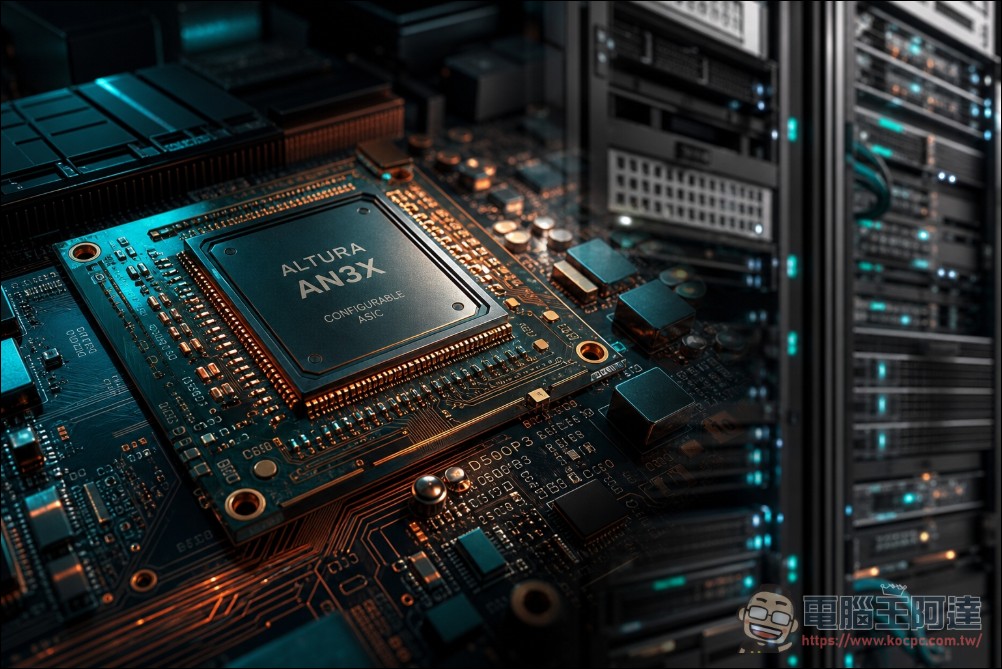
Light asset model: Leading design and manufacturing outsourcing, gross profit margin target 40-50%
In order to ensure that the gross profit margin of system-level design integration business can reach at least 40% to 50%, MediaTek is expected to adopt an asset-light model of “leading design and verification”. The specific approach is to make good use of Taiwan’s complete hardware supply chain ecological advantages and outsource manufacturing to partners. Taiwan has a server manufacturing ecosystem that covers everything from PCBs, cooling modules, chassis to power supplies. This is MediaTek’s unique advantage over other competitors.
This strategy is completely different from MediaTek’s business model that focused on chip design in the past. In the past, MediaTek’s role was to “design chips and hand them over to foundries for production.” In the future, it will be further responsible for the design verification of the entire system and then outsource the manufacturing process. Ming-Chi Kuo emphasized that this is a long-term plan and the impact on MediaTek’s fundamentals within two years will be negligible. The real goal is to seize new growth opportunities and reduce the impact of potential risks.
Google TPU: Switch to PCBA from v10 Icefish and import CPO simultaneously
Regarding the layout of Google TPU, MediaTek’s goal is to enter the PCBA business starting from the next generation TPU v10 (codenamed Icefish), and simultaneously strive to introduce its own CPO (co-packaged optics) solution. CPO technology can package optical components directly next to the chip, greatly shortening the signal transmission distance and reducing power consumption. It is one of the key technologies for the next generation data center. If MediaTek can introduce its own CPO solution in TPU v10, it will greatly increase its voice in Google’s supply chain.
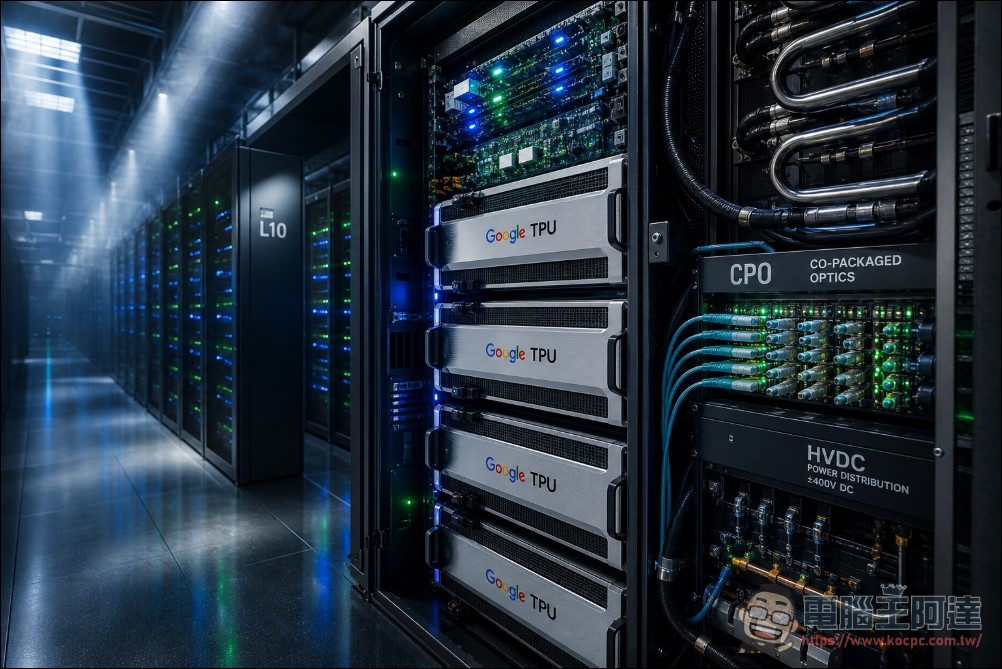
However, Ming-Chi Kuo admitted that Google’s hardware assembly ecosystem is quite complete, and MediaTek’s chances of winning are not high if it wants to further win orders for higher-end L10 cabinets. In other words, MediaTek’s strategic positioning on the Google line is to “start with PCBA and gradually climb up” rather than challenge complete cabinet integration from the beginning.
Musk’s companies: Bigger opportunity, but unclear timeline
In contrast, the AI computing power of Musk’s companies (including companies such as xAI) still mainly uses NVIDIA chip solutions. The cabinet assembly ecology of its own AI chips is not yet complete, which opens a window of opportunity for MediaTek. Unlike Google, which has a mature hardware supply chain, the Musk camp’s AI self-developed chips are still in the early stages, and the cabinet assembly ecosystem has not yet been established. MediaTek has the opportunity to participate in the construction from the beginning.
Ming-Chi Kuo pointed out that this business still lacks clear timetable visibility. It is still unknown when the self-developed AI chips of Musk’s companies will be mass-produced and when L10 cabinet integration will be required. The key to MediaTek’s long-term success or failure lies in whether the company can make good use of Taiwan’s hardware supply chain ecosystem and successfully win L10 cabinet integration orders with the help of its partnership with Terafab (an advanced semiconductor foundry).
Key points to observe: The key leap from chip manufacturer to system solution provider
MediaTek’s move from chip design to system-level design reflects that the AI arms race has entered a new stage. As large cloud service providers and technology giants invest in self-developed AI chips, simple chip design services are no longer enough to meet customer needs. Whether it can provide a system-level integration solution “from chip to cabinet” will become the key to the next wave of competition.
In the short term, this strategic transformation will not immediately have a significant contribution to MediaTek’s financial results. But from the perspective of long-term competitiveness, this is a key step for MediaTek to transform from an “AI chip supplier” to an “AI system solution provider.” Whether Musk’s AI cabinet order can bear fruit and whether TPU v10’s PCBA business can advance as scheduled will be the market’s primary observation indicator to test the success of this strategy.
Source: KOCPC Chinese