


At this product launch event, besides unveiling its first AR glasses, Orion, Meta also announced its new multimodal open-source model, Llama 3.2. Llama 3.2 can now read image information, making it even more useful and giving it image recognition capabilities similar to ChatGPT. You can go read the visual model case studies for Llama 3.2. Here, we mainly introduce the examples Meta officially demonstrated for future use of Llama 3.2 in Meta AI, Instagram, and Facebook.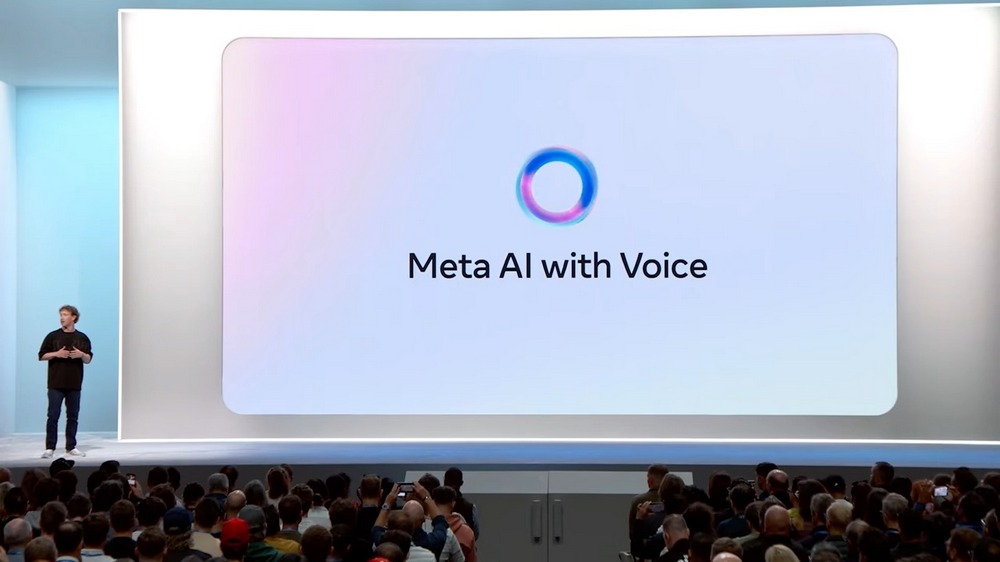
Meta’s new multimodal open-source model Llama 3.2 opens a new era of AI: practical applications in Meta AI, Instagram, and Facebook
At today’s Meta product launch event, in addition to unveiling Orion, its first AR glasses that will not go into production due to prohibitively high manufacturing costs, Meta also announced a new multimodal open-source model, “Llama 3.2,” that can be used across Meta AI, Llama, and Ray-Ban. The new Llama 3.2 can now read image information, meaning it can do what GPT-4o and Apple Intelligence The same real-time responses and visual scene recognition.
Meta AI Voice Mode
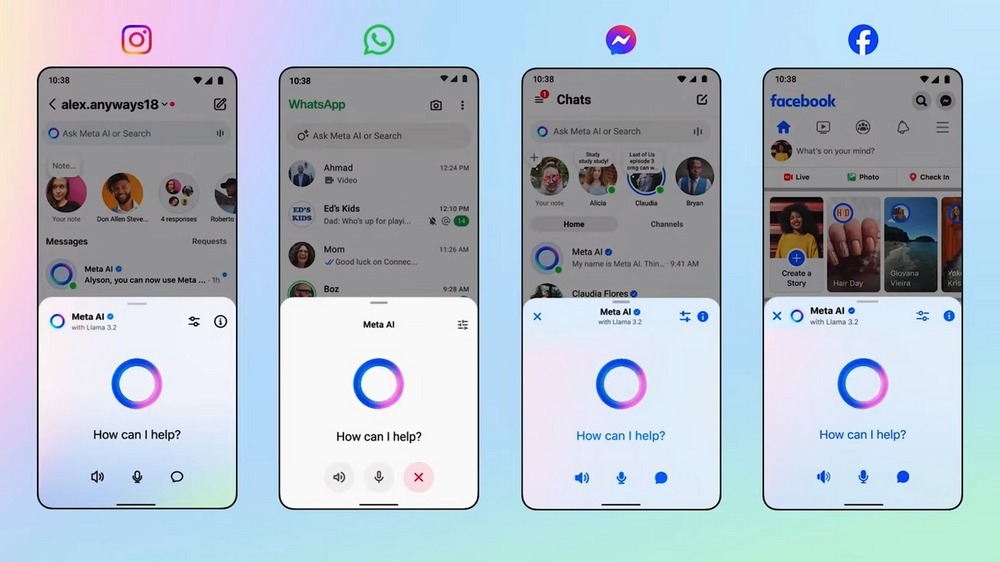
With Llama 3.2, Meta AI finally has its own voice mode, just like ChatGPT’s advanced voice mode. It can answer questions in real time, and you can even interrupt it mid-sentence. You can use Meta AI’s voice mode on Instagram, WhatsApp, Messenger, and Facebook.
With the Llama 3.2 multimodal model, Meta AI can now see images, enabling it to help users edit photos—whether removing, adding, or replacing elements. However, this feature is currently only available in the United States.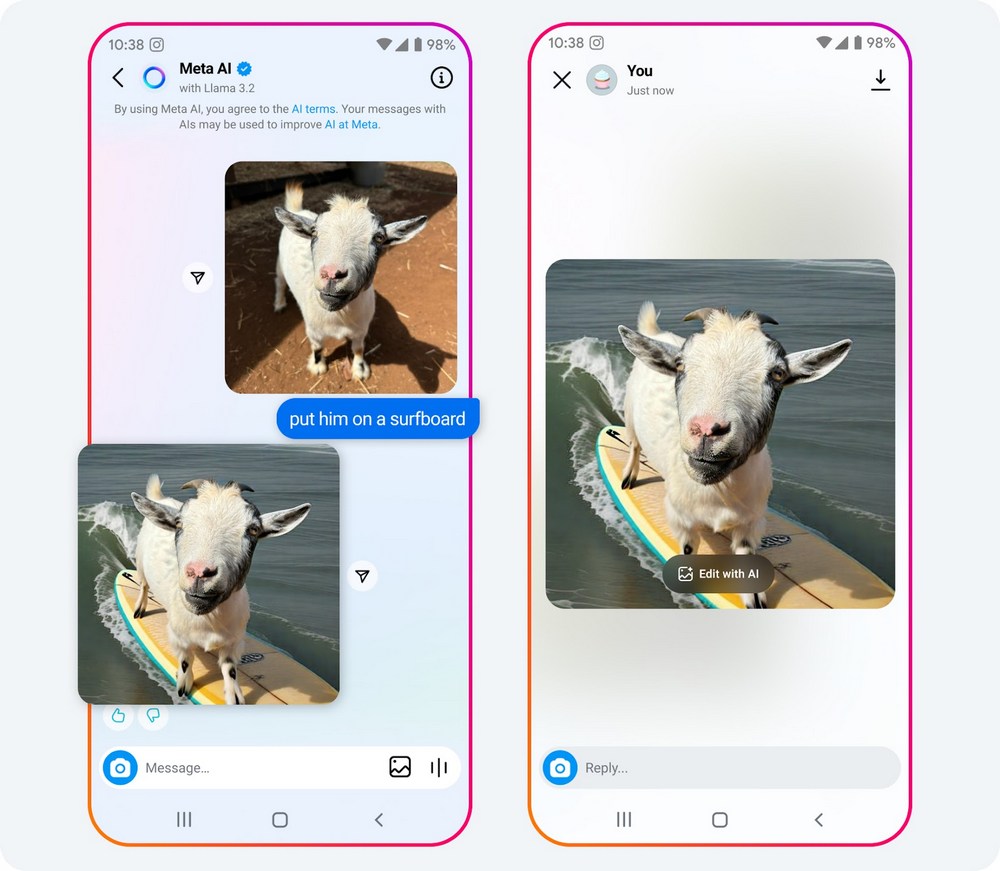
Meta AI voice mode lets you have conversations with Meta AI, and based on what netizens have tested, it’s reportedly super fast with natural, highly interactive dialogue. Meta AI also offers celebrity voice options like Awkwafina, Kristen Bell, John Cena, and more to choose from.
📣 You can now have a conversation with Meta AI using voice. It’s super fast, connected to the web, natural and conversational and even comes with celebrity voice options from Awkwafina, Kristen Bell, John Cena, and more. What voice speaks to you? (pun intended 😆) pic.twitter.com/qpfA0zybmu
— Ahmad Al-Dahle (@Ahmad_Al_Dahle) September 25, 2024
In addition to the above features, Meta is also launching an experimental “Meta AI translation” feature for Reels, which can help creators automatically dub their videos and even sync lip movements. It’s starting with English and Spanish, with other languages still in development.
That concludes this sharing of examples for how Meta’s new open-source multimodal model “Llama 3.2” will be applied to Meta AI, Instagram, and Facebook in the future. These features feel somewhat familiar, as OpenAI and Apple already have similar capabilities. Now it really comes down to seeing who can get these features into the hands of all consumers first. OpenAI’s voice feature is currently available to ChatGPT Plus and Team users worldwide, while Apple’s Apple Intelligence is currently only available in the United States. Meta’s voice feature will roll out over the next month in the US, Canada, Australia, and New Zealand. As for when users in other language regions will get access, that remains unknown. For those interested in learning more about OpenAI’s voice feature and Apple’s Apple Intelligence, feel free to click the links below to read the related coverage.
Apple Intelligence 前瞻整理懶人包,iPhone 16 相機控制讓 Apple Intelligence 更好用
Source: KOCPC Chinese