


When you receive an email, you check to see if the sender is from a trusted source, but is what appears true? That’s not necessarily the case. In the past, it was common to see similar-shaped letters and numbers used to confuse the real ones, making it difficult to tell the real ones. Now there is a more powerful trick, starting directly from the IDS and using different language methods to alter the data, instead of mixing the traditional email address with numbers and letters.

Outlook security vulnerability allows unscrupulous people to conduct phishing scams with fake IDNs
The contact information related to IDS (Internationalized Domain Name) can be displayed in Outlook’s mailing address. It seems that the content is detailed and easy to gain trust. However, IDS accepts not only English letters and numbers, but also letters from other languages that are very similar to Latin letters in appearance, such as Cyrillic letters. Security researcher DobbyWanKenobi is atPersonal blogHe wrote that he discovered a vulnerability in Outlook that allowed him to send phishing emails that were misleading at first sight.
I recently found a bug in the Address Book component of Microsoft Office for Windows that allowed me to send convincing phishing emails! https://t.co/wEm2aHFzXj
— DobbyWanKenobi (@dobby1kenobi) September 1, 2021
The concept of IDN was proposed in 1996 to expand the domain name space to non-Latin languages and deal with the ambiguity of different characters that look identical in shape to the Latin alphabet. IDNs can also easily represent the Internationalized Domain Name Encoding (Punycode) version of a function variable name in ASCII form, where there is no ambiguous area between two similar domain names. DobbyWanKenobi found that half of this is not very clear in Microsoft Outlook. When displaying the sender’s contact information, the address book function does not make any distinction. Mike Manzotti of security agency Dionach also followedpublished his research, below we can see that the test sender on his side looks like it is coming from a trusted source “onmicrosoft.com”, when in fact it is coming from “onmìcrosoft.com” (note the difference in i and ì). In addition, the contact information in the address book can be changed in different languages to confuse the recipient’s audio and video.
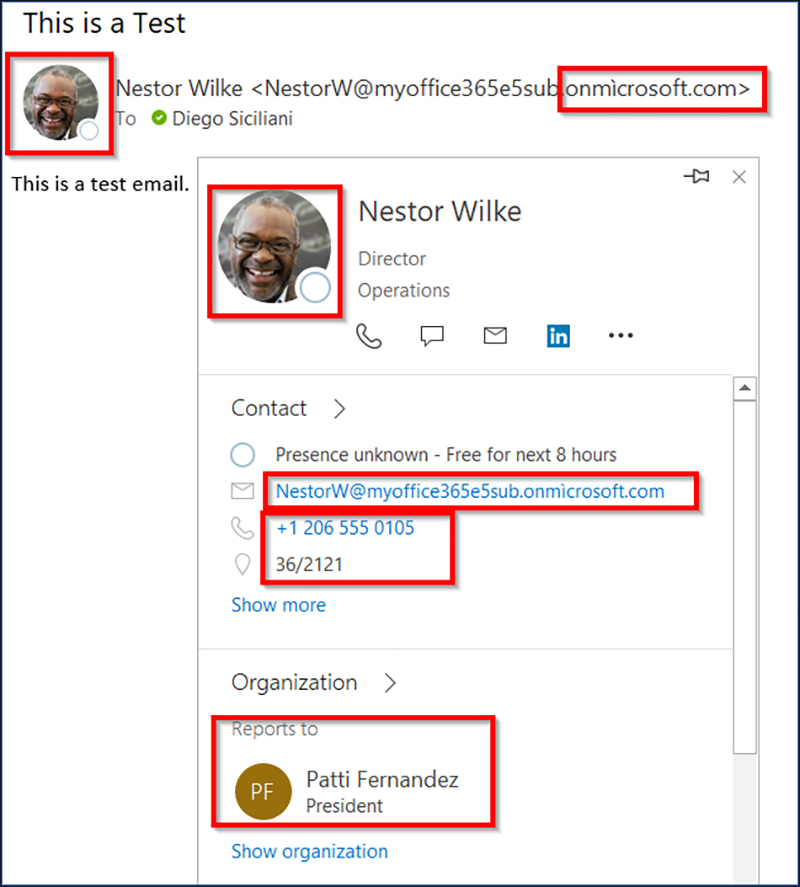
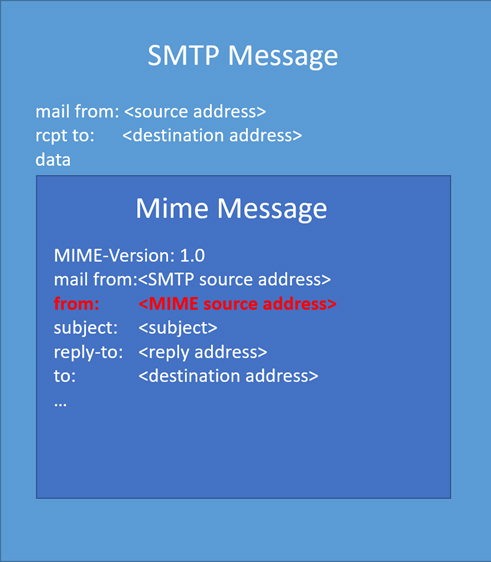
The reason for this is that Outlook does not properly validate the Multipurpose Internet Mail Extensions (MIME) header. When you send a message, you can specify the SMTP sender address and the sender’s MIME, because MIME is wrapped in the SMTP protocol. But according to Manzotti, Microsoft Office Outlook 365 fails to properly validate internationalized domain names, allowing attackers to impersonate any valid contact in the target organization.
Researchers discovered that this vulnerability affects both 32-bit and 64-bit versions of Windows 365. However, after notifying Microsoft, Microsoft responded to Manzotti that it would not fix this vulnerability in the current version. In fact, Microsoft has already started to fix it early. Starting from Outlook 16.0.14228.20216, this vulnerability will no longer exist. It is recommended that everyone update Outlook to the latest version and be vigilant against such phishing scams.
◎Data source:ArsTechnica
Source: KOCPC Chinese