


The rise of virtual currencies in the past few years has made the act of “mining” the only way to get rich in the eyes of many people in the short term. Since you want to make a fortune, you must invest in tools to make a fortune. Thanks to the efforts of these people, the graphics card market has reached an unprecedented period. People who want to play games cannot buy new cards because the new cards have been swept away by miners on a large scale. However, Gigabyte recently launched a very interesting “card” under the Aodrus brand. This card looks long and rectangular, and has a blower fan to dissipate heat. At first glance, I thought it was a graphics card. However, a closer look reveals that the situation is not simple. This “card” doesn’t actually have any video terminals, and even if you peel off the heatsink, you won’t see the GPU and GDDR memory. Because this is not a graphics card, but a solid-state drive with a PCI-E interface. The reason for its appearance is purely because this card can be equipped with 8 NVMe SSDs. Each NVMe SSD can be cooled through the heat sink on it after the card is installed. As for how players use it, I don’t need to go into details:
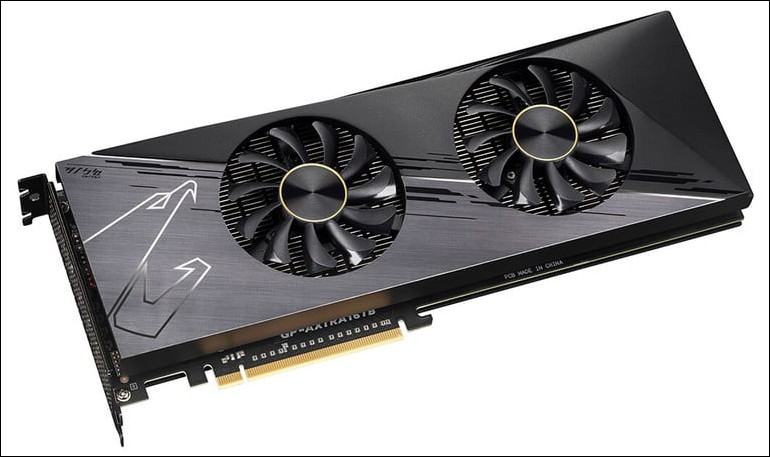
▲Aorus’ new SSD has a very similar appearance to a graphics card (Image source)
Gigabyte Aorus recently launched a new SSD. This solid-state drive has a PCI-E interface and a dual fan and heat sink that are as long as the graphics card radiator. But in fact, it only has an SSD underneath and nothing else. The actual name of this card is Aorus Xtreme Gen 4 SSD. It can have 32TB of storage space and an ultra-high transfer speed of 28 GB/s, which can almost reach the maximum bandwidth of the PCI-E 4.0 interface (32 GB/s). In other words, this is an SSD add-on card that combines high speed, high capacity and high expandability. It still needs to be installed with an SSD to be able to show its strength.
The Xtreme Gen 4 SSD can accommodate a total of eight 4TB NVMe SSDs, thus providing a capacity of 32TB. The SSD is configured via a RAID 0 array, thus achieving extremely high transfer speeds. It’s even nearly four times faster than the current Gigabyte’s own Aorus Gen4 7000s SSD. However, since it can run so fast, it means that the heat generated by these SSDs must be terrifying. Normally, one high-speed SSD can make players worry about heat dissipation for a long time. When 8 high-speed SSDs are installed at a time, a powerful heat sink is naturally required. Because of this, it’s not surprising that this PCI-E add-on card has a heat sink dedicated to BMI’s high-end graphics cards:
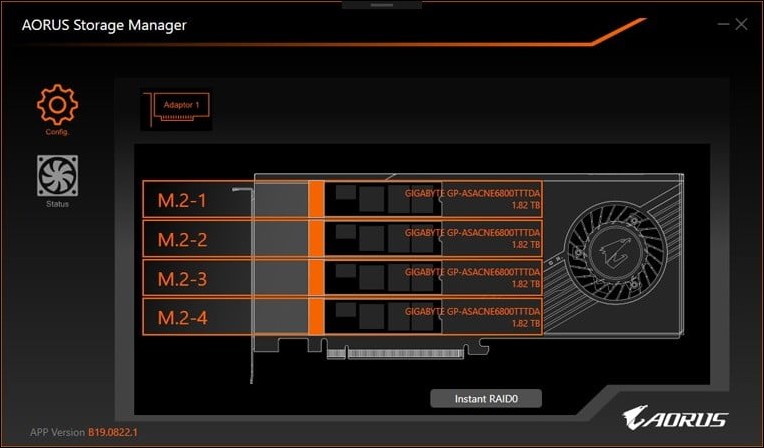
▲Eight SSDs can be installed in one card, so heat dissipation must be paid attention to (Image source)
Since it has Gen 4 in the name. Naturally, one would think that this solid-state hard drive card must be inserted into a PCI-E 4.0 slot in order for this performance beast in the storage industry to run as fast as it should. When consumers are considering this type of product, they must also remember to get a PCI-E 4.0 platform so that it can truly demonstrate its strength. Even the matching CPU must be carefully considered. For example, the Ryzen 5000 series processors are currently equipped with only 24 PCI-E lanes. Considering that there are other devices in the system that need to be utilized, the number of lanes is somewhat limited. If paired with a Threadripper processor, it can be used to its full potential on a platform with 128 PCI-E lanes (or even more):
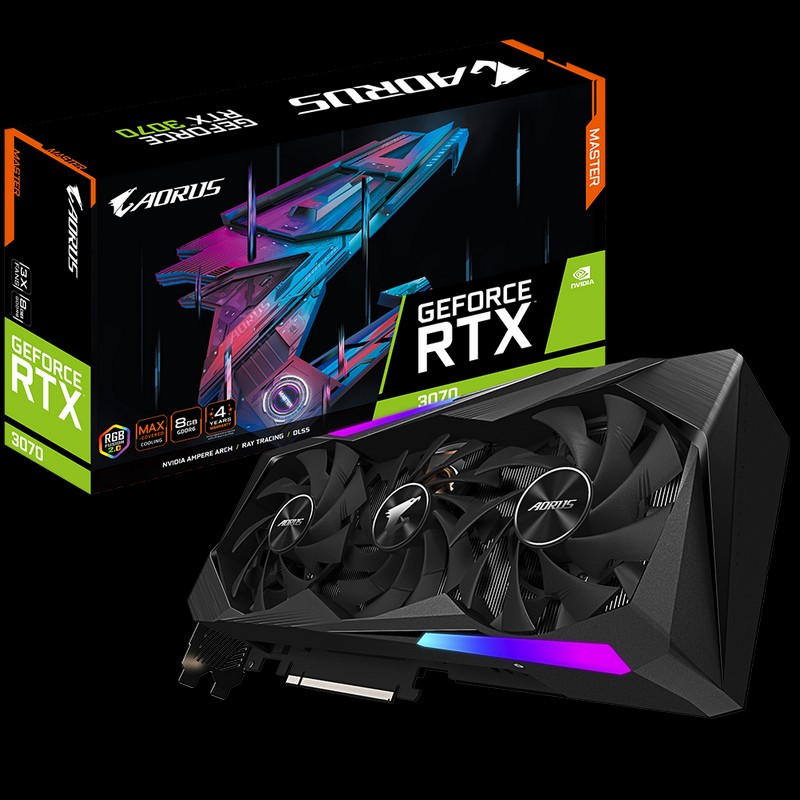
▲This is the graphics card of the control group. Does it have at least eight images in appearance? (Image source)
Although this card looks impressive, it is a rare product for customers who want to delve into the field of high-end computing. However, Gigabyte officials have not officially announced the price of this card. It is currently speculated that this card may be priced in the thousands of dollars, but the details are still to be officially announced. In addition, although this Aorus Xtreme Gen4 SSD can also support the PCI-E 3.0 platform, considering that the bandwidth can no longer meet the throughput of this card, such a combination may not be a good choice.
Source: KOCPC Chinese