


In late June, Taiwan was once again hit by typhoons and Meiyu fronts, enduring waves of heavy rainfall. Although Typhoon No. 7 Mikra did not make landfall directly, its peripheral circulation interacted with the stagnant front, bringing widespread heavy rainfall to Taiwan. The Pingtung region was the first to bear the brunt. In just 11 hours, 11 measuring stations had accumulated rainfall exceeding 400 millimeters, with some measuring stations even approaching 500 millimeters, surpassing local historical records. Taipei City’s Neihu District was not spared either. Water accumulated on Wende Road to calf height in a short period of time. Motorcyclists were unable to ride, bus passengers were forced to change routes, and breakfast shops were forced to close due to power leaks. The losses are difficult to estimate.
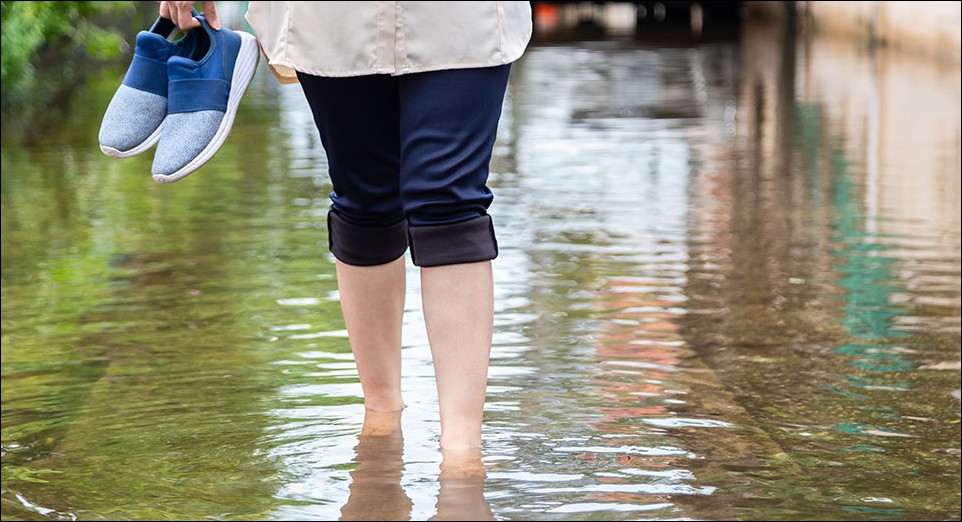
This wave of rainfall events has once again revealed Taiwan’s vulnerability to extreme climate shocks. The drainage system in urban areas quickly became stressed under the test of short-term high-intensity rainfall, and water accumulated in low-lying areas faster than residents could react. In the southern region, due to the continuous intensity of rainfall, water accumulation in some areas has not subsided, and residents’ lives have been seriously affected. The Meteorological Administration launched “large-scale or severe heavy rain operations,” and the Taipei City Disaster Response Center was immediately upgraded to an enhanced level three. Governments across the country mobilized emergency response, and cleaning crews devoted themselves to the aftermath.
However, there are limits to the adaptability of government units. When the floods recede, what remains in every home, every store, and every street is a post-disaster scene that is difficult to deal with on your own in a short period of time. Yellow mud stains seep into the gaps in the floor, clear water lines are left on the walls, furniture and electrical appliances emit a damp odor that is difficult to eliminate after being soaked in water, and mold grows in the kitchen and bathroom after being soaked in water, which is a hidden health hazard that is difficult to detect with the naked eye but has far-reaching consequences. For many affected families, the moment the floodwaters recede is not the end of their suffering, but the beginning of another long cleanup.
It is difficult to clean up after the floods have receded. The affected households have to work and go to school. The losses of businesses that have been closed continue to increase.
After the floods receded, what faced the affected residents was a physical battle with no end. Stagnant water brings not only water, but also sediment, dirt and various unknown impurities mixed in it. After the water recedes, these things will adhere tightly to the floor, corners, the bottom of furniture and various gaps. It is difficult to completely remove them with mops and rags alone.
For the average family, the issue is time. After flooding, life does not automatically pause. Children still have to go to school, office workers still need to clock in the next day, and not every disaster-stricken family can take time off to focus on dealing with the aftermath. Going out to work during the day and coming home at night to face mud stains, soaked floors and smelly corners can last for several days or even longer. Even if you have plenty of time, cleaning the sludge that has seeped into the gaps between the tiles and the water stains that adhere to the wall with bare hands is an extremely labor-intensive task, and residues may still be left after cleaning.
The difficulties faced by businesses are equally severe, or even more pressing. Once the store is flooded, the kitchen equipment, refrigeration and refrigerators, cash registers, and products on the shelves will not be spared. After the water recedes, the mixture of mud and sewage remaining on the floor, coupled with food residues and various debris, makes cleaning far more complicated than generally imagined. For a store, every extra day it can’t operate is a physical loss. However, it is impossible to restore the store to normal operations before the cleaning work is completed.
In addition to cleaning, disinfection is also required. Blind spots in post-disaster cleaning may become gaps in community health
“The amount of post-disaster cleaning work far exceeds the general public’s expectations.” Rieter Cleaning (please put the link in front of the noun: https://www.all.org.tw/) team said. A large amount of sludge remains on the floors and walls after the water has receded. Unidentified dirt accumulates at the bottom of the furniture and in the gaps between the floors. Kitchens and bathrooms emit odors that are difficult to eliminate due to long-term soaking. These tasks are only handled by family members with their bare hands, which not only consumes a lot of physical strength and time, but also makes it difficult for the cleaning effect to meet true safety standards.
What needs to be more vigilant is that if post-disaster cleaning is not done properly, the hidden health risks are far more serious than surface stains. Medical experts pointed out that a large number of pathogens are mixed in the stagnant water and sludge after the typhoon, which may lead to a total of 11 diseases in three categories, covering pollution infections, mosquito breeding, and contact infections. Among them, melioidosis, cholera, dengue fever, and tetanus can be life-threatening in severe cases and should not be ignored.
Many people only deal with the dirt visible to the naked eye when cleaning, and easily ignore the key link of disinfection. Even if the floors, walls and kitchen countertops soaked in sewage appear to be clean and tidy, a large number of bacteria and viruses may still remain. If moisture remains in hidden areas such as the inner layers of walls and floor gaps, mold will quickly grow in Taiwan’s hot and humid summer environment. It will also provide a breeding ground for vector mosquitoes, further increasing the risk of the spread of infectious diseases such as dengue fever.
Because of this, the integrity of post-disaster cleaning (please put the link in front of the noun: https://www.nuri.org.tw/special-cleaning.html) is directly related to the community’s epidemic prevention safety. It is by no means something that can be solved with just a mop and a few buckets of water. Entrusting a cleaning team with professional equipment and disinfection capabilities to intervene is not only a time-saving and labor-saving option, but also the most direct way to protect the health of yourself and your family in a high-risk post-disaster environment.
Every second counts during post-disaster recovery. Leave it to the professional cleaning team to get life back on track as soon as possible.
No one wants a typhoon to come, and no one wants their home to be in a mess and businesses to be forced to close for several days. However, the frequency of extreme weather is changing. During the typhoon season, flooding disasters are no longer uncommon news in various parts of Taiwan. The victims range from families to businesses, from old apartments to newly built communities, from urban low-lying areas to rural settlements. No area can be guaranteed to be completely spared.
Faced with this reality, the ability to cope afterwards is as important as the preparation beforehand. When a disaster has already occurred, how to complete safe and effective cleaning and disinfection in the shortest time directly determines whether the affected families can return to normal life as soon as possible and whether they can effectively block the risk of further spread of pathogens in the community. For disaster-stricken households who do not have time, do not have enough manpower, or whose houses are severely damaged, seeking the assistance of a cleaning team with professional disinfection capabilities is currently the most effective way to shorten the post-disaster recovery time.
“Our responsibility is to help customers return to normal life as soon as possible.” Rieter Cleaning (please put the link in front of the noun: https://www.neer.org.tw/) team said that the number of post-disaster cleaning commissions it received after the typhoon increased significantly. The types of commissions include floor sludge removal, wall water stain treatment, furniture and equipment cleaning, and even room disinfection after sewage soaking. The severity of the disaster varies. Although the housing situation in each case is different, the client still has only one expectation, and that is to return to normal life as soon as possible. It is this urgency that allows Rieter’s cleaning team to respond to everyone in need of help as quickly as possible and with the most accurate cleaning standards in every post-disaster commission.
Source: KOCPC Chinese