


Scams are evolving rapidly, from fake customer service calls to SIM card theft, with criminal groups continuously exploiting vulnerabilities in telecommunications infrastructure to conduct cross-border fraud. To plug this gap at the source, Taiwan Certificate Authority (TWCA) today (1st) joined forces with three major telecom operators—Chunghwa Telecom, Taiwan Mobile, and Far EasTone—as well as financial institutions including First Bank, E.Sun Bank, and Taiwan SME Bank, to jointly announce the official launch of the new-generation “MID Plus (MID+)” mobile identity authentication service, adopting the Open Gateway standards established by the international GSMA (Global System for Mobile Communications Association), and building a more robust digital fraud prevention mechanism through cross-industry data integration between telecom and financial sectors.
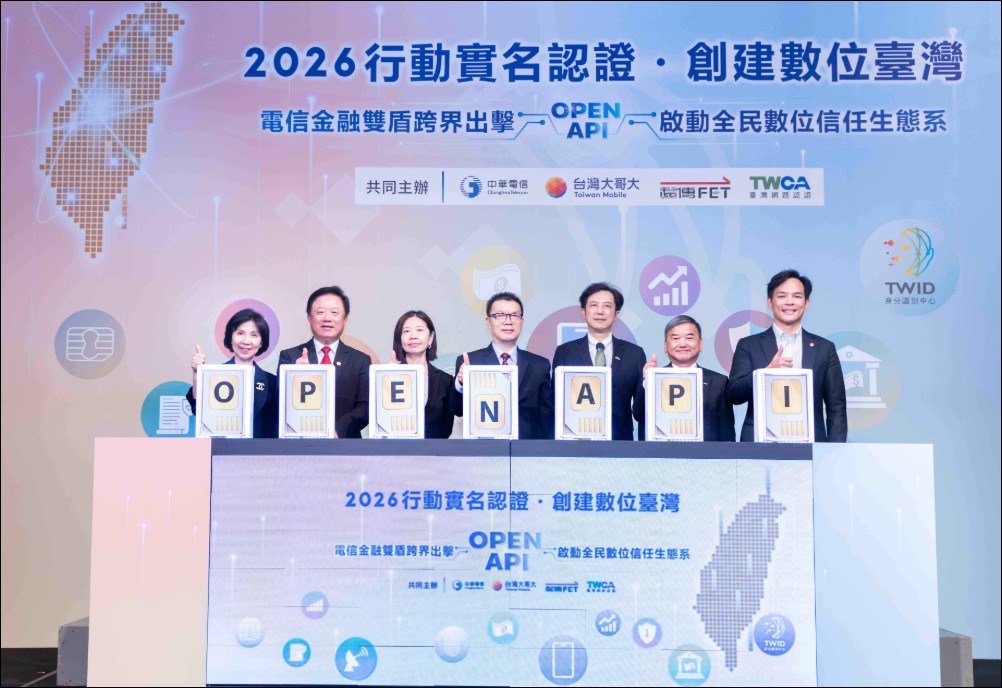
The strategic partnership launch event was hosted by TWCA, with FarEasTone Telecommunications General Manager Jing Qi attending the ceremony. Under the witness of three cross-ministry officials—NCC Chairman Chen Chong-shu, FSC Deputy Chairman Chen Yan-liang, and Deputy Minister Yang Jialing of the Ministry of Digital Affairs—Taiwan’s telecom industry officially aligned with international anti-fraud standards.
Four Core APIs: How Telecom Data Becomes a Financial Fraud Prevention Tool
This implementation of the GSMA Open Gateway standard sees three major telecom operators each launching four APIs, enabling financial institutions to perform real-time risk assessments based on actual transaction scenarios.
- Number VerificationVerify the mobile phone holder’s identity at the time of transaction to confirm user authenticity at the source
- SIM Swap DetectionCheck whether this phone number has recently had a SIM card replaced. If abnormal SIM swap records appear within a short period, this serves as a high-risk indicator and can be used to proactively block identity fraud.
- Device Roaming StatusMonitor whether the user’s phone is currently in overseas roaming mode, and detect abnormal transactions and cross-border fraud.
- User Data Verification (KYC Match)Compare user identity data on the telecom side to enhance protection for account opening and transaction verification scenarios
These four APIs establish defenses across three dimensions: identity verification, time anomaly detection, and geolocation verification. Using SIM Swap as an example, Chu-Chih Chang, CTO of E.Sun Bank, pointed out that when cardholders make large purchases or withdrawals overseas, the bank can instantly connect with telecom data to verify whether the phone number is actually in overseas roaming status, and precisely block foreign fraud.
Vice President Tsai Yu-cheng from the Digital Finance Division of Taiwan Business Bank cited the application of SIM Swap API in e-payment account binding and large-value transfers as an example, explaining that if financial institutions can directly query a phone number’s SIM swap records within the past 100 days, they can conduct anomaly assessments for high-risk operations, establishing a comprehensive online and offline protection network to prevent mule accounts and identity fraud in account opening.
Unify interface standards to reduce industry integration costs
Previously, each telecom operator maintained its own API standards, so financial institutions wanting to connect to anti-fraud services from different providers had to integrate with each one individually, making integration costs prohibitively expensive. The key breakthrough of MID Plus is that the three major telecom providers jointly offer a unified integration standard, allowing financial institutions to access all three telecom services through TWID, a platform under TWCA.
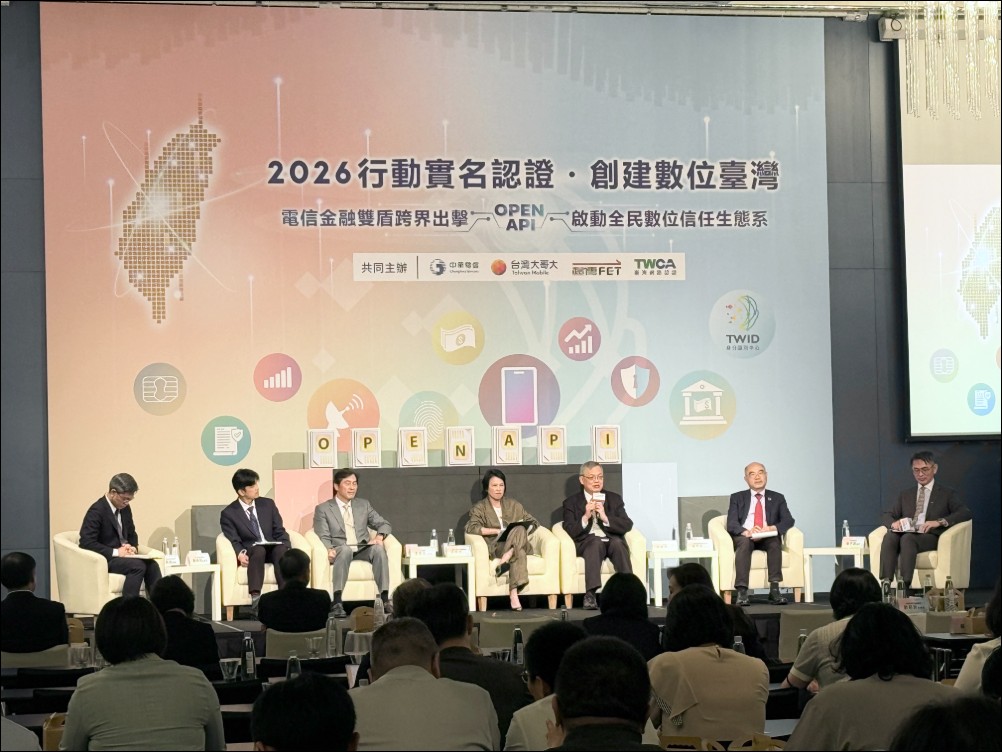
Dai Shao-qi, Deputy Director of the Digital Banking Division at First Bank, pointed out that banks have faced the problem of “difficulties in data verification” when combating fraud. For example, IP addresses are prone to change, making it difficult to use as a reliable basis for identity determination. In the future, through Open Gateway API standardizing service definitions across different telecom operators, combined with easy integration via TWID, can significantly reduce integration costs.
Financial institutions also recognize that MID Plus adopts the Open Gateway API industry standard, and that standardized data structures help the financial sector implement AI model training, improving the accuracy of fraud prevention models.
Far EasTone: Stopping Threats at the Source with a Proprietary AI Model
FarEasTone’s General Manager Jing Ci pointed out in her speech that while telecom operators are improving network speeds and expanding capacity, they must also prioritize security while ensuring a good user experience, fully helping users protect against hacking and viruses. She compared scam groups to thieves riding the telecom industry’s “internet bus” to commit fraud, with the ultimate target being the banks where people store their wealth. Therefore, although the three telecom operators are usually competitors, their cooperation in anti-fraud efforts is very smooth and enjoyable.

In an industry dialogue, FarEasTone CISO Chu Chien-kuo shared that telecom identity verification services are an important measure to prevent fraud at the source, effectively reducing the opportunity for criminal organizations to obtain illegal phone numbers. The dual blocking mechanism of phone number verification and user data verification can simultaneously improve fraud prevention effectiveness and user experience.
Besides the four major APIs, Far EasTone has partnered with Bank Sinopac since April this year, using a proprietary AI model to establish user risk coefficients and prediction mechanisms, effectively helping identify high-risk users. Far EasTone’s “Fraud Prevention Intelligence” system blocks over 200,000 scam calls and 300,000 scam messages monthly, stopping fraudulent messages at the very first line of defense from the telecom side.
The Three Major Telecom Giants Showcase Their Strengths; Chunghwa Telecom Already Earns 11 Certifications
Regarding the international expansion of Open Gateway, the three telecom operators have made varying progress. Chunghwa Telecom Chairman Chien Chih-cheng noted that since joining the GSMA Open Gateway initiative in June 2024, Chunghwa Telecom has successively obtained 11 permanent Open Gateway API certifications officially issued by GSMA. These certifications cover three major areas: fraud identity verification, location status verification, and foot traffic data analysis, making it the telecom operator in Taiwan with the most certifications to date.
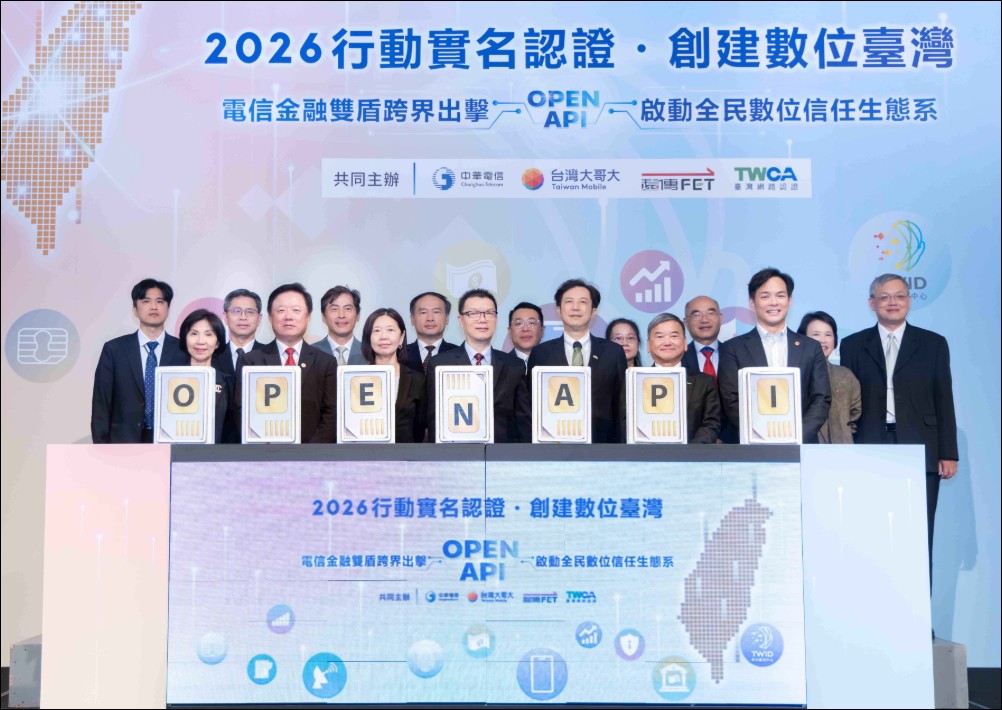
Taiwan Mobile General Manager Lin Zhi-chen stated that Taiwan Mobile is the first telecom operator in Taiwan to receive the GSMA Open API Stable permanent certification, and as the sole member of Bridge Alliance in Taiwan, it continues to advance international standardization. He pointed out that for AI Agents, digital finance, and cross-border transactions to truly become widespread, the key lies in real-time identity verification, transaction authorization, and risk assessment being completed behind the services. Real-time network signals such as SIM card anomalies and device roaming are precisely the advantages that telecom operators naturally accumulate while serving tens of millions of users.
International Integration: UK, France, and Brazil Already Have Success Stories
Mobile identity verification services are not a first for Taiwan. Chu Chien-kuo points out that the UK, France, Brazil and other regions have already successfully implemented mobile identity verification services, effectively reducing telecom fraud cases. Taiwan’s adoption of the GSMA Open Gateway standard this time is precisely to align with international practices, ensuring that anti-fraud mechanisms don’t have gaps due to borders.
Additionally, given that scam activities exhibit cross-border and cross-domain characteristics, the anti-fraud API will subsequently be made available for collaboration with international financial institutions, creating a borderless, real-time cross-border security protection mechanism. Taiwan Fixed Network’s General Manager Guo Zhaohong also stated that under the MID+ cooperation framework, the company will continue to collaborate with telecommunications and financial industries on joint prevention efforts to strengthen prevention mechanisms.
The Next Step in the Digital Trust Ecosystem
The launch of MID Plus marks Taiwan’s official transition from static verification to dynamic detection in digital identity defense. Previously, identity verification services provided by the telecom industry could only confirm “who this person is.” Now, through APIs such as SIM Swap and Device Roaming Status, financial institutions can further assess “whether this person’s current behavior is anomalous,” strengthening risk control across both temporal and spatial dimensions.
Jing Ci emphasized that digital technology brings convenience to life, while also carrying the risks associated with the borderless nature of the digital world. Far EasTone is honored and duty-bound to participate in this collaboration, hoping to fulfill the mission for consumers: “Connecting our world, making it more convenient, safer, warmer, and more sustainable.”
As the three major telecom operators join forces and financial institutions progressively connect, this telecom data-based anti-fraud framework is expected to gradually expand to more digital industry sectors, building a stronger defense line for Taiwan’s digital trust ecosystem.
Source: KOCPC Chinese