


Has anyone ever thought about, at the end of last year, Google The most popular image generation model that has sparked various viral reactions worldwideGemini 2.5 Flash Image“Why is it called”Nano Banana」(nano banana)? This model in August of last year not only LMArenaIt claimed a landslide victory on the Large Model Arena, sparking countless meme trends across social media. This week (January 15, 2026), Google’s official blog finally revealed the secret behind this peculiar name—it wasn’t a carefully planned codename, but a “happy accident” that came from a spontaneous brainstorm at 2:30 AM.
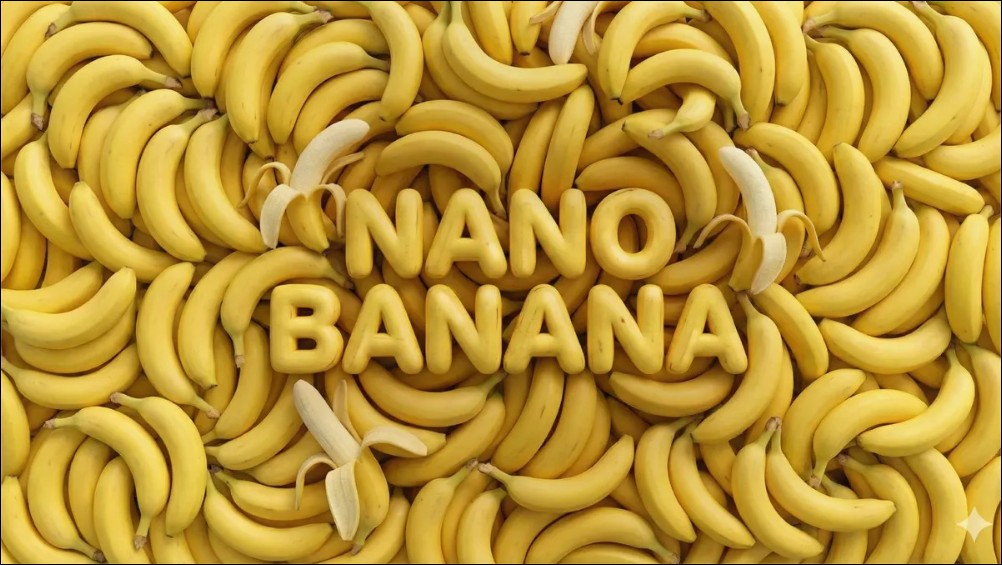
Why is Google’s strongest AI image generation called “Nano Banana”?
The story takes us back to late July 2025. At the time, the engineering team at Google DeepMind was in a state of high alert, preparing to launch a brand-new image generation model codenamed “Gemini 2.5 Flash Image”. This model was highly anticipated, and the team was busy fixing the final bugs and conducting internal evaluations.
But before the official release, the team is about to take the final crucial step: submitting the model to LMArena Conduct a blind test.
Here, some background knowledge must first be provided for the reader: LMArena is a highly credible public evaluation platform in the AI research community. It employs a “blind test” mechanism, where users input prompts and receive responses generated by two anonymous models, then vote for the better one. The true identities of the models are only revealed after voting concludes. This mechanism effectively eliminates the influence of brand bias, reflecting the most authentic capabilities of each model. Since the model had not yet been officially released, Google could not use the official name “Gemini,” and they urgently needed an anonymous “codename.”
Google DeepMind’s product manager Naina Raisinghani recalled: “We kept putting off the codename discussion until the very last minute.”
At around 2:30 in the morning, a project manager (PM) sent an urgent message: “We need to submit the model right now—give us a name!” Under the double assault of drowsiness and pressure, Naina fired back with a suggestion: “Well, how about something funny? Like ‘Nano Banana’?”
The other party’s response was: “Okay, no problem. This name is completely nonsensical.”
Why is it called “Nano Banana”?
Why “Nano Banana”? This seemingly random name actually comes from Naina’s personal nickname.
Naina explained that her friends have two different ways of calling her in private:
-
Naina BananaA rhyme taken from her name
-
NanoBecause of her petite frame and her passion for computer technology (Nano also means nanometer and tiny), her friends playfully call her Nano.
“So I just mashed these two nicknames together,” Naina said, “and it happens to be fitting, because it’s a Flash model.”
In the tech industry, “Flash” typically denotes a model version that is fast, low-latency, and highly efficient. Combining “Nano,” which represents something tiny, with “Banana,” which already carries a silly vibe, seemed like a “completely nonsensical” decision at the time—but it unexpectedly nailed the core characteristics of this model: affordable, fast, and full of energy. And so, a model codename that would shake up the AI world in the months to come was born in the fatigue and banter of an early morning.
The “Banana” Storm Sparked by LMArena
In early August 2025, a model codenamed “Nano Banana” officially debuted on LMArena. What happened next exceeded everyone’s expectations at Google. Users were amazed to discover that this image generation model with the quirky name displayed astonishing image editing capabilities. Compared to other models on the market at the time, Nano Banana performed exceptionally well in “maintaining likeness” and “multi-image fusion editing.” It could precisely understand complex instructions and make delicate modifications without disrupting the original image structure. We were among the first toreportand also shows everyone how to experience it first.
With praise pouring in, social media started buzzing. Discussions like “Who’s behind Nano Banana?” and “This banana model is crazy powerful!” flooded X (formerly Twitter) and tech forums everywhere. Naina pointed out: “The public reaction was fantastic. They were first blown away by the powerful features, then discovered the hilarious name, which sparked even more discussions.” When the tech world widely speculated that “Nano Banana” might come from Google’s secret model, the team also posted on X, hinting that Google was behind it all.
https://t.co/9Qtne8CWwI pic.twitter.com/ejPA82QCcT
— Naina Raisinghani (@nainar92) August 19, 2025
When Google finally admitted “Yes, that was us” on X, they made an extremely wise decision:Won’t change nameWhile the official technical name for the model remains the serious-sounding “Gemini 2.5 Flash Image,” Google has decided to fully embrace the “Nano Banana” brand.
This decision was quickly reflected in the product interface:
-
AI StudioIn Google’s developer tools, the model’s run button has been changed to bright yellow.
-
Gemini AppNext to the “Create Image” option, they even added a banana emoji (🍌).
-
MerchandiseGoogle even made limited-edition banana-themed merchandise.
This “going with the flow” strategy proved extremely successful. Naina said: “We decided to embrace this silliness. Since everyone finds it fun, we might as well go with it.” When the model launched last year, the team actually shared related explanations on X:
“People came for the name, but stayed for the model.”
There’s a reason the internet is going bananas over Nano Banana!
I spoke to @nainar92 and @phillip_lippe at Google DeepMind to understand why the model is taking over the internet.
What they told me:
• Why Nano Banana… pic.twitter.com/KsuH8FXwgd
— Zain Kahn (@heykahn) September 25, 2025
Of course, a name alone can’t retain users. The real reason “Nano Banana” succeeded comes down to the victory of technical prowess. According to official information, the model addresses one of the biggest pain points in generative AI:ControllabilityIn the past, AI image generation was often like “gambling” — users struggled to precisely control the output. However, Nano Banana allows users to perform highly precise iterative editing through text, images, or a combination of both.
Such capabilities have sparked waves of cultural creation around the globe.
-
ThailandA ‘figurine trend’ has emerged, where users use models to transform photos of people into realistic 3D toy figurine styles.
-
IndiaA “Saree trend” has emerged, demonstrating the model’s powerful capabilities in handling complex fabric textures.
These user-generated content (UGC) creations are more persuasive than any official advertising. Naina believes that the model’s simultaneous global launch from day one, available to both developers and general consumers regardless of country, is also a key reason for its rapid popularity.
From Nano to Pro: The Legend Continues
As technology has evolved, Google has now launched an image model based on the latest Gemini 3 architecture. This time, they didn’t hesitate at all and directly named it 「Nano Banana Pro」(Gemini 3 Pro Image)。
Looking back at the birth of “Nano Banana,” if that PM hadn’t sent the message at 2:30 AM, or if Naina had chosen a safe codename like “Project Alpha,” this model might still have earned praise for its technical prowess, but it would never have achieved the kind of cross-border cultural impact that resonates globally. Google’s success this time offers all tech companies a lesson: while pursuing the extremes of “artificial intelligence,” never forget that “people” are the ultimate users of technology. Sometimes, the charm of a banana can far outweigh endless pages of technical specifications. With the launch of Nano Banana Pro, we look forward to seeing what other surprises this “nano banana” will bring to the AI world.
Source: KOCPC Chinese