


Although the ability to install extensions on browsers is nothing new, users are also happy to obtain extensions from third parties that make their browsers more functional and practical, such as picture-in-picture, VPN, etc. From another perspective, extension plug-ins seem to be an invisible window for unscrupulous people to spy on users’ online behavior. In addition to Chrome and Firefox, which have experienced malicious disasters from time to time in the past, Edge has also become one of the victims.

Fraudulent extensions begin to invade Edge browser
The Edge browser with Chromium as the core is the focus of Microsoft’s recent promotion. Compared with the past IE and the old version of Edge, it does have features that keep pace with the times, and has more functions that are popular with users. The ability to install extension plug-ins gives users the freedom of customizing the browser. However, there has been a long-term plug-in problem on Chrome and Firefox.
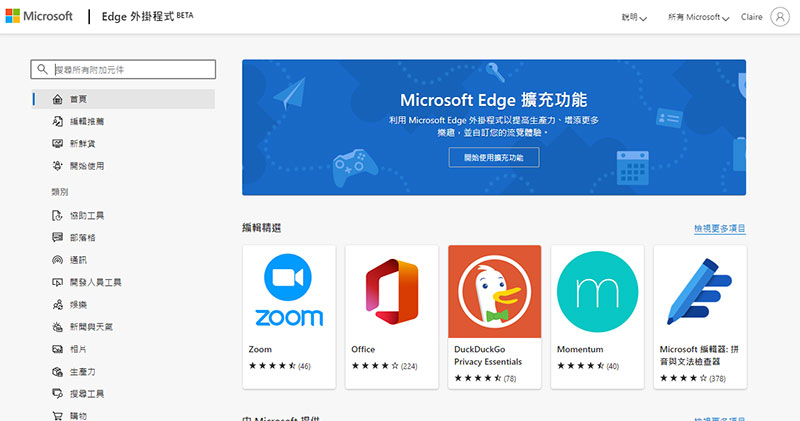
Although the Edge browser’s extension plug-in store currently does not have as many items as Chrome, unscrupulous people have begun to list some plug-ins disguised as NordVPN, TunnelBear VPN, Adguard VPN, The Great Suspender, Floating Player — Picture-in-Picture Mode and other well-known services, thereby redirecting users to other websites. although Report by Ars TechnicaIt did not mention whether any privacy violations occurred, but this issue cannot be underestimated. One of the biggest problems with browser extensions is its extremely lax or almost non-existent review mechanism, which is even worse than the Google Play Store. Browser companies have been working hard to control extensions, but because anyone can apply to Chrome or Edge for listing plugins, some are cunningly listed under names similar to products of well-known companies and developers, confusing users.
Image source: Ars Technica
Due to Microsoft’s active promotion (even forced winning of prizes), the number of users of the new Edge browser continues to increase, which means that more users are potential victims. Although these fake extensions have been officially removed from the store immediately, there will definitely be waves of speculators coming back. In addition to relying on browser manufacturers to solve the problem by deleting them after receiving notifications, users must clearly identify them before installing them to ensure that their privacy is safe.
◎Data source: Ars Technica
Source: KOCPC Chinese