


Apple’s latest updates to MacBook Air/Pro and Mac mini products use its own M1 processor as the core. To put it another way, it is actually an official launch event for a new processor. The new Macbook and Mac Mini computers are simply supporting roles to set off the powerful performance of the M1. At this stage, excluding Mac Pro and iMac, which are relatively higher-end professional computers, all consumer products are powered by Apple (Silicon). But the key point is, is the M1 really bragging and boasting about its performance, but it encounters various obstacles in actual use? The Geekbench website provides an explanation for this. Judging from the running scores, M1 is really powerful. At least the single-core performance can crush the “Xianbai” with its strength. There is no dispute:
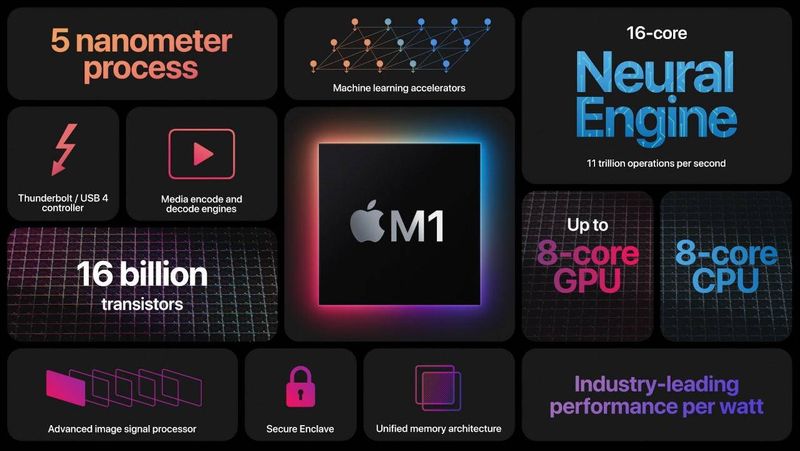
▲Since the official release of the Apple M1 chip, doubts about its performance and software execution performance have never stopped (Image source)
Apple has never been a company that exclusively launches computer products on a single series of processor architectures. Players familiar with the Mac product line in the past will know that the company has moved its products from PowerPC processors to Intel, and now it has just switched from Intel to the Apple Silicon series, which is actually an ARM processor. Although switching architectures is nothing new for Apple, the ARM platform challenged this time is a relatively unfamiliar system platform. Even though the processor itself is produced by Apple, there are always problems with its performance, software execution, and compatibility.
At the press conference, Apple executives tried their best to show everyone the high performance and software performance of Apple M1. But just by looking at official words, we may not be able to get a glimpse of what this new processor will look like. Fortunately, there is another software in the world called GeekBench, and many developers have recently shown you the processor performance of the Apple M1 chipset. In terms of scores, it’s actually not that low. If you cross-compare other generations of Mac computers, you may find that the performance of the Apple M1 is indeed promising:
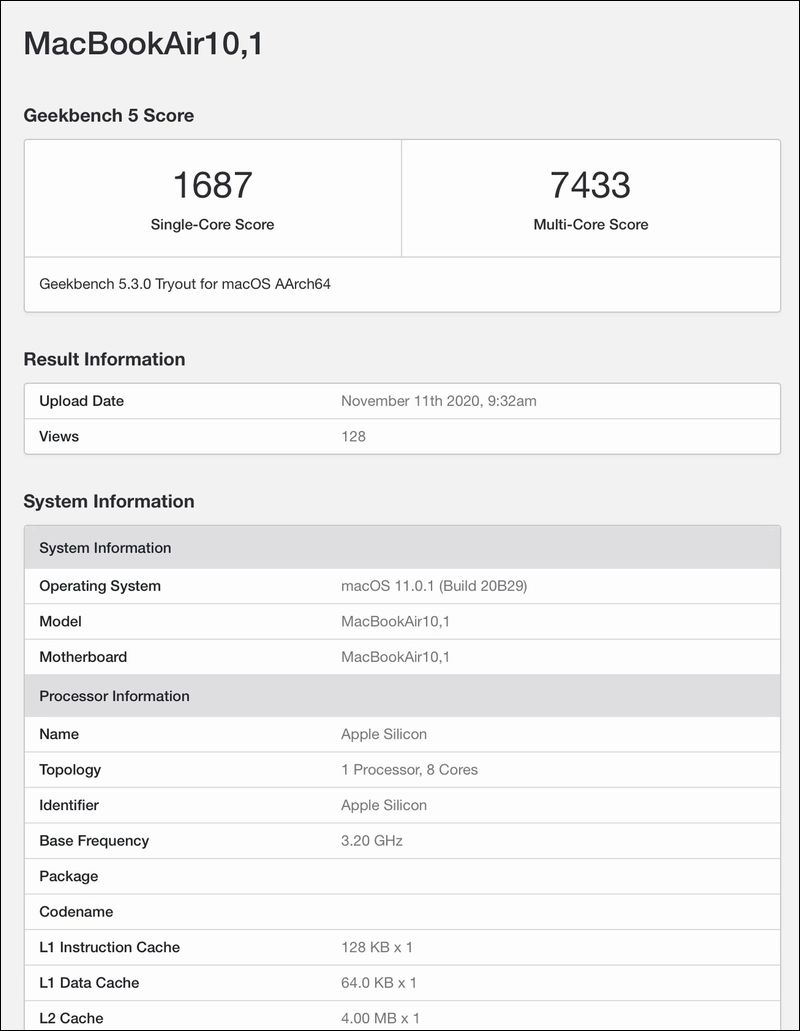
▲Although the currently exposed Apple M1 scores differ depending on the model (MacBook Pro/Air, Mac Mini), overall the score difference is not big and can reflect the real running score data (Image source)
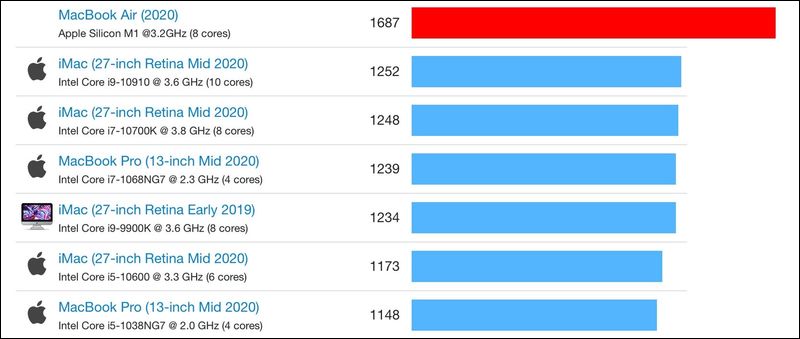
▲Single-core performance is the strength of the Apple M1 processor. Compared with other Macs, it can be seen that it is not lagging behind, or even ahead of others (Image source)
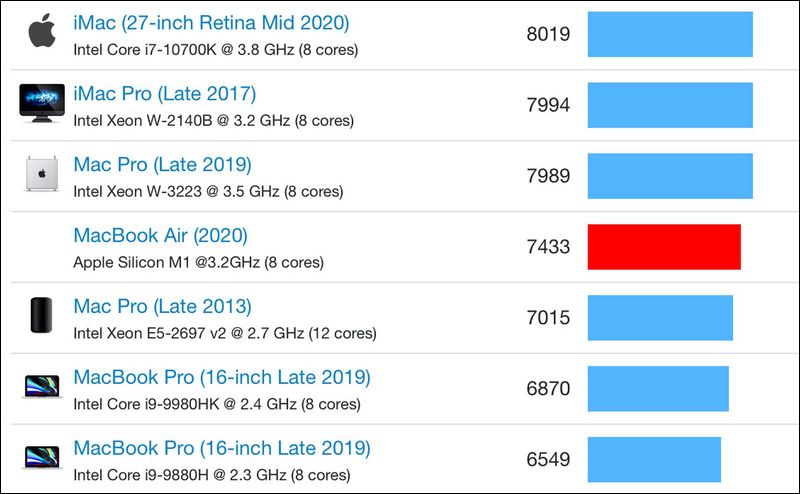
▲The multi-core performance is a bit unsatisfactory, but at least it is better than the old model. In practical applications, the only question left is whether the simulation efficiency of the software is really good enough (Image source)
Although Apple has revealed few technical details on the M1 processor, Apple’s R&D strength and experience in A-series chipsets over the years have been fully utilized on the M1 processor. In terms of running scores, it even surpasses any previous generation of iOS devices. From this point of view, the performance is at least guaranteed. The only remaining problem is that the new platform has just been launched and third-party software can only rely on simulation software to execute. However, major software manufacturers will surely soon launch updated software to cope with the new architecture. What consumers may have to worry about is whether the integration of software and hardware during this period is satisfactory.
However, Apple M1 still has many shortcomings that bother everyone. First of all, the biggest problem is the lack of eGPU support, which is the expansion of external graphics cards. For many professional users who need both performance and energy saving, external GPU solutions allow users to obtain more powerful computing performance within a better budget. It is especially helpful in areas such as film editing and game development. Once this part of the support is missing, it will be difficult to meet the needs of professional users. These problems must still be solved by Apple through next-generation chips and other external solutions. At this stage, M1 is a processor whose performance does meet general needs, and is still more than sufficient for non-professional applications.
Source: KOCPC Chinese