


OpenAI is officially introducing ads to the free version of ChatGPT, marking what appears to be the end of the era of ad-free AI chat experiences. Currently, the rollout begins in the United States. In addition to completely free accounts, users on the lower-tier Go subscription plan will also start seeing ads. In contrast, paid tiers like ChatGPT Plus, Pro, Business, Enterprise, and Education will remain ad-free.
The ad-free experience on ChatGPT’s free tier is ending
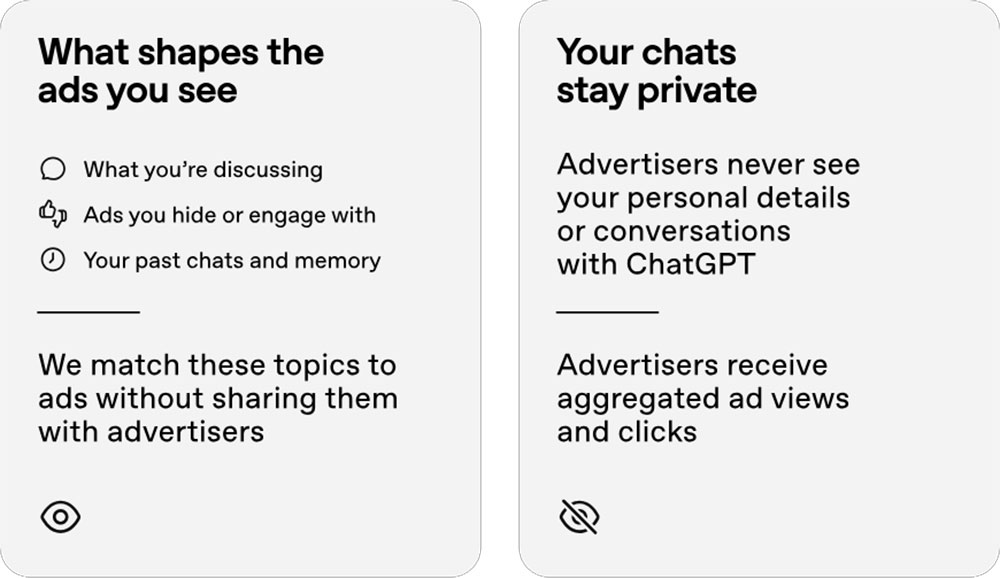
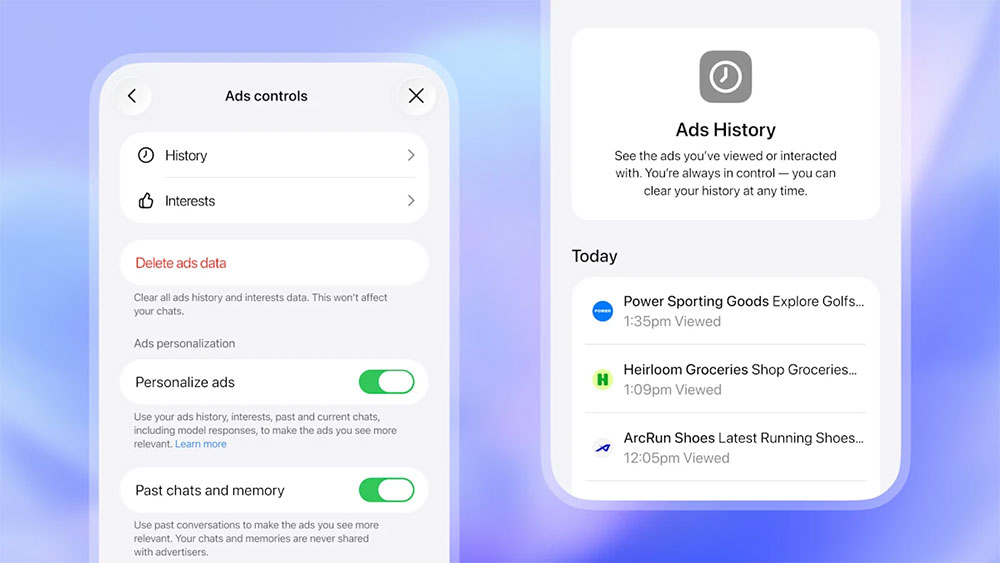
OpenAI emphasized in its announcementAdvertising will not affect the quality of the model’s responses, nor will it allow advertisers to access users’ conversations, records, or personal data. Advertisers can only obtain aggregate performance data, such as impressions and click-through rates. In other words, OpenAI is attempting to maintain users’ trust in privacy and model neutrality while introducing advertising.
From a business perspective, this move was actually foreseeable. The AI data centers that power services like ChatGPT and Sora come with extremely high costs. While OpenAI still has massive investment funding backing it, the long-term goal remains establishing a sustainable operating model for its services. Beyond enterprise solutions, API billing, and premium subscriptions, advertising is one of the most direct and mature revenue channels—and for an AI platform with hundreds of millions of users, it’s almost inevitable.

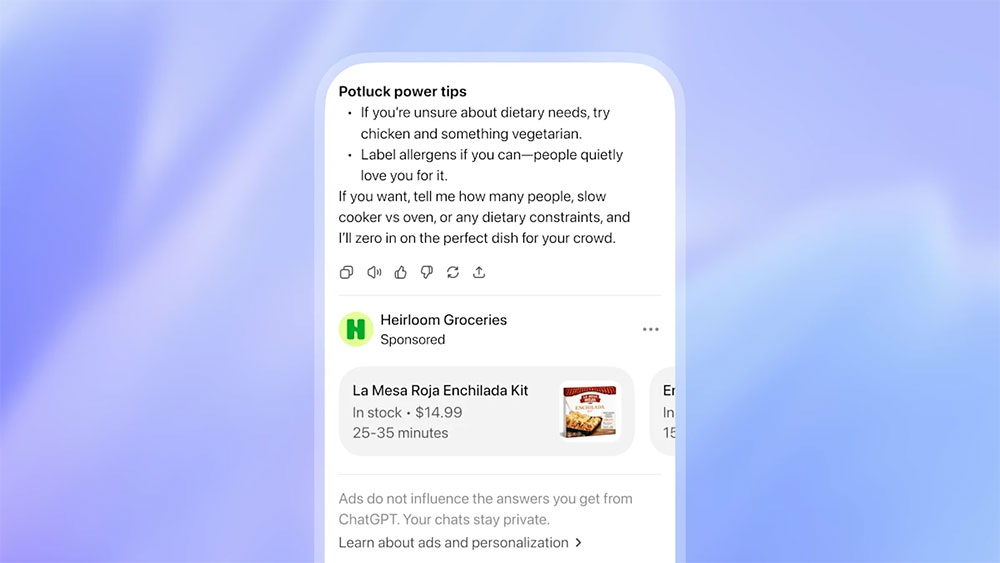
Notably, these ads don’t just appear in the interface sidebar but are embedded in the conversation flow based on usage context. For example, when a user asks “What should I bring for a party meal?”, ChatGPT will first give suggestions, then present ads from delivery platforms in another box clearly marked as “Sponsored.” At least for now, OpenAI says it won’t include subtle product placements in the model’s responses, with ads and content remaining separate.
However, these advertising revenues do not benefit the creators and publishers whose content was used to train the models. While OpenAI has secured licensing deals with a handful of media outlets (such as Axios and Future), the vast majority of content is still provided to model training for free. This also means that the revenue generated from advertising primarily flows back to OpenAI itself, rather than into the content ecosystem.
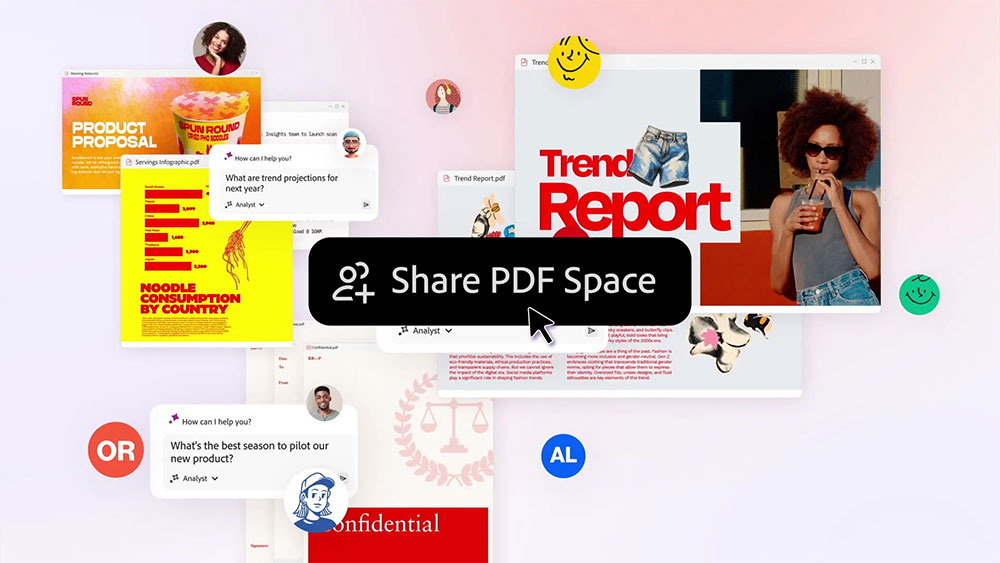
Many companies have also started sharing how they use ChatGPT ads to reach consumers.Adobe Planning to use Acrobat Studio and Firefly as initial deployment items;Target It will display relevant products when users ask “What countertop appliances can make cooking more convenient?” These cases show that brands have already viewed ChatGPT as a new search and recommendation portal, and it may even become the next important advertising platform.
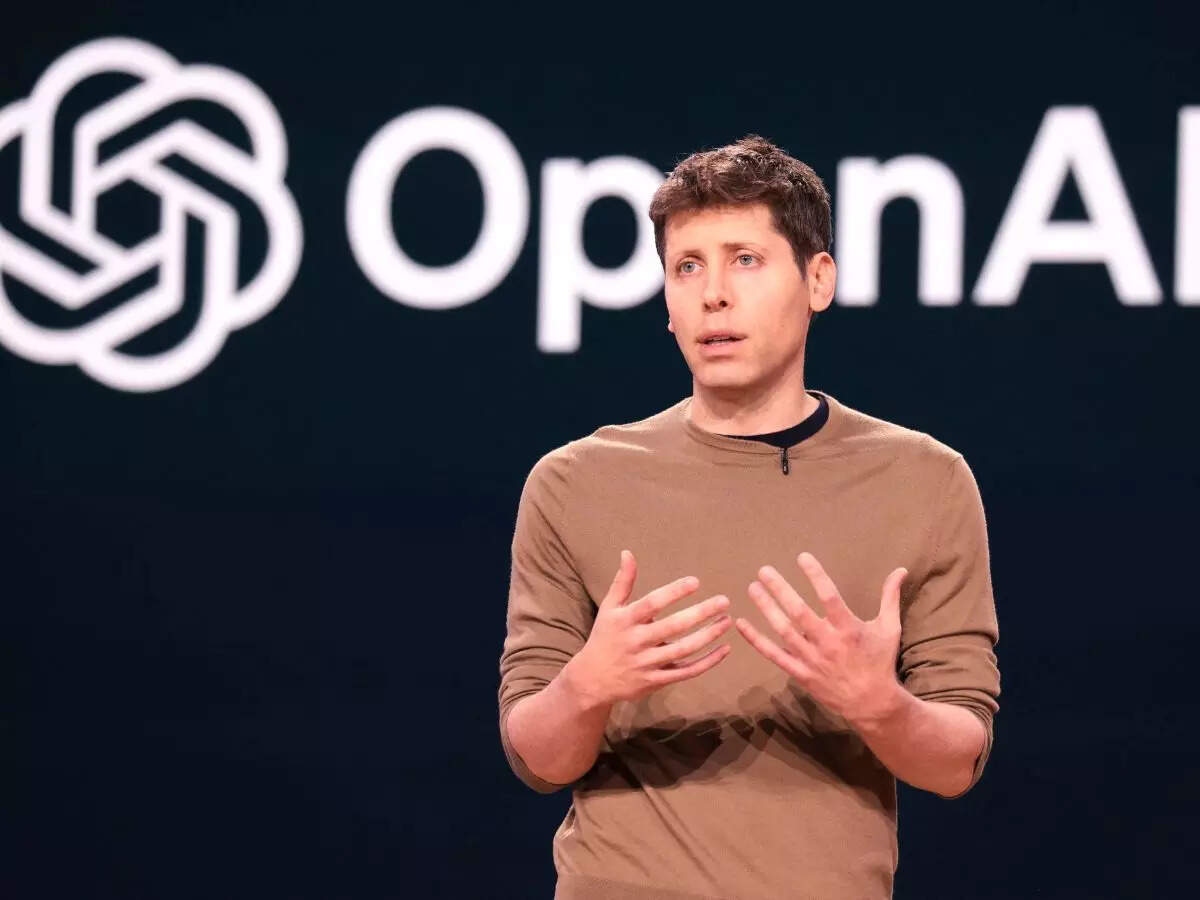
Meanwhile, the competitor Anthropic They adopted a completely different strategy. They publicly pledged to “never introduce ads,” even running ads during the Super Bowl to emphasize this position. After the ad aired, the OpenAI CEO Sam Altman hits back on Xaccused Anthropic of using “deceptive advertising to criticize non-existent deceptive advertising,” and described the other party’s approach as “authoritarian.” This exchange highlights the divergence in commercialization strategies among AI companies and reflects that the narrative war for future AI platform competition has already begun.
Looking ahead, it seems only a matter of time before free AI services fully integrate advertising. After all, when AI becomes an everyday tool, advertising naturally follows into this new interface. But at least for now, among mainstream AI products, OpenAI is the first major brand to formally integrate advertising into its core experience. Microsoft Copilot’sThe early version briefly displayed ads (it was still called Bing Chat at the time)However, the current version no longer displays this.
The monetization of ChatGPT marks a turning point for AI services, as they evolve from technology showcases to mature platforms. For users, this may mean subtle adjustments to their experience; for the industry, it’s a significant step in solidifying AI business models.
Source: KOCPC Chinese