


On the Trans-Canada Highway in British Columbia, Canada, a Tesla driver was found sleeping soundly in front of the steering wheel while Full Self-Driving Supervised (FSD) was engaged, with the vehicle traveling at approximately 100 km/h. Two children were also in the car, both asleep. Surprisingly, Tesla’s FSD driver monitoring system failed to trigger any alerts or automatically stop the vehicle because the driver was wearing sunglasses.
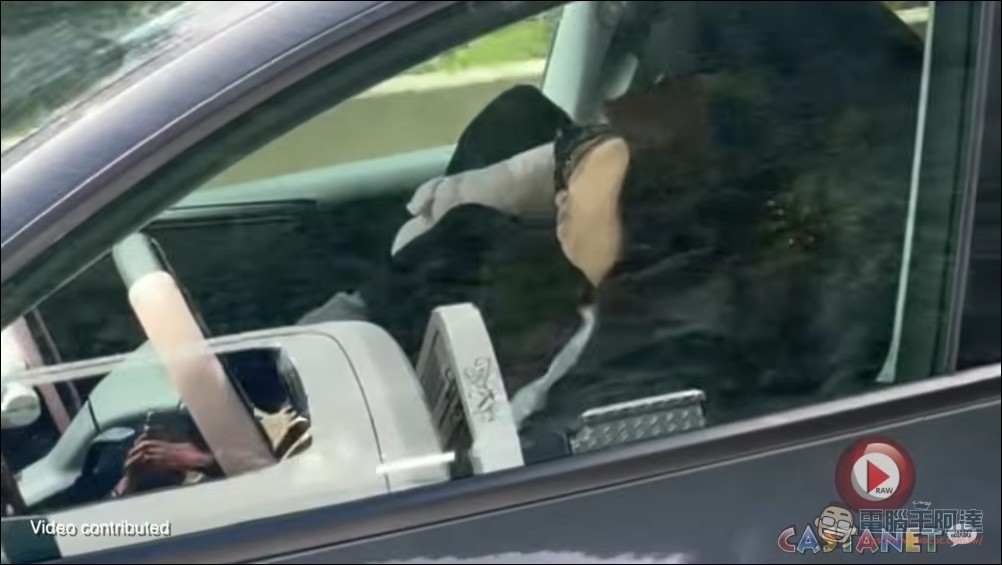
The incident occurred on July 6 (Sunday) at a section of Highway 1 between Golden and Revelstoke in British Columbia. A family of witnesses named Carleigh spotted the Tesla while driving. The driver was clearly slumped to the side, completely unconscious, while the vehicle continued driving in the rain at approximately 100 km/h. Two children inside the car were also in a deep sleep. Carleigh immediately recorded video and called the police. The Royal Canadian Mounted Police (Revelstoke RCMP) later stated they had obtained the license plate information and would track down the driver involved.
Sunglasses blind cameras to eyes, system falls back to weak defense
Actually, FSD does have drowsy driving detection. Under normal conditions, if the driver’s eyes are closed for an extended period and the system detects they’re asleep or drowsy, it will under normal operation slowly pull over to the side of the road and stop. There are related test videos from overseas.
if you stop supervising (or fall asleep), FSD 14 safely pulls to the shoulder and stops pic.twitter.com/SFnWEloq52
— ΛI DRIVR (@AIDRIVR) July 3, 2026
So why didn’t Tesla’s driver monitoring system stop this sleeping driver? Since the FSD v12.4 rollout in 2024, Tesla has relied primarily on the cabin camera above the rearview mirror to track the driver’s face and eyes. However, Tesla’s owner’s manual clearly states that this visual monitoring “will not engage” when the camera is blocked, lighting is poor, the driver isn’t looking ahead, or the driver is wearing sunglasses or a hat that obscures their eyes.
The driver in question happened to be wearing a pair of large sunglasses, and the camera couldn’t confirm the state of their eyes. The system then reverted to the old steering wheel torque detection mechanism, only periodically checking whether there was force on the steering wheel. This mechanism is far weaker than visual monitoring—it cannot determine whether the driver is awake or looking at the road; a slumped body or an arm resting on the steering wheel is enough to fool it.
In other words, Tesla’s driver monitoring system has a fundamental design flaw: its core judgment relies on being able to see the driver’s eyes, and a pair of sunglasses costing just $2 from a gas station can render the entire safety mechanism ineffective. When the in-car camera cannot confirm the driver’s eye status, the system is left with only steering wheel torque detection as the last line of defense—a line of defense that cannot even stop a person who has collapsed onto the steering wheel.
FSD is legal in BC, but sleeping while driving is not.
According to British Columbia’s Motor Vehicle Act, autonomous vehicles rated Level 3 and above are prohibited from operating on public roads. Tesla’s FSD is a Level 2 driver assistance system, meaning drivers are legally required to maintain constant control of the vehicle at all times. In other words, not only is it dangerous to sleep while FSD is engaged, it’s actually illegal in the province.
RCMP Corporal Michael McLaughlin previously stated regarding similar incidents: “Indeed, some electric vehicles are equipped with autonomous driving modes, but autonomous driving systems are not legal for use in BC. You must remain fully awake, alert, focused, and in control of your vehicle at all times.”
Dummy Heads and Sunglasses: The Various Vulnerabilities in FSD Monitoring Systems
This isn’t the first time FSD driver monitoring has been bypassed—previously, some Chinese Tesla owners purchased cheap plastic dummy heads and attached them near the rearview mirror. When the camera detected a “face looking forward,” it determined the driver was paying attention to the road, allowing FSD to operate unsupervised.
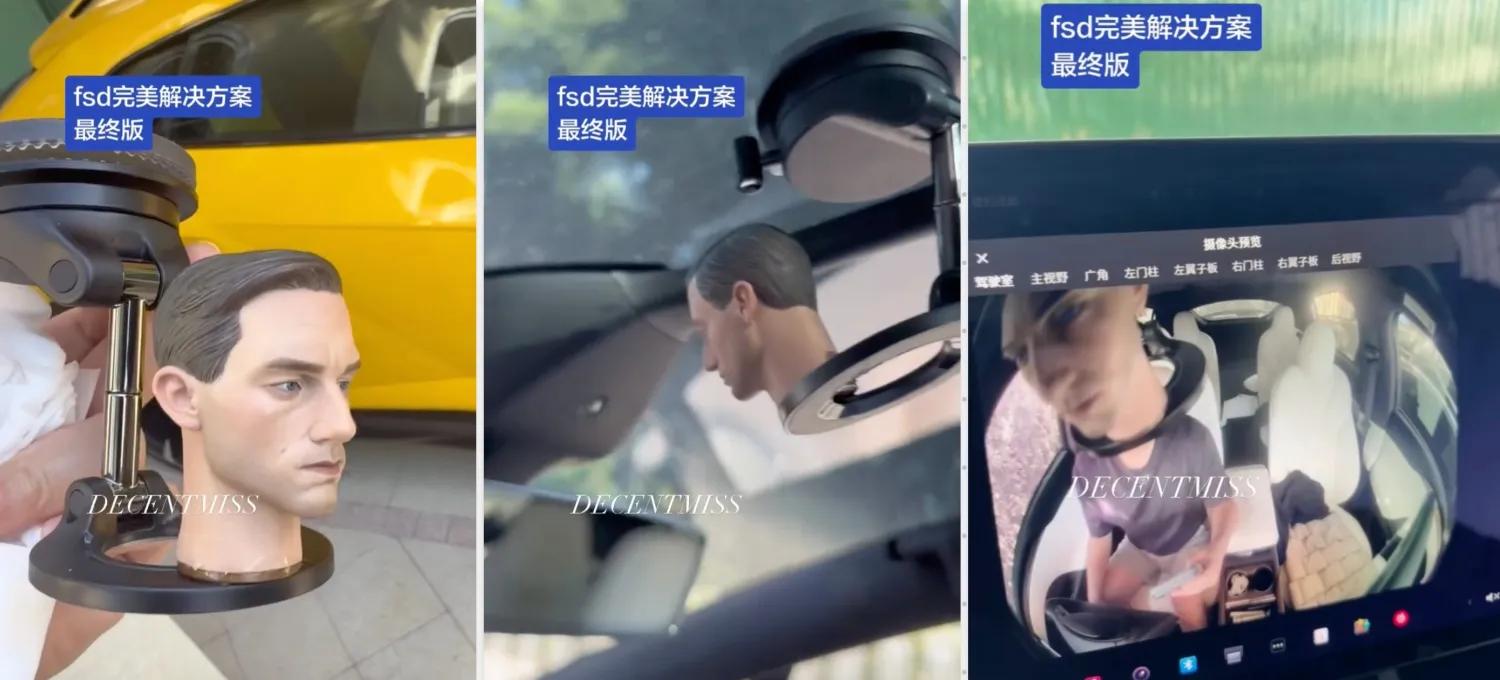
If a cheap plastic mannequin head can deliberately fool the system, then a pair of sunglasses inadvertently disabling the system shouldn’t be surprising. Tesla’s current monitoring design can only restrain well-meaning drivers, but cannot prevent dangerous driving behavior that deliberately exploits loopholes. As FSD continues to evolve and perform more reliably, drivers’ overtrust in the advanced driver assistance system actually makes such dangerous behaviors more likely to occur.
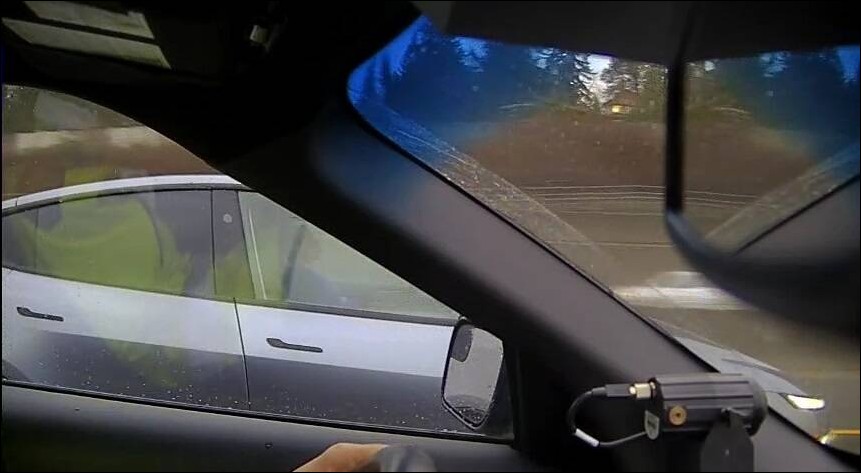
Additionally, an incident also occurred on Highway 1 in Coquitlam, BC this past MarchSimilar incidentsA 37-year-old female driver was spotted by police during rainy rush hour driving a new Model Y with her eyes closed and arms crossed over her chest while the vehicle continued moving. She received two tickets: a dangerous driving fine of 368 Canadian dollars and a speeding fine of 138 Canadian dollars, totaling 506 Canadian dollars. The driver claimed she “zoned out,” but police in-car camera footage doesn’t support this claim.
Tesla has always marketed the FSD assisted driving system as a safety feature. However, in real-world accidents, this system has been easily bypassed with just a pair of sunglasses. Currently, Tesla’s “Full Self-Driving” is only L2 capability, meaning drivers remain fully responsible for any accidents. Drivers should absolutely not gamble with their own safety, their family’s safety, or the safety of other road users.
Source: KOCPC Chinese