


Since OpenClaw sparked a new wave of AI globally, various related variants have been sprouting up everywhere. But nearly all of them are cloud-based or software applications. Recently, however, Sipeed, a Chinese embedded systems developer, released a disruptive personal AI assistant: PicoClaw. This product shocked the industry with its extremely lightweight design: it can run on less than 10MB of memory, and can even execute smoothly on low-cost hardware priced at just 10 dollars.
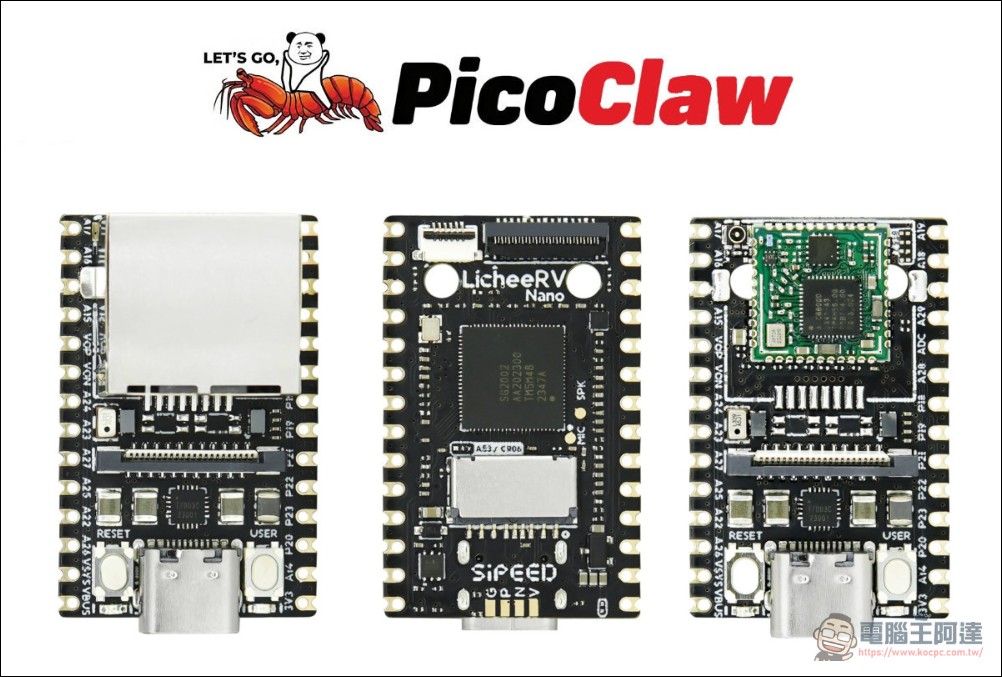
PicoClaw: An OpenClaw alternative with $10 hardware, under 10MB memory, and 1-second startup
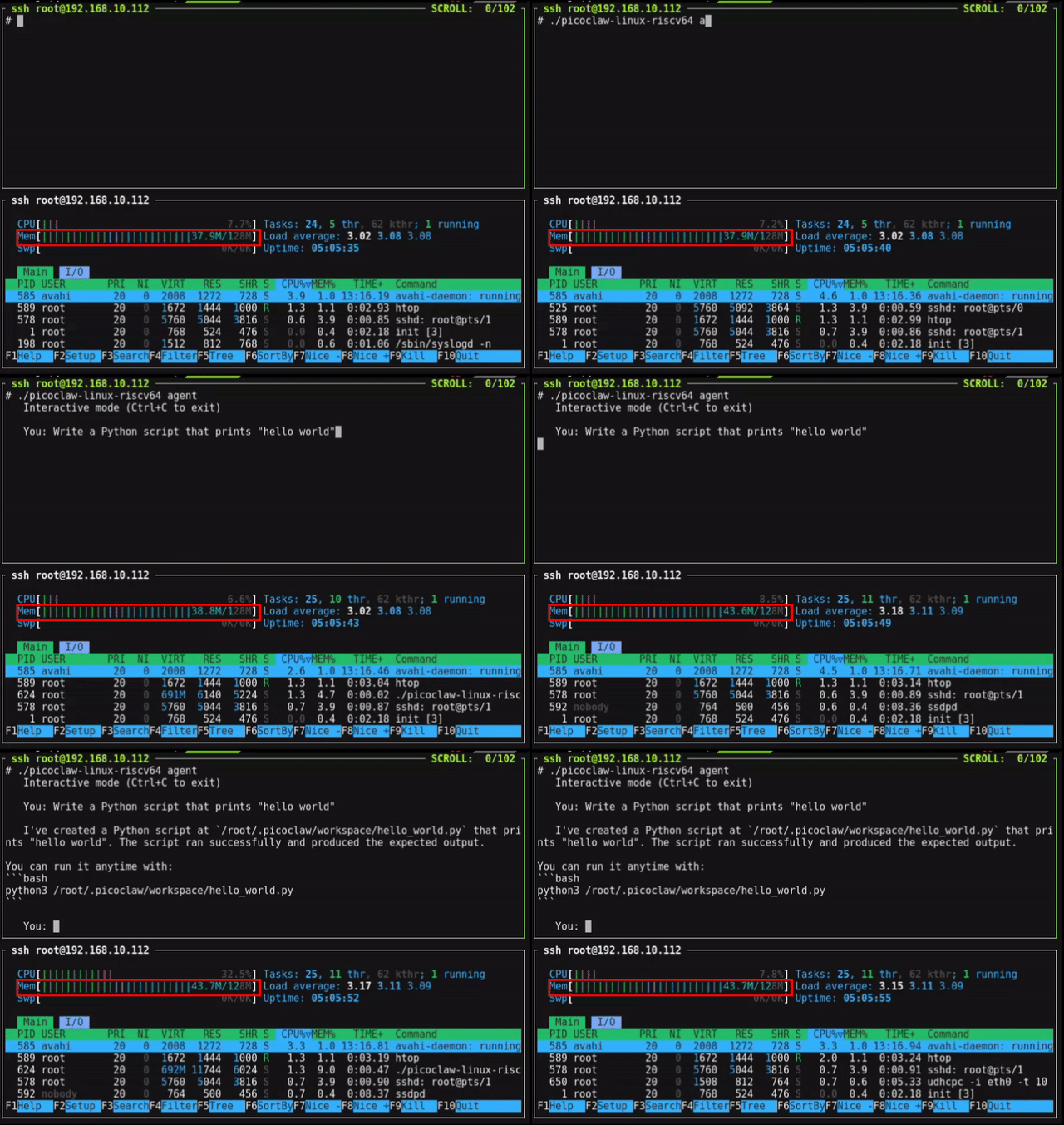
In a landscape where AI assistants typically demand substantial computational resources—especially with Mac mini being a common platform—PicoClaw stands out as quite an outlier. According to official information, this AI assistant uses less than 10MB of memory, compared to OpenClaw’s requirement of over 1GB of RAM—a difference exceeding a hundredfold.
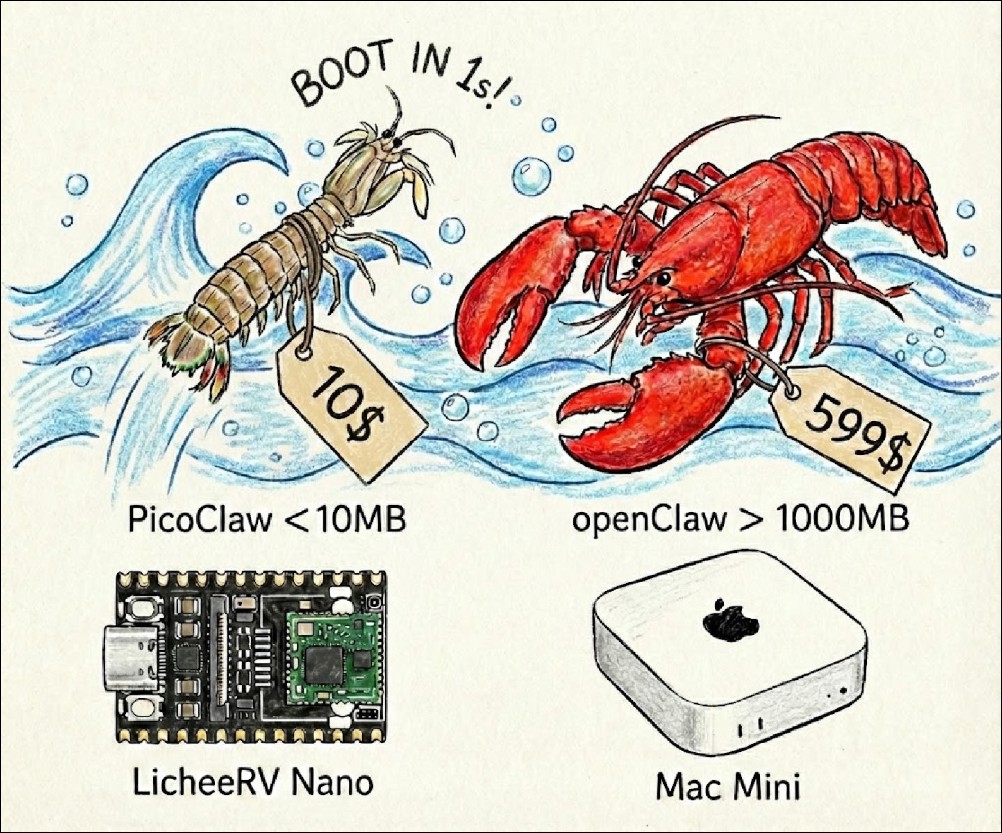
Even more surprising is its startup speed. PicoClaw’s cold boot time is under 1 second, while OpenClaw takes over 500 seconds to boot on a Mac Mini, meaning PicoClaw is over 500 times faster to start up.
| specifications | PicoClaw | OpenClaw |
|---|---|---|
| Memory requirements | < 10MB | > 1GB |
| Hardware cost | $10 USD | $599 (Mac Mini) |
| Startup time | < 1 second | > 500 seconds |
AI-Generated: 95% of the code written by AI
Another notable feature of PicoClaw is its development process. The project was built using Go, with up to 95% of the code generated by AI. This “Self-Bootstrapping” development model demonstrates the immense potential of AI-assisted programming. The development team stated that this approach not only significantly shortened the development cycle but also proved the practical value of AI tools in complex system development. PicoClaw’s source code has already GitHub Released under the MIT license, free for developers to use and modify.
Cross-platform support: compatible with RISC-V, ARM, and x86
PicoClaw’s cross-platform capabilities are equally impressive. It natively supports RISC-V, ARM, and x86, the three major processor architectures, meaning this AI assistant can run on everything from low-cost microcontrollers to traditional PC processors.
Hardware that is currently confirmed to work includes:
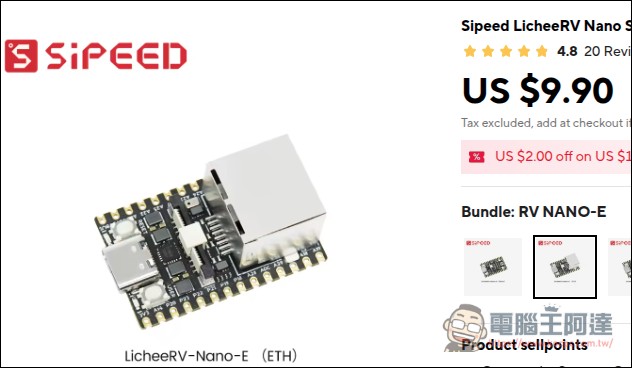
- LicheeRV-NanoRISC-V Development Board Priced at Just $9.9
- NanoKVMLightweight KVM device
- MaixCAMAI Vision Development Kit
Full features: rivals top-tier competitors
Despite its compact size, PicoClaw’s features are no joke. It claims to support:
- Development and DeploymentAssist with software development and system deployment operations
- Web searchReal-time web search
- Instant Messaging IntegrationTelegram and Discord Bot Features
- Scheduled taskAutomated Scheduled Execution
- Long-term memoryContinuously learning and remembering user preferences


This combination of features can already meet the daily AI assistant needs of most individual users.
Conclusion
The birth of PicoClaw is not only a technological breakthrough but also a challenge to the existing AI industry mindset. It proves that “small and beautiful” AI solutions can also have practical value, and provides developers and enthusiasts with an extremely attractive open-source choice. As the project continues to develop, we can look forward to seeing more innovative applications built on PicoClaw emerge.
Source: KOCPC Chinese