


Many whistleblowers have mentioned Apple’s ambitions to make its own processors more than once, and have also predicted that this processor will be officially used in Apple’s computer product line next year in 2021. It’s just that the bad relationship between Apple and Intel is still not over yet. Even if there are such rumors, it doesn’t mean that Apple will definitely change the processor immediately. However, Bloomberg recently provided a new wave of information. It is mentioned that the development code of the processor is Kalamata, which is still produced by TSMC and surprisingly uses the 5nm process. If it is true, it at least proves that Apple is indeed very ambitious. This processor is indeed finalized, and it is expected that at least one or more new products will adopt it:
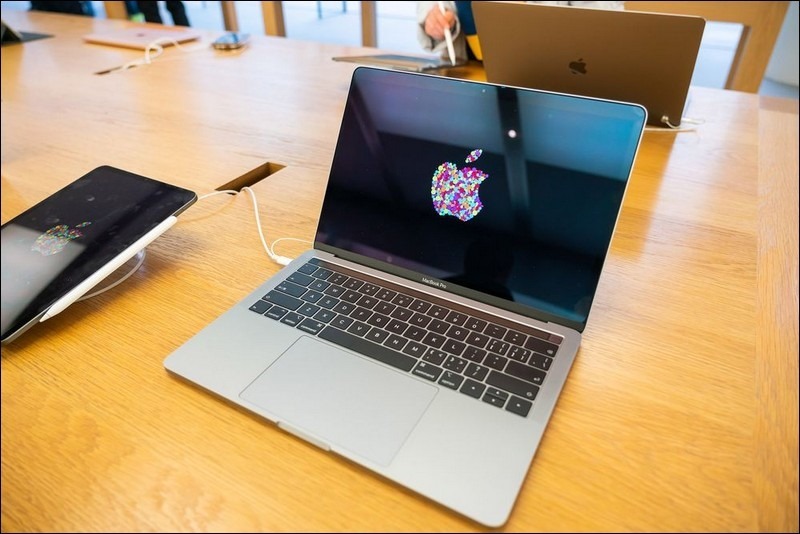
▲Apple’s computer series may use at least 12-core homemade processors next year (Image source)
Apple’s iPhone series is most famous for its high degree of integration from hardware to software, which can maximize the hardware strength integrated with its own products. The core of the iPhone has also gradually become stronger with research and development, and it already has the performance of an entry-level computer. These phenomena make people feel that even if Apple wants to produce a dedicated processor for its own computers, it is probably only a matter of time.
In the past, Apple has cooperated with companies such as IBM to develop PowerPC processors and used them in its own computer series. However, PowerPC processors have brought a lot of trouble to Apple. In particular, although the PowerPC G5 970FX/970MP processor is known for its high clock speed, its relatively high heat has forced Apple to use water cooling as the default cooling solution. There has even been a subsequent scandal of coolant leakage. Even though Apple later enhanced the water cooling design to avoid water leakage problems, it still left a very bad impression on Apple computer users. This has become one of the main reasons why Apple has completely replaced the processor for its own computer production line for the first time:
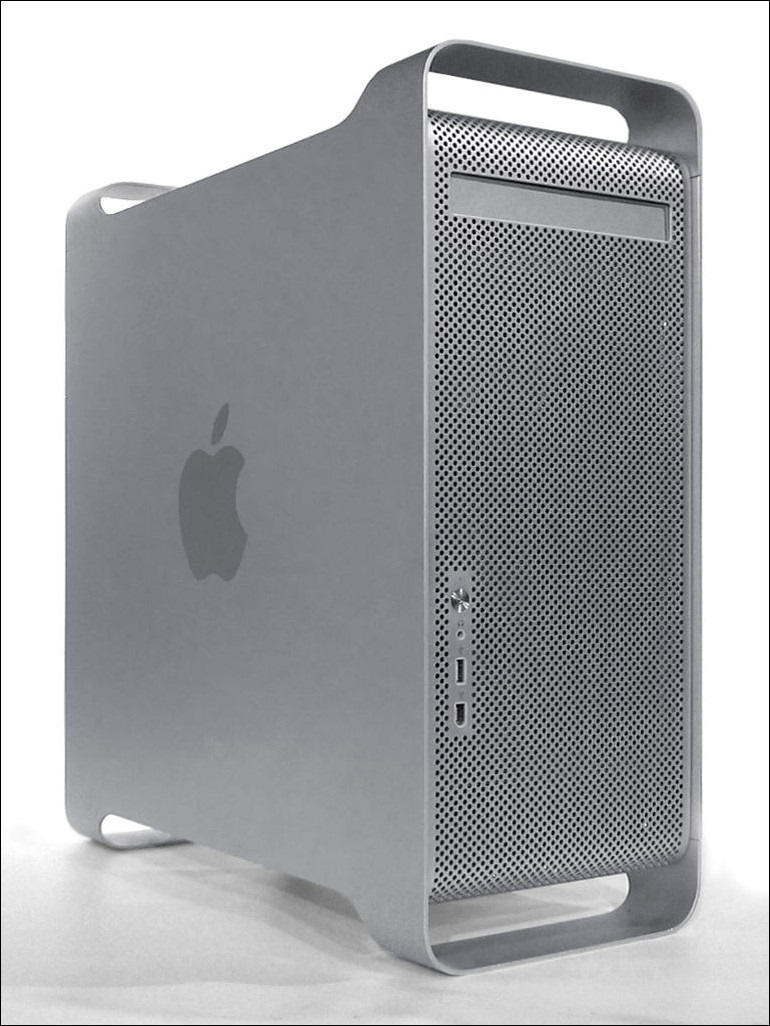
▲Power Mac G5 is the one that used water cooling to suppress the heat of PowerPC G5 970FX/970MP (Image source)
Although Apple later launched Mac computers with Intel processors to this day, there have been constant rumors recently that Apple is planning to significantly replace the processors and use its own designed processors. Although Intel processors have made Mac computers more affordable and brought multi-core advantages, Intel has recently fallen into a dilemma of unstable supply. Perhaps it is because of this that Apple executives believe that they can rely on their own best ideas. There are still rumors about Apple switching to its own designed processors, and now there are more details.
Judging from Apple’s current smart devices, all of them use processors designed by Apple. The biggest feature is the use of multiple processor units or cores, allowing smartphones or tablets to handle complex tasks and meet the needs of different fields. For example, the latest A13 Bionic chip has a 2+4 core design, with 2 high-performance cores and 4 energy-saving cores. Based on this design, the core clock is increased, making its performance further surpass that of the previous generation, and firmly sitting on the performance throne of core chips for today’s mobile devices. Even to some extent, it can threaten the performance and energy efficiency of modern mainstream PCs:
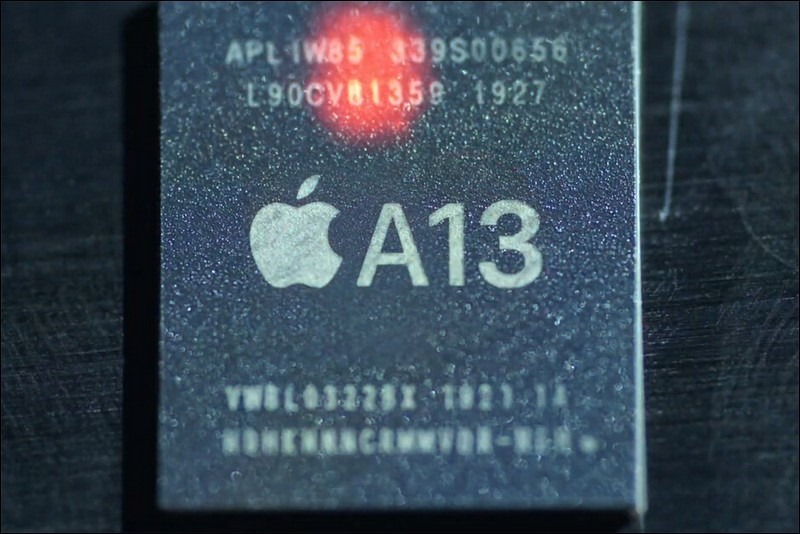
▲Currently the A13 Bionic chip is the performance high point of Apple’s own processors (Image source)
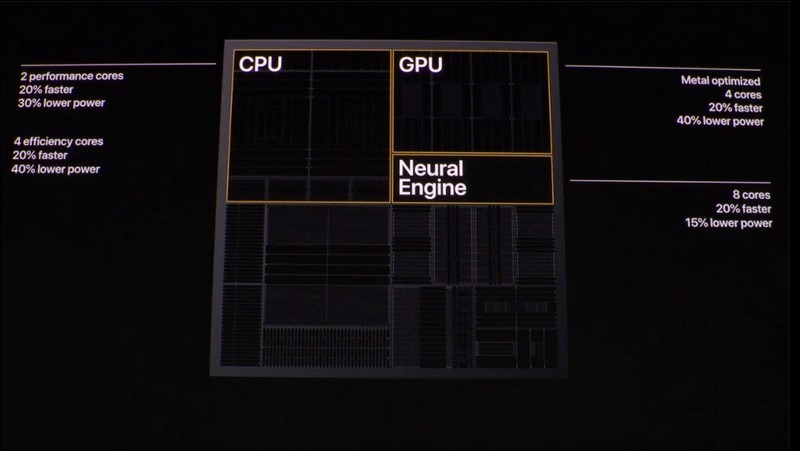
▲The 2+4 core architecture and higher clock speed allow this chip to surpass previous generation products in performance (Image source)
The computer processor Apple is preparing for the future is said to be developed under the code name Kalamata. There is still a lot of information about this processor that has not yet been made public, but it is known that it is produced by TSMC using a 5nm process. The Kalameta processor is said to contain eight high-performance cores, internally codenamed Firestorm, and at least four energy-efficient cores, internally codenamed Icestorm. It is also speculated that Apple will not stop at the Kalameta processor, but will continue to explore processor designs with more than 12 cores, so that its own-designed processors can be applied to higher-end product lines.
Judging from the current Intel Mac laptops, most processors mainly use 2 to 4 cores, and some high-end products use 6-core or higher-end processors. Although Kalameta belongs to the ARM architecture, it uses 8+4 cores to challenge the multi-core performance of Intel processors. I believe the comparison between the two will be interesting.
As for whether the current Macbook Air will be the last Intel Mac product, it still depends on whether the cooperation between Apple and Intel will continue. The author believes that there may be a dual-processor parallel solution. High-end products or customized parts will still use Intel processors, but products with entry-level positioning or smaller screen sizes may use Apple-designed ARM processors. It may not necessarily be applied to iPad Pro products. On the other hand, there are also rumors that the processor is mainly based on Apple’s A14 processor, but it will be much faster than the processors used in new iPhones and iPads. Considering that the processor is rumored to have a clock speed exceeding 3GHz, it is likely to be a branch of the A14:

▲In terms of running scores, the multi-core score of 4612 is roughly similar to the Core i5-9500, but the single-core running score is much higher than the Core i5-9500 (Image source)
However, the main problem in the conversion process is still software support. In the past, Apple also spent a lot of time transitioning from PowerPC processors to Intel processors. Presumably Apple will not fully adopt its own processors in one fell swoop. Whether this processor, currently called Kalameta, will give you more surprises in the future remains to be seen.
Source:Bloomberg
Source: KOCPC Chinese