


If you think a virus invading your computer is the scariest thing you can do, then you have to think about the situation where someone has been stealing money from your bank account. There’s no worst, only worse, as a British security firm has discovered that dozens of apps in the iOS App Store are luring consumers with free offers that will actually turn what seemed like a good deal into an expensive lesson.
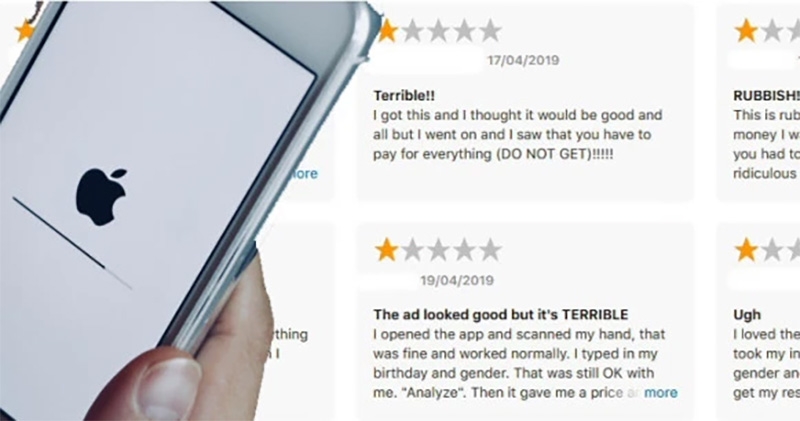
Security firm uncovers dozens of apps purporting to be free trials
British security company Sophos released a report earlier this week, warning that more than 3.5 million iOS users have installed “Fleeceware” applications on their mobile devices. Fleeceware is a new Internet security term coined by Sophos last year, which refers to applications that abuse the loopholes in the Android and iOS trial mechanisms to engage in new online fraud. Both Google and Apple’s app stores allow developers to set trial periods for commercial, paid, and subscription-based applications. After the user installs the application, he or she grants the application permission to charge the payment credit card to register for a free trial. After the trial period ends, the system will automatically debit the credit card and extend the user’s usage rights. Fleeceware exploits this loophole and continues to charge the user even after the user removes the application, without considering the user to have stopped trial. While some app makers have abused this vulnerability to charge users what amounts to petty theft, some unscrupulous app developers have charged users as much as hundreds of dollars.
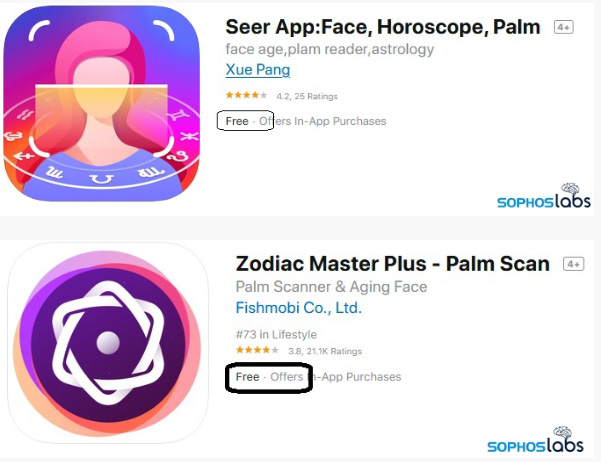
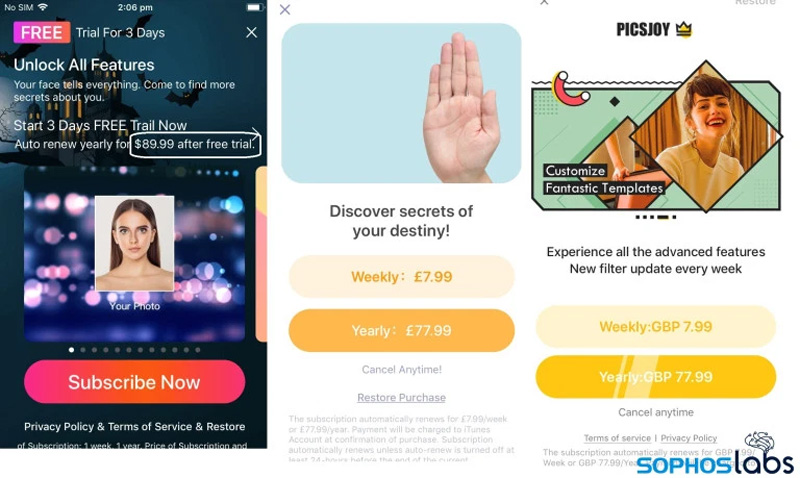
Most of these Fleeceware apps are apps with simple functions such as image editors, horoscopes, fortune telling, handheld readers, QR Code scanners, etc. Sophos researchers said that 32 iOS apps have been identified so far. The charging price of $30 per month or $9 per week may not seem like a large amount at first glance, but the cumulative annual cost totals between $360 and $468. These apps rely heavily on online advertising to attract traffic and installations, but then fail to provide meaningful functionality. Later, users follow their usual habits and remove the apps without following the internal mechanism to cancel. Fees continue to be deducted on a weekly and monthly basis. The researchers also said that many of these apps are on the App Store’s highest-grossing list.
Security researchers recommend that mobile phone users regularly check the subscription items of applications on their mobile phones to ensure that they are not being continuously sucked blood unknowingly. Here is a list of these problematic applications for your reference:
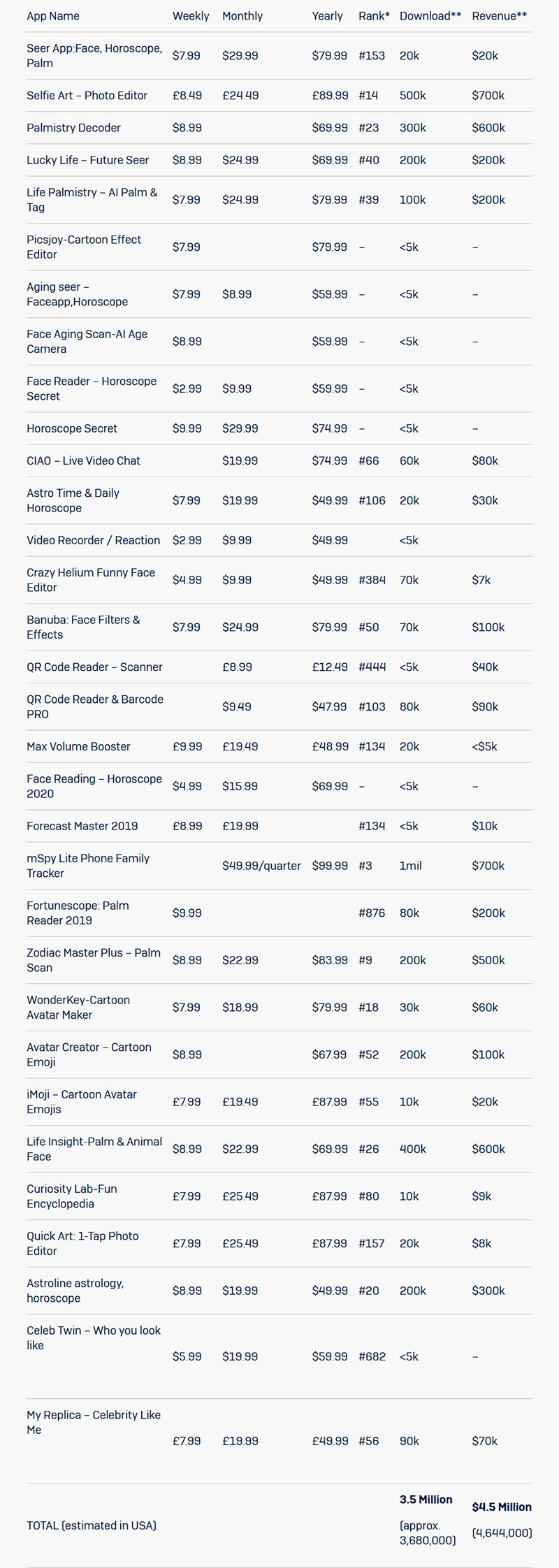
◎Data source:Sophos
Source: KOCPC Chinese